

Finding the Best Coffee for Pour Over
When it comes to pour-over, the best coffee is almost always going to be a fresh, single-origin bean with a light to medium roast. Think of the pour-over method as a high-definition lens for flavor. It magnifies every subtle note, so you really want a coffee with a complex character worth showing off. Ready to find your perfect match? Click our links throughout this guide to explore and purchase the coffees that catch your eye.
Your Guide to the Best Pour Over Coffee Beans
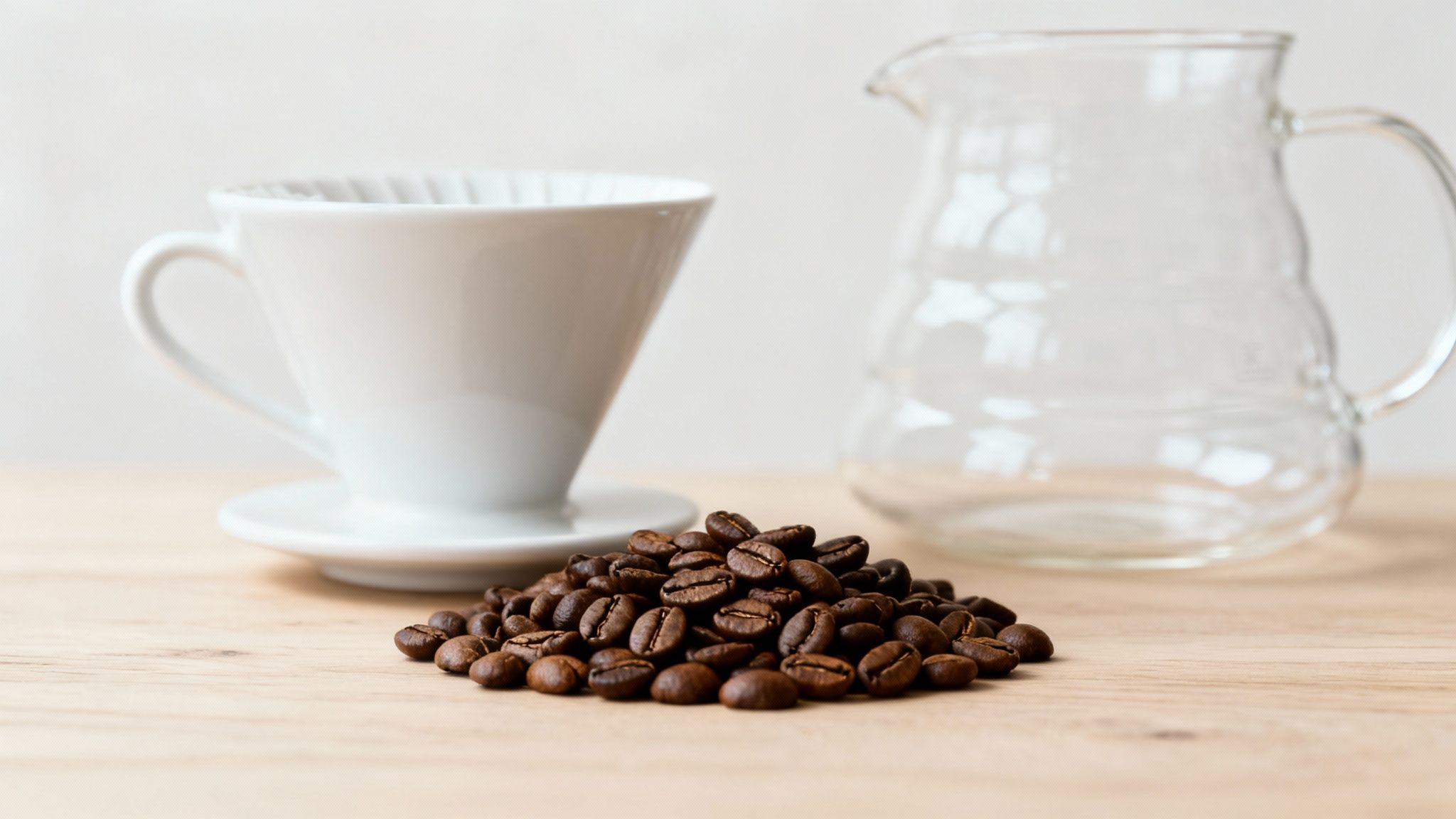
Making pour-over coffee is a craft. It’s a world away from the automated drip machine or the full-immersion of a French press. While drip coffee offers convenience and a French press delivers a bold, heavy-bodied cup, pour-over puts you in the driver's seat, gently coaxing out the delicate, intricate flavors locked inside the bean. This hands-on process is precisely why your choice of coffee is so important.
The growing fascination with this method isn't just a niche trend, either. The pour-over coffee pot market is expected to balloon to $500 million by 2025, a clear sign that coffee lovers everywhere are craving more control over their brew. This market is even projected to see a 7% growth through 2033, fueled by people who appreciate the nuance this method delivers.
Finding Your Perfect Bean
To get the most out of your pour-over, you need a coffee that has a story to tell. Here’s what I always look for:
- Single-Origin Beans: These coffees come from a specific farm or region, giving them a distinct and clear flavor profile. They are the perfect match for pour-over because the method is designed to highlight their unique, vibrant notes.
- Light to Medium Roasts: Lighter roasts are fantastic because they preserve the bean’s original character—all those bright, fruity, and floral notes. Medium roasts start to develop more sweetness and body, creating a beautifully balanced and complex cup.
- Freshness is Key: Never forget that coffee is a fresh product! The lively, exciting flavors that make pour-over so special begin to fade just a few weeks after roasting.
Choosing the right coffee transforms your morning routine from a simple caffeine fix into a sensory experience. The pour over method is your tool to unlock the vibrant, hidden notes of a coffee’s origin, from the bright citrus of Ethiopia to the smooth chocolate of Peru. Don't hesitate to click and make a purchase to start your flavor journey.
To help you remember what matters most, here's a quick summary of the ideal characteristics for pour-over coffee.
Key Characteristics of Ideal Pour Over Coffee
| Characteristic | Why It Matters for Pour Over | Beans Without Borders Recommendation |
|---|---|---|
| Roast Level | Light to medium roasts preserve delicate, origin-specific flavors that darker roasts would obscure. | Click to purchase our Ethiopian Yirgacheffe for its bright, floral notes or our Colombian Supremo for a balanced, sweet cup. |
| Origin | Single-origin beans offer a clear and distinct flavor profile, which is exactly what pour-over is designed to highlight. | Explore our full range of single-origin selections and purchase the perfect bean for you. |
| Freshness | Freshly roasted beans (within a few weeks) are crucial for retaining volatile aromatic compounds. | We roast our beans to order, ensuring you receive them at their absolute peak of flavor. |
| Flavor Profile | Look for bright, acidic, and complex notes like fruit, flowers, and citrus. | Coffees from Africa and Central America, like our Kenyan AA, are fantastic choices for their vibrant acidity. |
This guide will walk you through these pillars—roast, origin, and freshness—giving you the foundation to choose beans with confidence. The first step to unlocking exceptional flavor starts with selecting a coffee that’s truly up to the task.
Why Pour Over Brewing Demands a Special Kind of Coffee
Think of your pour-over setup as a high-fidelity sound system. The same way premium speakers reveal every subtle note in a song—the soft brush of a snare drum, a quiet harmony in the background—the pour-over method does the same for coffee. Its slow, deliberate process is designed to gently pull out the most delicate flavors and aromas hidden inside the beans.
This isn't a method for blasting out generic coffee flavor. It's a spotlight. It illuminates the bright, floral, and fruity notes that often get lost or muddled in more aggressive brewing methods like a French press. Using a generic, dark-roasted bean for a pour-over is like playing a scratchy, low-quality MP3 on that high-end sound system. You just won't hear the magic.
A Method Built on Clarity and Precision
At its heart, pour-over is all about clarity. Unlike immersion brewing where the grounds sit and soak, the continuous flow of fresh water over the coffee bed is constantly rinsing away the extracted flavors. This prevents the bitter compounds from over-extracting and results in an exceptionally clean, crisp cup that lets the bean's true personality shine.
This is exactly why finding the best coffee for pour over is so important. The method will expose everything about the bean you choose, for better or for worse. A low-quality bean has nowhere to hide; its flaws will be amplified. But an exceptional single-origin coffee? It will sing, its complex flavors laid bare for you to enjoy. For a deeper look at the technique itself, check out our guide on how to make pour over coffee.
The beauty of pour over lies in its transparency. It doesn't create flavor; it reveals it. Your choice of bean isn't just one part of the final drink—it is the final drink.
Beyond the Brew: Crafting Your Favorite Coffee Drinks
While pour-over coffee is fantastic on its own, you might wonder how to create popular coffee shop drinks at home. Many classic beverages start with a base of espresso—a concentrated shot of coffee made by forcing hot water through finely-ground beans. Here’s a quick guide:
- Americano: Espresso diluted with hot water.
- Latte: Espresso with a large amount of steamed milk and a thin layer of foam. Popular milk choices include whole, oat, almond, or soy milk.
- Macchiato: Espresso "marked" with a small dollop of foamed milk.
- Mocha: A latte with added chocolate syrup or powder.
- Breve: A rich latte made with steamed half-and-half instead of milk.
To craft these drinks, a bold, dark roast like our Sumatra is an excellent choice for a strong espresso base. Click to buy it now and start experimenting!
Finding the Perfect Roast for Your Pour Over
When it comes to pour over, the single most important decision you'll make is the roast level. Think of it like cooking a beautiful steak. A light roast is a perfect medium-rare, letting the quality of the meat shine through. A dark roast? That's taking it well-done, where you mostly just taste the char.
Pour over is all about clarity. It's designed to pull out and showcase a bean's unique, inherent character. That’s precisely why light and medium roasts are the top contenders for this brewing method, hands down.
Light Roasts: A Taste of Place
A light roast is all about preservation. The roaster's job is to apply just enough heat to make the bean brewable while keeping its distinct origin flavors—what the pros call terroir—completely intact. This careful approach unlocks all sorts of bright, delicate notes that a darker roast would simply burn away.
When you brew a light roast, you're not just tasting coffee; you're tasting the soil, the altitude, and the climate where it was grown. This is what makes pour over so exciting—it's like a direct line to the coffee's soul.
- What to Expect: Look for bright, acidic flavors like citrus, berries, and stone fruit. You'll often get incredible floral aromas, almost like jasmine or bergamot tea.
- Our Go-To: For a quintessential light roast experience, our Ethiopian Yirgacheffe is a must. Its tea-like body and notes of lemon and blueberry are exactly what this method was born to highlight. Click the link to purchase a bag and taste for yourself!
Medium Roasts: The Best of Both Worlds
Move a little further down the roast spectrum and you get to medium roasts, where more sweetness and body start to develop. The natural browning and caramelization processes have had more time to work their magic, resulting in a cup that feels rounder and more balanced.
You might lose some of the super-bright acidity, but new flavors step forward—think milk chocolate, warm caramel, and toasted nuts. A great medium roast gives you a fantastic balance: enough origin character to keep things interesting, but with those comforting, classic coffee flavors we all love.
A medium roast pour over is like a well-composed photograph. You have a clear subject—the bean's origin—but it's framed by a rich, detailed background of sweetness and body that makes the whole picture feel complete.
Why Dark Roasts Aren't a Great Fit
Dark roasts are left in the roaster for much longer. The intense heat forces oils to the surface and begins to carbonize the sugars, creating those bold, smoky, and intensely roasty flavors. While these can be fantastic for a French press or a traditional espresso, they completely bulldoze the subtle, delicate notes that pour over is meant to celebrate.
Pour-over coffee really comes alive with beans that tell a story about where they're from—like a vibrant Ethiopian or a nutty Peruvian from our own lineup. The growing appreciation for these high-quality, specialty beans is a huge reason the global coffee market is set to expand from $121.69 billion in 2024 to $186.55 billion by 2033. You can dig deeper into these fascinating global coffee market trends to see where things are headed.
How a Coffee’s Origin Shapes Your Pour Over Brew
Think of it like wine. Just as the soil and climate of a specific valley in France determine the final taste in the glass, a coffee bean's origin defines its fundamental flavor. This sense of place, what the French call terroir, is the secret behind why a coffee from Africa tastes so wildly different from one grown in South America.
For a brewing method like pour over, which is all about clarity and highlighting nuance, understanding a bean's origin is your passport to a world of incredible tastes. Our detailed guide to famous coffee growing regions offers a deeper dive into the unique characteristics of each area.
Exploring our single-origin coffees is the best way to really get a feel for these differences. Instead of a blend that’s been crafted for a consistent, uniform taste, a single-origin bag gives you the pure, unadulterated expression of one specific place. It’s a journey that can take you from the bright, floral highlands of Ethiopia to the smooth, chocolatey valleys of Peru, all without leaving your kitchen.
Tasting Notes from Around the Globe
Each of the world's major coffee-growing regions imparts a signature character to its beans. Here’s a quick tour of what you can expect and how it all comes together in a beautifully brewed pour over.
The map below gives a great visual of how roasters approach different beans to either highlight or transform these origin notes.
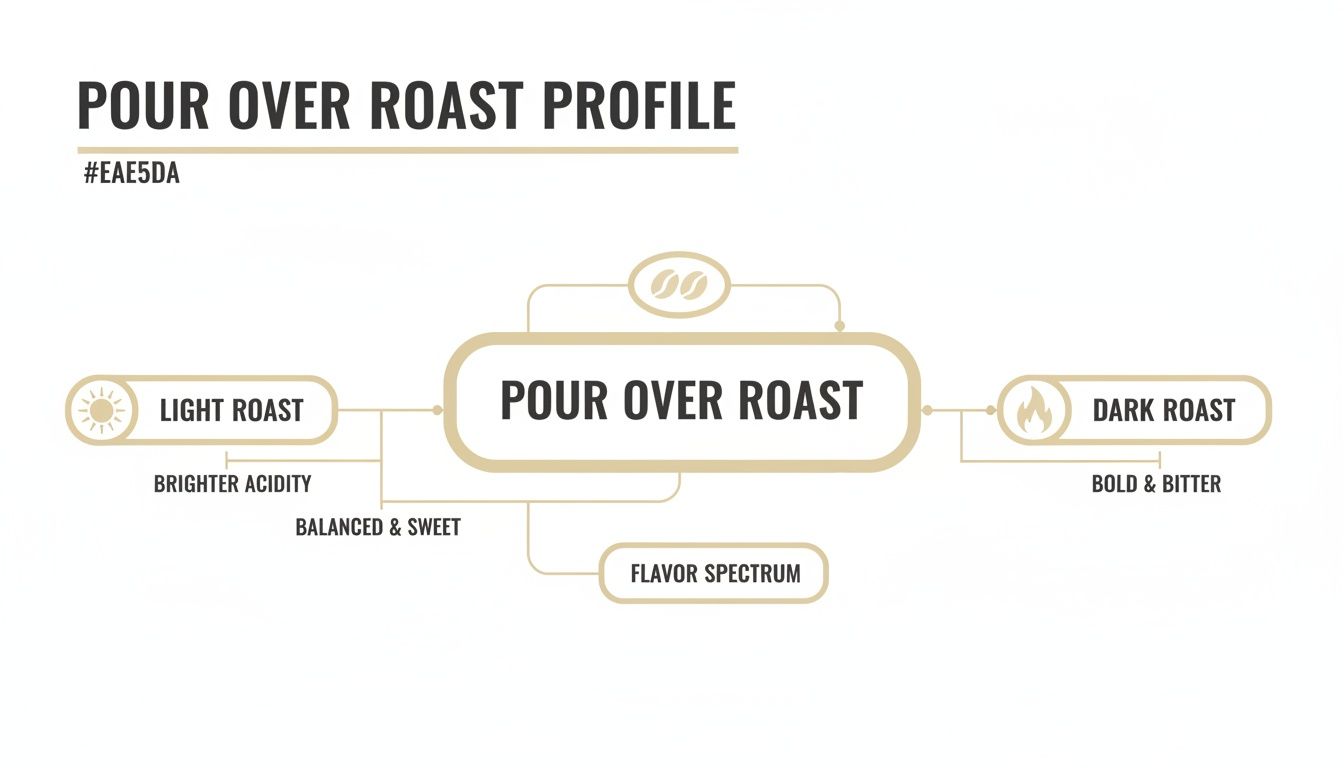
As you can see, lighter roasts are all about preserving those delicate, interesting flavors from the farm. As you go darker, the roasting process itself starts to introduce more caramelized and smoky notes that can easily overpower the bean's natural character.
Pour Over Flavor Profiles by Origin
To help you choose your next brew, this table breaks down the distinct tasting notes you can expect from single-origin coffees from different corners of the world. Each recommendation is a direct link to purchase—find your favorite and buy it today!
| Origin Region | Common Tasting Notes | Try Our Beans Without Borders Coffee |
|---|---|---|
| Ethiopia | Bright, clean, and complex with vibrant notes of blueberry, bergamot, and jasmine. Often has a distinctly tea-like body. The ideal coffee growing region for a delicate and aromatic cup. | Our bright and floral Ethiopian Yirgacheffe |
| Peru | This coffee growing region produces exceptionally smooth, balanced, and mellow cups. Gentle flavors of milk chocolate, toasted nuts, and mild citrus. A comforting and classic pour over brew. | Our smooth and nutty Peruvian selection |
| Bali (Indonesia) | Known for rich and deep coffee with a heavy, syrupy body. This coffee growing region delivers earthy notes of dark chocolate, sweet tobacco, and a hint of spice. | Our earthy and complex Bali Blue Moon |
This is just a starting point, of course. The best part of the pour over journey is discovering which of these unique profiles speaks to you.
By choosing a single-origin coffee, you’re not just brewing a beverage; you're tasting a story. Each sip is a reflection of the farm, the elevation, and the hands that harvested it. It's the most authentic coffee experience you can have.
The Importance of Freshness and Grind Size
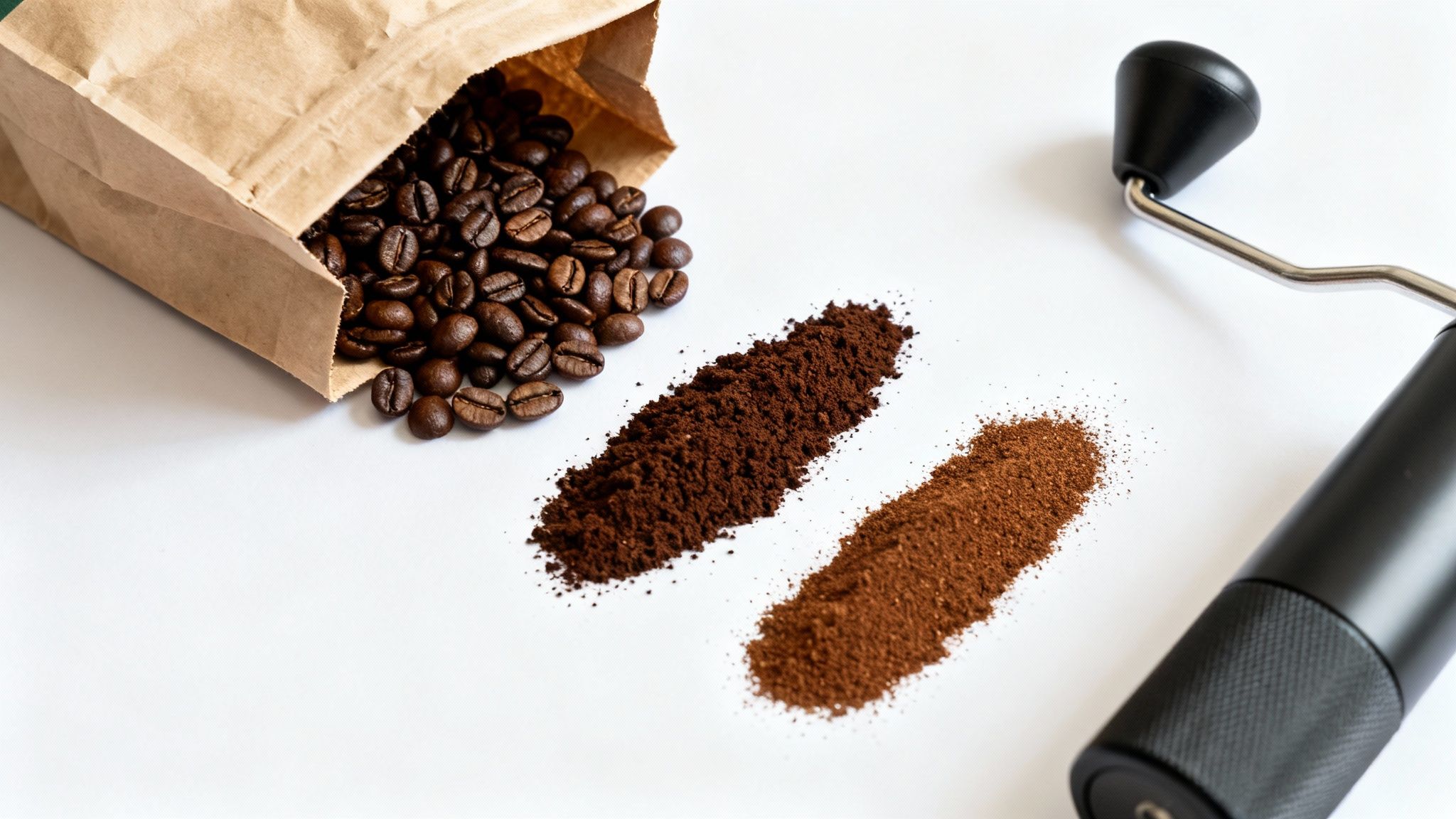
You’ve found the perfect origin and the ideal roast level. Now we get to the part that can make or break your daily brew: freshness and grind size. Nailing these two things is what separates a good cup from an unforgettable one.
Think of whole bean coffee like a freshly baked loaf of bread. Right out of the oven, it’s aromatic, full of life, and tastes incredible. But it doesn't stay that way forever. Coffee is perishable, and the countdown to stale starts the second it comes out of the roaster.
Those amazing, nuanced flavors in coffee come from volatile compounds that start breaking down in just two to three weeks. This is precisely why we roast in small batches and ship directly to you—your coffee shows up at its absolute peak, not after sitting on a grocery store shelf for months.
Finding the Perfect Grind Consistency
With fresh beans in hand, your next job is to grind them correctly. This is your main point of control over extraction, which is just a fancy word for how water pulls flavor out of the coffee grounds. Your goal is to find that perfect sweet spot for a balanced, delicious brew.
It helps to think about how water moves through different materials. If you pour water over a pile of big pebbles (a coarse grind), it’s going to rush right through. It barely has time to pick anything up, leaving you with a weak, sour, and under-extracted cup of coffee. No good.
On the other hand, if you pour that same water over fine sand (a fine grind), it's going to get stuck. The water will sit there too long, pulling out way too much from the coffee, including all the bitter, unpleasant stuff. This results in a harsh, muddy, and over-extracted brew.
Your Target for Pour Over
For pour-over, we're looking for something right in the middle: a medium-fine grind. The ideal texture is a lot like common table salt. This consistency creates just enough resistance to let the water flow through at a steady pace, pulling out all those sweet, bright, and fruity notes without dragging the bitterness along with it.
It’s that simple. This single adjustment is the most powerful tool you have for perfecting your daily cup. When you start with incredibly fresh beans from Beans Without Borders and pair them with the right grind, you're setting yourself up for a consistently sweet, clean, and delicious pour-over. Every single time.
Join the Beans Without Borders Community
Making the perfect pour-over isn't just a morning ritual—it's a craft. As you dive deeper into this world of incredible flavor, we want you to know you're not alone. There's a whole community of people who share your passion for truly great coffee, and you're already on the right path to mastering the art.
Let’s quickly revisit what we've learned. The secret to finding the best coffee for pour over really boils down to three simple things: sticking with a light to medium roast, opting for single-origin beans, and never, ever compromising on freshness and the right grind. Get those three pillars right, and you’re set up for a fantastic cup, every single time.
More Than Just Coffee
While your pour-over adventure is just getting started, our world of flavor has so much more to explore. We truly believe there's a perfect drink for every moment.
- For quiet moments: Take a look at our selection of the best loose leaf tea online. Our premium loose-leaf teas offer everything from a classic, bold English Breakfast to a calming Hibiscus Berry. Click to explore and purchase your new favorite tea.
- For the coffee culture enthusiast: Want to wear your passion on your sleeve? Check out our branded apparel and ceramic coffee mugs. You can find our whole line of shirts, hats, and hoodies here and make a purchase to show your love for great coffee.
- For every coffee lover: We have the perfect bean for every taste and brew method. We encourage you to browse our shop and make a purchase today to elevate your coffee experience.
At Beans Without Borders, our whole reason for being is to close the gap between the world's most dedicated coffee farmers and your kitchen. We bring you closer to celebrated growing regions, one freshly roasted bag at a time.
The best way to keep exploring and stay in the loop is to become part of our community. When you sign up for our e-mail list, we'll start you off with a 10% discount on your first order. From there, you'll be the first to know about new arrivals, get exclusive brewing guides, and receive offers just for our members. Sign up today!
Your Pour-Over Questions, Answered
As you dive into the world of pour-over, a few common questions always pop up. Let's tackle them head-on so you can get straight to brewing that perfect cup.
Can I Use a Dark Roast for My Pour-Over?
You can, but you probably don't want to. Think of the pour-over method as a spotlight, designed to illuminate all the subtle, interesting flavors that make a coffee unique.
Dark roasts tend to bring their own loud, smoky, and roasty notes to the party, which can completely drown out the delicate flavors of the bean itself. For a pour-over that truly sings, stick with light to medium roasts. Our Ethiopian Yirgacheffe and Peruvian selections are fantastic places to start, as their natural character really shines through with this method. Click on their names to make a purchase!
What's the Real Difference Between a Single-Origin and a Blend?
It's all about focus versus harmony. A single-origin coffee comes from one specific place—a single farm or a small region—so its flavor profile is a pure, distinct snapshot of that location. A blend, on the other hand, is a carefully crafted mix of beans from different origins, designed for a consistent and balanced taste.
For pour-over, single-origin coffees are almost always the star. Why? Because the brewing method is so good at drawing out those unique, vibrant notes. You can see how different beans work with various brew styles in our guide on the best way to brew coffee.
Single-origin beans tell the story of their terroir—the soil, climate, and altitude of where they were grown. Pour-over is the ideal method to read that story in every sip.
Is Grinding My Own Beans Really That Big of a Deal?
Honestly? Yes, it is. The moment coffee is ground, it starts losing its magic to oxidation. All those incredible aromas and volatile compounds that make coffee so special begin to fade away.
Grinding your beans right before you brew is the single best thing you can do to lock in that freshness. It guarantees a more aromatic, flavorful, and all-around better cup of coffee. While our pre-ground options are great for convenience, buying whole beans from Beans Without Borders and grinding them at home will take your pour-over game to a whole new level.
Ready to brew a cup that tells a story? Explore the vibrant world of single-origin coffees at Beans Without Borders and taste the difference freshness makes. We encourage you to click the link and make a purchase. Shop our full collection today!