

The Best Water Temperature for Brewing Coffee Explained
If you’re serious about making incredible coffee at home, the single most important variable to control is your water temperature. For just about every brew method, the sweet spot is between 195°F and 205°F (90.5°C to 96°C).
This isn't just an arbitrary number; it's the temperature range where water is energetic enough to pull out all the delicious, complex flavors from your coffee grounds without scalding them and introducing bitterness. Nail this, and you're already halfway to a café-quality cup. Ready to taste the difference for yourself? Browse our incredible selection of coffees and find your perfect match.
The Golden Rule for Coffee Water Temperature
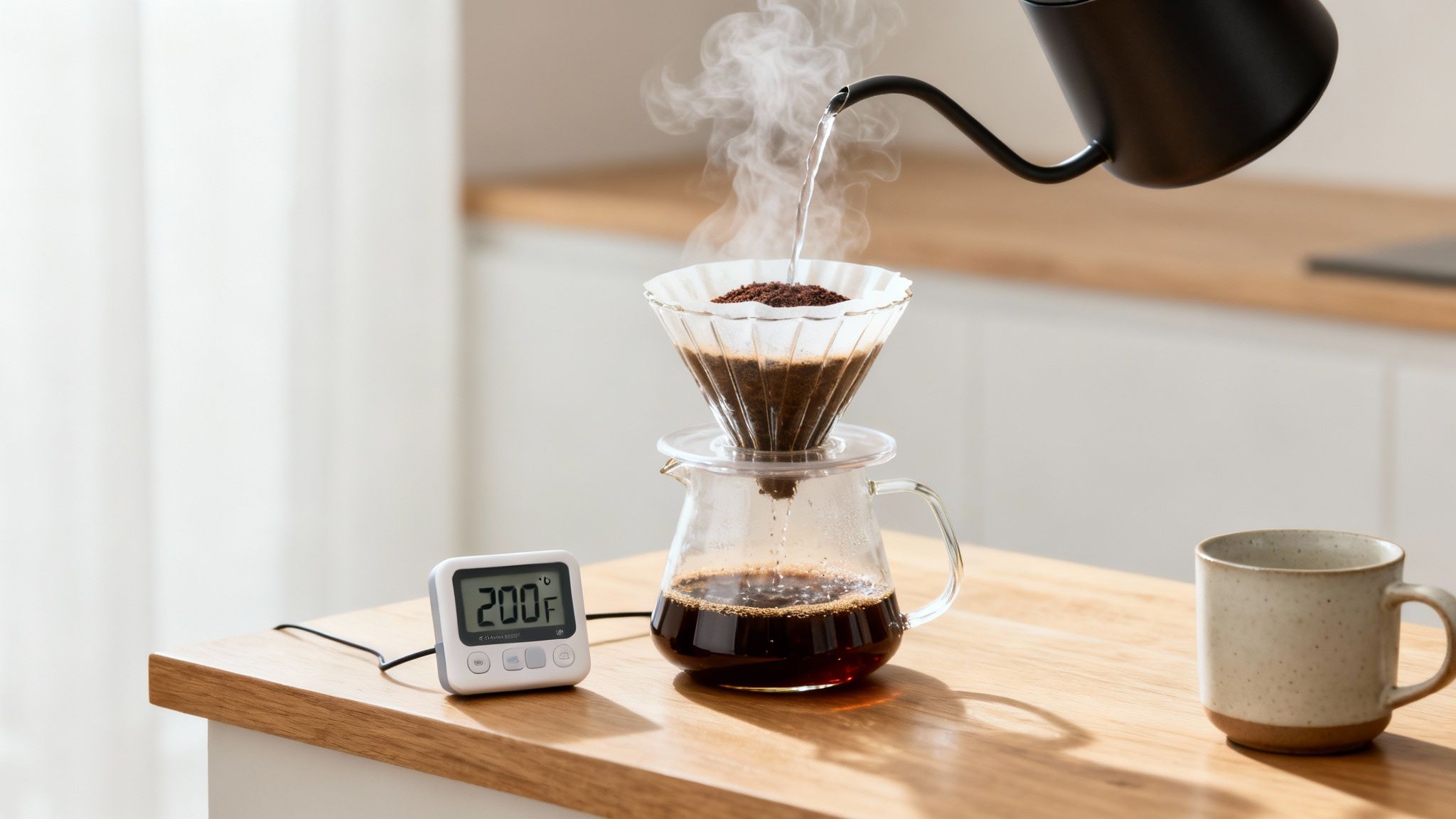
Think of water temperature as the main dial controlling flavor extraction. Your goal is to dissolve the right stuff—the sugars, oils, and acids that create a balanced, aromatic cup. When you brew within that 195°F to 205°F window, you set yourself up for success every time.
This isn't just coffee lore, either. It’s a standard backed by decades of expertise and championed by organizations like the Specialty Coffee Association (SCA). The science is pretty straightforward: at these temperatures, water has the perfect amount of thermal energy to efficiently extract desirable compounds while leaving the less desirable, bitter ones behind. Choosing the right beans is just as important—explore our coffee collections and make a purchase that will elevate your home brewing.
Why This Temperature Range Works
The chemistry of coffee extraction is all about solubility. Some flavor compounds dissolve easily, while others need a bit more coaxing. Temperature is what provides that coaxing.
-
Too Cold (Below 195°F): Water just doesn't have enough energy to get the job done. It will pull out the sour-tasting acids but leave most of the sugars and deeper flavors behind. The result is under-extraction—a cup that tastes weak, grassy, and disappointingly sour.
-
Too Hot (Above 205°F): Water becomes too aggressive. It rips everything out of the grounds, including harsh, bitter-tasting compounds that are meant to stay put. This is over-extraction, and it leads to an astringent, hollow, and often burnt-tasting brew.
-
Just Right (195°F-205°F): This is the sweet spot. The water is hot enough to dissolve all the good stuff—the bright fruit notes, the sweet caramels, the rich chocolates—creating a balanced, vibrant, and complete flavor profile.
"The difference between a good cup and a great cup often comes down to just a few degrees. Controlling your water temperature is one of the most impactful changes a home barista can make."
To help visualize this, here's a quick cheat sheet for how temperature affects your final cup.
Quick Guide to Coffee Brewing Temperatures
| Temperature Range | Flavor Profile | Extraction Level |
|---|---|---|
| Below 195°F | Sour, weak, underdeveloped, sometimes grassy. | Under-extracted |
| 195°F - 205°F | Balanced, sweet, aromatic, and complex. | Ideal |
| Above 205°F | Bitter, harsh, astringent, and often burnt. | Over-extracted |
This table makes it clear why staying in that "golden zone" is so crucial for achieving a delicious, well-rounded brew.
Putting It Into Practice
You don't need a science lab to get this right. If you have a variable-temperature kettle, just dial in your target. If not, the old-school "off-the-boil" method works wonders.
Simply bring your water to a full boil, take it off the heat, and let it sit for about 30 to 60 seconds. That brief pause is usually all it takes to land your water right in the 195°F to 205°F zone.
Understanding this core principle is the foundation for everything else. While this range is your go-to starting point, you’ll eventually learn to tweak it for different brew methods and beans. For a closer look at how temperature plays into different techniques, check out our guide on the best way to brew coffee. From there, you can start experimenting to unlock the perfect flavor from every bag you bring home.
How Temperature Unlocks Your Coffee's Flavor
Ever wonder why temperature is such a big deal in coffee? Let’s break down the chemistry happening inside your brewer.
Think of it like toasting a marshmallow. With just the right amount of heat, you get that perfect golden-brown, gooey, sweet result. Too little heat, and the inside stays raw. Blast it with too much, and you're left with a bitter, charred mess.
Coffee extraction works the same way. The temperature of your water provides the energy needed to pull all those amazing flavor compounds out of the coffee grounds and into your cup. The goal is to find that sweet spot—a balanced extraction that showcases everything the bean has to offer without dredging up the nasty stuff.
Under-Extraction: The Sour and Weak Cup
When your water is too cool (think below 195°F), it just doesn't have enough oomph to dissolve all the good stuff. It’s like trying to melt a sugar cube in lukewarm water; it’s a slow, inefficient process.
This leads to under-extraction. The first flavors to dissolve are always the bright, fruity acids. While those are fantastic, they need to be balanced by the sugars and deeper flavors that come later in the extraction. If the water isn't hot enough, the process stalls out, leaving you with a cup that tastes pretty disappointing:
- Sour or overly acidic.
- Weak and thin, with no real body.
- Sometimes even a little salty or grassy.
If your coffee tastes thin and makes you pucker, chances are your water was too cold. You’ve only scratched the surface of what that coffee could be.
Over-Extraction: The Bitter and Harsh Cup
On the flip side, water that’s too hot (above 205°F) is just plain aggressive. It slams into the coffee grounds and rips out everything it can find, including the compounds you'd much rather leave behind.
This is called over-extraction, and it’s the usual suspect behind harsh, unpleasant coffee. Once all the acids and sugars have been pulled out, the last things to dissolve are heavy, bitter-tasting compounds. Boiling or near-boiling water extracts these in droves, resulting in a brew that is:
- Bitter and astringent, making your tongue feel dry.
- Hollow or empty, because the delicate flavors have been scorched away.
- Often just described as tasting burnt.
That lingering bitter aftertaste is the classic sign of over-extraction. All the nuance has been stripped away by the intense heat, leaving only the harsh notes.
The Sequence of Flavor Extraction
If you can understand the order flavors are extracted, you can diagnose your brew just by tasting it. It’s a predictable journey that gives you the power to make smart adjustments.
- First come the acids. These are the bright, zesty, and fruity notes that make coffee so vibrant. Think citrus, berries, and floral aromas.
- Next are the sugars. This is where the sweetness and balance come from. We're talking caramel, chocolate, and nutty flavors that give the coffee its body and depth.
- Last are the bitters. In small amounts, these heavier compounds provide a bit of structure. But they quickly become overpowering and unpleasant if you extract too much.
The perfect brew captures the acids and the sugars in beautiful harmony, stopping just before the bitters take over. This is the magic that happens within the 195°F to 205°F range.
Nailing this balance allows you to truly taste the unique character of different beans. You can highlight the delicate florals of an Ethiopian Yirgacheffe or the deep, chocolaty body of a Mexican single-origin, just like the roaster intended. To go deeper on how origin shapes flavor, check out our guide to the famous coffee growing regions and their distinct taste profiles. This knowledge, combined with your control over temperature, is your ticket to a whole new world of coffee.
Matching Your Temperature to Your Brew Method
That golden 195°F to 205°F range? Think of it as your starting line, not the finish line. The perfect water temperature isn't a single magic number; it shifts depending on how you're brewing your coffee.
It’s a bit like cooking. A quick sear on a hot pan is totally different from a slow roast in the oven, but both use heat to create incredible results. The same logic applies to coffee.
Each brewing style has its own unique dance of time and contact between water and coffee grounds. To coax out the best possible flavor, you need to dial in your temperature for your specific brewer. This is where you graduate from making good coffee to making truly unforgettable coffee.
Recommended Brewing Temperatures by Method
To make things easier, here’s a quick-reference table. It gives you a solid starting point for the most popular home brewing methods, along with grind size suggestions and coffees that really shine with each technique. Click the links to purchase your ideal coffee today.
| Brewing Method | Recommended Temp (°F/°C) | Grind Size | Recommended Coffee |
|---|---|---|---|
| Pour-Over/Drip | 200-205°F / 93-96°C | Medium-Fine | Our bright single-origin Ethiopian coffee. |
| French Press | 195°F / 90.5°C | Coarse | Our rich and bold dark roast blend. |
| AeroPress | 175-203°F / 80-95°C | Fine to Medium | The balanced and versatile Mexican coffee. |
| Cold Brew | Room Temp / Cold | Extra Coarse | Our smooth Peruvian coffee. |
These are just starting points, of course. Feel free to tweak them based on your taste and the specific beans you're using. Now, let's break down the "why" behind these numbers.
Pour-Over and Drip Coffee Temperature
For pour-overs and automatic drip machines, the water passes through the grounds pretty quickly. This method highlights the bright, delicate notes of a coffee. To get a full extraction in that short amount of time, you need more energy—and that means hotter water.
Aim for a temperature between 200°F and 205°F.
This hotter temp works fast, dissolving all the delicious sugars and complex flavor compounds before the brew cycle is over. Go too cool, and you risk a weak, sour, or "undeveloped" cup. This is especially important for delicate single-origin coffees where you want every nuanced, floral note to pop. We recommend our single-origin Ethiopian coffee for an exceptional pour-over experience.
French Press and Full Immersion Temperature
Full immersion methods like the French press are a completely different ballgame. Here, the coffee grounds hang out in the water for several minutes (usually four or more), giving them plenty of time to extract. This method is known for creating a rich, full-bodied cup with a satisfying mouthfeel.
Because of this long steep time, you can dial the temperature back a bit to avoid pulling out too much. A great starting point for a French press is right around 195°F.
This slightly cooler water is gentler, allowing flavors to extract slowly and evenly. It helps you dodge those harsh, bitter compounds that can make a French press taste muddy, leaving you with a rich, full-bodied brew that's smooth from start to finish. Our dark roast blend is the perfect choice for this method.
This infographic is a fantastic visual for understanding how temperature, time, and grind size all work together to shape your final cup.
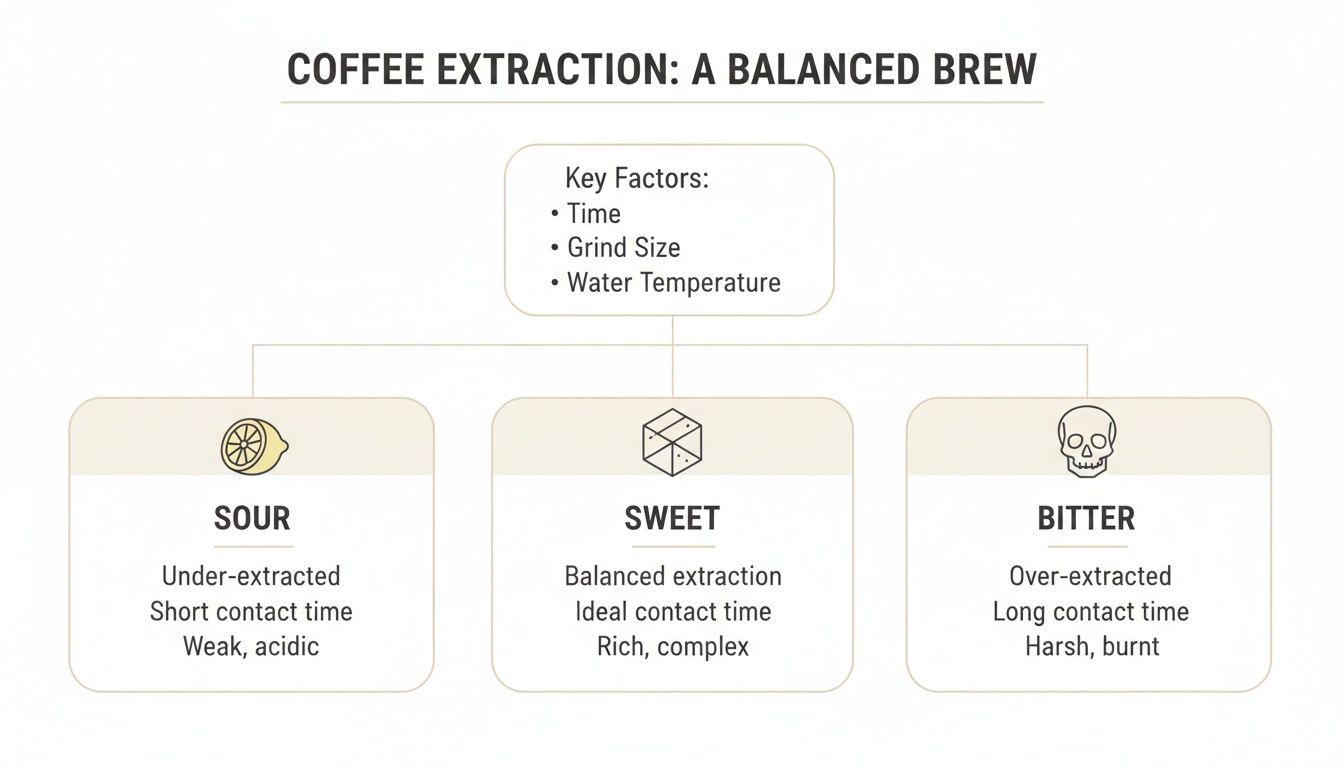
Think of it as a troubleshooting map. If your coffee tastes sour, you might be under-extracting. If it's bitter, you're likely over-extracting.
AeroPress: A Unique and Versatile Brewer
Ah, the AeroPress. This brewer is a true hybrid, blending immersion with pressure, which gives you an incredible amount of control. Because you can play with every variable from steep time to plunge speed, the ideal water temperature is all over the map.
- For quick, espresso-like shots that you brew in under a minute, hotter water around 203°F works beautifully.
- For longer, inverted immersion brews, you can drop the temperature as low as 175°F to get a uniquely smooth and sweet cup that’s impossible with other methods.
This massive flexibility is why so many coffee lovers are obsessed with the AeroPress. You can learn more about its place in the coffee world in our guide to the different types of coffee brewing methods.
The Outlier: Cold Brew
And then there's the one method that tosses all these rules right out the window: cold brew.
Instead of heat, cold brew uses time—a lot of it. By steeping extra-coarse grounds in cold or room-temperature water for 12 to 24 hours, you get a super-smooth, low-acid coffee concentrate.
This gentle, marathon extraction process pulls out all the sweet, chocolatey flavors while leaving most of the bitter compounds and acids behind. The result is a clean, mellow concentrate perfect for pouring over ice or using in creative coffee cocktails.
How Coffee Roasts Influence Your Water Temperature
Not all coffee beans are created equal, and their journey through the roaster dramatically changes how they respond to hot water. The best water temperature for brewing coffee isn’t a single, magic number; it’s a moving target that you should adjust based on the roast level of your beans. Honestly, learning to make this simple tweak is one of the biggest leaps you can take toward brewing consistently amazing coffee at home.
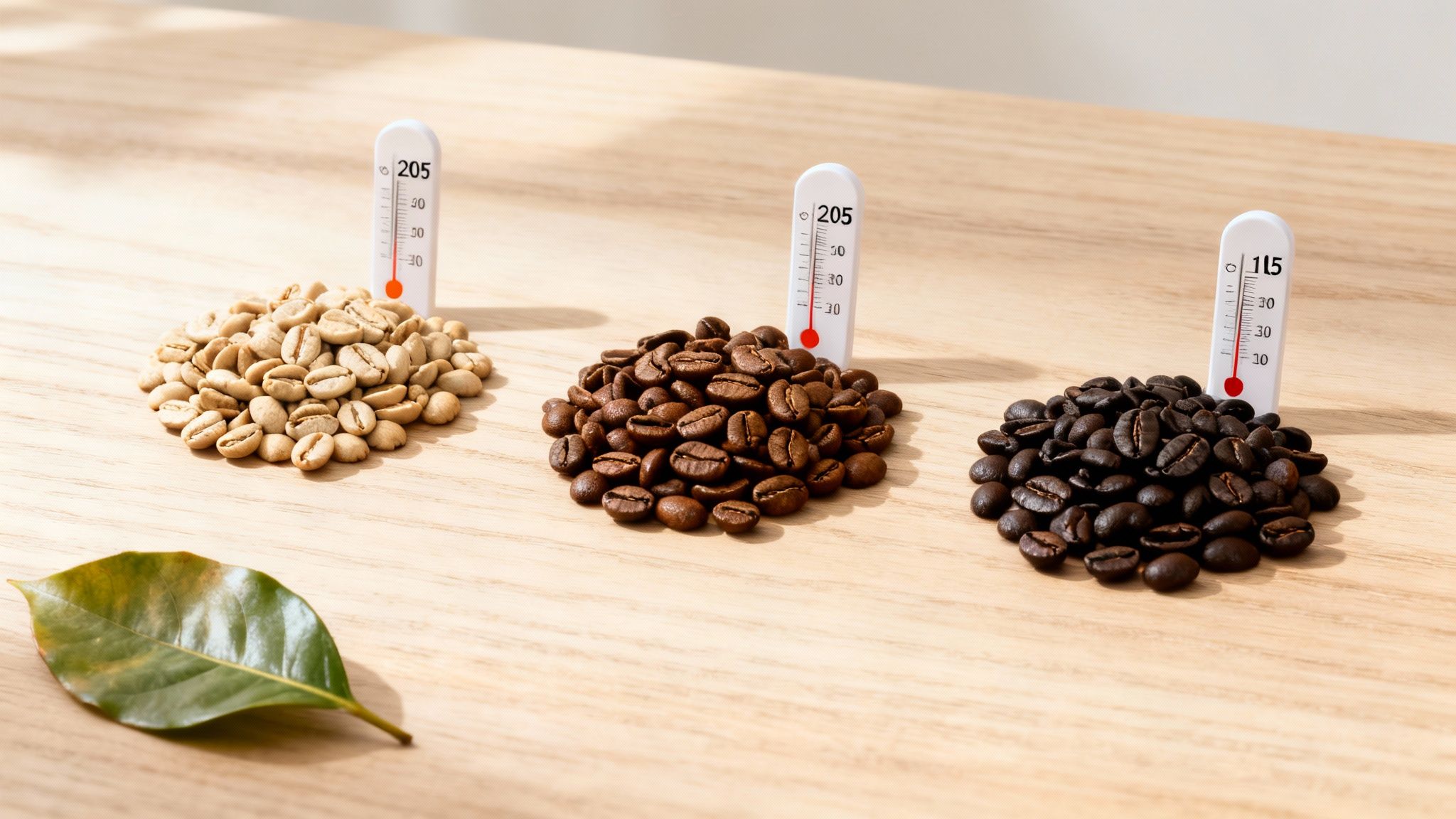
Think of the roast level as a preview of the bean's density and solubility. Lighter roasts are harder and less porous, holding onto their flavors tightly. Darker roasts, on the other hand, are more brittle and practically bursting to give up their flavor. This physical difference is exactly why you can’t use the same water temperature for every bag of coffee and expect great results.
Brewing Light Roasts Hotter
Lightly roasted coffees are celebrated for their complex, bright, and often floral or fruity notes. Because these beans spent less time in the roaster, they are physically denser and less soluble than their darker cousins. All those delicate, nuanced flavors are locked up tight.
To coax them out, you need more energy—and in brewing, that means hotter water.
- Recommended Temperature: Go for the high end of the scale, somewhere around 203-205°F (95-96°C).
- Why It Works: This hotter water has the power needed to get inside the dense bean structure and pull out those bright acids and subtle sugars.
- What to Avoid: Using cooler water on a light roast is a recipe for disappointment. You’ll almost always get a sour, under-extracted cup that tastes weak and a bit like grass.
For a perfect example, try brewing our single-origin Ethiopian coffee with water just a few seconds off the boil. You'll be blown away by how that higher temperature makes its vibrant, berry-like notes sing. Click here to purchase a bag and try it for yourself!
Brewing Dark Roasts Cooler
Dark roast beans have gone through a much more intense transformation in the roaster. This process makes them more porous, brittle, and highly soluble. All those bold, roasty, chocolatey flavors are sitting right on the surface, ready to be extracted with very little convincing.
This sensitivity makes them incredibly vulnerable to high temperatures. Hit them with water that’s too hot, and you’ll instantly scorch the grounds, pulling out harsh, bitter compounds that will ruin your cup.
The secret to a phenomenal dark roast is a gentle extraction. By lowering your water temperature, you can tame its intensity and pull out a smooth, rich, and deeply sweet flavor profile without the ashy bitterness.
Here’s how you can dial it in:
- Recommended Temperature: Start on the cooler side of the spectrum, around 195-198°F (90.5-92°C).
- Why It Works: Cooler water provides a much gentler extraction, dissolving those rich, deep flavors without grabbing the astringent, burnt-tasting compounds.
- What to Avoid: Water at 205°F or above will almost certainly give you a bitter, hollow-tasting cup of coffee.
To taste this in action, brew our bestselling dark roast blend with cooler water. You'll get all that bold, smoky character you love, but with a surprising smoothness that’s just so satisfying. We encourage you to click the link and make a purchase today.
And for Everything in Between
As you’ve probably guessed, medium roasts are the happy middle ground. They tend to be well-balanced and quite forgiving, which makes them a fantastic starting point for any home barista.
A temperature around 200°F (93°C) is usually the sweet spot. It provides enough heat to extract those balanced notes of caramel and nuts without much risk of things going bitter.
Just remember, these are powerful guidelines, not unbreakable laws. Your grind size also plays a huge role in extraction. For a deeper dive, our article on whole bean vs. ground coffee explains how grind consistency and temperature work together to shape your final cup. By learning to adjust both, you gain complete control over your brew.
Challenging the Golden Rule with Modern Science
For decades, the coffee world clung to the 195°F to 205°F range like it was gospel. It was the "golden rule," an unbreakable law for a great brew. But what if you don't own a fancy temperature-control kettle? Does that mean a delicious cup is out of reach?
Not at all. In fact, some exciting new research is showing that your consistency might be far more important than hitting a single, magical number on the thermometer. This is fantastic news because it makes specialty coffee so much more approachable. It’s less of a strict rule and more of a really good starting point for your own delicious experiments.
The Science of Flexibility
So what does this mean for your morning routine? It means you have more control than you think. If your water comes off the boil and lands a little cooler than "ideal," you're not doomed to a sour, under-extracted cup. You just need to pull a different lever.
Think of brewing as a balancing act. Temperature is a big part of it, but it's not the only part. By focusing on a consistent technique and learning how to make small adjustments, you can brew coffee that rivals your favorite cafe, no expensive gear required.
"Modern coffee science is showing us that great extraction is a balancing act. Temperature is just one of several levers you can pull to achieve a sweet, balanced, and delicious cup of coffee."
This is liberating. Instead of stressing over a single degree, you can start mastering the beautiful interplay between all the variables at your disposal.
How to Adjust Your Brew at Home
Let's get practical. Say your kettle clicks off and the water is on the cooler side—maybe around 188-190°F. Old wisdom says this leads straight to a weak, sour brew. But we can easily counteract that.
You just need to give the cooler water a little help extracting all those delicious flavors from the beans. Here are two simple ways to do that:
- Grind a little finer. A finer grind creates more surface area, giving the water more to work with. This helps it extract flavor more efficiently, even at a lower temp.
- Extend your brew time. For a pour-over or French press, just let the coffee and water hang out together a bit longer. This extra contact time gives the cooler water the chance it needs to do its job properly.
This isn't just a hunch; it's backed by some fascinating science. A groundbreaking 2020 study from the UC Davis Coffee Center put this exact idea to the test. Researchers brewed coffee at a range of temperatures, even going as low as 87°C (188°F). The key? They adjusted other variables, like grind size, to keep the final extraction level the same across all the brews.
The result was stunning. Even professionally trained coffee tasters couldn't distinguish between the cups. This study really shook up the industry's rigid temperature standards. You can read more about these surprising findings and see what it means for brewing at home.
Ready to try it yourself? Grab a bag of our versatile Peruvian coffee and brew it a few degrees cooler than you normally would, but grind it just a touch finer. You’ll be amazed at the balanced, delicious cup you can create. This kind of hands-on experimentation is what makes the journey into coffee so much fun. Be sure to click the link and make a purchase to start your coffee adventure.
Turn Your Brew into Cafe-Quality Drinks
You’ve just nailed the perfect water temperature and brewed a fantastic cup of coffee. That’s your foundation. Now, let’s explore the world of classic coffee drinks you can make at home, from a bold Americano to a creamy latte. With the right coffee base, you can craft beverages that rival your favorite cafe.
Exploring Popular Coffee Drinks
- Americano: A simple yet elegant drink made by adding hot water to a shot of espresso. The key is a well-extracted espresso that offers a full, rich flavor without bitterness.
- Latte: A creamy classic made with a shot of espresso and steamed milk, topped with a thin layer of foam. The milk's sweetness perfectly complements a bold espresso. You can use whole, skim, oat, almond, or soy milk depending on your preference.
- Macchiato: An espresso "marked" with a small dollop of foamed milk. It’s for those who love the intense flavor of espresso with just a hint of creaminess.
- Mocha: A decadent mix of espresso, steamed milk, and chocolate syrup, often topped with whipped cream. It's the perfect coffee dessert.
- Frappe: A blended iced coffee drink, typically made with instant coffee, sugar, water, and milk. It's whipped into a frothy, refreshing treat.
- Breve: A rich and creamy drink made with a shot of espresso and steamed half-and-half instead of milk.
- Affogato: A simple Italian dessert where a scoop of vanilla ice cream or gelato is "drowned" in a shot of hot espresso.
Crafting the Classics at Home
Time to put your new brewing skills to the test. Different coffee drinks come alive with different types of coffee, so we recommend the following pairings. We encourage you to click the links and make a purchase of the coffee of your choice.
-
The Perfect Latte or Cappuccino: For these milky classics, you need a coffee that’s bold enough to cut through the richness. We love using our Espresso Blend for its deep, chocolatey notes that stand up beautifully to steamed milk, whether you prefer dairy, oat, or almond.
-
A Rich and Decadent Mocha: A good mocha is all about that perfect balance between sweet chocolate and complex coffee. The nutty, caramel tones in our single-origin Peruvian coffee lay down an incredibly smooth and luxurious foundation for this timeless treat.
-
The Bold and Simple Americano: The beauty of an Americano lies in its simplicity—just espresso and hot water. Because there’s nowhere for a bad coffee to hide, you need a bean with a clean, vibrant profile. Our balanced Mexican coffee creates a full-bodied, satisfying cup every time.
Complete Your Home Coffee Bar
Making your favorite drinks is about more than just the coffee itself; it’s about the whole ritual. Pouring that perfectly crafted latte into a mug you love just makes the whole experience feel complete. And for tea lovers, we also offer the best loose leaf tea online.
The final step in elevating your home coffee is enjoying it from a cup that feels as good as the coffee tastes. It connects the craft of brewing with the comfort of that first sip.
Check out our collection of branded ceramic coffee mugs to find the perfect partner for your homemade creations. While you're there, you can explore our full range of stylish branded shirts and hats for anyone who really loves coffee culture.
Ready to start experimenting? Grab a bag of your favorite beans and see just how much a perfectly brewed base can elevate your go-to recipes. And don't forget to sign up for our e-mail list to get a 10% discount on your first order.
Your Top Questions About Coffee Water Temperature, Answered
Alright, let's get practical. You've got the theory down, but what does this all mean when you're standing in your kitchen at 7 a.m.? Here are some quick answers to the most common questions that come up when you're trying to nail your brew.
Does Boiling Water Ruin Coffee?
In a word, yes. Pouring water that's at a roaring boil (212°F or 100°C) right onto your coffee grounds is a recipe for a bad time. That extreme heat shocks the coffee, scorching it and yanking out all the harsh, bitter compounds first. The result is a cup that tastes astringent and hollow.
The fix is incredibly simple: let your kettle sit for 30 to 60 seconds after it boils. That short pause is all it takes for the water to settle into that sweet spot of 195-205°F, leading to a much more balanced and pleasant extraction.
What If I Don’t Have a Fancy Temperature-Control Kettle?
No problem at all! You don't need expensive gear to make great coffee. The classic "off-the-boil" method works like a charm.
Just bring your water to a full boil, take it off the heat, and wait about 45 seconds. This little trick naturally drops the temperature right into that ideal brewing window. If you want a bit more accuracy without breaking the bank, a simple digital kitchen thermometer is a fantastic and affordable tool to add to your coffee kit.
Should I Use Different Temperatures for Iced Coffee?
It really depends on how you're making it.
-
For a "flash brew" (sometimes called Japanese-style iced coffee), you're brewing hot directly over ice. You'll want to use that same 195-205°F water to make sure you're properly extracting all those delicious, complex flavors before they get flash-chilled.
-
For a traditional cold brew, you're swapping heat for time. Here, you'll use cool or room-temperature water and let the coffee steep for anywhere from 12 to 24 hours. It’s this long, slow dance that creates that signature ultra-smooth, low-acid concentrate.
How Does Altitude Affect My Brewing Temperature?
This is a fantastic and often-overlooked question! Altitude dramatically changes the boiling point of water. At sea level, water boils at a familiar 212°F. But if you're up at 5,000 feet, it boils at around 203°F.
What does this mean for you? If you live at a high altitude, your "boiling" water might already be in the perfect brewing range! You might not need to wait at all before pouring. It's a fun little quirk of physics that can simplify your morning routine.
Ready to put this knowledge to the test and find your new favorite brew? At Beans Without Borders, we source exceptional single-origin beans and craft unique blends perfect for any brewing method. Explore our collection and taste the difference that fresh, high-quality coffee makes. Shop our full coffee selection today!