

10 Types of Coffee Brewing Methods to Master in 2026
The journey from a humble coffee bean to the perfect cup is an art form, and the brewing method you choose is your paintbrush. Each technique unlocks a different spectrum of flavors, aromas, and textures, transforming the same high-quality bean into a completely unique experience. Whether you crave the clean, nuanced notes of a Pour Over or the bold, rich body of a French Press, understanding the various types of coffee brewing methods is the first step toward crafting your perfect cup.
This guide explores the most popular ways to brew coffee, including immersion methods like the French Press and percolation methods like Drip and Pour Over. We'll dive into the unique characteristics of beans from the world's best growing regions and recommend the perfect coffee for every brewing style and coffee drink. We'll even explore classic espresso-based drinks like Lattes, Americanos, and Macchiatos, and how to craft them at home. Your journey from coffee enthusiast to home barista starts now.
Ready to find the perfect coffee for your favorite brewing method? We encourage you to explore our single-origin coffees and make a purchase today. While you're here, check out our collection of branded shirts, t-shirts, hats, hoodies and ceramic coffee mugs to show off your love for coffee culture. For exclusive deals and brewing tips, be sure to sign up for our e-mail list!
1. Pour Over (V60, Chemex, Melitta)
Pour Over is one of the most celebrated types of coffee brewing methods, prized for its ability to produce a clean, clear, and nuanced cup. This manual percolation method involves pouring a steady stream of hot water over a bed of coffee grounds held in a filter-lined dripper. As water passes through the grounds, it extracts soluble flavors, resulting in a brew that highlights the delicate and complex notes of high-quality, single-origin beans. This hands-on method gives you complete control over every variable, making it a favorite in third-wave coffee culture.
The resulting coffee has a light body and vibrant clarity, free of sediment, allowing bright, floral, and fruity notes to shine. It's the perfect method for appreciating the unique terroir of different coffee growing regions.
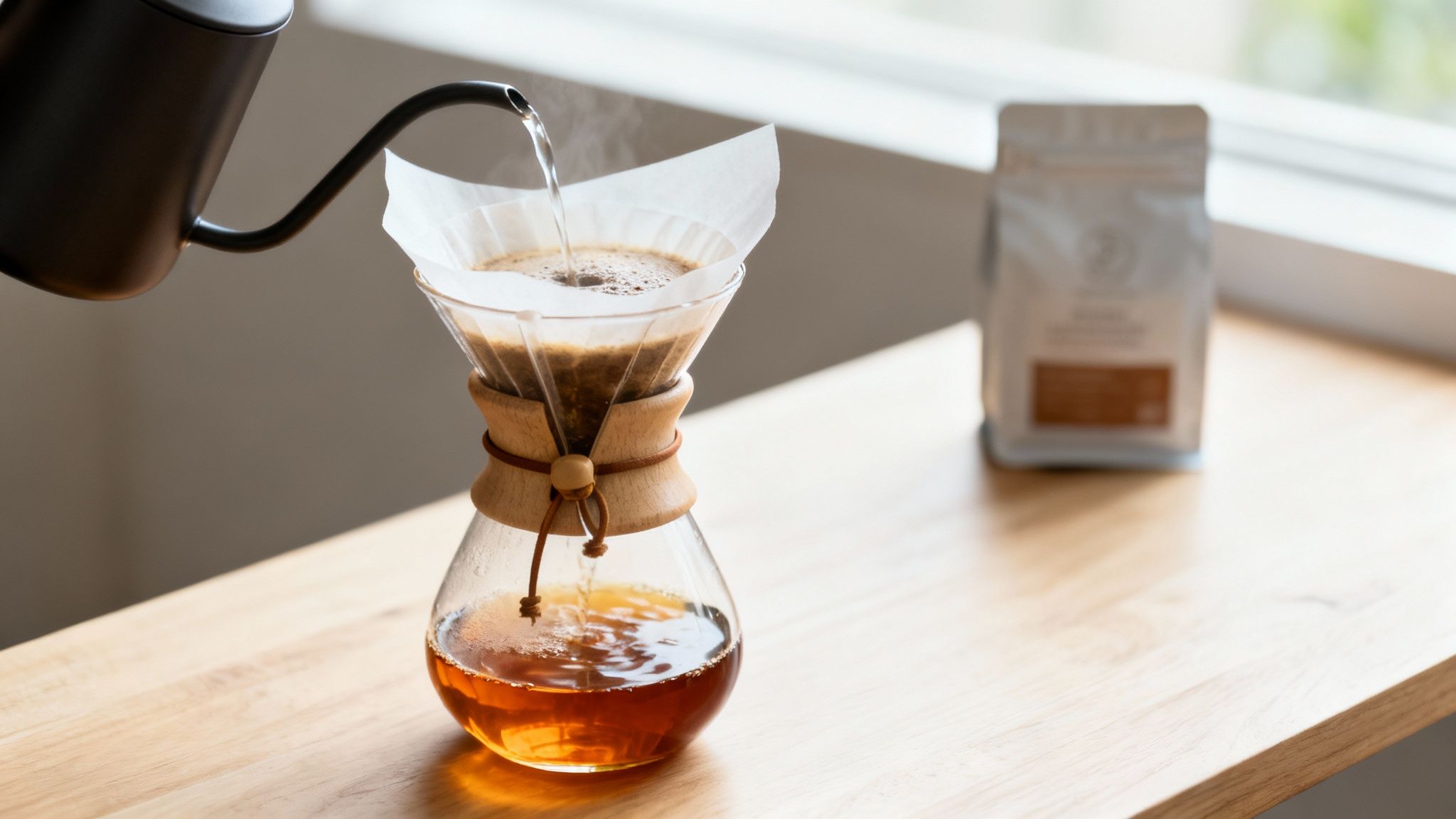
Why Choose Pour Over?
Pour Over is ideal for coffee lovers who enjoy the ritual of brewing and want to taste the subtle distinctions between different coffee origins. Its clean flavor profile, free of sediment, allows the bright, floral, and fruity notes of beans to shine. If you appreciate the art and science behind a perfect cup, this method is for you.
Quick Guide to Pour Over Brewing
- Grind Size: Medium-fine, similar to table salt.
- Brew Ratio: A common starting point is 1:16 (1 gram of coffee to 16 grams of water).
- Water Temperature: Optimal extraction occurs between 195–205°F (90–96°C).
- Brew Time: Typically 2-4 minutes, depending on the brewer and batch size.
Coffee Growing Regions & Recommendations
- Latin America (e.g., Mexico, Costa Rica): Coffees from this region are known for their crisp acidity and notes of brown sugar, chocolate, and nuts. Our Mexico Single-Origin is a perfect choice for a balanced and sweet pour over.
- Africa (e.g., Ethiopia, Kenya): African coffees are celebrated for their vibrant, complex flavors with bright acidity and fruity or floral notes. To experience this, try our Ethiopia Single-Origin to highlight its bright, floral, and citrusy notes. Click the link and make a purchase to taste the difference.
- Asia/Pacific (e.g., Sumatra, Papua New Guinea): These coffees are typically full-bodied with low acidity and earthy, spicy, or chocolatey notes.
Ready to dive deeper? Check out our complete guide for a step-by-step walkthrough of how to make perfect pour over coffee.
2. French Press (Immersion Brewing)
The French press is a classic among types of coffee brewing methods, celebrated for its simplicity and the rich, full-bodied cup it produces. This is a full immersion method, where coarse coffee grounds steep directly in hot water for several minutes. A fine metal mesh filter is then pressed down, separating the grounds from the liquid. This process leaves behind the coffee’s natural oils and fine sediment that paper filters remove, resulting in a robust, velvety brew with a heavy mouthfeel and deep, rich flavors.
Its forgiving nature makes it an excellent starting point for beginners, while its ability to extract a coffee's inherent richness appeals to seasoned brewers who enjoy a hearty, unfiltered taste profile.
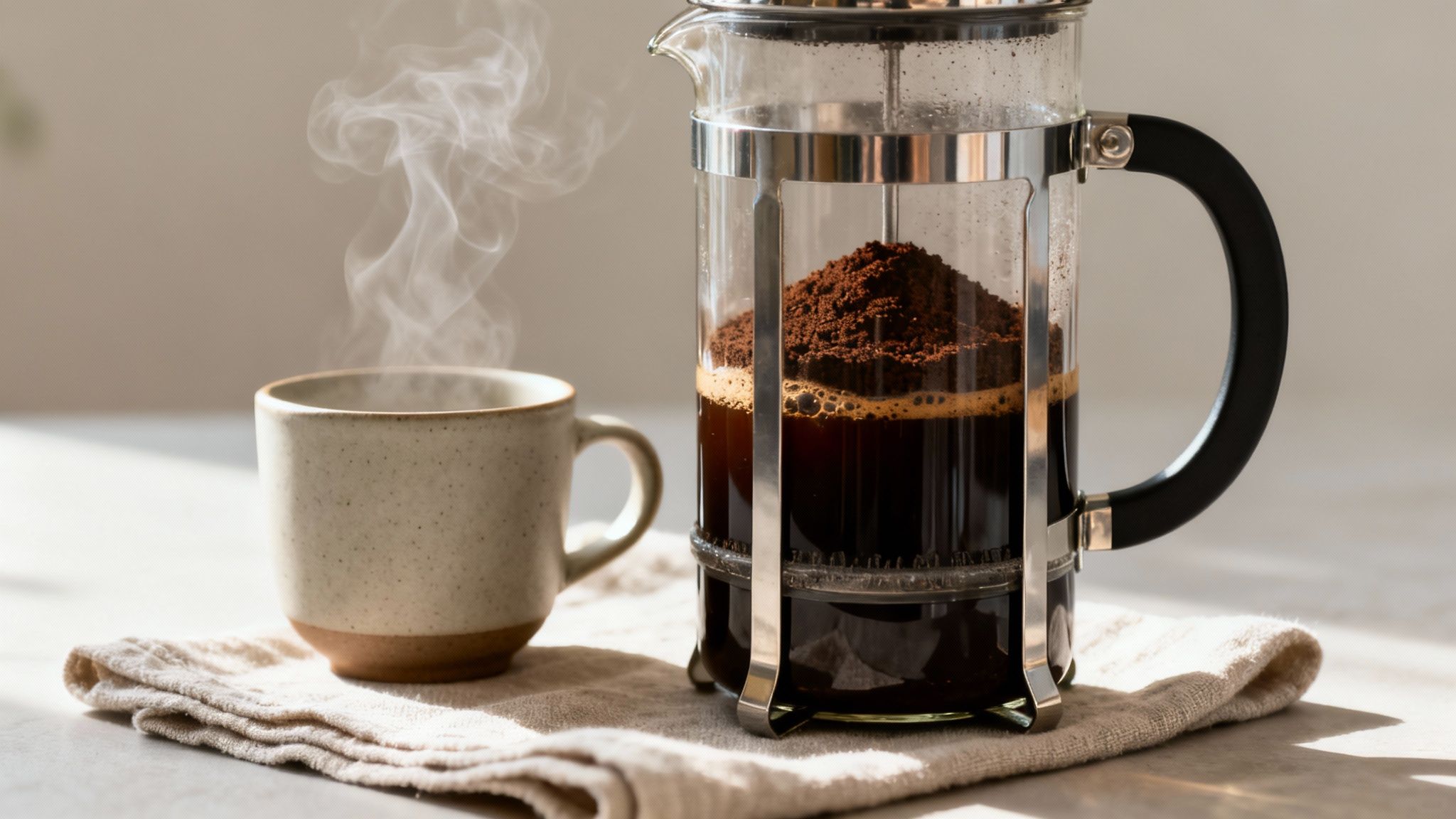
Why Choose French Press?
The French press is perfect for those who crave a strong, bold, and textured cup of coffee. Because it doesn't use a paper filter, more of the coffee's natural oils and microscopic solids remain in the final brew, creating a full-bodied experience. If you enjoy a simple, hands-off brewing process that consistently delivers a potent and flavorful cup, the French press is an ideal choice.
Quick Guide to French Press Brewing
- Grind Size: Coarse, similar to breadcrumbs or sea salt.
- Brew Ratio: A standard starting point is 1:15 (1 gram of coffee to 15 grams of water).
- Water Temperature: Use water just off the boil, around 195–205°F (90–96°C).
- Brew Time: Steep for exactly 4 minutes for a balanced extraction.
Coffee Growing Regions & Recommendations
The French press excels with medium to dark roasts that have bold, rich flavors.
- Latin America (e.g., Brazil, Colombia): These beans offer classic nutty, chocolatey, and caramel notes that create a decadent French press. Our Brazil Single-Origin is a fantastic choice for a smooth, satisfying cup.
- Asia/Pacific (e.g., Sumatra): For a truly rich and earthy brew, coffees from this region are unmatched. Our Sumatra coffee delivers a full-bodied character that is perfect for this method. Make a purchase today and experience this bold flavor.
Explore more tips and find out why this method is considered by many to be the best way to brew coffee.
3. Drip Coffee Maker (Automatic Filter)
The automatic Drip Coffee Maker is arguably the most common and accessible of all coffee brewing methods, a staple in homes and offices. This is a percolation method where the machine automates the process: it heats water and dispenses it over a bed of coffee grounds in a filter basket. Gravity then pulls the brewed coffee down into a carafe. It’s designed for convenience and brewing larger batches, making it perfect for serving multiple people or fueling a busy morning.
From the classic Mr. Coffee to modern high-end brewers, automatic drip machines offer a consistent and familiar cup with set-and-forget simplicity.
Why Choose a Drip Coffee Maker?
This method is ideal for anyone who values convenience, consistency, and the ability to brew multiple cups at once. If you want a reliable, no-fuss way to make a great pot of coffee to share or to enjoy throughout the morning, the automatic drip machine is a perfect choice. Its programmable features mean you can wake up to the aroma of freshly brewed coffee.
Quick Guide to Drip Coffee Brewing
- Grind Size: Medium, resembling coarse sand.
- Brew Ratio: A standard starting point is 1:17 (1 gram of coffee to 17 grams of water), or about two tablespoons per 6 oz cup.
- Water Temperature: Most machines are pre-set, but higher-end models aim for the ideal 195–205°F (90–96°C) range.
- Brew Time: Typically 4-6 minutes, depending on the machine and batch size.
Coffee Growing Regions & Recommendations
Drip coffee makers are versatile and work well with a variety of beans, especially balanced and smooth profiles.
- Latin America (e.g., Peru, Mexico): These coffees are crowd-pleasers with notes of nuts, chocolate, and mild fruitiness. Our Mexico Single-Origin is a perfect daily driver for your drip machine.
- Blends: Our Beans Without Borders House Blend is specifically crafted to deliver a consistently smooth, balanced, and full-bodied cup, making it a perfect choice for any drip coffee maker. We encourage you to click the link and purchase a bag today.
4. Espresso Machine (Pressure-Based)
The Espresso Machine is a titan among the types of coffee brewing methods, using intense pressure to create a concentrated and powerful coffee shot. This method involves forcing hot water, typically around 200°F (93°C), through a tightly packed "puck" of finely-ground coffee at 9 bars of pressure or more. The result is a small, viscous beverage with a complex flavor profile and a signature layer of rich, reddish-brown foam known as crema.
This iconic brewing style is the foundation for countless beloved café drinks like lattes, cappuccinos, and Americanos. Learning to pull a great shot of espresso at home is the gateway to becoming a true home barista.
Why Choose an Espresso Machine?
An espresso machine is for those who crave a rich, concentrated coffee experience and enjoy crafting café-style beverages at home. It’s perfect for exploring the bold, syrupy body of a coffee bean and serves as the ultimate base for milk-based drinks. If you love the intense flavor and velvety texture of a coffee shop shot, this method is for you.
Quick Guide to Espresso Brewing
- Grind Size: Fine, resembling powdered sugar with a slight grit.
- Brew Ratio: Typically 1:2 (18 grams of coffee to 36 grams of liquid espresso).
- Water Temperature: Optimal extraction occurs between 195–205°F (90–96°C).
- Brew Time: Aim for 25–30 seconds from the moment you start the pump.
Popular Espresso Drinks & Coffee Recommendations
Espresso is the heart of many coffee drinks. Here are a few favorites and the best beans for them:
- Espresso: A single or double shot served on its own. Our Brazil Single-Origin creates a classic, chocolatey shot.
- Americano: A shot of espresso diluted with hot water. A bright Colombia Single-Origin makes for a crisp and flavorful Americano.
- Latte: Espresso with a large amount of steamed milk and a small layer of foam. The milk can be whole, skim, oat, almond, or soy. A versatile coffee like our Mexico Single-Origin works beautifully.
- Macchiato: A shot of espresso "marked" with a dollop of milk foam. Use a bold coffee like our Espresso Roast.
- Mocha: A latte with chocolate syrup or cocoa powder added.
- Frappe: Espresso blended with ice, milk, and sweeteners.
- Breve: A latte made with steamed half-and-half instead of milk.
- Affogato: A scoop of vanilla ice cream drowned in a shot of hot espresso.
Ready to craft the perfect latte? Find your ideal espresso base in our shop today and start brewing.
5. AeroPress
The AeroPress is a uniquely versatile and innovative coffee brewing method, celebrated for its speed, durability, and exceptional cup quality. The process uses a combination of immersion and air pressure: coffee grounds steep briefly in hot water before being pushed through a filter by a plunger. This rapid, pressurized extraction creates a rich, full-bodied coffee concentrate that is remarkably smooth and low in acidity, often described as a hybrid between pour over and French press.
This compact, lightweight brewer has become a cult favorite among travelers, outdoor enthusiasts, and competitors in the World AeroPress Championship. Its simple design allows for endless experimentation, making it one of the most adaptable types of coffee brewing methods available.
Why Choose AeroPress?
The AeroPress is perfect for those who want a consistently delicious, clean, and full-flavored cup in under two minutes. Its portability and forgiving nature make it an excellent choice for brewing great coffee anywhere, from a hotel room to a mountaintop. If you enjoy experimenting and want a brewer that can produce everything from an espresso-style shot to a larger, cleaner cup, the AeroPress is for you.
Quick Guide to AeroPress Brewing
- Grind Size: Fine to medium-fine, similar to espresso or slightly coarser.
- Brew Ratio: A common starting point is 1:15 (1 gram of coffee to 15 grams of water).
- Water Temperature: Versatile, but 175–195°F (80–90°C) is a great range to start.
- Brew Time: Typically 1-3 minutes, including steeping and plunging.
Tips for the Perfect AeroPress
To get the most out of your AeroPress, experiment with both the standard and inverted brewing methods. Pre-wetting your paper filter (or using a reusable metal one) helps create a cleaner taste. Plunge slowly and steadily, aiming for about 20-30 seconds of pressure. Don’t press all the way through; stop when you hear a hissing sound to avoid extracting bitter flavors.
Pro-Tip: The AeroPress is fantastic for brewing on the go. Its small size and fast brew time make it the ultimate travel companion for coffee lovers.
The AeroPress’s versatility makes it ideal for exploring different origins. We highly recommend purchasing our Beans Without Borders Sampler Packs to discover how our single-origin coffees from Costa Rica and Colombia express their unique flavors with this dynamic brewer.
6. Turkish Coffee (Cezve/Ibrik)
Turkish coffee is one of the most ancient and culturally significant types of coffee brewing methods, offering an unfiltered, rich, and intensely flavorful experience. This traditional technique uses a special small pot, typically made of copper or brass, called a cezve (or ibrik). Ultra-finely ground coffee, almost like a powder, is combined with cold water and often sugar or spices like cardamom directly in the cezve. The mixture is then slowly heated until a thick foam forms, brought to a near-boil two or three times to build layers of flavor.
The resulting brew is a strong, thick, and aromatic coffee served in small demitasse cups. Recognized by UNESCO as an Intangible Cultural Heritage of Humanity, the Turkish coffee ceremony is a cherished ritual in Middle Eastern, North African, and Balkan cultures.
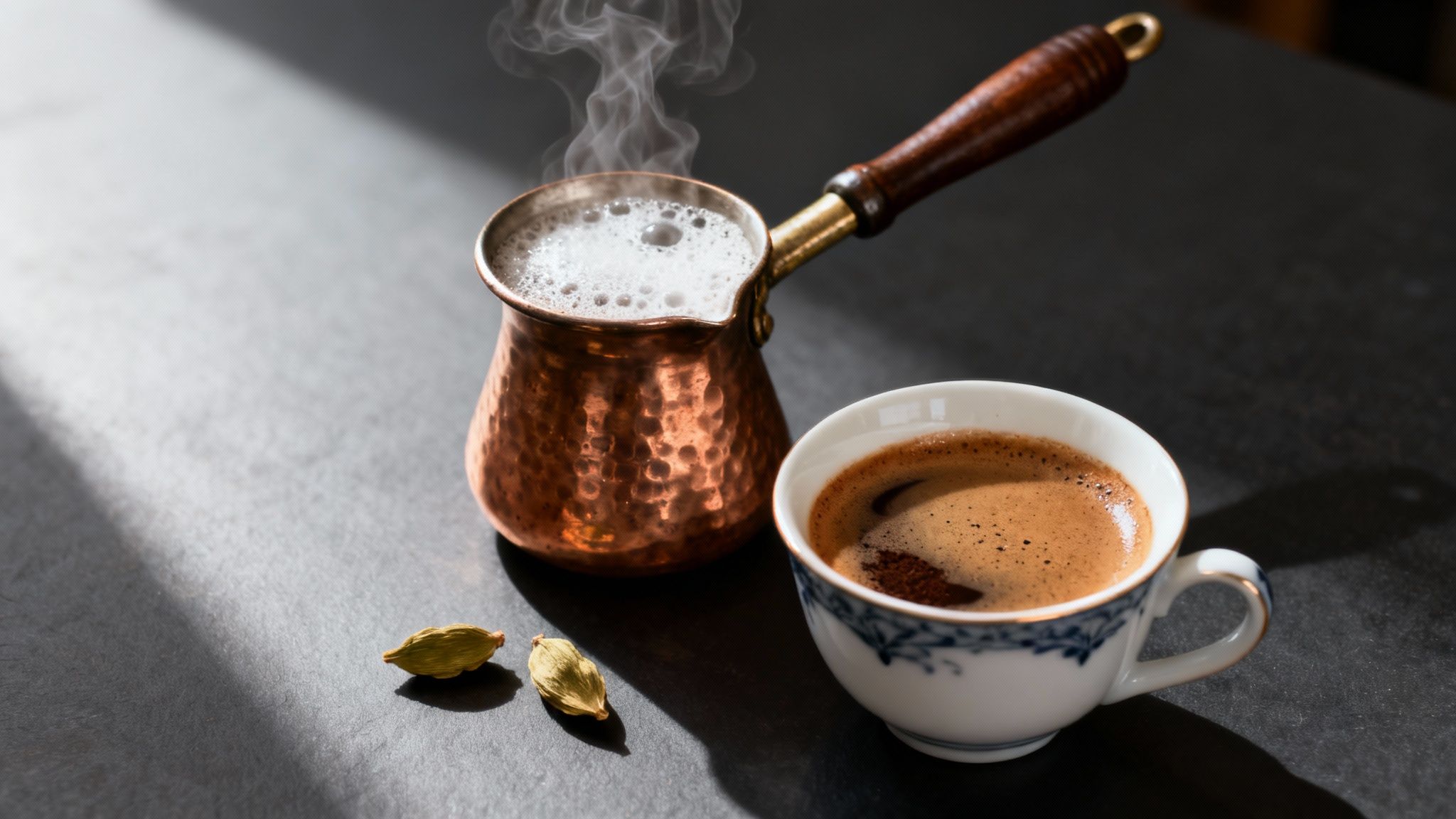
Why Choose Turkish Coffee?
Turkish coffee is for those who crave a potent, full-bodied brew and appreciate a deep connection to coffee history. This method produces a velvety, syrupy coffee with a robust flavor that is unlike any other. If you enjoy rich, unfiltered coffee and the ceremonial aspect of preparation, brewing in a cezve is an incredibly rewarding experience.
Quick Guide to Turkish Coffee Brewing
- Grind Size: Extra-fine, like powdered sugar. It should be the finest grind possible.
- Brew Ratio: Typically 1:9 (1 part coffee to 9 parts water), often using a demitasse cup for measurement.
- Water Temperature: Start with cold water and heat it slowly on a low flame.
- Brew Time: Approximately 2-3 minutes, watching carefully to manage the foam.
Tips for the Perfect Turkish Coffee
To achieve the signature foam, start by combining cold water, coffee, and sugar (if using) in the cezve and stirring until just combined. Heat slowly and watch intently as the foam begins to rise; remove the cezve from the heat just before it boils over. Repeat this process two or three times to build a rich crema. Serve immediately, allowing the grounds to settle at the bottom of the cup before drinking.
Pro-Tip: Never stir the coffee after it has been served. Let the grounds settle naturally to create a clean separation between the liquid and the sediment.
This method pairs beautifully with dark, rich beans. Try our Beans Without Borders' Sumatra Mandheling for its earthy, full-bodied profile, or our Espresso Roast for a bold, intense flavor that stands up to this powerful brewing style.
7. Moka Pot (Stovetop Espresso)
The Moka pot is one of the most iconic types of coffee brewing methods, celebrated for its ability to create a strong, concentrated, and rich brew right on your stovetop. This classic Italian brewer uses steam pressure to push hot water up from a bottom chamber, through a middle basket of coffee grounds, and into a top chamber where the final, espresso-like coffee collects. The result is a bold, full-bodied cup with a syrupy texture, capturing the essence of European coffee culture.
Invented by Alfonso Bialetti in 1933, the Moka pot brought the intensity of café espresso into the home, becoming a staple in countless Italian and European households. Its simple, durable design and reliable brewing process have made it a beloved and budget-friendly alternative to electric espresso machines.
Why Choose a Moka Pot?
The Moka pot is for those who love a strong, potent, and deeply flavorful cup of coffee that bridges the gap between drip coffee and true espresso. It's an excellent choice if you enjoy the robust base for drinks like Americanos or lattes but don't want to invest in a costly machine. Its simplicity and portability also make it great for travel or camping.
Quick Guide to Moka Pot Brewing
- Grind Size: Medium-fine, slightly coarser than espresso grind.
- Brew Ratio: Fill the basket with coffee and the water chamber to the fill line.
- Water Temperature: Start with pre-heated water to shorten brew time and avoid a metallic taste.
- Brew Time: Typically 4-6 minutes on medium-low heat.
Tips for the Perfect Moka Pot Brew
To get the best results, fill the water chamber just below the safety valve and avoid tamping the coffee grounds down; just level them off. Use medium-low heat to prevent scorching the coffee, which can create bitter flavors. As soon as you hear a gurgling or hissing sound, remove the pot from the heat to stop the extraction.
Pro-Tip: Running the base of the Moka pot under cold water immediately after brewing stops the extraction process, preventing over-extraction and ensuring a smoother, less bitter cup.
The Moka pot excels with darker roasts that offer deep, rich flavors. Try our Beans Without Borders' Brazil for its classic nutty and chocolatey profile, or our Sumatra for a bold, earthy brew. Ready to bring this Italian classic into your kitchen? Grab your favorite beans and discover the art of stovetop espresso today.
8. Cold Brew (Immersion/Steeping)
Cold brew is a wildly popular brewing method that trades heat for time, resulting in a coffee concentrate that is incredibly smooth, rich, and low in acidity. The process involves steeping coarse coffee grounds in cold or room-temperature water for an extended period, typically 12 to 24 hours. This gentle, slow extraction process draws out the sweet, chocolatey, and fruity flavors from the beans while leaving behind many of the bitter compounds and acidic oils that are typically extracted with hot water.
Popularized by the third-wave coffee movement and now a staple in cafes and homes worldwide, cold brew is celebrated for its convenience and mellow flavor profile. The resulting concentrate is versatile: serve it over ice, dilute it with water or milk, or even use it as a base for creative coffee cocktails.
Why Choose Cold Brew?
Cold brew is the perfect choice for those who prefer a less acidic, naturally sweet, and smooth coffee experience. Its make-ahead nature is ideal for busy professionals who want grab-and-go coffee without sacrificing quality. If you find hot coffee too bitter or acidic, the mellow, full-bodied character of cold brew will be a welcome change.
Quick Guide to Cold Brew Brewing
- Grind Size: Coarse, similar to breadcrumbs.
- Brew Ratio: Start with 1:4 (1 part coffee to 4 parts water) for a strong concentrate.
- Water Temperature: Cold or room temperature water.
- Brew Time: 12–24 hours, depending on desired strength.
Tips for the Perfect Cold Brew
To make a great batch, consistency is key. Always use a coarse grind to prevent a cloudy, over-extracted brew. After steeping, strain the concentrate through a fine-mesh filter or multiple layers of cheesecloth to remove all sediment. The resulting concentrate can be stored in an airtight container in the refrigerator for up to two weeks.
Pro-Tip: Since cold brew mutes acidity, it's a fantastic method for bringing out the deep, rich, and chocolatey notes in medium and dark roast beans.
To create a truly decadent cold brew, try our Beans Without Borders' Peru for its smooth, nutty profile or our Uganda selection to highlight its rich, bold flavors. Ready to get started? Our complete guide will walk you through how to make perfect cold brew coffee.
9. Siphon/Vacuum Pot (Siphon Coffee Maker)
The siphon pot is one of the most visually stunning and scientifically precise types of coffee brewing methods. Often described as a "full immersion" brewer with a clean finish, it uses vapor pressure and vacuum to create a remarkably clear and flavorful cup. The process involves two glass chambers: water is heated in the lower chamber, and the resulting steam pressure forces it up into the upper chamber to steep with the coffee grounds. Once the heat is removed, a vacuum is created, pulling the brewed coffee back down through a filter into the lower chamber, leaving the grounds behind.
This theatrical method, which looks like a science experiment, provides incredible control over temperature and brew time, resulting in a brew that is both rich and delicate. It’s a favorite in Japanese coffee culture and at high-end specialty coffee shops, where the brewing process itself is an experience.
Why Choose Siphon/Vacuum Pot?
The siphon method is perfect for the coffee connoisseur who appreciates precision, ritual, and an incredibly clean cup. It combines the full-bodied flavor of immersion brewing with the clarity of a paper filter, producing a vibrant, aromatic, and sediment-free coffee. If you enjoy the performance of brewing and want to unlock a coffee’s purest flavors, the siphon pot is an unmatched choice.
Quick Guide to Siphon Brewing
- Grind Size: Medium-fine, slightly coarser than for pour over.
- Brew Ratio: Start with a ratio around 1:15 (1 gram of coffee to 15 grams of water).
- Water Temperature: Maintain a consistent brew temperature of 195–205°F (90–96°C) in the upper chamber.
- Brew Time: Total immersion time is typically 60-90 seconds.
Tips for the Perfect Siphon Brew
Mastering the siphon requires attention to detail. Always use pre-heated, filtered water in the lower chamber to speed up the process and ensure a clean taste. Secure the filter properly in the top chamber to prevent grounds from falling through. Once the coffee is pulled back down, serve it immediately to enjoy its vibrant aromatics at their peak.
Pro-Tip: The siphon's cloth or metal filter allows more oils to pass through than paper, creating a full-bodied but exceptionally clean cup that highlights a coffee's unique profile.
To truly experience what this method can do, try brewing our Beans Without Borders' Kenya AA. Its bright acidity and complex notes of blackcurrant and wine will be brilliantly showcased by the siphon’s clean extraction.
10. Coffee Pods & Pod Systems (Single-Serve Convenience)
Among the most popular types of coffee brewing methods, coffee pods offer unparalleled convenience and consistency. This method uses pre-packaged, single-serve portions of ground coffee sealed in filter paper or plastic capsules. Compatible pod machines, like those from Keurig or Nespresso, puncture the pod and force hot, pressurized water through the grounds, delivering a fresh cup in under a minute with zero guesswork or cleanup.
Initially popularized by Keurig for revolutionizing the American home and office coffee routine, pod systems have evolved significantly. What was once seen as a compromise on quality has been elevated by specialty roasters, including Beans Without Borders, who now offer premium, high-quality, and even compostable pod options.
Why Choose Coffee Pods?
Coffee pods are the perfect solution for busy professionals, hectic households, or anyone who values speed and simplicity without sacrificing flavor. This method eliminates the need for grinding beans, measuring doses, or timing extractions, ensuring a perfectly consistent cup every single time. It's an excellent way to explore different roasts and origins without committing to a full bag of beans.
Quick Guide to Pod Brewing
- Grind Size: Pre-ground and sealed by the manufacturer for optimal extraction.
- Brew Ratio: Pre-portioned; typically 9-12 grams of coffee per pod.
- Water Temperature: Automatically controlled by the machine, usually around 192°F (89°C).
- Brew Time: Extremely fast, often between 30-60 seconds.
Tips for the Perfect Pod Coffee
To get the most out of your pod system, start by choosing capsules from reputable specialty roasters who prioritize quality beans. Before brewing, run a water-only cycle to preheat the machine and rinse any residual coffee oils. Always check for machine compatibility before purchasing pods and store them in a cool, dry place to maintain freshness.
Pro-Tip: For a richer flavor, use a smaller cup size setting on your machine. This concentrates the brew, creating a more robust and less watery coffee.
For a taste of global flavors without the fuss, explore our Beans Without Borders' 12-Pack Single-Serve Coffee Capsules. They offer the ultimate convenience for trying unique single-origins and are perfect for anyone wanting to discover their favorite coffee profile.
Top 10 Coffee Brewing Methods Comparison
| Method | 🔄 Complexity | ⚡ Resources & cost | 📊 Expected outcomes | 💡 Ideal use cases | ⭐ Key advantages |
|---|---|---|---|---|---|
| Pour Over (V60, Chemex, Melitta) | 🔄 Moderate — requires steady technique and timing | ⚡ Low–Med: brewer, gooseneck kettle, grinder, filters | 📊 Clean, bright cup; highlights single‑origin nuances; 2.5–4 min | 💡 Tasting single‑origin coffees; meditative home brewing | ⭐ High clarity and control; affordable equipment |
| French Press (Immersion Brewing) | 🔄 Low — forgiving immersion method | ⚡ Low: press, coarse grinder, hot water | 📊 Full‑bodied, oily cup with sediment; 3–4 min | 💡 Beginners, groups, those preferring bold flavor | ⭐ Rich body and simplicity; no paper filters |
| Espresso Machine (Pressure‑Based) | 🔄 High — technical skill and consistency required | ⚡ High: machine, espresso grinder, maintenance | 📊 Intense, concentrated shots with crema; ~25–30 s | 💡 Cafés, milk‑based drinks, experienced home baristas | ⭐ Fast, consistent espresso base; crema and intensity |
| AeroPress | 🔄 Low–Moderate — easy but versatile techniques | ⚡ Low: AeroPress, filters, grinder; very portable | 📊 Clean, balanced cup; concentrated or regular; 1–3 min | 💡 Travel, single‑serve brewing, rapid experimentation | ⭐ Portable, fast, versatile with high success rate |
| Turkish Coffee (Cezve/Ibrik) | 🔄 Moderate — precise boil and timing skills | ⚡ Low: cezve, ultra‑fine grind, heat source | 📊 Very thick, concentrated brew with settled grounds; 5–10 min | 💡 Traditional rituals, small servings, cultural ceremonies | ⭐ Deep intensity and cultural authenticity; low equipment cost |
| Moka Pot (Stovetop Espresso) | 🔄 Low–Moderate — stove control affects outcome | ⚡ Low: moka pot, stovetop, medium‑fine grind | 📊 Strong, espresso‑like concentrate (not true espresso); 5–10 min | 💡 Budget espresso‑style drinks at home, milk‑based drinks | ⭐ Robust flavor, durable, no electricity required |
| Cold Brew (Immersion/Steeping) | 🔄 Low — long steep time and planning required | ⚡ Low–Med: jar or system, coarse grind, fridge | 📊 Smooth, low‑acid concentrate; 12–24 h steep; lasts ~2 weeks | 💡 Busy professionals, summer drinks, acid‑sensitive drinkers | ⭐ Batch convenience, low acidity, long shelf life |
| Siphon/Vacuum Pot | 🔄 High — technical, theatrical, precise timing | ⚡ Med–High: glass siphon, heat source, fragile parts | 📊 Exceptionally clean, nuanced cup; 5–10 min | 💡 Specialty cafés, tasting sessions, visual presentations | ⭐ Precision extraction and striking presentation |
| Drip Coffee Maker (Automatic Filter) | 🔄 Low — set‑and‑forget automation | ⚡ Low–Med: machine, electricity, filters; varies by model | 📊 Consistent full‑pot coffee; moderate clarity; 5–10 min | 💡 Families, offices, busy mornings, multi‑cup needs | ⭐ Convenience, capacity, programmable features |
| Coffee Pods & Pod Systems | 🔄 Minimal — one‑button operation | ⚡ Med–High: pod machine purchase + ongoing pod cost | 📊 Fast, consistent single‑serve results; 1–3 min | 💡 Offices, single‑serve households, extreme convenience seekers | ⭐ Ultimate convenience and consistency; wide variety of options |
Your Perfect Cup is Just a Click Away
We’ve journeyed through the intricate and rewarding landscape of the world’s most popular types of coffee brewing methods. From the clean, bright notes of a meticulously prepared Pour Over to the bold, full-bodied immersion of a French Press, your kitchen can become a global café. You now have the knowledge to transform your morning ritual into a deliberate act of flavor discovery.
The perfect cup is a personal equation, balancing your taste preferences, the time you have, and the experience you desire. A quick, reliable Drip coffee might be your weekday savior, while the rich intensity of Espresso can elevate your weekend mornings. Each device is a unique tool, ready to unlock a different facet of the same coffee bean. This knowledge transforms coffee from a simple beverage into an engaging, delicious hobby.
Elevate Your Brew with Beans Without Borders
Now that you’re equipped with the theory, it’s time for the practice. The perfect method deserves the perfect beans. The origin, roast level, and freshness of your coffee beans are the true foundation of a spectacular brew.
For that bright, floral Pour Over, our Ethiopia Single-Origin offers notes of jasmine and citrus that will dance on your palate. If you’re preparing a rich, chocolatey French Press, our Mexico Single-Origin is the ideal companion. We strongly encourage you to click on these links and make a purchase of the coffee of your choice.
For those who love to experiment, our Sampler Packs are the ultimate toolkit, allowing you to taste how different origins react to your favorite brewing method. And don't forget to complete your coffee station with our durable ceramic mugs and stylish branded apparel, perfect for those who are part of the coffee culture.
We even cater to tea lovers with a curated selection of the best loose-leaf tea online. Every order ships free within the US, delivering freshly roasted excellence directly to your door. Your journey into the art of coffee has just begun, and the next chapter is filled with incredible flavors waiting to be discovered.
At Beans Without Borders, we provide the freshly roasted, single-origin coffees that make every brewing method shine. Explore our collection and taste the difference that quality beans make. Visit Beans Without Borders today and get 10% off your first order when you sign up for our e-mail list.