

How to Store Loose Leaf Tea for Ultimate Freshness
If you want to keep your loose leaf tea tasting incredible, the secret lies in one simple rule: store it in an airtight, opaque container and tuck it away somewhere cool, dark, and dry. That's it. This one habit protects those delicate leaves from their five biggest enemies and keeps their flavor and aroma locked in for months, sometimes even years.
Protecting Your Tea From Its Five Biggest Threats
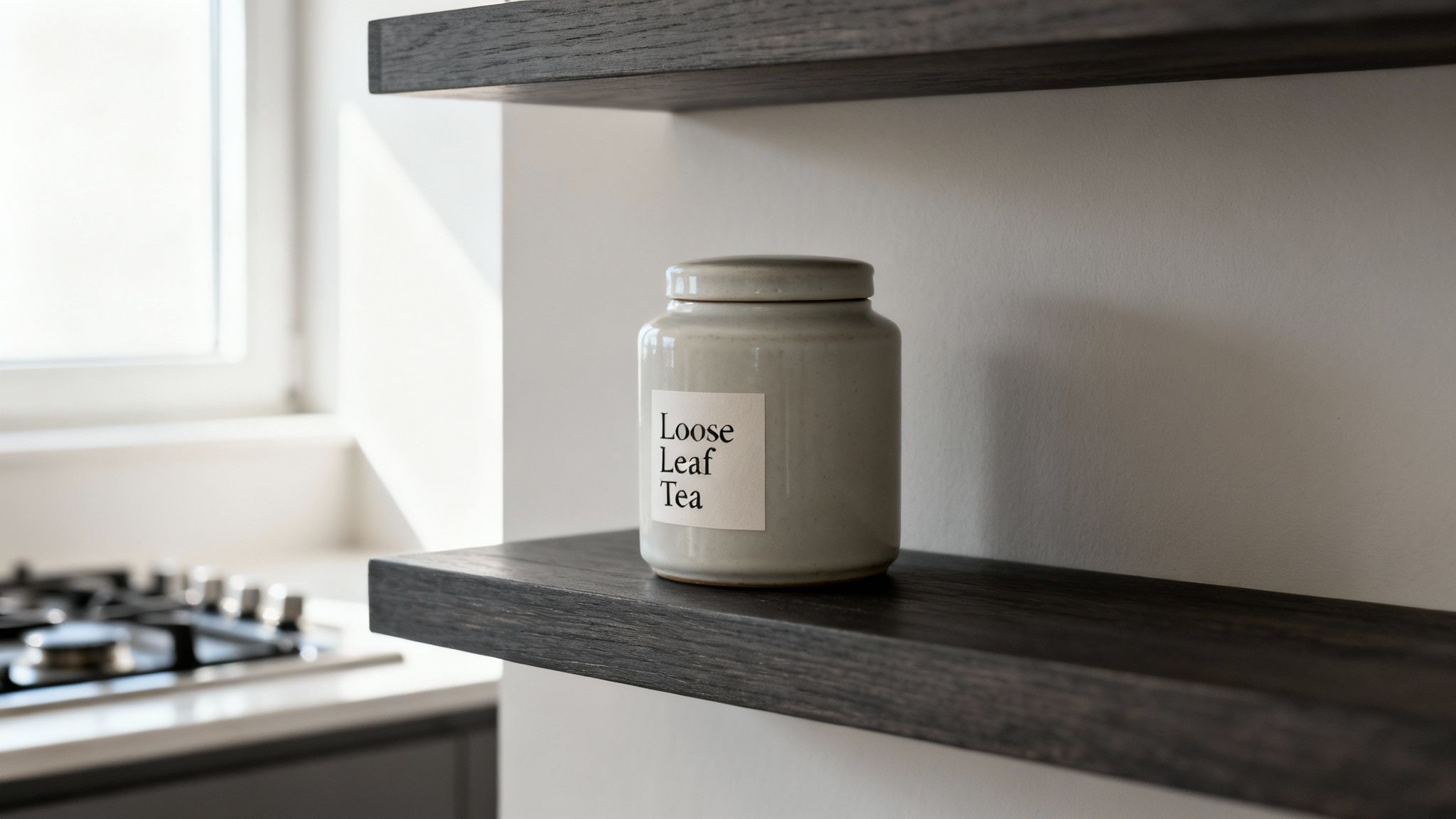
Ever brew a cup of what was once your favorite tea, only to find it tastes flat, dusty, and just… sad? The problem wasn't the tea; it was how you stored it. Think of loose leaf tea as a delicate, living product. It’s incredibly sensitive to its surroundings, and protecting your investment means knowing what will harm it.
There are five culprits constantly trying to ruin your tea. By understanding them and putting up the right defenses, you can make sure every cup is as fresh and vibrant as the day you brought it home.
The Five Enemies of Tea Freshness
-
Light: Sunlight is a killer. The UV rays, even from a bright indoor light, trigger chemical reactions that literally break down the essential oils and chlorophyll in the leaves. You’ll notice the flavor fades, and a beautiful green tea can turn a disappointing brownish-yellow.
-
Heat: Warmth speeds up oxidation, the very process that gives black and oolong teas their character. But once a tea is finished, any extra oxidation from heat essentially "cooks" it, leaving you with a stale, sometimes bitter brew. Keeping tea near the stove, on top of the fridge, or in a sunny spot is a recipe for disaster.
-
Moisture: Tea leaves are hygroscopic, which is a fancy way of saying they suck up moisture from the air like a sponge. Even a little humidity can make the leaves clump together. Worse, it creates a breeding ground for mold and bacteria, which will completely ruin your tea.
-
Air (Oxygen): Oxygen is another driver of oxidation. When you leave tea exposed to the air, its aromatic compounds evaporate and the complex flavors start to degrade. An airtight seal isn't a suggestion—it's a requirement.
-
Strong Odors: Because they're so absorbent, tea leaves will soak up any strong smells around them. Stash your prized Silver Needle next to your coffee beans or in a spice cabinet, and you'll end up with a confusing, contaminated flavor. Your tea will literally start to taste like its neighbors.
To make it simple, I've put together a quick cheat sheet for keeping your tea safe.
Quick Guide to Defeating Tea's Enemies
This table breaks down the primary threats to your tea's freshness and the best way to fight back.
| Enemy | How It Damages Tea | Best Defense |
|---|---|---|
| Light | Degrades essential oils and chlorophyll, causing flavor loss. | An opaque (non-see-through) container. |
| Heat | Accelerates oxidation, making the tea taste stale and flat. | Store in a cool pantry or cabinet, away from appliances. |
| Moisture | Causes clumping and can lead to mold growth. | A container with a tight, waterproof seal. |
| Air (Oxygen) | Causes oxidation and evaporates aromatic compounds. | An airtight lid or double-lidded canister. |
| Strong Odors | Tea absorbs surrounding smells, altering its intended flavor. | Store away from spices, coffee, or other strong-smelling foods. |
Mastering these defenses is the key to preserving the life and character of your favorite teas.
Did you know that improper storage can cut the shelf life of your loose leaf tea by up to 50%? Black teas, like a hearty English Breakfast, can easily last 18-24 months when stored correctly. But delicate green teas can lose their magic in just 6-8 months if you're not careful. You can learn more about how temperature impacts tea freshness and why a cool spot is so critical.
Finding the Perfect Home for Your Tea
The canister you choose is arguably the most critical piece of the puzzle. It’s your tea's first and last line of defense against the elements we just covered. While it's tempting to grab any old jar from the kitchen, the material, the seal, and even the canister's size make a world of difference in preserving your tea's delicate character.
Think of it less like simple storage and more like creating a tiny, controlled environment. The goal is to lock in all the good stuff—aroma and flavor—while keeping all the bad stuff—light, air, moisture, and odors—out for good.
The Anatomy of a Great Tea Canister
The best storage containers all share a few non-negotiable features. They’re completely opaque, they seal up tight, and they’re made from materials that won’t mess with your tea’s flavor.
Here's what to look for:
-
Opaque Material: This is a big one. Stay away from clear glass jars. I know they look beautiful showcasing the leaves, but they're a death sentence for tea, letting in damaging light. Instead, reach for materials like ceramic, stainless steel, or a high-quality tin.
-
Airtight Seal: A flimsy, loose-fitting lid is an open invitation for oxygen to come in and make your tea stale. You want a canister with a silicone or rubber gasket, a traditional double-lidded design (common with Japanese tea caddies), or a sturdy clasp that creates a truly firm seal.
-
Non-Porous and Inert: Your container shouldn't add any flavors of its own. Flimsy plastics can leach chemical notes into the leaves, and unlined wooden boxes can impart a woody aroma that overpowers the tea. Stainless steel and ceramic are fantastic choices because they are inert—they don't react with or absorb the tea's essential oils.
When you invest in a quality loose leaf tea, you're not just buying leaves; you're buying the result of incredible agricultural craft. The right container doesn't just hold your tea—it actively protects that investment, ensuring every cup you brew is just as vibrant as the tea master intended.
Why Size Really Does Matter
It’s tempting to buy one huge, gorgeous canister and dump your entire tea stash inside. It looks organized, but it's a trap. Every single time you open that big container for a scoop, you're flooding the entire batch with fresh, damaging oxygen.
A much better strategy is what I call the "decanting" method.
Keep the bulk of your tea in a larger, well-sealed container that you store away in a dark, cool cupboard. Then, transfer just enough tea for a week or so into a smaller, countertop canister for daily use. This way, your main stash stays almost entirely undisturbed and pristine, while your "daily driver" is always fresh. It’s a simple habit that makes a massive difference in how long your tea stays at its peak.
Custom Storage Strategies for Different Tea Types
Not all teas are created equal, and their storage needs are just as diverse. A robust, fully oxidized black tea can handle conditions that would completely ruin a delicate, unoxidized white tea. Truly understanding how to store loose leaf tea means tailoring your approach to the specific type in your canister.
This kind of focused care is what preserves the unique character of every tea in your collection. After all, you wouldn't use the same defense strategy for the grassy, vibrant notes of a Japanese green tea as you would for the earthy, deep flavors of an aged Pu-erh.
Delicate Greens and Whites
Think of green and white teas as the most fragile members of the tea family. Because they're minimally oxidized, their fresh, vegetal, and sometimes floral notes are incredibly sensitive to their environment. Their biggest enemy is oxygen, which will quickly dull their brightness and can even introduce a bitter, stale taste.
When it comes to these teas, the rules are strict:
- Absolute Airtightness: You need a container with a strong silicone gasket or a classic double-lidded caddy. Any air that gets in will just accelerate flavor loss.
- Total Darkness: These teas are highly susceptible to light damage. Light degrades their chlorophyll, turning those vibrant leaves a sad, dull yellow. Opaque ceramic or stainless steel isn't just a suggestion—it's a must.
- Cool and Consistent: Keep them in the coolest, darkest part of your pantry. Their shelf life is the shortest of all teas, usually just 6 to 12 months before their peak flavor really starts to fade.
This flowchart can help you visualize the key decisions when picking out the perfect home for any tea.
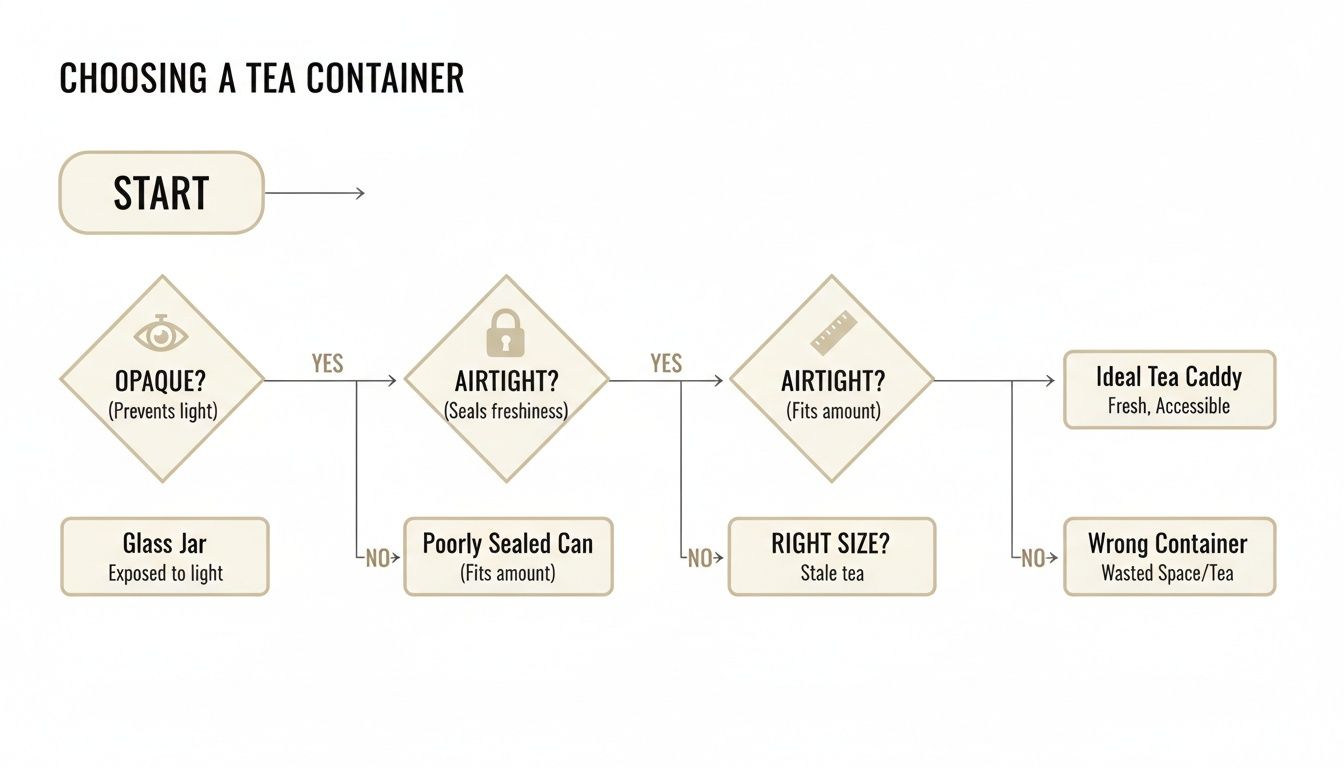
As you can see, it really boils down to three core pillars: keeping it dark, keeping it sealed, and using the right size container. Getting these right is the key to protecting flavor and freshness.
Robust Black and Oolong Teas
Black teas, like a classic English Breakfast, and many oolongs are fully or partially oxidized during processing. That extra step makes them much hardier than their green and white cousins. They still need protection, of course, but they're a lot more forgiving.
With just a little care, these teas can hold onto their rich, malty, or fruity profiles for 1 to 2 years. A simple airtight, opaque tin stored in a cool, dark cabinet is all you really need to keep them tasting great.
Unique Cases of Pu-erh and Herbal Infusions
Pu-erh is a whole different ballgame. As a fermented tea that’s often designed to age, its storage needs are unique. Some aged Pu-erhs can actually benefit from a tiny bit of air circulation to continue their slow, controlled fermentation, which is what develops their incredibly complex, earthy character over many years. Even so, they must be protected from strong odors and moisture.
Herbal infusions, or tisanes, are a mixed bag. The delicate flowers like chamomile are more fragile, while denser roots or dried fruits are more stable. As a general rule, just treat them like black tea: store them in an airtight, opaque container for 1 to 2 years, and they should be fine.
Storage Needs by Tea Type
Every tea has its own personality, and its storage needs reflect that. This table breaks down what you need to know at a glance.
| Tea Type | Ideal Shelf Life | Oxygen Sensitivity | Light Sensitivity | Best Container |
|---|---|---|---|---|
| Green & White | 6-12 Months | Very High | Very High | Opaque, double-lidded, airtight caddy |
| Oolong | 1-2 Years | Medium | Medium | Opaque, airtight tin or ceramic jar |
| Black | 1-2+ Years | Low | Medium | Opaque, airtight tin or bag |
| Pu-erh (Aged) | Decades | Very Low | Low | Clay jar or paper (for breathability) |
| Herbal Tisanes | 1-2 Years | Medium | High | Opaque, airtight container |
Ultimately, choosing the right home for your tea ensures that every cup you brew will be as fresh and flavorful as the last.
The Great Debate: Long-Term Storage in the Fridge vs. Freezer
So, you've splurged on a rare, seasonal harvest or just like to buy your favorite tea in bulk. How do you keep it fresh for the long haul? This leads us to one of the most debated topics among tea aficionados: should you use the fridge or freezer?
It might sound strange, and for good reason—it’s a high-risk, high-reward strategy. While cold storage can be an incredible tool for preserving the most delicate teas, one wrong move can spell disaster for your precious leaves.
The whole point of going cold is to dramatically slow down the oxidation that quickly dulls fragile green and white teas. The flip side is condensation. Pull a cold container into a warmer, more humid room, and you'll see moisture form instantly. That moisture is the enemy of tea, creating a perfect breeding ground for mold and ruining an entire batch in the blink of an eye.
When Cold Storage Makes Sense
Let's be clear: this isn't for your everyday English Breakfast. Using the fridge or freezer is an advanced technique best reserved for high-value, exceptionally delicate teas where peak freshness is everything. Think of prized Japanese greens like a vibrant Gyuro or a fresh-from-the-field Sencha.
When you get it right, the results are stunning. Some research even suggests that proper cold storage can extend the freshness of green and white teas by as much as 200%. According to one comprehensive guide from botanicals, delicate greens can maintain their best quality for 6-12 months at fridge temperatures (around 2.8°C), a massive leap compared to how fast they fade at room temperature. The same source notes that freezer-stored leaves kept their chemical stability nearly identical to fresh ones.
The Right Way to Use a Fridge or Freezer
If you're going to venture into cold storage, you have to be meticulous. There's simply no room for error. While we generally steer people away from this method for coffee, the core principle of fighting moisture is the same. You can check out our guide on storing coffee beans properly to see just how serious the risks are.
Here are the non-negotiable rules for success:
- Vacuum Seal Everything: This is the most important step. You absolutely must remove every last bit of air. Use a high-quality, multi-layered vacuum-seal bag to protect your tea.
- Double Up on Protection: For an extra layer of defense against freezer odors and moisture, I always place the sealed bag inside a second one before it goes into the cold.
- Patience is Key (The Thaw): This is where most people go wrong. DO NOT open the bag while it’s still cold. Let the completely sealed package sit on your counter for several hours—6 to 12, depending on the size—until it has fully warmed up to room temperature. If you open it too soon, condensation will form directly on the leaves, and it's game over.
Once a tea comes out of cold storage, it stays out. The constant back-and-forth from cold to warm will create moisture and wreck the tea's delicate structure and flavor. This method is strictly for unopened, bulk packages you don't plan on touching for months at a time.
Smart Habits for Everyday Tea Management
Knowing how to store tea is more than just finding the right container. It's about developing a few simple, smart habits that keep your collection fresh day in and day out. Think of it less as a one-time setup and more as an active process.
By weaving these practices into your routine, you protect your investment in good tea and make sure every cup is just as vibrant and aromatic as it should be.
Label Everything and Rotate Your Stock
This is probably the single most effective habit you can build. Grab a label or even just a piece of masking tape and write down the tea's name and the date you bought it. This tiny step completely removes the guesswork later on.
It also lets you practice the "first in, first out" principle. When you're reaching for a green tea, grab the oldest one first. This simple rotation ensures nothing gets shoved to the back of the pantry to be forgotten for a year, saving you from sad, flavorless tea and wasted money.
Master the Decanting Method
Every time you open that big bag or tin of your favorite tea, you're letting in a fresh wave of oxygen, one of tea's worst enemies. The best way to combat this is to "decant" your tea.
Keep the bulk of your supply in a large, well-sealed container tucked away in a dark, cool cupboard. Then, portion out just enough for a week or so into a smaller tin for daily use. This "daily driver" can live on your countertop for easy access, while the main stash stays sealed and protected from constant air exposure. It's a game-changer for preserving freshness.
Think of it like this: You wouldn't leave the entire carton of ice cream on the counter while you scoop one bowl. You take what you need and put the rest back in the freezer immediately to protect it. The same logic applies to preserving the delicate aromatics of your tea.
Learn to Spot Stale Tea
Your own senses are your best tool for managing your collection. Fresh tea should greet you with a vibrant, distinct aroma the moment you open the tin. If you have to stick your nose in and search for a scent, or if it just smells flat, dusty, or like old paper, that tea has seen better days.
The final test, of course, is in the cup. Stale tea brews up weak and lackluster, often with a hint of bitterness, and it will be missing all the wonderful, complex notes it had when it was fresh. Learning to recognize these signs tells you when it’s time to compost the old stuff and restock.
When you're ready for an upgrade, explore the incredible freshness of our premium Matcha and other loose leaf teas.
Answering Your Tea Storage Questions
Even with a solid game plan, a few common questions always seem to surface when you're dialing in your tea storage. Let's tackle some of the most frequent head-scratchers so you can feel confident you're doing everything right to protect your precious leaves.
Can I Store Different Kinds of Tea Together?
Absolutely not. Think of your tea leaves like little sponges for scent. They will soak up any strong aromas nearby, and that's the last thing you want.
Imagine storing a bright, bergamot-scented Earl Grey right next to a delicate, grassy Japanese Sencha. You'd end up with a floral, citrusy Sencha and a muddled, grassy Earl Grey. It's a classic case of flavor contamination. Every tea deserves its own airtight home to keep its unique character intact.
How Long Does Loose Leaf Tea Really Last?
Tea doesn’t spoil in the way milk does, but it absolutely loses its vibrancy over time. Think of it as having a "best by" date for peak flavor. Once that window passes, the aromas will flatten out and the taste will become dull. How long you have depends entirely on the type of tea and how well you've stored it.
Here’s a realistic timeline for peak flavor:
- Green & White Teas: These are the most fragile. You'll want to enjoy them within 6 to 12 months for the best experience.
- Oolong Teas: Being a bit more oxidized gives them more staying power. They're usually great for 1 to 2 years.
- Black & Herbal Teas: These are the hardiest of the bunch and can easily stay flavorful for 1 to 2 years, sometimes even longer.
- Pu-erh Teas: This is the big exception. Pu-erh is a fermented tea that gets better with age, much like a fine wine. If stored correctly, it can develop more complexity for decades.
These are just rules of thumb, of course. Your nose is your best guide. If the tea no longer has that beautiful, distinct aroma when you open the tin, its best days are likely behind it. For a classic that holds up beautifully over time, our Earl Grey loose leaf tea is a perfect example of a blend that stays aromatic and bold when stored properly.
Should I Keep My Tea in the Fridge or Freezer?
For the vast majority of us, the answer is a firm no. It seems logical to think cold equals fresh, but a refrigerator is a terrible place for tea. It's full of moisture and strong food odors—two of tea’s mortal enemies. Every time you take the container out, condensation can form, introducing moisture that will ruin your leaves.
Freezing is an advanced technique really only used by serious collectors for large, unopened, vacuum-sealed batches of very high-grade green teas. For your daily stash, a cool, dark, and dry pantry or cabinet is always the best and safest bet.
At Beans Without Borders, we know that an incredible cup of tea begins with fresh, high-quality leaves. When you protect your investment with proper storage, every brew is a rewarding experience. Ready to find your next favorite?