

How to Store Coffee Beans Properly for Maximum Flavor
To get the most out of your coffee, you need to store it right. The best way? Keep your beans in an airtight, opaque container and stash them in a cool, dark spot like a pantry or cabinet. It’s that simple. This protects them from their four biggest enemies—oxygen, light, heat, and moisture—which are constantly trying to rob your coffee of its flavor.
And whatever you do, keep those beans out of the fridge and freezer unless you know exactly what you’re doing for long-term storage.
Why Your Coffee Storage Method Matters
You know that incredible, soul-lifting aroma that hits you when you first open a fresh bag of coffee? That's not just a smell—it's the very essence of the coffee's flavor making a great escape. Storing your coffee properly isn't just a fussy detail for coffee snobs; it's the single most important thing you can do to protect the amazing, complex flavors our roasters worked so hard to bring out.
The moment roasted coffee beans meet the open air, the clock starts ticking. Those delicate compounds that give our Peruvian beans their nutty notes or our Ethiopian beans their bright, floral character begin to break down immediately. To protect your coffee, you have to know what you’re fighting against.
The Four Enemies of Coffee Freshness
Think of these four elements as the villains in your coffee’s story. Keeping them away from your beans is the secret to a delicious cup, every single time.
-
Oxygen: This is coffee’s arch-nemesis. Oxidation is a chemical reaction that makes the oils in coffee go stale, leaving you with a flat, bitter, and lifeless brew. The more air your beans are exposed to, the faster they lose their magic.
-
Light: Sunlight is the obvious culprit, but even the fluorescent lights in your kitchen can degrade the aromatic compounds in your coffee. There's a reason we don't sell our beans in clear bags—opaque is always the way to go.
-
Heat: Warmth is a flavor killer. Storing coffee near your stove, on top of the fridge, or in a sunny spot will cause the fragile oils to rise to the surface of the bean, where they quickly turn rancid.
-
Moisture: Coffee beans are like little sponges. They’re hygroscopic, meaning they absorb moisture and odors from the air around them. This not only ruins the oils but can even lead to mold. It's also why the humid environment of a refrigerator is one of the worst places for your daily supply of beans.
The big takeaway here is simple: the less your beans are exposed to these four things, the longer they’ll taste exactly as they were meant to. This is especially true when choosing the form of your coffee, a topic we dive into in our guide on whole bean vs. ground coffee.
Ultimately, how you store your coffee directly translates to how it tastes. When you protect your investment in high-quality, single-origin beans, you’re guaranteeing that every cup you make is as vibrant and flavorful as it was meant to be.
Choosing the Best Container for Your Coffee Beans
Think of your coffee container as the first and most important line of defense in the battle for flavor. It’s the armor that shields your precious beans from their greatest enemies. While the bag your coffee arrives in is a great start, upgrading to the right permanent home is a game-changer for preserving the unique character of each coffee origin.
The material of your container plays a massive role in how well it protects the beans inside. The truth is, not all containers are created equal, and some popular choices can actually do more harm than good. Let's dig into the best options to ensure you’re giving your coffee the five-star treatment it deserves.
This diagram breaks down the four primary culprits you're fighting against when you store your beans.
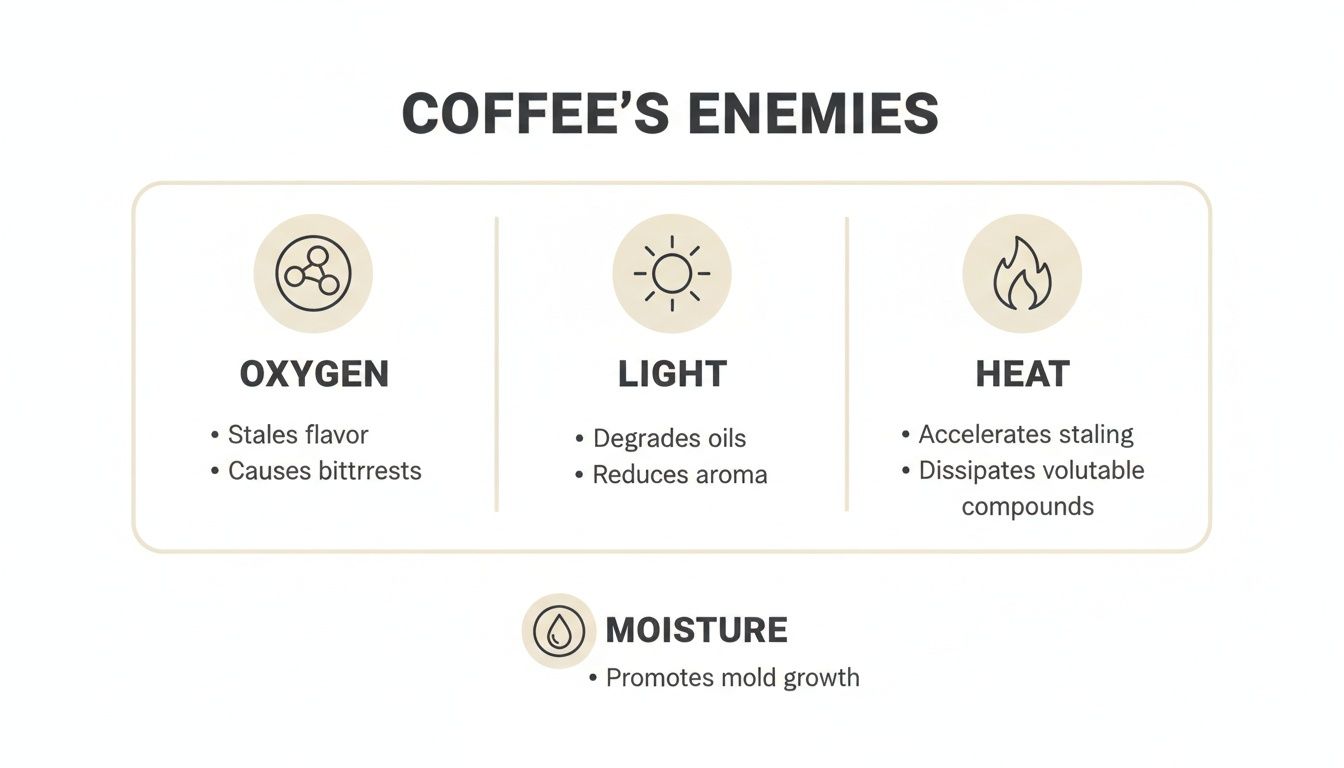
As you can see, a great container needs to block oxygen, light, heat, and moisture to be truly effective.
Selecting the Right Material
When you're choosing a home for your coffee, you have a few excellent choices. Each one brings something different to the table, but they all share the same goal: keeping your beans fresh and flavorful for as long as possible.
-
Opaque Ceramic: A fantastic choice for its ability to completely block out damaging UV light. Ceramic is also non-reactive, which is just a fancy way of saying it won’t add any unwanted flavors to your coffee. Just make sure to find one with a high-quality airtight seal, like our branded ceramic canisters, which are designed to keep your coffee fresh while looking great on your counter.
-
Stainless Steel: Durable and highly effective, stainless steel canisters are another top-tier option. They’re great at blocking light and, when equipped with a proper gasket and clasp, create a formidable barrier against both oxygen and moisture.
-
Opaque Glass: Those clear glass jars might look nice on a Pinterest board, but they are a terrible choice for coffee storage because they let light flood in. An opaque glass container, on the other hand, gives you the non-reactive benefits of glass without exposing your beans to the flavor-killing effects of light.
A common mistake I see all the time is people storing their beans in a clear plastic or glass container. While it looks nice, it’s like leaving your beans out in the sun—light will rapidly degrade their complex flavors.
The boom in online specialty coffee—exactly where Beans Without Borders thrives—means that both packaging and our at-home storage habits are more important than ever. In fact, digital-forward reports show the raw coffee bean market alone is expected to grow by about USD 8.06 billion between 2024 and 2029. That's a 3.7% compound annual growth rate, driven largely by e-commerce and more people getting into quality home brewing.
This is why you're seeing more premium coffee sold as whole beans, often with storage advice right on the bag, while ground coffee and pods are sealed in high-barrier materials to slow down oxygen. You can learn more about these market trends and coffee industry growth if you're curious.
Coffee Storage Container Material Comparison
Choosing the right material for your coffee container is crucial. Here’s a quick breakdown of the most common options and how they stack up against coffee's biggest foes.
| Material | Oxygen Protection | Light Protection | Best For | Recommendation |
|---|---|---|---|---|
| Opaque Ceramic | Excellent (with good seal) | Excellent | Countertop display, long-term storage. | A top choice. Invest in one with a quality airtight gasket. |
| Stainless Steel | Excellent (with good seal) | Excellent | Durability, travel, long-term storage. | Another fantastic option, especially if you need something rugged. |
| Opaque Glass | Excellent (with good seal) | Good to Excellent | Countertop storage, flavor purity. | A great choice if it's truly opaque and has a solid seal. |
| Clear Glass/Plastic | Poor to Good (depends on seal) | Poor | Not Recommended. | Avoid. Light exposure will quickly stale your coffee beans. |
| Original Coffee Bag | Good (with one-way valve) | Excellent | Short-term storage (1-2 weeks). | Perfect for the first couple of weeks after opening. |
Ultimately, opaque ceramic and stainless steel are the clear winners for keeping your beans at peak freshness over time.
The Magic of One-Way Degassing Valves
Ever noticed that little plastic circle on the front of our coffee bags? That’s a one-way degassing valve, and it's a brilliant bit of coffee tech.
Freshly roasted coffee releases a lot of carbon dioxide (CO2) for several days in a process called "degassing." This clever valve lets that CO2 escape without letting any flavor-destroying oxygen get inside. This is what makes our original packaging an excellent choice for short-term storage, especially for the first week or two after you get your order. It keeps the beans in their own protected, C02-rich environment.
Match Your Container to Your Coffee Habits
The perfect container for you really depends on how you drink coffee. Let your daily routine be your guide.
- For the Daily Drinker: If you polish off a bag of coffee in a week or two, storing it in the original Beans Without Borders bag is perfectly fine. Just remember to squeeze out the excess air and seal it tightly after each use.
- For the Weekend Enthusiast: If a bag tends to last you several weeks, your best bet is to transfer the beans to a dedicated airtight, opaque canister. It provides a more robust and reliable seal for the long haul.
Investing in proper storage is a small step that pays off in a big way with every single cup. By selecting the right armor for your beans, you ensure that every brew—from an energizing morning Americano to a rich afternoon latte—is as vibrant and delicious as the roaster intended.
Finding the Perfect Environment to Store Coffee
So, you’ve picked out the perfect airtight container. Great start, but that’s only half the battle. Where you actually put that container is just as important for protecting the delicate flavors of your coffee. The environment in your home can either be your coffee's best friend or its worst enemy, quickly turning a vibrant, aromatic bag of beans into a flat, disappointing brew.
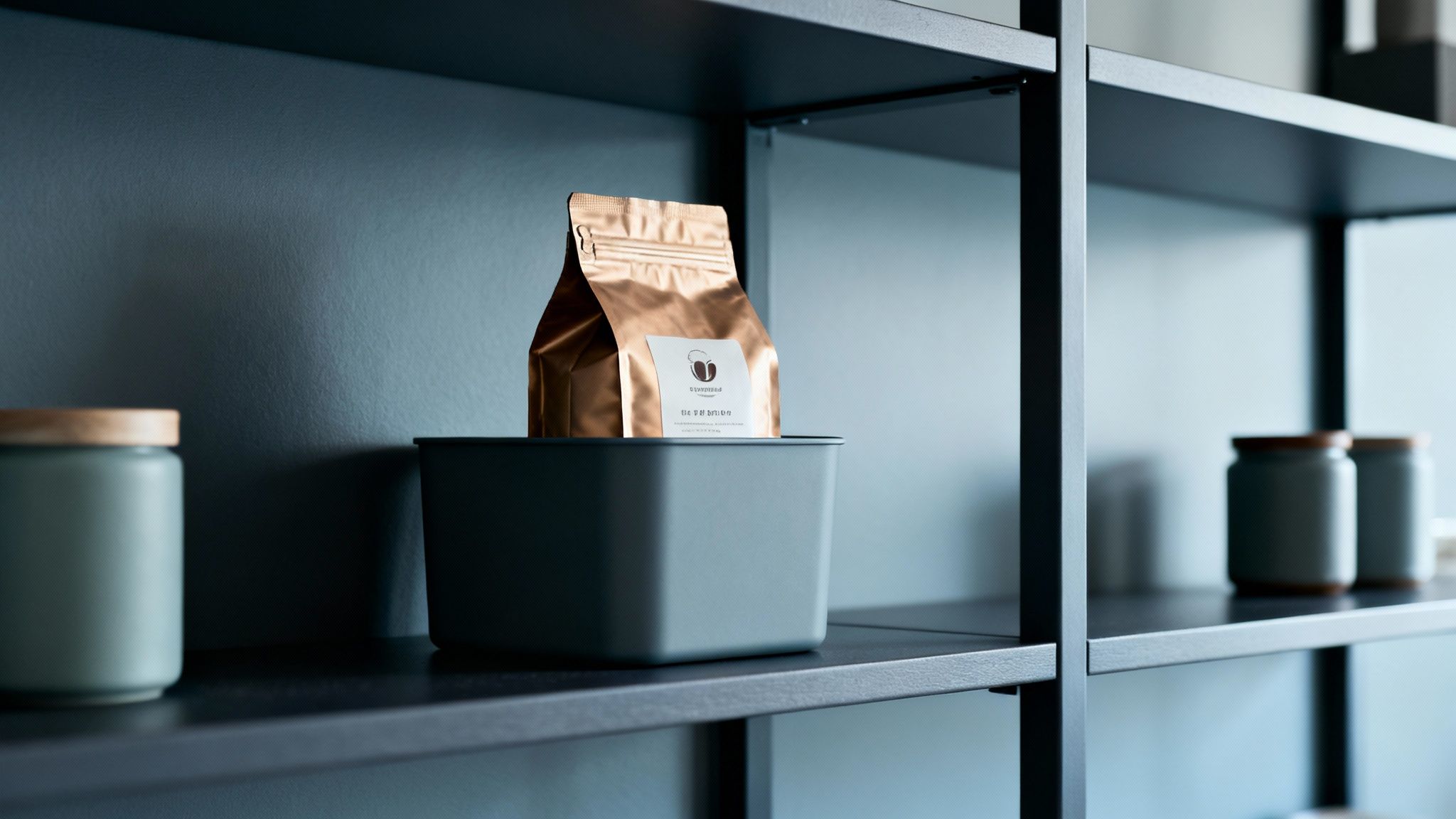
Your goal is to find a stable, protected spot for your coffee. Think of it like a wine cellar—you’re looking for somewhere cool, dark, and dry. This simple trifecta is the gold standard for fighting off the main culprits of stale coffee: oxygen, light, heat, and moisture.
Why a Pantry Beats a Countertop Every Time
That sunny spot on your kitchen counter might look nice, but it's one of the worst places you could possibly store your coffee. Direct sunlight acts like a heat lamp, forcing the precious oils inside the beans to the surface where they quickly go rancid.
And it’s not just the sunny spots you have to watch out for. Other common kitchen locations are surprisingly hostile environments for fresh coffee.
- The Cabinet Above the Stove: This is a definite no-go. Heat and steam from cooking rise directly into this space, creating a warm, humid pocket that will absolutely wreck your coffee.
- Next to the Oven: Even when it’s off, the oven gives off radiant heat that can slowly cook your beans over time, destroying their complex flavors.
- On Top of the Fridge: The top of the refrigerator often feels warm, and for good reason—it’s where the appliance releases heat from its condenser coils.
The ideal spot for your coffee is usually a place you already have: a cool, dark kitchen pantry or a cabinet far away from any heat sources. It's simple, it's effective, and it doesn't cost a thing.
This advice is especially crucial when you're enjoying beans from different parts of the world. Since Beans Without Borders sources freshly roasted lots from regions as varied as Ethiopia, Peru, Bali, and Mexico, being mindful of temperature is key. The USDA projects world coffee production to hit about 178.8 million 60-kg bags in 2025/26. For those of us brewing at home, the same principles apply on a smaller scale: just keeping your beans in an airtight container in a cool cupboard (around 18–23°C / 64–73°F) instead of a warm countertop can extend their peak flavor by weeks. It's a small change with a big impact. You can explore more global coffee production insights from the USDA to see the bigger picture.
The Importance of Temperature Stability
It’s not just about keeping coffee cool; it’s about keeping the temperature stable. Big temperature swings are a hidden enemy of freshness.
Think about what happens when you take a cold glass out of the cupboard on a hot, humid day—condensation immediately forms on the outside. The same thing happens on a microscopic level to your coffee beans if their storage spot fluctuates between cool and warm.
This cycle of condensation introduces moisture, which is a fast track to mold and that dreaded muted, papery taste. By maintaining a consistent temperature, you prevent this from happening and protect the unique character of your beans. For example, the bright, fruity notes in our Ethiopian Yirgacheffe coffee are particularly sensitive to these shifts and really shine when stored in a stable environment.
Creating Your Ideal Coffee Storage Zone
Finding the perfect spot doesn’t need to be complicated. Here are a few practical tips for creating a safe haven for your coffee right in your own kitchen.
- Do a quick audit of your kitchen. Look for the coolest, darkest cabinet you have—one that isn't next to the dishwasher, stove, or a window that gets a lot of sun.
- Dedicate a shelf. If you can, give your coffee its own space. This keeps it from absorbing strong smells from spices, onions, or other aromatic foods you might have stored nearby.
- Think outside the kitchen. If your kitchen is particularly small, warm, or bright, don't be afraid to look elsewhere. A hall closet or a dry, cool basement pantry can work wonders.
By being a little more intentional about where you store your coffee, you ensure that every cup you brew delivers the full spectrum of flavor our roasters worked so hard to achieve. Whether it's the rich, chocolatey depth of our Mexican Chiapas beans or the earthy complexity from Bali, a little environmental awareness goes a very long way.
The Great Debate: Should You Freeze or Refrigerate Your Coffee?
Ah, the age-old question. Talk to ten coffee lovers, and you might get ten different answers about putting beans in the fridge or freezer. It’s a hot topic, but let's cut through the noise.
First thing's first: the refrigerator is a definite no-go for your daily coffee stash. It's probably the fastest way to ruin a perfectly good bag of beans.
The biggest villain here is condensation. Think about taking a cold can of soda out on a warm day—it immediately starts "sweating." The same thing happens every time you pull your coffee container out of the fridge. That moisture wreaks havoc on the delicate oils responsible for all that amazing flavor and aroma, leaving you with a dull, flat-tasting cup.
On top of that, coffee is incredibly porous. It will literally soak up the smells of whatever is around it. Unless you enjoy a hint of leftover takeout or that stray onion in your morning brew, keep your beans far, far away from the fridge.
Freezing: A Long-Term Strategy When Done Right
Now, the freezer is a different story. It’s not for your everyday beans, but it can be a fantastic tool for long-term storage if—and this is a big if—you do it with care. This is the method I use when I stock up on a big bag of something special, like our incredible Peruvian coffee, and want to keep it pristine for months.
Freezing works by putting the brakes on the staling process. The key is to create a fortress against air and moisture.
Here’s how to lock in that freshness:
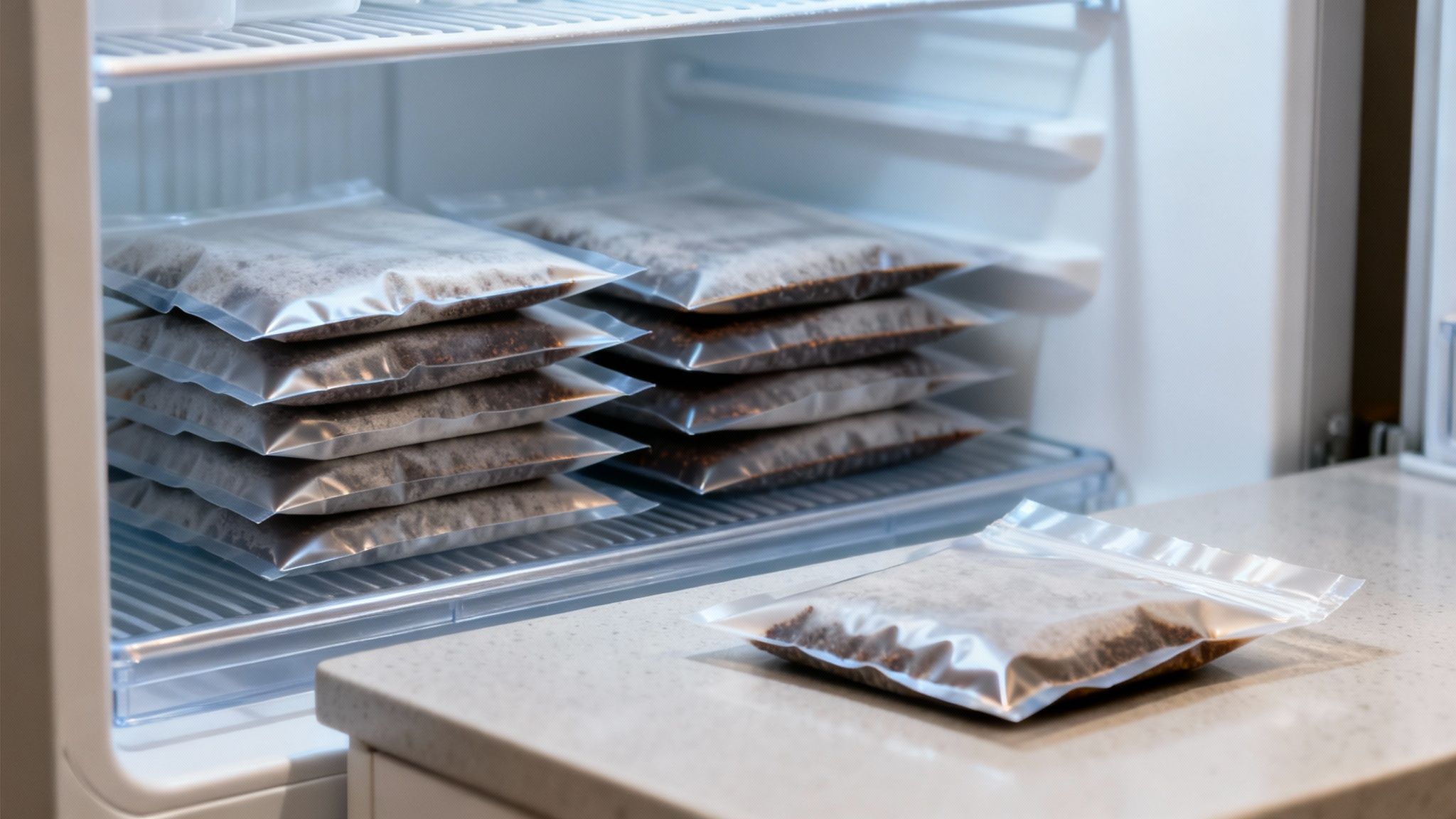
- Divide and Conquer: Before anything touches the freezer, portion out the beans into smaller, weekly-supply-sized bags. This is the golden rule. You only want to thaw what you'll use, so the rest stays frozen solid and untouched.
- Suck Out the Air: A vacuum sealer is your best friend here. Get every last bit of oxygen out of those bags. No vacuum sealer? A heavy-duty freezer bag and the water displacement method (dipping the bag in water to force the air out) is a decent alternative.
- Deep Freeze: Tuck the sealed bags deep into your freezer, where the temperature is most stable and they won't get bumped around. Once they’re in, leave them be.
Crucial Tip: When you're ready to use a bag, pull it out and let it thaw on the counter—completely sealed—until it reaches room temperature. If you open it while it's still cold, condensation will form instantly, and all your careful work will be for nothing.
Thawing Your Beans for the Perfect Brew
Patience is everything. Let a frozen, sealed bag sit on the counter for at least 6-8 hours (or even overnight) to thaw completely. This prevents any moisture from clinging to the beans when you finally open it.
Once the beans are at room temperature, they're ready to go. Treat them just like a brand-new bag: transfer them to your everyday airtight container and keep them in your pantry. Aim to use them up within a week or two to enjoy them at their peak.
It’s a great way to ensure you always have a perfect bag from Beans Without Borders on hand. And for more ways to enjoy those perfectly preserved beans, check out our guide on how to make cold brew coffee.
Practical Storage Strategies for Daily Brewers
Knowing the science behind coffee freshness is one thing, but actually putting it into practice is what gets an exceptional cup of coffee into your hands every morning. The best storage strategy really comes down to your daily habits and how you like to brew. Whether you're a pour-over purist or a pod-loving professional on the go, these tips will help you get the most out of every single bean.
If there’s one habit that will completely change your coffee game, it's this: buy whole beans and grind them right before you brew. The moment coffee is ground, its surface area explodes, creating a massive invitation for oxygen to come in and start the staling process. Grinding fresh is like slicing an apple just before you eat it—it guarantees you’re getting the most vibrant, lively flavor possible.
The Whole Bean Advantage
For anyone who truly savors the ritual of making coffee, whole beans are a must. There's just no substitute for the aromatic cloud that fills your kitchen when you grind a fresh dose of our bright, floral Ethiopian Yirgacheffe coffee for a morning pour-over. The same goes for preserving the deep, chocolatey notes of our Peruvian beans—they’re at their absolute best when kept whole until the very last second.
This single step is crucial for getting what you paid for. If you want to get deeper into the mechanics of grinding for different brew methods, be sure to check out our guide on how to make pour-over coffee.
Properly storing your beans protects that investment in flavor. And it's a big investment—the global coffee beans market was valued between USD 32.6–38.3 billion recently and is on track to hit around USD 55.0 billion by 2030. At home, the same chemistry applies. A bag of beans left open can lose most of its aromatic intensity in just 7–14 days. But when sealed properly, that same bag can stay vibrant for 4–6 weeks or even longer. You can discover more insights on the growing coffee market and see why quality is everything.
Smart Storage for Coffee Pods
We get it. Sometimes convenience is king. For those frantic mornings when you need a great cup of coffee without the fuss, our single-serve coffee pods are the perfect answer. Even so, they still benefit from a little thoughtful storage.
While each pod is sealed to lock in freshness, they aren't invincible. They're still vulnerable to heat and strong smells.
To keep them tasting their best:
- Tuck the box away in a cool, dark cabinet, far from the stove or a sunny countertop.
- Avoid storing them next to pungent spices like garlic powder or curry. The packaging can absorb those aromas over time, and nobody wants a hint of last night's dinner in their morning latte.
This simple step ensures every pod delivers that rich, consistent flavor you’re counting on.
Managing Multiple Bags Like a Pro
One of the greatest joys of coffee is exploring different origins. If you’ve just treated yourself to one of our curated sampler packs, you’ll want a system to make sure nothing gets forgotten and goes stale. All you need is a simple inventory habit.
First-In, First-Out (FIFO): It's a classic for a reason. Always use the oldest bag of coffee first. When your new Beans Without Borders order arrives, just slide your current coffee to the front of the shelf and place the newcomers behind it. For an extra-helpful touch, stick a small piece of tape on each bag with the date you opened it.
This rotation system is a foolproof way to guarantee you're always brewing beans at their peak, letting you fully appreciate the unique character of each region. It’s a simple but powerful strategy for any daily brewer looking to elevate their coffee game.
And for the final touch, enjoy that perfectly stored coffee in one of our branded ceramic coffee mugs, made for true enthusiasts. Don't forget to sign up for our e-mail list for more tips and exclusive offers
Your Coffee Storage Questions Answered
We’ve gone deep on the best ways to keep your coffee tasting incredible, but I know that in the real world, specific questions always pop up. Think of this as your go-to cheat sheet for solving those common storage puzzles that can make or break your morning brew.
How Long Do Coffee Beans Actually Stay Fresh?
Let's be realistic. Once a bag is opened, you've got a window of about 2 to 4 weeks for whole beans to stay at their absolute peak, assuming you're storing them correctly. The countdown begins the second oxygen hits them.
For pre-ground coffee, that window slams shut much, much faster. Because so much more of the bean is exposed to the air, those amazing aromas and flavors start to disappear in days. It can taste noticeably flat in under a week. This is exactly why we're such big believers in grinding right before you brew—it's the single best thing you can do for your coffee's flavor.
Is the Original Coffee Bag Good Enough for Storage?
Honestly, a good quality bag—like the ones we use at Beans Without Borders with the one-way valve and zipper seal—does a fantastic job for the first week or two. It's designed to protect the beans on their journey to you, and it works well for a little while after.
But if you want to keep that coffee tasting great for longer, transferring the beans to a dedicated airtight, opaque canister is the way to go. It offers a more reliable seal against daily opening and closing and gives you much better protection from light. Think of it as upgrading from a tent to a cabin; both offer shelter, but one is built for the long haul.
Can I Really Taste the Difference if My Coffee Is Stale?
Oh, absolutely. It’s a night-and-day experience. Fresh beans give you that "aha!" moment—a cup bursting with aroma, complexity, and all the unique notes of its origin, whether it’s the bright fruitiness of an Ethiopian Yirgacheffe or the deep chocolate of a Peruvian bean.
Stale coffee, on the other hand, just tastes... brown. It's flat, lifeless, sometimes a little bitter or even papery. All the personality of the bean is gone. Proper storage is your ticket to tasting what the farmer and our roasters intended.
The nuances of flavor are especially important for specific brewing methods. For example, the clarity and brightness of a pour-over brew can be significantly diminished by stale coffee. You can find more details on perfecting your technique in our comprehensive guide to choosing the right grind size for pour-over coffee.
What Is the Single Most Important Storage Rule?
If you walk away with just one piece of advice, make it this: Keep your beans in an airtight container in a cool, dark, and dry place. A pantry or a cabinet away from the heat of the oven is perfect.
That’s it. By shielding your coffee from its four enemies—oxygen, heat, light, and moisture—you’ll radically improve every single cup you make. It’s the simplest, most powerful way to get the most out of every bag of Beans Without Borders coffee.