

Loose Leaf Tea vs Tea Bags: A Guide to Choosing Your Perfect Brew
At its core, the choice between loose leaf tea and tea bags boils down to a trade-off between quality and convenience. Loose leaf tea promises a far richer flavor and aroma because it uses whole, unbroken leaves. On the other hand, tea bags deliver unbeatable speed and simplicity, making them perfect for a busy lifestyle. What you choose really depends on what you value more: a deep, nuanced tea experience or the sheer practicality of a quick, clean cup.
Understanding the Great Tea Debate
Deciding between loose leaf tea and tea bags feels a lot like choosing between freshly ground, single-origin coffee beans and a convenient coffee pod. Both will give you a hot, comforting drink, but the process and the end result are miles apart. This isn't just about taste; it’s about the quality of the leaves, the ritual of brewing, and even the environmental footprint.
For many, the tea bag is a symbol of modern efficiency—a quick fix for a comforting brew.
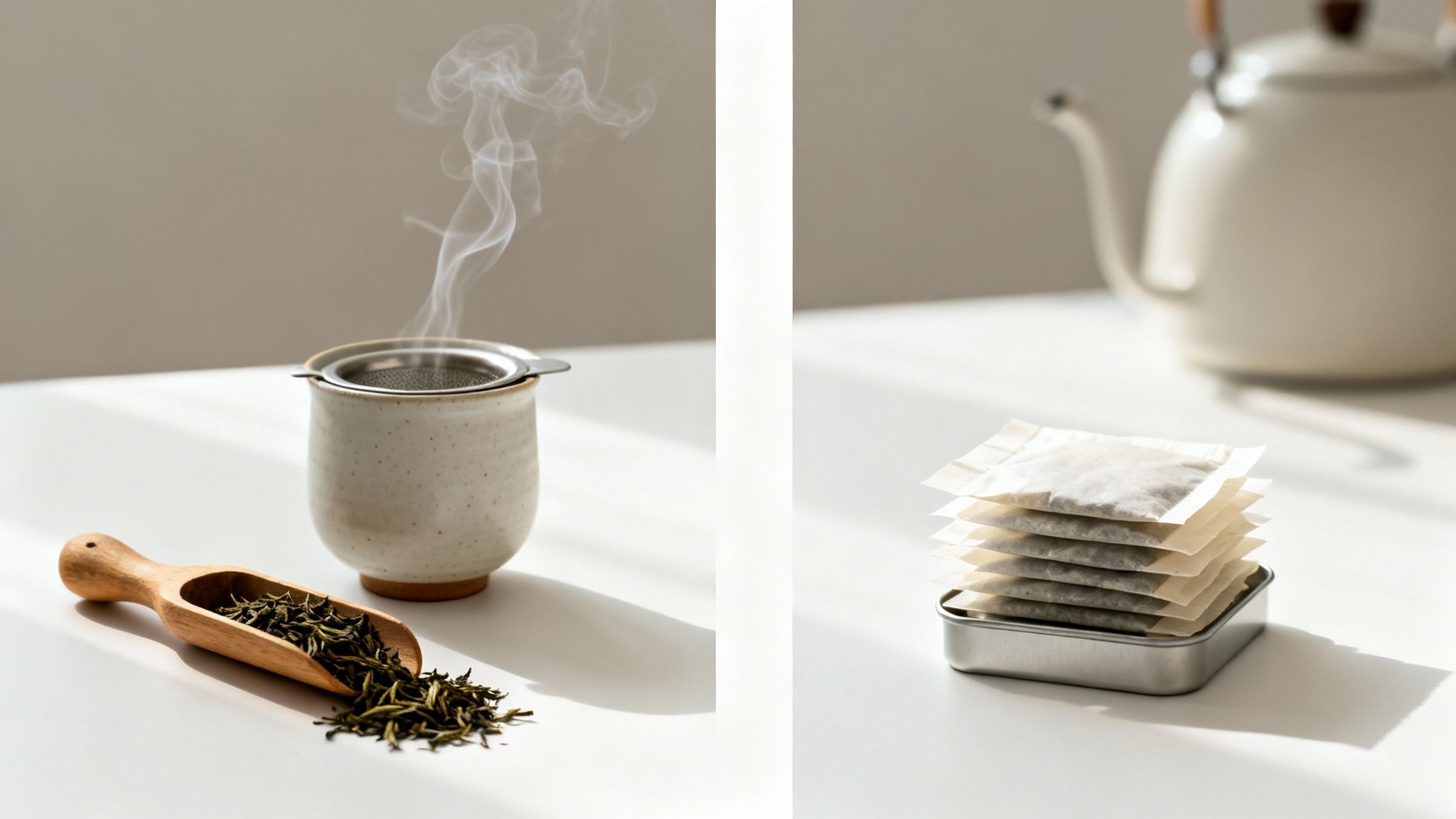
It’s no surprise, then, that tea bags dominate the global market. In the UK, an incredible 96% of all tea is made using tea bags. Similarly, over 70% of tea drinkers in the US use them either exclusively or as their primary method. This massive preference shows that, for most people, convenience is king.
Loose Leaf Tea vs Tea Bags at a Glance
To give you a quick snapshot of the main differences, this table lays out what each format offers. Think of it as a high-level summary before we dive deeper into each point.
| Attribute | Loose Leaf Tea | Tea Bags |
|---|---|---|
| Leaf Quality | Whole or large broken leaves | "Fannings" or "dust" (small particles) |
| Flavor Profile | Complex, nuanced, and aromatic | Strong, bold, and often one-dimensional |
| Brewing | Requires an infuser; allows for re-steeping | Simple "dip and sip" process; single-use |
| Convenience | More involved, requires cleanup | Extremely fast and easy with no mess |
| Cost Per Cup | Often lower due to re-steeping ability | Initially cheaper, but higher for single-use |
| Variety | Wider range of unique, artisanal blends | Mostly common, mass-market varieties |
In the end, it all comes down to what you're looking for. If you truly appreciate the delicate floral and citrus notes in a classic blend, exploring our premium Earl Grey loose leaf tea will open up a world of flavor that bagged versions simply can't replicate. We invite you to make a purchase and taste the difference.
Comparing Flavor Profiles and Aromatics
The most compelling argument in the loose leaf tea vs. tea bags debate happens right in your cup. The difference isn't just a minor detail; it's a fundamental split in how flavor and aroma are created and released. Think of it like the difference between a freshly ground coffee bean and instant coffee granules.
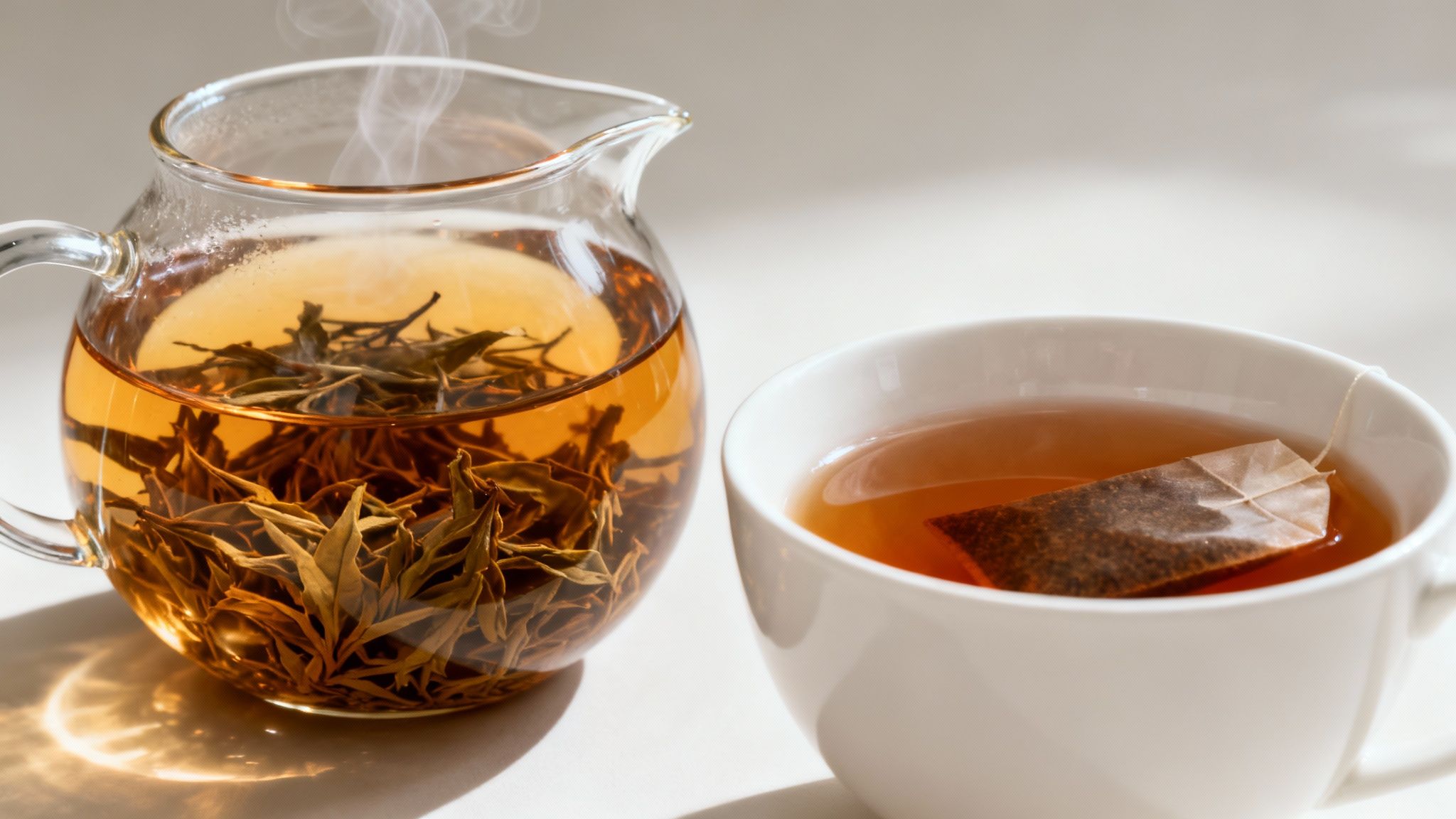
Loose-leaf tea is all about whole or large, broken leaves. This is crucial because it preserves the tea's natural essential oils, which are the very soul of its complex flavor and rich fragrance. When you pour hot water over them, these leaves have the space they need to unfurl, expand, and gracefully release their character into the water.
Why Leaf Size Dictates Flavor
The physical form of the tea has a direct and dramatic impact on the final brew. Whole leaves release their flavors slowly and evenly, creating a multi-layered taste experience. You can often pick out distinct top, middle, and base notes, from bright florals to deep, earthy undertones.
On the other hand, most commercial tea bags are filled with "fannings" or "dust." These are the tiny, broken particles left over from processing higher-quality teas. Their small size creates a completely different brewing dynamic. The large surface area means they infuse incredibly quickly, but this often comes at a cost. You get a strong, bold color fast, but you lose the delicate oils and nuanced flavors found in whole leaves, often leading to a simpler, sometimes bitter taste.
A Tale of Two Teas
Let's use a classic brew to really bring this to life.
-
Loose Leaf English Breakfast: When you brew a high-quality loose-leaf version, the first thing you'll notice is a robust, malty aroma filling the air. The taste is full-bodied yet smooth, with layers of complexity that might bring to mind hints of honey or dark cocoa. Because the leaves infuse gradually, you have more control over bitterness, resulting in a rich and deeply satisfying cup. Our Beans Without Borders English Breakfast is a perfect example of this depth. Click the link to purchase this exceptional tea today.
-
Bagged English Breakfast: The tea bag version, typically made with fannings, infuses almost instantly. This rapid extraction releases tannins all at once, which is why it can easily become harsh, astringent, or bitter. The flavor is usually strong and one-dimensional—a quick hit without the nuance and character that makes a truly great cup of tea.
The core difference is simple yet profound: Loose-leaf tea allows for a full, layered extraction of flavor compounds and aromatic oils, while tea bags provide a fast, strong, but often flat brew. Giving the leaves room to breathe is the secret to unlocking their true potential.
Analyzing Tea Leaf Quality and Sourcing
The real difference between loose-leaf tea and tea bags doesn't start in your kitchen. It begins in the tea gardens, long before the leaves ever reach your cup. The quality of the leaf and where it comes from sets the foundation for everything that follows—flavor, freshness, and the overall character of your brew.
When you open a tin of our loose-leaf tea, you're almost always looking at a higher grade of product. It’s made from whole or large, broken leaves that have been handled with care to keep their structure and essential oils intact. This is the top tier of the tea world.
The Importance of Traceability
Just like with single-origin coffee, knowing where your tea comes from is a huge indicator of its quality. The best loose-leaf teas can often be traced back to a specific estate or a particular region. This transparency lets you connect with the tea’s unique origin story, or terroir.
- Loose-Leaf Sourcing: Typically sourced from a single estate or a well-known growing region. This gives it a distinct, consistent flavor profile you can’t find anywhere else.
- Tea Bag Sourcing: Most big-brand tea bags use blends from countless sources. Tea companies do this to make sure their product tastes exactly the same year after year, but it comes at the cost of any unique character.
This is exactly why a cup of our traceable Hojicha, with its signature roasted notes from a specific Japanese tradition, tastes worlds apart from a generic "green tea" bag. You can literally see the quality in the whole, rolled leaves. We encourage you to purchase a bag and experience it for yourself.
Fannings and Dust: The Compromise in Tea Bags
So, what’s actually inside most tea bags? The industry calls it "fannings" and "dust." These are the tiny, broken bits left over after higher-grade leaves have been sorted. They brew up fast, but that convenience comes with a trade-off.
Because the tea particles in a bag are so small, they have a much greater surface area exposed to air. This causes them to lose their essential oils and antioxidants much faster, leading to a brew that’s flatter and less vibrant than what you get from a whole leaf.
Ultimately, it’s about what you’re looking for in a cup. Loose-leaf tea gives you a transparent connection to a specific garden, delivering the full, complex experience the plant has to offer. Tea bags deliver consistency by blending lower-grade leaves, resulting in a reliable but often one-dimensional brew.
For a blend that truly puts its ingredients on display, our Masala Chai is a perfect example. It combines high-quality tea leaves with whole, visible spices—a level of quality you’ll simply never find in a dusty paper bag. Click the link to add this aromatic tea to your collection.
The Brewing Process and Daily Ritual
The difference between loose-leaf tea and tea bags isn't just about the leaves—it's about the entire experience. One is a deliberate, mindful ritual. The other is designed for pure, grab-and-go efficiency. Neither is "better," but they definitely cater to different moments in our day.
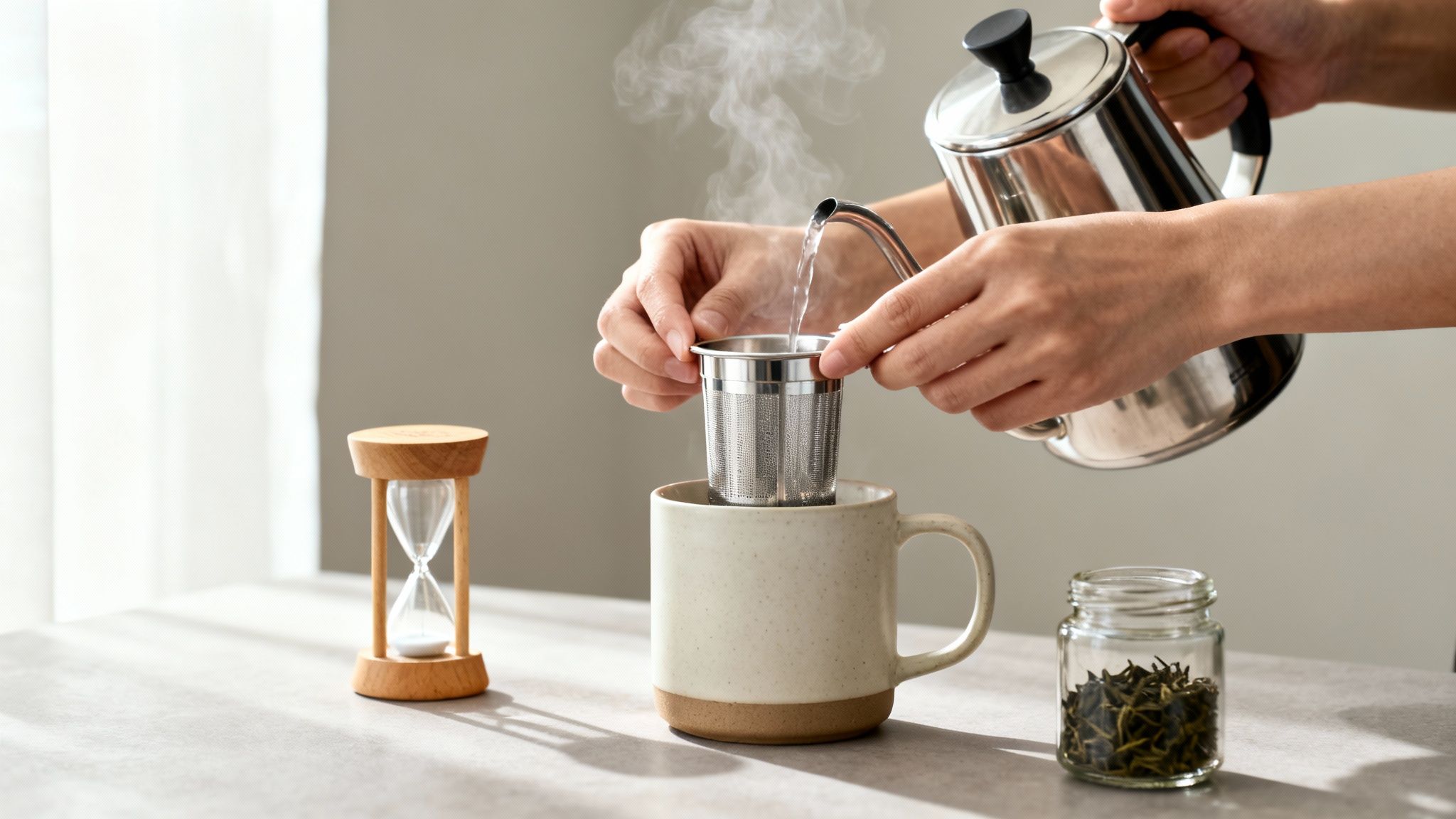
Making loose-leaf tea is a hands-on affair. You measure the leaves, heat the water to just the right temperature, and watch the clock. For many of us who are part of the vibrant coffee and tea culture, this little break is a feature, not a bug—a chance to slow down, be present, and just savor the moment.
On the flip side, the tea bag is the undisputed king of convenience. No special gear, no measuring, and cleanup is a breeze. It’s the perfect fit for a hectic morning, a quick pick-me-up at the office, or anytime you want a comforting cup without any fuss.
Brewing the Perfect Cup of Loose-Leaf Tea
Learning to brew loose-leaf tea is easy, and the payoff is huge. A few simple steps are all it takes to unlock the full depth of flavor without any bitterness, turning your tea break into something special.
- Measure Your Leaves: The general rule of thumb is one teaspoon of tea leaves per eight ounces (one cup) of water. Feel free to adjust this up or down to get the strength just right for you.
- Heat Your Water: Temperature is everything. Boiling water will scorch delicate green and white teas, leaving them tasting bitter. Use a variable-temp kettle if you have one, or just let boiling water cool for a minute or two before pouring.
- Steep for the Right Time: Pop your leaves into an infuser and submerge them in the hot water. Steeping times can vary wildly—from just 60 seconds for some green teas to a full five minutes for hearty black teas.
- Remove and Re-steep: Once the timer goes off, pull the infuser out to stop the brewing. Don't throw those leaves out! High-quality loose-leaf tea can often be re-steeped two or three times, revealing new, subtle flavors with each infusion.
The ritual of brewing loose-leaf tea is an invitation to be present. The simple act of measuring, pouring, and waiting transforms a routine drink into a moment of intentional calm and sensory engagement.
Tips for Elevating Your Tea Bag Experience
Even if you're firmly in the tea bag camp, you can still brew a much better cup. The biggest mistake people make is over-steeping, which releases too many tannins and makes the tea taste astringent.
To fix this, just dunk the bag for the recommended time and then take it out. Seriously, don't just leave it sitting in your mug. Using filtered water instead of tap water can also make a surprising difference in the final taste.
No matter how you brew it, understanding your tea is the key to a great cup. To learn how to keep your leaves fresh and flavorful, check out our guide on how to store loose-leaf tea.
Brewing Guide by Tea Type and Format
Getting the water temperature and steep time right is crucial for a perfect brew. Here’s a quick-reference guide to help you nail it every time, whether you're using loose-leaf or tea bags.
| Tea Type | Loose Leaf (Temp / Time) | Tea Bag (Temp / Time) | Recommended BWB Tea |
|---|---|---|---|
| Black Tea | 195-205°F (90-96°C) / 3-5 mins | 200-212°F (93-100°C) / 2-3 mins | Organic English Breakfast |
| Green Tea | 175-185°F (79-85°C) / 1-3 mins | 175-185°F (79-85°C) / 1-2 mins | Organic Green Tea with Mint |
| White Tea | 170-180°F (76-82°C) / 2-4 mins | 170-180°F (76-82°C) / 1-3 mins | N/A |
| Herbal Tea | 212°F (100°C) / 5-7 mins | 212°F (100°C) / 4-6 mins | Organic Egyptian Chamomile |
Notice how tea bags generally require a slightly shorter steep time? That's because the smaller leaf particles infuse much faster. Adjust these times to your personal taste, but use this as your starting point for a balanced, delicious cup. Don't hesitate to purchase one of our recommended teas to try these methods.
Cost vs. Convenience: Finding Your Perfect Brew
Let's talk brass tacks: money and time. These are often the two factors that really drive the decision between grabbing a tin of loose-leaf tea or a box of tea bags. The initial sticker shock of a quality loose-leaf tea can be a bit daunting compared to its bagged counterpart, but that price tag is only part of the story.
The real math comes down to the cost-per-cup. Since high-quality loose-leaf teas use whole leaves, you can—and should—steep them more than once. It’s not uncommon to get two, three, or even more fantastic infusions from a single serving. When you start re-steeping, that cost-per-cup plummets, often making loose-leaf the thriftier option over the long haul.
Does Your Tea Fit Your Day?
Ultimately, the best tea is the one that actually fits into your life. The grab-and-go nature of a tea bag is undeniably perfect for certain moments.
- The Morning Rush: When you're trying to get out the door, the last thing you want is a complicated process. A tea bag is your best friend here—no measuring, no fuss, no cleanup.
- The Office Break: In a shared kitchen, a tea bag is a lifesaver. It’s a clean, simple way to get a great cup of tea without needing any special gear like an infuser or a teapot.
But for those times when you can afford to slow down, the ritual of preparing loose-leaf tea becomes part of the experience. Think of a quiet weekend morning or a calm evening unwinding after a long day. That’s where loose-leaf truly shines.
This isn't about one format being objectively "better." It's about what works for you right now. Loose-leaf offers incredible value and a richer experience for slow moments, while tea bags deliver unbeatable efficiency when life is moving fast.
We're seeing this appreciation for quality play out in the market, too. While tea bags are still the go-to for daily routines, loose-leaf tea is picking up serious momentum. Projections show the global loose-leaf market is on track to hit USD 4.75 billion by 2034, expanding at a solid 5.50% CAGR. That growth rate easily outpaces the tea bag segment’s slower 2.9%, showing a clear shift in consumer priorities from pure convenience toward a higher-quality experience. You can discover more insights about these market trends and see how tea drinkers' tastes are evolving.
Find Your Perfect Tea with Beans Without Borders
So, loose leaf or tea bag? We offer the best loose leaf tea online. The best answer really depends on what you're looking for in your daily cup. Are you chasing the richest possible flavor, or do you need the quickest, easiest brew to get you through a busy day?
Let’s break it down. Think of it as a simple decision tree to find what fits your life.
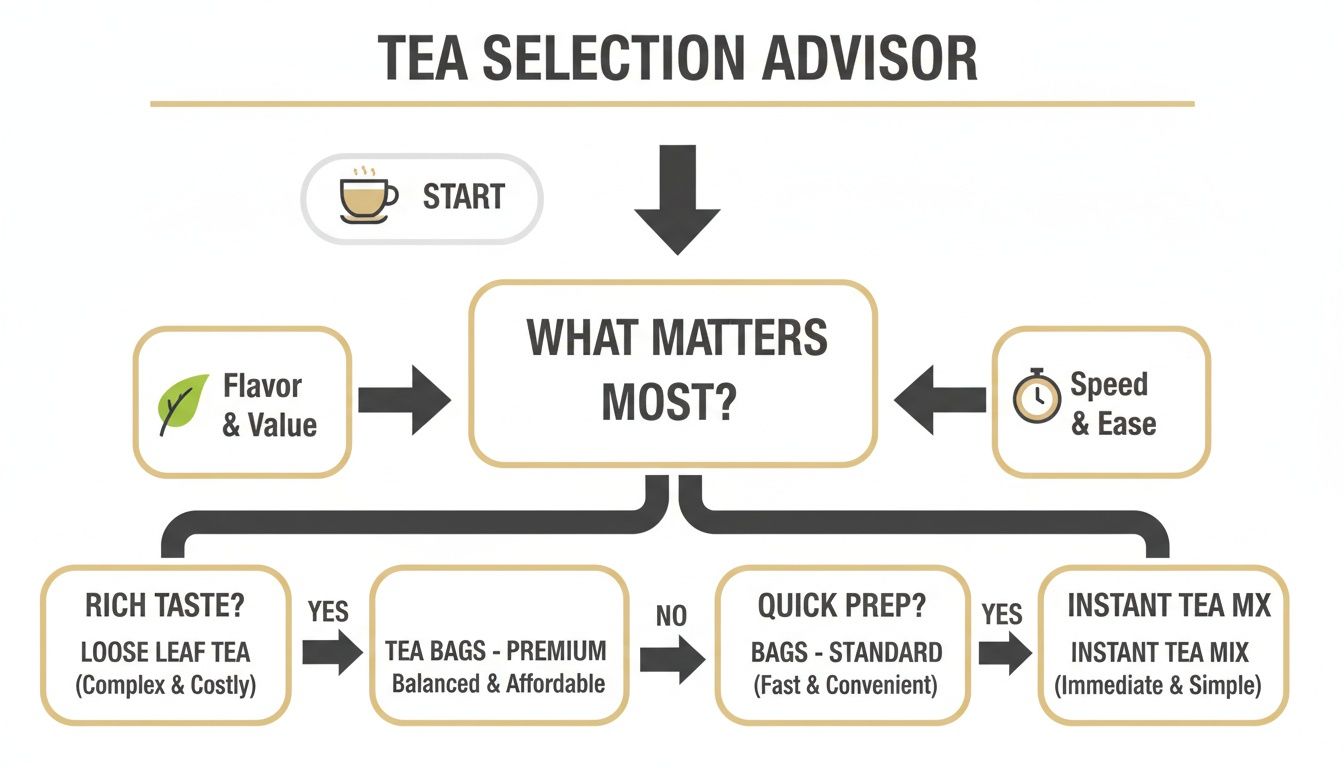
As you can see, it's pretty straightforward. If your main priority is an exceptional taste experience and getting the most out of every leaf, the "Flavor & Value" path points directly to loose leaf. If it's all about "Speed & Ease," tea bags are your go-to.
Recommendations for the Flavor Seeker
If a complex, aromatic, and deeply satisfying brew is what you're after, then loose leaf tea is, without a doubt, the way to go. It’s about giving those whole leaves the space they need to unfurl and release their full spectrum of flavor. This isn't just about making tea; it’s an invitation to slow down and really savor the ritual.
For a classic, robust start to your day, you can't go wrong with our English Breakfast loose leaf. But if you’re in the mood for something more fragrant and adventurous, our Hibiscus Berry blend offers a vibrant, caffeine-free cup that’s bursting with flavor. We strongly encourage you to purchase one of these selections and taste what premium tea can be.
Recommendations for the Efficiency Expert
When your day is packed from morning to night, convenience is king. We'll always champion the superior quality of a loose leaf brew, but we get it—sometimes you just need a quick, no-fuss cup that still tastes great.
The best tea is the one that fits seamlessly into your life. Whether it’s a mindful morning ritual or a quick office brew, the right choice makes every cup a moment of enjoyment.
And to make that perfect cup even better, why not pair it with one of our branded ceramic coffee mugs? They're designed for comfort and style, making that little break in your day feel even more special. We also offer branded shirts, t-shirts, hats, and hoodies for our customers involved in the coffee culture.
Ready to find your new favorite? Explore our full tea collection and discover a world of exceptional flavor. And don't forget to sign up for our e-mail list to receive exclusive offers and be the first to know about new arrivals.
Still Have Questions? Let's Clear Things Up
Even after weighing the pros and cons, you might still be mulling over a few details. Let's tackle some of the most common questions people ask when choosing between loose-leaf tea and tea bags.
Is Loose Leaf Tea Actually Healthier Than Tea Bags?
In many ways, yes. Loose-leaf tea is typically made from whole leaves, which means they hold onto more of their natural essential oils and antioxidants. The tea in most bags, on the other hand, is made from tiny particles called "fannings" and "dust," and the heavy processing can strip away some of those beneficial compounds.
There's also the matter of what the bag itself is made of. Some tea bags, particularly the pyramid-style ones, are made from food-grade plastics that can shed microplastics into your cup when steeped. With loose-leaf tea, you sidestep that issue entirely—you're just brewing the pure, unadulterated plant.
Can I Brew Loose Leaf Tea Without Any Special Equipment?
Absolutely. While a dedicated infuser or teapot simplifies things, you don't need one to get started. The easiest way is to just steep the leaves directly in your mug with hot water.
When it's done brewing, simply pour the tea through a fine-mesh kitchen strainer into another cup. It's a fantastic, no-fuss method to dive into the world of loose-leaf without buying any extra gear.
Are Tea Bags Bad for The Environment?
It really depends on the bag. Many traditional tea bags are sealed with polypropylene, a type of plastic that isn't biodegradable and messes with the composting process. Thankfully, more and more brands are making the switch to plastic-free, fully compostable materials.
As a general rule, loose leaf tea is the most eco-friendly choice. It eliminates the waste from individual bags, strings, and tags, leaving only the compostable leaves behind after you've enjoyed your brew.
Ultimately, the choice between loose-leaf and tea bags boils down to what matters most to you—the ritual and robust flavor, or the quick and easy convenience.
Ready to find a brew that fits your life perfectly? Explore the incredible collection at Beans Without Borders and taste what true quality is all about. Shop our premium loose leaf teas today.