

What Is a Dark Roast Coffee A Guide to Bold Flavors
Ever walked into a coffee shop and been hit by that deep, smoky, almost chocolatey aroma? Chances are, you were smelling a dark roast. So, what makes it so distinctively bold? It all comes down to taking coffee beans and roasting them at high temperatures for a longer duration, pushing them to a deep, dark brown color, often with a visible, oily sheen.
This intense roasting creates the rich, powerful, and sometimes bittersweet flavors that so many of us crave in our morning cup. Ready to find your perfect brew? Explore our collection and discover the rich flavors our coffee has to offer. Make a purchase today and taste the difference.
Your First Look at Dark Roast Coffee
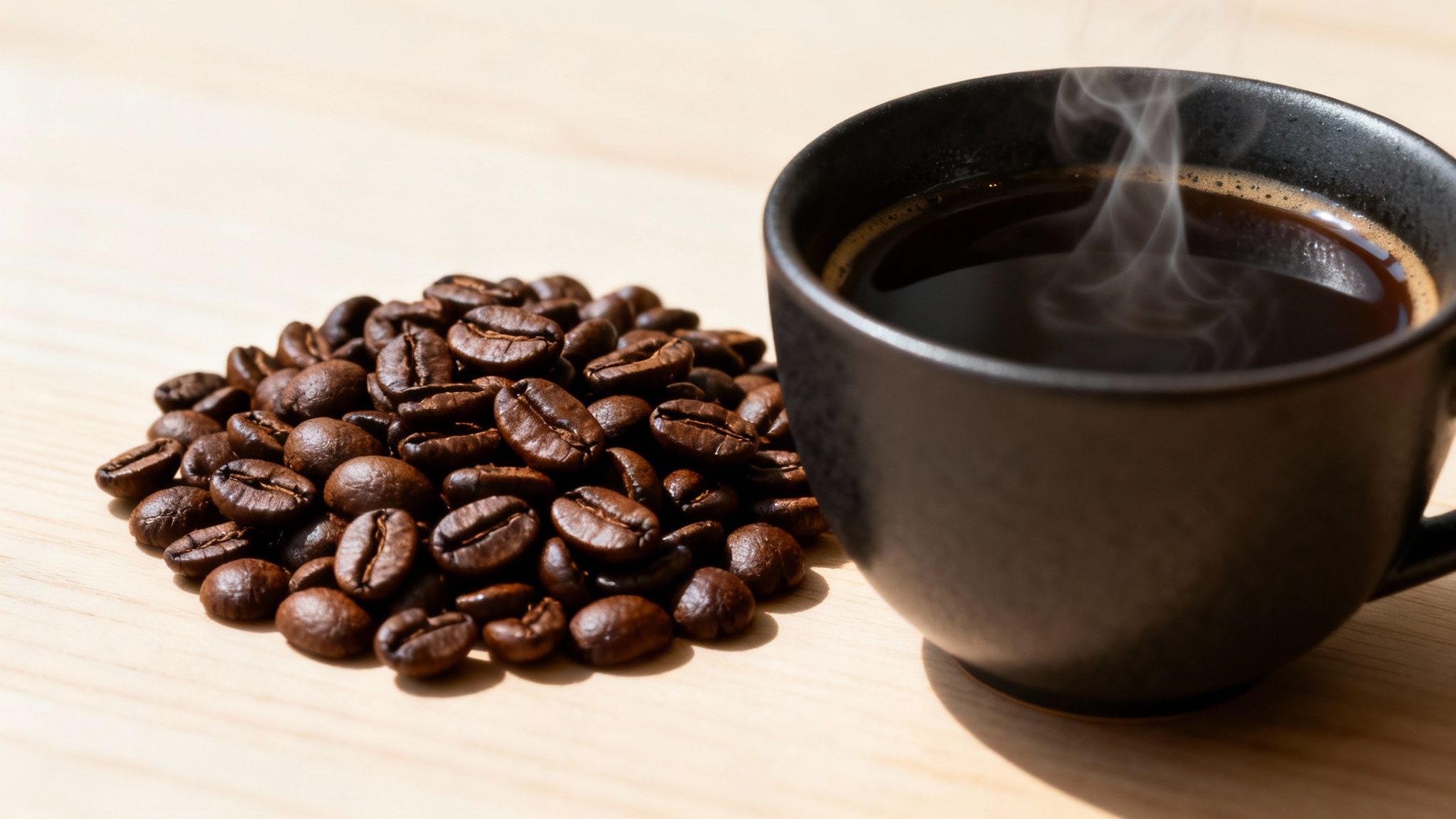
A great way to think about it is like toasting bread. A light roast is like a piece of lightly toasted bread—you can still taste the original flavor of the grain. A dark roast, on the other hand, is toasted until it's deeply browned. The flavor is no longer about the grain itself but about the toasty, caramelized, and smoky notes created by the heat.
That same transformation happens with coffee beans. The extended time in the roaster mutes the bean's natural acidity and brings its oils to the surface. The result? A heavy, full-bodied coffee with a remarkably smooth finish. It's this signature profile that has made dark roasts a classic and the go-to foundation for countless espresso drinks.
What Defines the Dark Roast Experience
The final character of a dark roast coffee is almost entirely in the hands of the roaster. The original, delicate flavors of the bean’s origin—be it fruity notes from Ethiopia or nutty tones from Brazil—are intentionally roasted away. What takes their place are the deep, powerful flavors created by the roasting process itself.
This focus on the roast gives dark coffee its consistent and potent taste, which usually includes:
- Deep, Rich Flavors: Think notes of dark chocolate, toasted nuts, and even a touch of smoky caramel.
- Low Acidity: The intense heat breaks down the bright, acidic compounds, resulting in a cup that's smooth and often easier on the stomach.
- Full Body: Those oils that migrate to the bean's surface give the brewed coffee a heavier, more viscous mouthfeel.
- Oily Sheen: A hallmark of a true dark roast, this oily surface is a visual cue that the beans have been roasted long enough to release their flavorful lipids.
The goal of a dark roast isn't to taste the bean's origin; it's to taste the masterful craft of the roast itself. This focus on process results in a dependably bold and satisfying flavor.
If you’re someone who loves a classic, no-nonsense coffee with a powerful punch, a high-quality dark roast is an absolute must-try. It makes for an incredible morning brew and stands up perfectly to milk and sugar in a latte. Ready to dive in? Our meticulously crafted Beans Without Borders French Roast is a perfect introduction to the world of deep, smoky flavor. Click the link and make a purchase to start your journey.
The Roasting Process Behind Bold Coffee
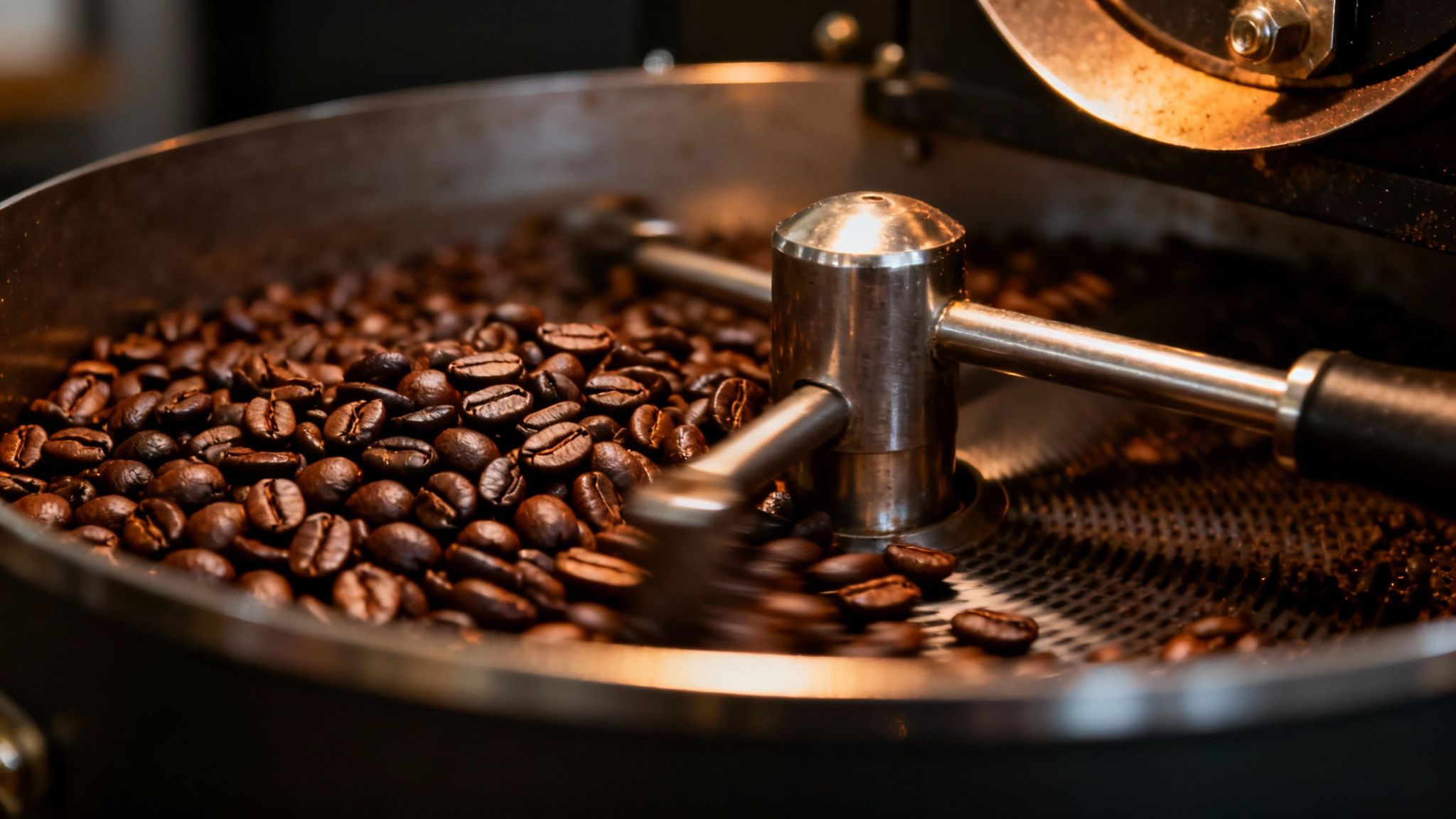
To really get what dark roast is all about, you have to picture what happens inside the roaster. This is where the magic happens, transforming a simple green coffee bean into the bold, rich coffee we know and love. It’s a delicate dance of heat and time, pushing the beans to temperatures between 430-450°F (220-232°C). This is where the roaster’s skill truly shines.
As the beans tumble in the heat, they reach a crucial moment called the “second crack.” It’s a literal popping sound, a lot like popcorn, signaling that the bean's internal structure is breaking down and oils are being forced to the surface. That signature oily sheen on a dark roast bean? That’s the second crack talking.
This extended stay at such high temperatures changes the bean on a fundamental level. It quiets down the original, more delicate flavors that come from its origin—those bright, fruity notes from an Ethiopian bean or the gentle, nutty profile from a Peruvian one start to fade into the background.
From Origin Notes to Roast Flavors
So, what takes their place? In short: the powerful, deep flavors created by the roast itself. The intense heat caramelizes the sugars locked inside the bean, giving rise to a completely new flavor profile.
You’ll often hear these flavors described in a few classic ways:
- Smoky and Toasty: This is the most dominant note, calling to mind a cozy wood fire or deeply toasted almonds.
- Dark Chocolate: A rich, often bittersweet cocoa flavor that has become the hallmark of many beloved dark roasts.
- Low Acidity: The heat breaks down the natural acids, resulting in a smooth, mellow finish that’s easy on the palate.
This is precisely why a good dark roast is often seen as a showcase of the roaster's craft. The challenge isn't just to roast dark, but to develop a consistent, satisfying, and bold flavor where the artistry of the roast is the real star. Famous styles like French and Italian roasts are defined by this very process, known for their oily surfaces and deep, smoky character.
For dark roast fans, the appeal is all about that reliable and potent flavor. It's less about chasing the subtle, exotic notes of a specific farm and more about savoring the rich, masterful taste created in the roaster.
And that appeal is huge. The global market for dark roast coffee beans was valued at $6.69 billion, which tells you just how many people crave these intense flavors. North America is a major player, with a market share of $1.38 billion, thanks in large part to a booming specialty coffee culture. This popularity is a testament to the value we place on the consistent, bold flavors that only a dark roast can offer. You can dive deeper into the data and find additional insights into its global appeal.
This is the kind of dedication we pour into our single-origin dark roasts. We carefully roast beans from Bali and Mexico to unlock their deepest, boldest flavors—perfect for a strong Americano or a rich pot of French press. And while you’re exploring our coffee, why not show off your passion with one of our comfortable branded t-shirts or hoodies? We also offer the best loose leaf tea online for those looking to explore other beverages.
Comparing Light, Medium, and Dark Roasts
To really get a feel for what a dark roast coffee is all about, it helps to put it in context with its lighter counterparts. The roast level is probably the single biggest dial a roaster can turn to influence how a coffee tastes, smells, and even feels in your mouth. Each roast level tells a completely different story.
Light roasts are all about celebrating the bean's origin. By keeping the roast time short, we preserve the natural, bright, and often fruity or floral notes that come directly from the specific farm and region where the coffee was grown. Think of it as a pure expression of the bean itself, typically with a crisp acidity and a lighter body.
Medium roasts, as you might guess, are the great compromisers. They walk a fine line, toning down some of the sharp acidity you find in a light roast while starting to introduce those deeper, caramelized flavors that come from the roasting process itself. This gives you a really well-rounded cup with more body and a smoother profile. To learn more, check out our guide to the best medium roast coffee beans and see why they're such a crowd-pleaser.
Roast Levels Side-By-Side
Sometimes, the easiest way to understand the differences is to see them laid out plainly. This quick comparison table breaks down the main characteristics of each roast level, so you can zero in on what you're really looking for in your morning cup.
Coffee Roast Comparison: Light vs. Medium vs. Dark
| Characteristic | Light Roast | Medium Roast | Dark Roast |
|---|---|---|---|
| Flavor Profile | Bright, fruity, floral, grainy | Balanced, sweet, caramel, nutty | Smoky, dark chocolate, roasty, bold |
| Acidity Level | High | Medium | Low |
| Body (Mouthfeel) | Light, tea-like | Medium, smooth | Heavy, full, viscous |
| Bean Appearance | Light brown, no oil | Medium brown, minimal oil | Dark brown to black, oily sheen |
As you can see, the journey to a dark roast completely reshapes the coffee bean. It’s a trade-off: you swap the bean’s delicate, origin-specific flavors for the bold, powerful notes created by the roaster’s fire. What you get is a cup that’s low in acidity, heavy in body, and defined by those rich, smoky flavors.
The Great Caffeine Myth
One of the most stubborn myths in coffee is that dark roasts have more caffeine. It makes a certain kind of sense—bolder flavor must mean a bigger jolt, right? Well, it turns out the opposite is generally true.
Key Takeaway: Lighter roasts actually have slightly more caffeine by weight. The intense heat and longer time needed to create a dark roast burn off a tiny bit of the caffeine along with moisture and other compounds.
The difference isn't dramatic, but it’s enough to bust the myth that a dark roast is "stronger" in the caffeine department. That feeling of strength you get from a dark roast comes from its powerful flavor and heavy body, not its stimulant kick.
At the end of the day, picking a roast comes down to what you love to taste. Are you after the nuanced, origin-driven notes of a light roast? Or the comforting, balanced sweetness of a medium? Or do you crave the rich, smoky intensity that only a dark roast can deliver? We encourage you to click our links and make a purchase of the coffee that best suits your taste.
How to Brew Your Perfect Cup of Dark Roast
So, you've got your hands on some beautiful dark roast beans. Now what? The key to an unforgettable cup is matching the right brewing method to the coffee's unique personality—its rich oils, low acidity, and heavy body. Certain techniques just know how to bring out that deep, smoky profile we all love.
This graphic really helps visualize the journey from light to dark roast, showing how flavor, body, and acidity shift along the way.
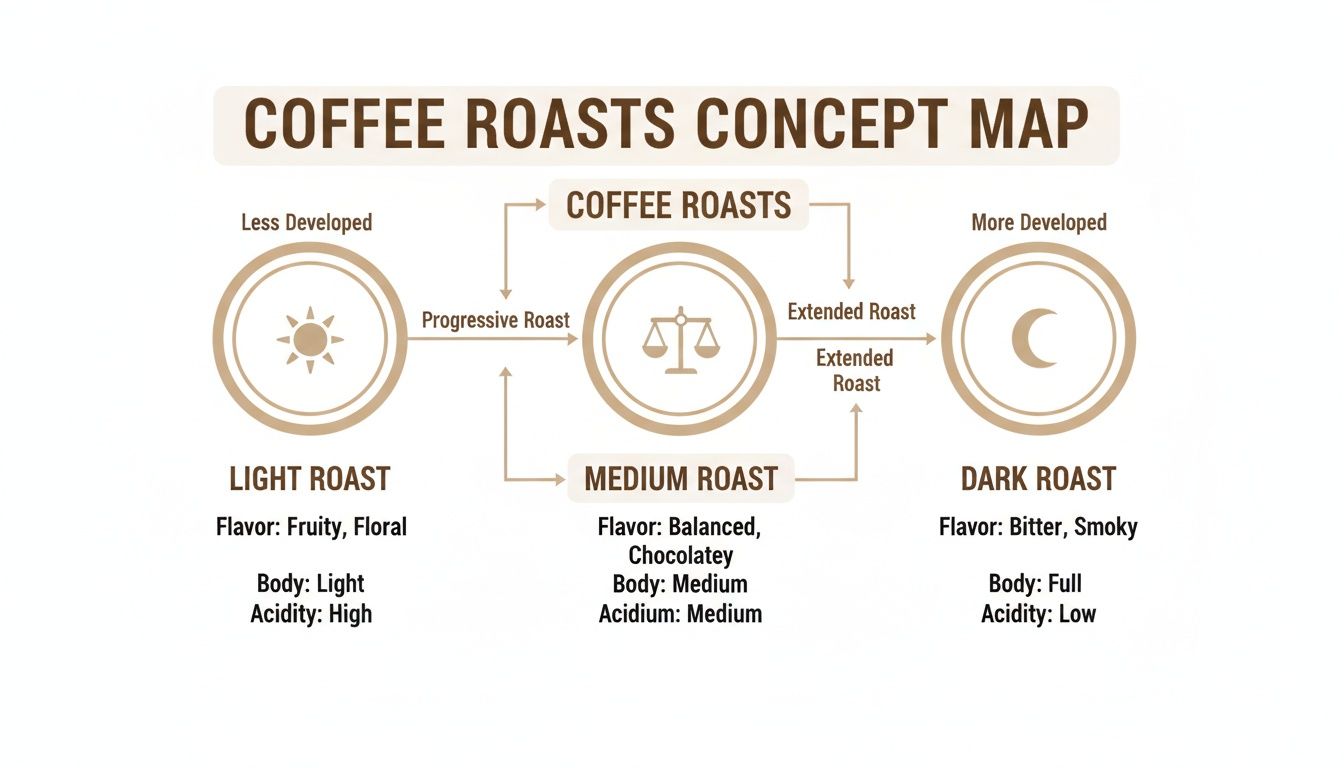
As you can see, the further you go into the roast, the more you trade bright, origin-specific notes for a bold, roasty character and a much fuller body. Let's dig into the brewing methods that make a dark roast truly sing.
The French Press Advantage
For a classic, full-bodied experience, the French press and dark roast are a match made in heaven. This immersion method lets the grounds steep directly in hot water, pulling out every last bit of the rich oils and solids that give dark roasts their signature heft. You end up with a viscous, intensely flavorful brew that a standard drip machine just can’t touch.
- Why It Works: Unlike paper filters, the metal filter in a French press allows those flavorful oils and microscopic coffee particles to make their way into your cup. This is what creates that incredible texture and mouthfeel.
- Pro Tip: Go for a coarse grind—think of the texture of coarse sea salt. This will keep your brew from becoming bitter and silty.
- Our Recommendation: The bold, chocolatey notes of our Beans Without Borders French Roast are spectacular when brewed in a French press. It produces a deeply satisfying cup that’s both smooth and powerful.
Pulling the Perfect Espresso Shot
There's a reason dark roasts are the traditional backbone of espresso. Their low acidity and rich, almost syrupy body create the perfect canvas for classic café drinks like lattes, cappuccinos, and Americanos. The high-pressure extraction of an espresso machine pulls a concentrated shot that puts those deep, caramelized flavors front and center.
To pull a great shot, just follow these simple steps:
- Dose Correctly: Start with a consistent amount of finely ground coffee in your portafilter.
- Tamp Evenly: Apply firm, level pressure to create a compact puck. This ensures water flows through it evenly.
- Brew Immediately: Lock in the portafilter and start your shot right away to keep the temperature stable.
A great dark roast espresso shot should be rich, intense, and crowned with a thick, reddish-brown crema. Its bold flavor stands up beautifully to steamed milk. For a flawless espresso every time, give our versatile Beans Without Borders French Roast a try.
Don't forget that water temperature is a huge piece of the puzzle, no matter how you brew. To really nail your technique, take a look at our guide on the best water temperature for brewing coffee.
Whether you're a French press fan or an espresso aficionado, choosing the right brew method is how you unlock the very best your dark roast beans have to offer.
Pairing Ideas for Dark Roast Coffee
Taking your dark roast beyond the morning mug is where the real fun begins. Its bold, smoky character and heavy body make it a fantastic culinary partner, one that can hold its own against rich flavors without getting lost in the mix.
The most classic pairing, of course, is dark chocolate. The bittersweet notes in a good dark roast and a quality piece of chocolate just sing together, creating a seamless, decadent experience. A buttery pastry, like a simple croissant or a rich almond bear claw, also works wonders. Its flaky texture and sweetness cut right through the coffee’s intensity.
But don't just think sweet. The robust profile of a dark roast stands up beautifully to savory foods.
- Strong Cheeses: A sharp, aged cheddar or a creamy gouda creates a fantastic contrast with the coffee's roasty notes.
- Smoked Meats: The smokiness in bacon or cured sausage harmonizes perfectly with those similar notes found in the coffee.
- Toasted Nuts: Walnuts, pecans, and almonds are great for teasing out the subtle nutty undertones often present in dark roasts.
Crafting Café-Quality Drinks at Home
Dark roast coffee really comes into its own as the base for espresso drinks. Its low acidity and powerful flavor profile mean it won't get watered down or overwhelmed by milk, making it the perfect choice for recreating your favorite café drinks right in your kitchen. We highly recommend our Beans Without Borders French Roast for any of these drinks.
For a classic Latte or Cappuccino, a shot of dark roast espresso provides that intense foundation for steamed milk. The type of milk you choose can really change the final drink.
- Whole Milk: This will give you that rich, creamy, traditional texture.
- Oat Milk: A fantastic alternative that’s naturally sweet and creamy, complementing the roast's deep flavors.
- Almond Milk: This makes for a lighter-bodied drink with a subtle nutty finish.
And for a truly indulgent Mocha, just add a bit of chocolate syrup to your espresso before pouring in the steamed milk. The dark roast base ensures the drink is rich and chocolatey without being cloyingly sweet.
The secret to a great coffee drink is starting with a great base. A high-quality dark roast espresso shot provides the depth and intensity needed to balance milk and flavorings, ensuring the coffee's character is never lost.
The origin of your beans can add another layer of complexity. While the roast profile is dominant, those subtle regional characteristics can still peek through. To get a better sense of how a bean's origin influences these underlying notes, you can explore our guide to famous coffee growing regions and their distinct taste profiles.
For the ultimate at-home café experience, serve your perfectly crafted creations in one of our beautiful, branded ceramic coffee mugs. They’re designed to feel great in your hands and make every sip feel special.
Let's Clear the Air: Common Dark Roast Myths
Dark roast coffee has a bit of a reputation, and frankly, a lot of it is just plain wrong. There are some persistent myths floating around that might keep you from trying what could be your new favorite brew. Let's tackle these misconceptions head-on.
One of the biggest whoppers is that dark roast is "stronger" because it has more caffeine. It tastes strong, absolutely. That bold, in-your-face flavor is what many of us love. But when it to comes caffeine, the longer roasting process actually cooks a tiny bit of it away.
If you measure your coffee by the scoop, a light roast will often have slightly more caffeine. The "strength" you perceive in a dark roast is all about its rich flavor and heavy body, not the buzz.
Beyond Burnt and Bitter
"Aren't all dark roasts just bitter and burnt?" This is another one I hear all the time. Look, a bad dark roast is definitely bitter. But that's a sign of a roaster who didn't know what they were doing, not a flaw in the style itself.
A masterfully handled dark roast is something else entirely. It’s smooth, low in acidity, and packed with deep, comforting notes of dark chocolate, toasted nuts, and smoky caramel.
If your dark roast tastes harsh, it’s far more likely a brewing issue—think water that’s too hot or a grind that’s too fine. A great dark roast should be bold, never bitter.
People also assume the roasting process completely obliterates the bean's original character. While the roast is certainly the star of the show, a good roaster knows how to let the bean's origin peek through. For example, our Ugandan beans still bring their own unique complexity to the cup, adding a subtle depth that beautifully complements the classic dark, roasty flavors.
An Old-School Classic for a Reason
Dark roast isn't some new trend; its roots go deep, all the way back to 17th-century Europe. Italian roasters, in particular, perfected this style and basically laid the groundwork for the entire espresso culture we enjoy today.
Its popularity isn't fading, either. The specialty coffee market is valued at over $24 billion globally and continues to grow. That tells you something: the love for a rich, bold, and satisfying cup of dark roast is as strong as ever. You can see the numbers on the specialty coffee market for yourself.
Answering Your Dark Roast Coffee Questions
We talk to a lot of coffee lovers, and a few questions about dark roasts pop up time and time again. Let's clear the air and tackle some of the most common curiosities we hear.
Is Dark Roast Coffee Less Acidic?
Absolutely. The longer roasting process fundamentally changes the beans, breaking down the chemical compounds (specifically, chlorogenic acids) responsible for that bright, tangy acidity you find in lighter roasts.
The result is a noticeably smoother, mellower cup. This is great news if you find other coffees a bit harsh or you have a sensitive stomach—a dark roast is often much gentler.
How Should I Store My Dark Roast Beans?
Proper storage is key, especially with dark roasts. Those beautiful, oily beans can lose their magic a little quicker if you're not careful.
Your best bet is to keep them in an airtight container at room temperature. Find a spot in a cool, dark cabinet, far away from sunlight, heat, and moisture, which are the enemies of fresh coffee. For the best flavor, try to enjoy them within two to three weeks of opening the bag.
Which Dark Roast Should I Try First?
Diving into dark roasts can feel like a big step, but we've got the perfect introduction. We highly recommend our Beans Without Borders French Roast.
It gives you a fantastic example of a classic, bold dark roast, letting you taste the unique character of this style. It's truly the best way to figure out what you like. And hey, be sure to sign up for our e-mail list—we'll send you a nice little discount for your first order!
Ready to find a bold brew that speaks to you? At Beans Without Borders, we’re passionate about bringing incredible coffee from around the world straight to your kitchen. Come explore our collection and taste what a truly masterful dark roast is all about. We are part of the coffee culture and offer branded shirts, t-shirts, hats, hoodies and ceramic coffee mugs for you to enjoy.