

What Is Single Origin Coffee: what is single origin coffee and regional flavors
Ever picked up a bag of coffee labeled "single origin" and wondered what that really means? Put simply, it’s coffee that comes from one specific place. We're not just talking about a country—it could be a single farm, a small cooperative of growers, or a particular region known for its unique beans.
Think of it like a fine wine. Just as a Pinot Noir from Burgundy, France tastes completely different from one grown in Oregon, coffee beans tell the story of where they came from. The soil, the climate, the altitude—it all comes through in the cup. Single origin coffee is your chance to taste that story, and we invite you to find the perfect beans for your next brew.
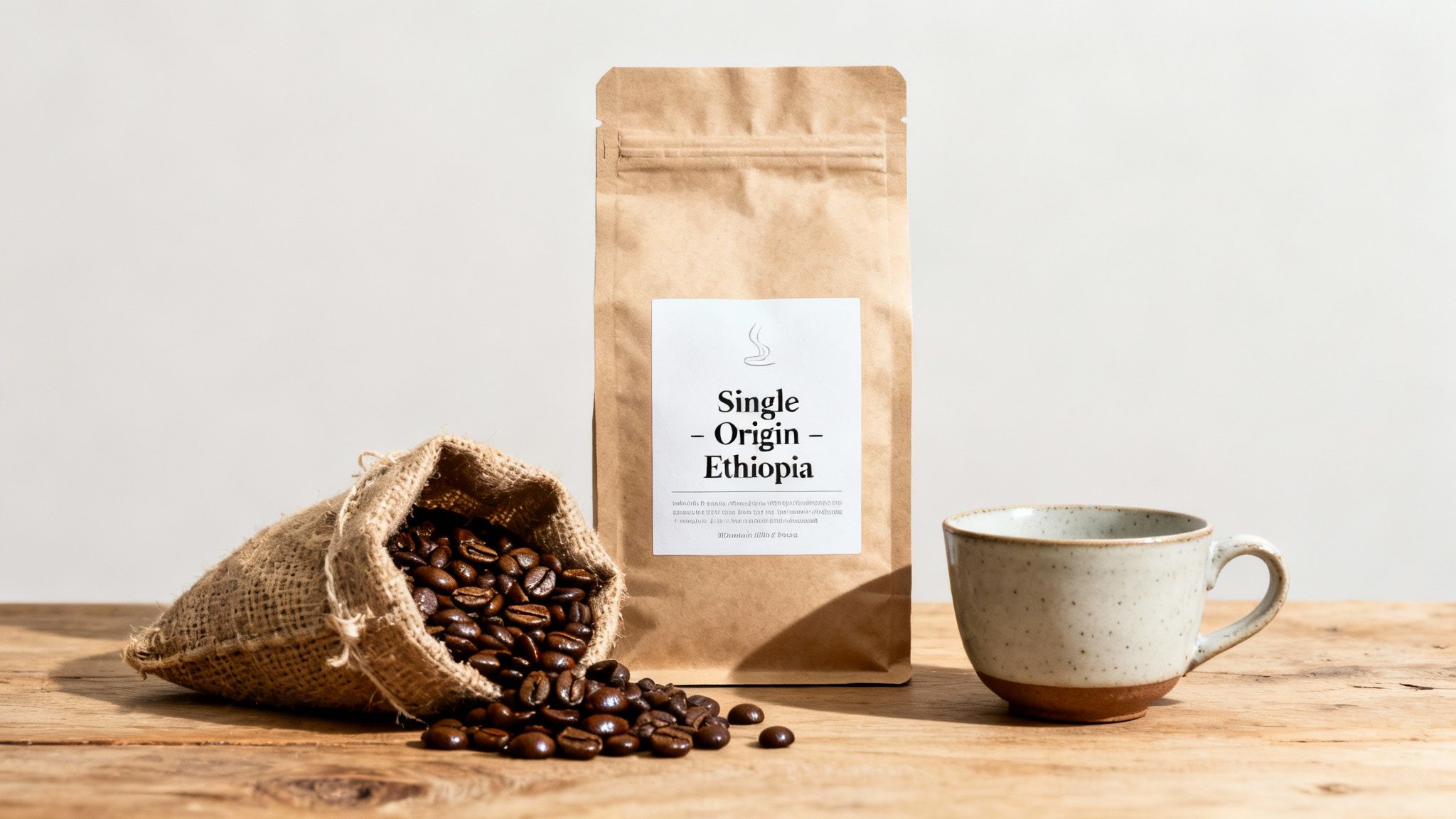
Single Origin vs. Blends: What’s the Difference?
So, how does this differ from the coffee blends most of us are used to? Blends are created by mixing beans from various origins. The goal is consistency—to deliver the same reliable, balanced flavor profile every single time. It's a fantastic way to create a crowd-pleasing coffee.
Single origin, on the other hand, is all about celebrating uniqueness. It’s about showcasing the distinct, sometimes wild, flavors of one particular place. You might get the bright, floral, almost tea-like notes from an Ethiopian Yirgacheffe or the deep, nutty chocolate tones from a high-altitude farm in Peru. It’s a flavor adventure waiting for you to explore and purchase.
To make it even clearer, here’s a quick rundown of the key differences.
Single Origin Coffee vs Blends at a Glance
| Characteristic | Single Origin Coffee | Coffee Blends |
|---|---|---|
| Flavor Profile | Distinct, unique, and often complex. Varies with each harvest. | Consistent, balanced, and predictable year-round. |
| Origin | One specific farm, co-op, or region. | Multiple origins from different countries or regions. |
| Traceability | High. You can often trace it back to the exact farm. | Lower. The specific mix of beans can change. |
| Best For | Coffee lovers looking to explore specific flavors and origins. | Drinkers who prefer a reliable, consistent taste every day. |
| Brewing | Great for methods that highlight nuance, like pour-over or siphon. | Versatile. Excellent for espresso and everyday drip brewing. |
Essentially, neither is "better"—they just serve different purposes. Blends offer comfort and consistency, while single origins provide discovery and excitement. We encourage you to click through our collection and find a coffee that speaks to you.
Why Does Origin Matter So Much?
The magic behind a single origin coffee lies in a concept wine lovers call terroir. It's the idea that a region's specific environment—its climate, soil, and altitude—imparts a unique flavor and aroma profile into the crop.
Here’s what really makes a difference:
- Altitude: Beans grown at higher elevations tend to be denser, more acidic, and pack a more complex flavor punch.
- Climate: The amount of sun, rain, and daily temperature swings all play a huge role in how the coffee cherry develops its sugars and acids.
- Soil Composition: Just like with any plant, the minerals and nutrients in the soil directly influence the final taste in the cup.
This focus on transparency and unique flavors has really captured the attention of coffee drinkers. The global single origin coffee market was valued at $3.2 billion and is expected to keep growing, which shows a real shift toward wanting authentic, traceable coffee experiences.
By choosing single origin, you’re not just buying coffee; you’re exploring a specific corner of the world. It’s a direct connection to the farmers and the land, offering a pure, unblended taste that can't be replicated.
Jumping into this world can feel a little intimidating at first, but it's incredibly rewarding. A great starting point is exploring a curated selection of single origin coffees from around the globe. It allows you to taste different profiles side-by-side and find your new favorite coffee to purchase today.
A Flavor Journey Through Global Coffee Regions
So, we've covered what makes single-origin coffee a big deal. Now for the fun part: exploring how geography shapes what's in your cup. Drinking single-origin coffee is like taking a trip around the world, where each region offers a completely unique taste of its land—what the wine world calls terroir. This is where our whole philosophy comes to life, connecting you straight to the source.
The flavors you're tasting don't just happen by accident. They're a direct result of the specific climate, the soil the trees grow in, and the altitude of the farm. Think of it as a flavor fingerprint, something that’s impossible to replicate anywhere else on Earth.
Tasting the World One Cup at a Time
Every coffee-growing region tells a story through its beans. Those distinct profiles are a testament to the local environment and the hard work of the farmers who live there. Exploring these differences is one of the greatest joys of specialty coffee, and we make it easy for you to experience them.
Here are just a few of the celebrated regions we source from, each with its own signature character:
-
Ethiopia: Widely considered the birthplace of coffee, Ethiopia produces beans that are bright, incredibly aromatic, and almost tea-like in their delicacy. You'll often find vibrant notes of blueberry, bergamot, and soft florals. The high altitudes and ancient heirloom coffee varieties come together to create a light body and a clean, crisp finish that is perfect for an Americano.
-
Peru: Tucked away in the Andes mountains, Peruvian coffee is all about a smooth, gentle, and really approachable profile. Expect comforting flavors like milk chocolate, toasted nuts, and a subtle, lingering sweetness. Its balanced nature makes it an excellent choice for a rich Mocha or a daily drip brew.
-
Bali: From the volcanic soils of Indonesia, you get a coffee that is rich, earthy, and seriously complex. Balinese beans often have a full, almost syrupy body with deep notes of dark chocolate, cedar, and sometimes a little hint of spice. Our very own Bali Blue Moon is a perfect example of this deep, satisfying flavor, ready for you to purchase and enjoy.
-
Mexico: Mexican coffees are often celebrated for being exceptionally balanced and clean. They typically have a light to medium body with delightful notes of brown sugar, a hint of citrus, and a smooth, nutty aftertaste. These versatile beans are the ideal foundation for a creamy Latte.
Exploring these regions helps you see how a single ingredient can offer such an incredible spectrum of flavor. Each origin is a new chapter in your coffee story, ready to be purchased and explored.
Getting a handle on these foundational tastes is the first step toward finding a single-origin coffee you'll absolutely love. If you want to dive deeper, you can learn more about the unique characteristics of famous coffee growing regions and their taste profiles. This knowledge will help you pick beans that truly excite your palate, turning your daily coffee routine into a genuine adventure.
How Roasting and Processing Shape Your Coffee's Taste
Ever wonder how a coffee bean from a farm in Peru becomes the rich, aromatic brew in your morning mug? The journey is a fascinating one, and two of the most critical steps—processing and roasting—are what truly shape its final character. Think of them as the director and editor of your coffee's story.
How a coffee cherry is handled right after it's picked makes a world of difference. That initial decision on the farm sets the stage for everything that follows, from the floral notes of an Ethiopian bean to the earthy cocoa hints from Peru.
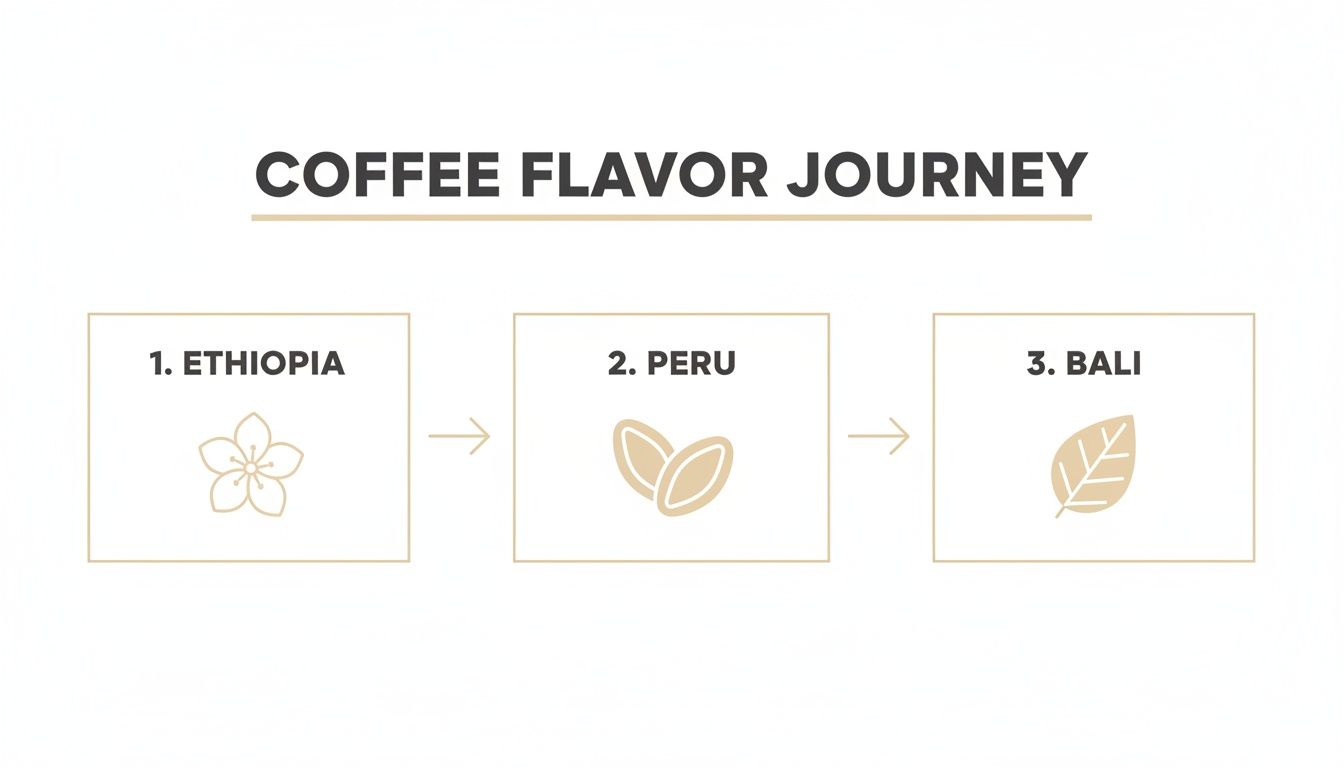
As you can see, each origin brings its own unique terroir to the table. Processing and roasting are the techniques used to refine and showcase that foundation.
The Art of Processing
At its core, processing is simply how farmers get the coffee bean out of the fruit that surrounds it. But "simple" doesn't do it justice. It's a craft that has a massive impact on the bean's sweetness, acidity, and body. This is really the first big flavor decision in the coffee's life.
You’ll typically come across three main methods:
- Washed Process: Here, the fruit pulp is completely washed away from the bean before it's dried. This method delivers an exceptionally clean, bright, and crisp cup. It really lets the coffee’s inherent acidity and true origin flavors shine through without anything getting in the way.
- Natural Process: With this method, the entire coffee cherry is dried whole, bean and all. The bean spends its drying time in close contact with the fruit, which imparts intense, sweet, and often very fruity flavors—we're talking notes of blueberry, strawberry, or even tropical fruit.
- Honey Process: This one is a happy medium. Some of the fruit pulp is left on the bean as it dries, but not all of it. The result? A cup with a lovely balanced sweetness, a silky body, and a more mellow acidity. It’s not as wild as a natural, but it’s sweeter than a washed coffee.
The Magic of the Roast
Once the beans are processed and dried, they arrive at our roastery as "green coffee," full of potential but not yet ready to brew. Roasting is where that potential is finally unlocked. A skilled roaster can choose to highlight the delicate, nuanced notes of a bean's origin or develop deeper, richer flavors. For a closer look at how the bean's form plays a role, check out our guide on whole bean vs ground coffee.
The roaster's job is to listen to the bean. A light roast on an Ethiopian coffee preserves its bright, floral elegance, while a medium roast on a Peruvian bean can unlock rich layers of chocolate and toasted nuts.
Ultimately, knowing a little about these steps puts you in the driver's seat. Whether you prefer the clean brightness of a washed coffee or the bold fruitiness of a natural, this knowledge helps you find and purchase a single-origin coffee you will absolutely love.
Choosing the Best Brewing Method for Your Beans
So you’ve found the perfect single-origin beans. Now for the fun part: bringing their story to life in your cup. The brewing method you choose isn't just a step in the process; it's the final creative touch that will either mute or magnify all the unique characteristics of that specific origin.
Think of it this way: brewing is how you translate the bean's journey into flavor. It can pull out the delicate, floral notes of a high-altitude Ethiopian coffee or amplify the deep, earthy richness of a Balinese bean. It’s all about matching the technique to what the bean has to offer. Remember, single-origin coffee is all about its traceability to one specific place, capturing a unique terroir that you just don't get from blends. The entire market is booming, projected to hit $25.3 billion by 2034 with a 5.6% CAGR, driven by people like us who appreciate a good story in their morning brew.
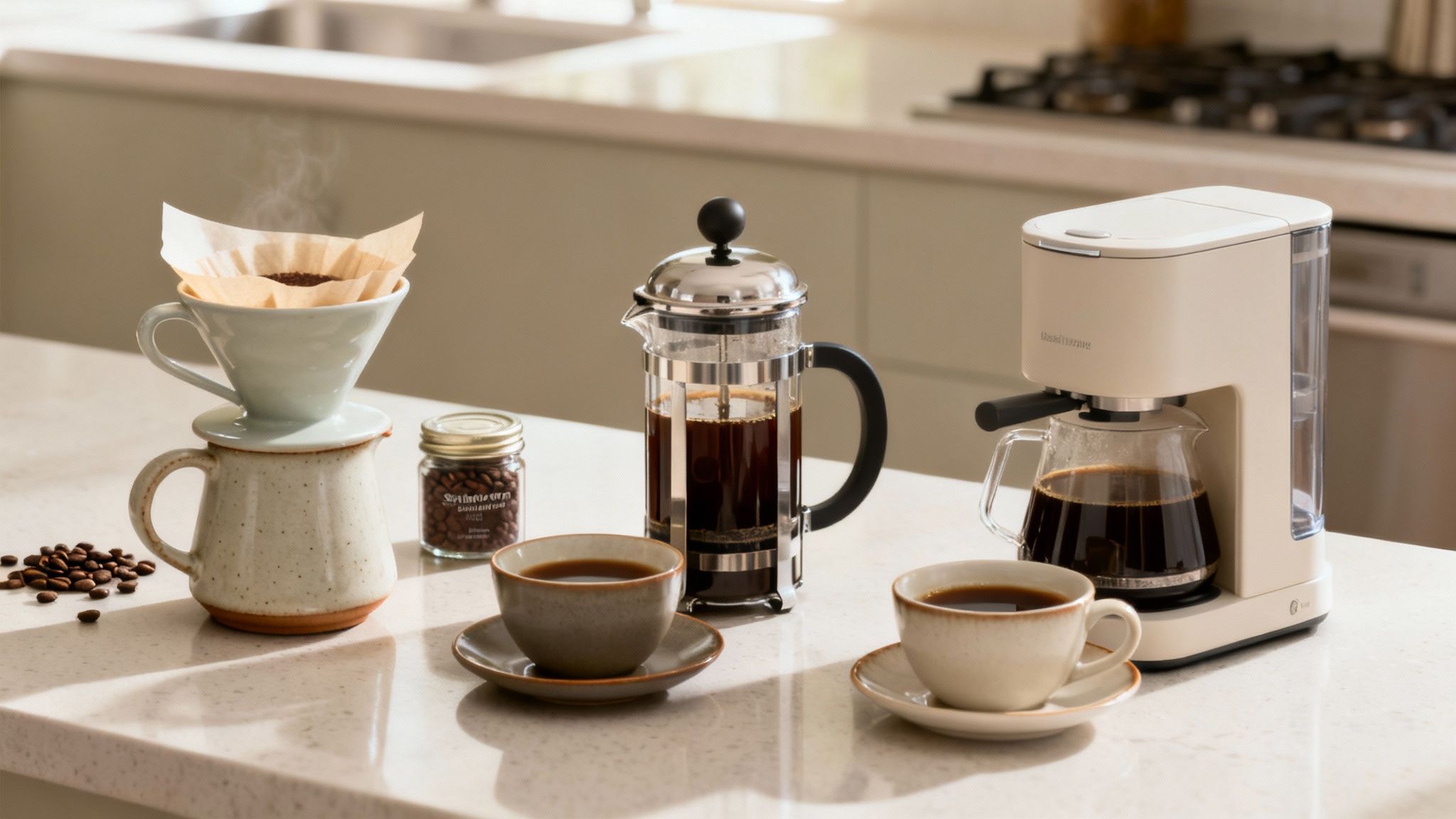
Pour-Over: For Precision and Clarity
If you're a coffee lover who enjoys the ritual and wants total control, the pour-over is your best friend. It lets you manage every variable, from water temperature to the speed of your pour. This level of precision is exactly what you need to highlight the subtle, complex notes of a delicate, light-roast coffee. The paper filter creates an incredibly clean, bright cup where every nuance—floral, fruity, or tea-like—can shine through.
- Best for: Coffees with bright acidity and delicate floral or fruit notes.
- Our Recommendation: The bright, citrusy notes of our Ethiopian Yirgacheffe truly sing when prepared with a pour-over. Click to make a purchase and experience it yourself.
French Press: For Body and Richness
On the other end of the spectrum is the French press, the go-to for anyone who craves a coffee with a full, heavy body and a truly robust flavor. This is an immersion method, meaning the grounds steep directly in hot water, pulling out every last bit of flavor. Because it uses a metal mesh filter, all the natural oils make their way into your cup for a rich, velvety texture.
- Best for: Darker roasts or beans with deep chocolate and earthy notes.
- Our Recommendation: Any of our coffees with bold, rich profiles will create a deeply satisfying cup. We encourage you to browse our shop and find the perfect match.
The French press is an unfiltered look into your coffee’s soul, capturing its full-bodied essence and delivering a deeply satisfying, complex cup.
Drip Coffee: For Consistency and Balance
Let's not forget the classic automatic drip machine. It’s the workhorse of the coffee world for a reason: convenience and reliability. It's a fantastic way to brew a balanced and consistent cup, especially when you’re making coffee for a crowd. Modern drip brewers have come a long way, offering excellent temperature control that ensures a proper, even extraction. For a deeper dive into all the options, check out our guide on the different types of coffee brewing methods.
- Best for: Medium-roast coffees with balanced profiles.
- Our Recommendation: The smooth, nutty, and chocolatey notes of our Peruvian beans make for a perfect and satisfying daily drip brew. Click the link to purchase a bag today.
Creating Your Favorite Coffee Drinks at Home
That daily coffee ritual of yours? It’s the perfect time to explore just how versatile single-origin beans really are. You can take the café favorites you already know and love and elevate them right in your own kitchen, all by starting with a coffee that has a unique character and story. Here are a few popular drinks you can master.
- Espresso: A concentrated shot of coffee, the foundation for many other drinks.
- Americano: Espresso diluted with hot water, highlighting the bean's pure flavor.
- Latte: Espresso with a large amount of steamed milk and a small layer of foam.
- Macchiato: An espresso "marked" with a small dollop of milk foam.
- Mocha: A latte with added chocolate syrup or cocoa powder.
- Frappe: An iced coffee drink, often blended with milk and sweeteners.
- Breve: A latte made with steamed half-and-half instead of milk for extra richness.
- Affogato: A scoop of vanilla ice cream "drowned" in a shot of hot espresso.
Pairing Origins with Classic Drinks
Choosing the right single-origin bean can turn a good drink into a truly great one. The trick is to match the bean's inherent flavors with whatever you're adding, whether it's rich chocolate or creamy milk.
Here are a few classic pairings to get you started:
- The Perfect Mocha: A great mocha demands a coffee that won’t get bullied by the richness of chocolate. The deep, nutty, and cocoa-forward notes of our Peruvian Single Origin Coffee are a perfect match, creating a decadent, well-balanced mocha that’s pure comfort in a mug.
- A Smooth and Creamy Latte: For a latte, you want a coffee that’s smooth and balanced—something that plays well with milk without getting lost. Our Mexico Single Origin Coffee brings a clean profile with hints of brown sugar, making for a perfectly smooth and satisfying latte, every single time.
- A Bold and Flavorful Americano: An Americano is all about appreciating the unadulterated character of the espresso, so you’ll want a bean with bright, complex flavors. The vibrant, almost tea-like floral notes of our Ethiopian Yirgacheffe Coffee shine here, creating a memorable and aromatic Americano that puts its origin on full display.
By thoughtfully pairing your beans with your drink, you’re not just making coffee; you’re crafting a unique flavor experience. Click the links above to purchase the recommended coffees and bring the specialty coffee shop experience home.
The Role of Milk in Your Coffee
Don't forget about the milk! The type you choose can dramatically change the final taste of your drink. Different milks interact with the unique acids and flavors of single-origin coffee in completely different ways.
Think about how these common choices can influence your brew:
- Dairy Milk: Whole milk adds a rich, creamy texture and a subtle sweetness that complements almost any coffee, but it’s especially good with chocolatey and nutty profiles like those from Peru.
- Oat Milk: Loved for its creamy consistency and neutral flavor, oat milk is a fantastic partner for a wide range of coffees. It lets the origin's unique notes shine through without getting in the way.
- Almond Milk: This milk often brings its own slightly nutty flavor to the party, which can beautifully enhance the nutty undertones found in many coffees from Mexico or Peru.
Beyond the Bean: Explore Our Teas and Gear
Our world revolves around finding the most incredible single-origin coffees on the planet, but our love for authentic flavor doesn't stop there. We believe every great beverage tells a story about where it came from, and that includes tea. That's why we’ve sourced some of the best loose leaf tea online, applying the same meticulous care we give our coffee beans.
When you're in the mood for something different, our tea collection opens up a new world of taste. Fancy the warming, aromatic spices of a traditional Masala Chai? Or maybe the bright, refreshing notes of our Hibiscus Berry blend? Each one is crafted to deliver a memorable experience—the perfect way to unwind or start a new kind of flavor journey.
Live the Coffee Culture
Drinking amazing coffee is one thing, but living the coffee culture is another. It’s a ritual, a passion, and a way of life. For everyone who feels the same way, we’ve created a line of branded gear to help you show it off.
Our merchandise is all about comfort and style, designed to be part of your daily routine or the perfect gift for the coffee lover in your life.
- Branded Shirts & Hoodies: Seriously cozy, and a great way to rep your favorite roaster.
- Ceramic Coffee Mugs: Sturdy, stylish, and designed to make that morning single-origin brew feel just a little more special.
- Hats & T-Shirts: The perfect accessories to complete your coffee-centric look.
Check out our full collection of apparel and mugs and wear your coffee pride on your sleeve—literally.
Your support is what allows us to keep connecting you with the world’s best small-batch farmers. Every single purchase, whether it's a bag of coffee or a t-shirt, truly makes a difference.
As a thank you, sign up for our email list today and get a 10% discount on your first order. You'll also be the first to know about exclusive offers, plus you'll get free US shipping and easy returns on everything.
Got Questions About Single Origin? We've Got Answers.
Let's wrap things up by tackling some of the most common questions people have when they're just getting into single-origin coffee. A little extra insight can make all the difference as you start exploring.
What’s the Best Way to Get Started?
Honestly, the best way to dive in is to taste a few different coffees right next to each other. It’s the quickest way to figure out what you truly enjoy.
That’s exactly why we put together our Coffee Sampler Packs. Think of them as a guided tour for your taste buds, taking you from the bright, floral notes of an Ethiopian Yirgacheffe to the deep, chocolatey richness of a Peruvian bean. It's a fun, low-pressure way to start your journey. Click the link to make a purchase and start exploring!
And if you love convenience, you're in luck. We offer many of our most popular single origins in pod format, so you can taste your way around the world with just the push of a button.
So, Is Single Origin Coffee Better Than a Blend?
That's a great question, but the truth is, one isn't "better" than the other—they just have different goals. A great blend is all about consistency. It's crafted to deliver that familiar, balanced cup you can rely on day in and day out.
Single-origin coffee, on the other hand, is about adventure. It’s about experiencing the unique, unadulterated flavor of one specific place and time. It tells a story, making it perfect for those moments when you want to slow down and savor something special.
Why Does Single Origin Sometimes Cost a Bit More?
The price tag really comes down to the incredible amount of care and traceability involved. Over 95% of the world's coffee is grown by smallholder farmers, many working on tiny plots of land with traditional, sustainable methods.
When you buy single-origin, you're not just buying coffee; you're often supporting these dedicated artisans and their communities directly. It ensures they get a fair price for a crop that is truly unique and of exceptional quality. You can discover more insights into the single origin coffee market to see the bigger picture.
This creates a beautiful, transparent connection from the farmer who grew the beans all the way to the coffee lover—you—who gets to enjoy the final result.
Your adventure into the world of truly unique coffee is just beginning. Here at Beans Without Borders, our passion is bringing the most incredible beans from around the globe straight to your cup. Come explore our collection and taste the difference for yourself. We encourage you to click the link below and make a purchase today!