

Colombian Coffee vs Arabica Coffee The Definitive Guide
When you hear people talking about Colombian coffee vs Arabica coffee, it's a bit of a misnomer. We're not actually comparing two different types of coffee. It’s more like comparing a specific, high-quality origin to a massive, global family.
Here’s the key takeaway: All Colombian coffee is Arabica, but not all Arabica coffee comes from Colombia. Getting this distinction right is the first step to understanding why Colombian beans have such a stellar reputation for their smooth, balanced, and remarkably clean flavor. Ready to find the perfect coffee for your morning ritual? We'll guide you through it, and you're sure to find a new favorite to purchase today.
The Myth Of Colombian Vs Arabica Coffee
Let's clear this up with an analogy. Think of wine. All Champagne is sparkling wine, but only the sparkling wine from the Champagne region of France gets to be called "Champagne." It’s the same idea here. Colombian coffee is a world-renowned type of Arabica grown exclusively within Colombia's unique, high-altitude microclimates.
The "Colombian" label isn't just about geography—it's a seal of quality. It signifies a national commitment to growing 100% Arabica beans under strict cultivation and processing standards. This dedication is why Colombian coffee has become a benchmark in the specialty coffee world, and why a purchase of our Colombian beans is always a smart choice.
For context, Arabica is a huge player on the global stage, accounting for about 55.9% of all coffee production in the 2022/23 coffee year. You can find more deep dives into the global coffee market on Cartograph Coffee. It’s this vastness that makes single-origin coffees like those from Colombia so special—they offer a reliable and distinctive flavor profile that coffee lovers at Beans Without Borders seek out, often featuring notes of chocolate, nuts, and a bright, clean finish.
At a Glance Colombian Coffee vs General Arabica
To put it simply, we're looking at the difference between a coffee defined by a specific, regulated origin versus the incredibly broad characteristics of the entire Arabica species. This table breaks it down.
| Characteristic | Colombian Coffee (Origin) | Arabica Coffee (Species) |
|---|---|---|
| Definition | A type of Arabica coffee grown exclusively in Colombia. | A species of coffee (Coffea arabica) grown worldwide. |
| Flavor Scope | Known for a balanced, mild, and clean profile with notes of citrus, nuts, and caramel. | Extremely diverse, ranging from fruity and floral (Ethiopia) to nutty and earthy (Brazil). |
| Quality | Consistently high due to strict national quality controls and ideal growing conditions. | Varies widely depending on the origin, farm, elevation, and processing method used. |
| Best For | A reliable, smooth, and classic daily coffee experience suitable for any brewing method. | Exploring a vast range of global flavor profiles and discovering unique, adventurous tastes. |
This table shows that choosing Colombian coffee means you're opting for a proven, consistent flavor profile, whereas choosing "Arabica" is just the starting point for exploring an entire world of different tastes.
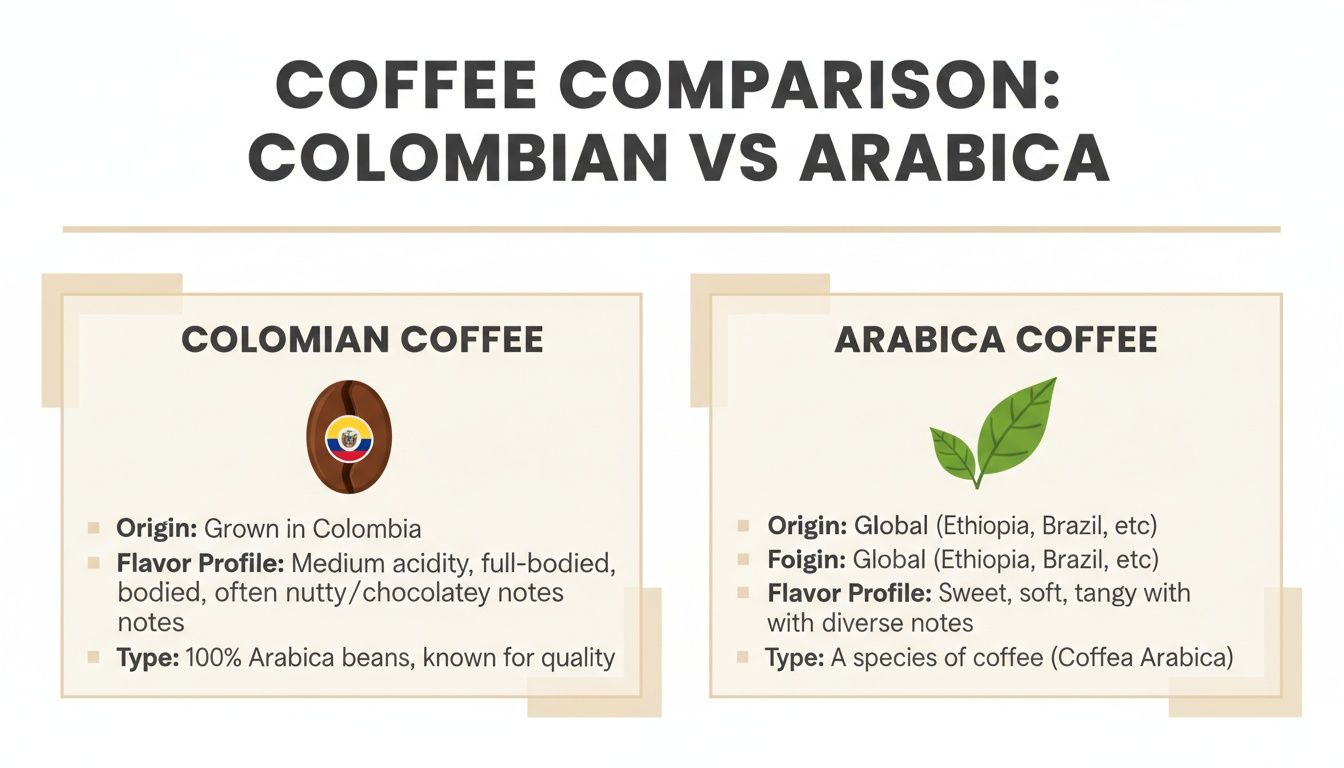
As the visual above illustrates, Colombian coffee is a highly-regarded subset of the wider Arabica category. Think of it this way: you're not choosing between them. You're deciding if you want the consistent, benchmark quality of a world-famous origin or if you'd rather explore the incredible variety that the entire Arabica species has to offer from around the globe. Clicking the links throughout this guide will help you make a purchase you'll love.
Understanding Arabica: The World's Premier Coffee Species
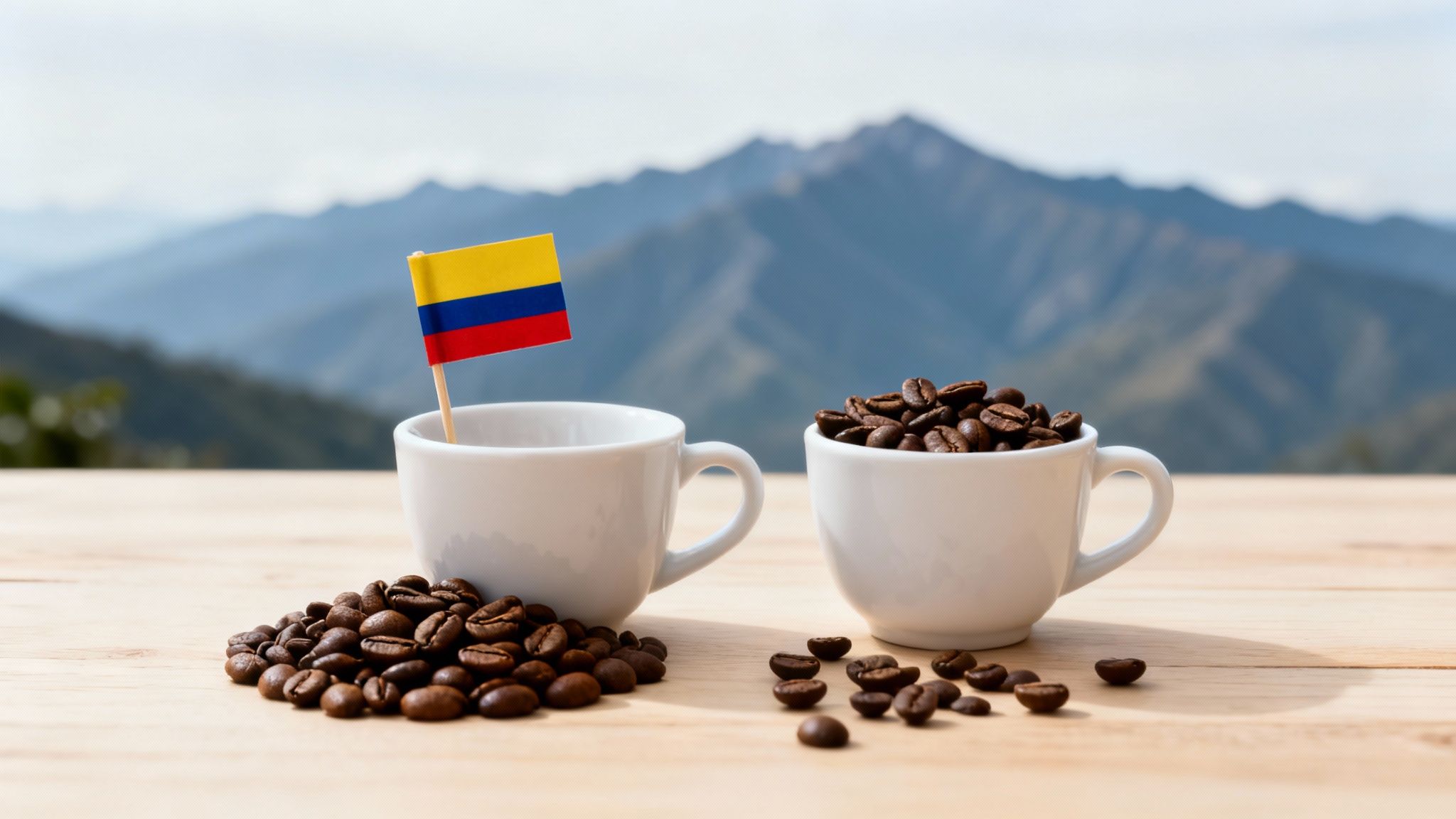
To really get what makes Colombian coffee so special, you first have to understand the plant it comes from: Coffea arabica. This isn't just one type of coffee—it's the superstar species that the entire specialty coffee world is built on.
Arabica originally comes from the highlands of Ethiopia and is prized for its delicate flavors, captivating aromas, and a bright, crisp acidity. It's a notoriously fussy plant, demanding very specific conditions to grow well. You could say it's a bit of a connoisseur itself, needing high altitudes, just the right amount of rain, and mild, steady temperatures to really shine.
This slow, high-altitude growing process is key. It gives the coffee cherries time to develop the complex sugars and acids that make for a truly exceptional cup. This is exactly why the best Arabica farms are tucked away in mountainous regions along the "Bean Belt," including the famous Andean slopes of Colombia.
The Incredible Diversity Within Arabica
This is where the whole "Colombian coffee vs. Arabica coffee" thing starts to make sense. "Arabica" is a massive category, not a single flavor profile. Its real magic lies in its incredible genetic diversity, which lets it express a huge range of tastes depending on where and how it's grown. For the true coffee aficionado, we also offer the best loose leaf tea online.
The specific variety of the Arabica plant—what we call a varietal—has a huge impact on the final taste. Some of the most well-known varietals include:
- Typica: One of the original, most important varietals. It's known for producing a very clean, sweet, and high-quality cup.
- Bourbon: Famous for its rich, buttery chocolate notes and sweet, complex character. It also tends to produce more coffee cherries than Typica.
- Geisha: An exceptionally rare and coveted varietal that explodes with floral and tea-like aromatics, often reminding people of jasmine or bergamot.
This diversity is what makes specialty coffee so fascinating. The same species can taste wildly different—from the bright, berry notes of an Ethiopian Yirgacheffe to the nutty, chocolatey profile of a Brazilian Bourbon.
Understanding this is crucial. When we compare Colombian coffee vs. Arabica coffee, we’re really just putting a spotlight on one famous member of a very large and talented family. While its cousin, Robusta, brings a heavier body and more caffeine to the table, it just can't compete with Arabica's nuanced flavor. If you want to dive deeper into that comparison, check out our guide on the difference between Arabica and Robusta beans.
Think of Arabica as the canvas and the origin as the artist. Colombia takes this canvas and paints a masterpiece of balanced, clean, and consistently delicious coffee. A purchase of our beans is a purchase of artistry.
What Makes a Colombian Coffee So Classic?
While Arabica tells you what the coffee is, "Colombian" tells you where it’s from and the incredible journey it took to get to your cup. The country’s coffee identity is carved out by its geography, where the Andes Mountains splinter into three separate ranges. This creates a stunning tapestry of microclimates perfect for cultivating world-class Arabica.
The magic really happens in the combination of high altitudes and fertile volcanic soil. Here, coffee cherries ripen slowly at elevations between 1,200 and 2,000 meters. This long, slow maturation is key—it allows the beans to develop the complex sugars that give Colombian coffee its famously bright and balanced flavor.
This relentless focus on quality has made Colombia a titan in the coffee world. The nation built its entire reputation on producing mild, well-balanced Arabica, turning every bag into a promise of a great brew.
The Signature Colombian Flavor
When you stack up a Colombian coffee vs Arabica coffee from elsewhere, the first thing you'll notice is the incredible consistency. While an Ethiopian Arabica might hit you with a burst of blueberry, a classic Colombian delivers a smooth, medium-bodied cup with a bright but gentle acidity almost every time.
It’s a profile you can set your watch to. Look for these signature notes:
- Caramel & Brown Sugar: A deep, comforting sweetness that anchors the entire experience.
- Citrus & Red Fruits: Zesty hints of orange or the crispness of red apple and cherry.
- Nutty Undertones: A subtle complexity, often with notes of almond or walnut.
This reliable and delicious profile makes it the ultimate daily driver. It’s welcoming for newcomers but has enough depth to satisfy seasoned coffee lovers.
Quality Control and Meticulous Processing
Ever seen the "Café de Colombia" logo on a bag? That's not just a fancy sticker. It’s a protected seal of quality managed by the Federación Nacional de Cafeteros de Colombia (FNC), guaranteeing you're getting 100% Colombian-grown Arabica that meets some of the toughest standards on the planet.
The classic Colombian profile is a direct result of the washed processing method. Producers painstakingly remove the fruit from the coffee cherry before drying, which spotlights the bean's true origin character—that clean acidity and subtle sweetness—without the funky, fermented notes you might find in other methods.
This meticulous washed process is precisely why Colombian coffee is famous for its clean, crisp, and bright character. It’s a technique designed for purity, letting those notes of citrus, caramel, and nuts shine through with absolute clarity. This dedication to one processing style is a huge part of what sets it apart in the vast world of Arabica.
Of course, Colombia is just one piece of the global coffee puzzle. To see how different environments shape what's in your cup, check out our guide on famous coffee growing regions and their distinct taste profiles. While the classic profile is a fantastic starting point, you'll also find stunning regional differences within Colombia itself, from the bright fruit notes of Huila to the delicate florals of Nariño.
A Nuanced Comparison Of Flavor And Aroma
This is where the real fun begins—in the cup. When we talk about flavor, comparing a classic Colombian coffee to the entire world of Arabica is like comparing a masterfully composed classical piece to the whole genre of improvisational jazz. Both are brilliant, but they offer completely different sensory experiences.
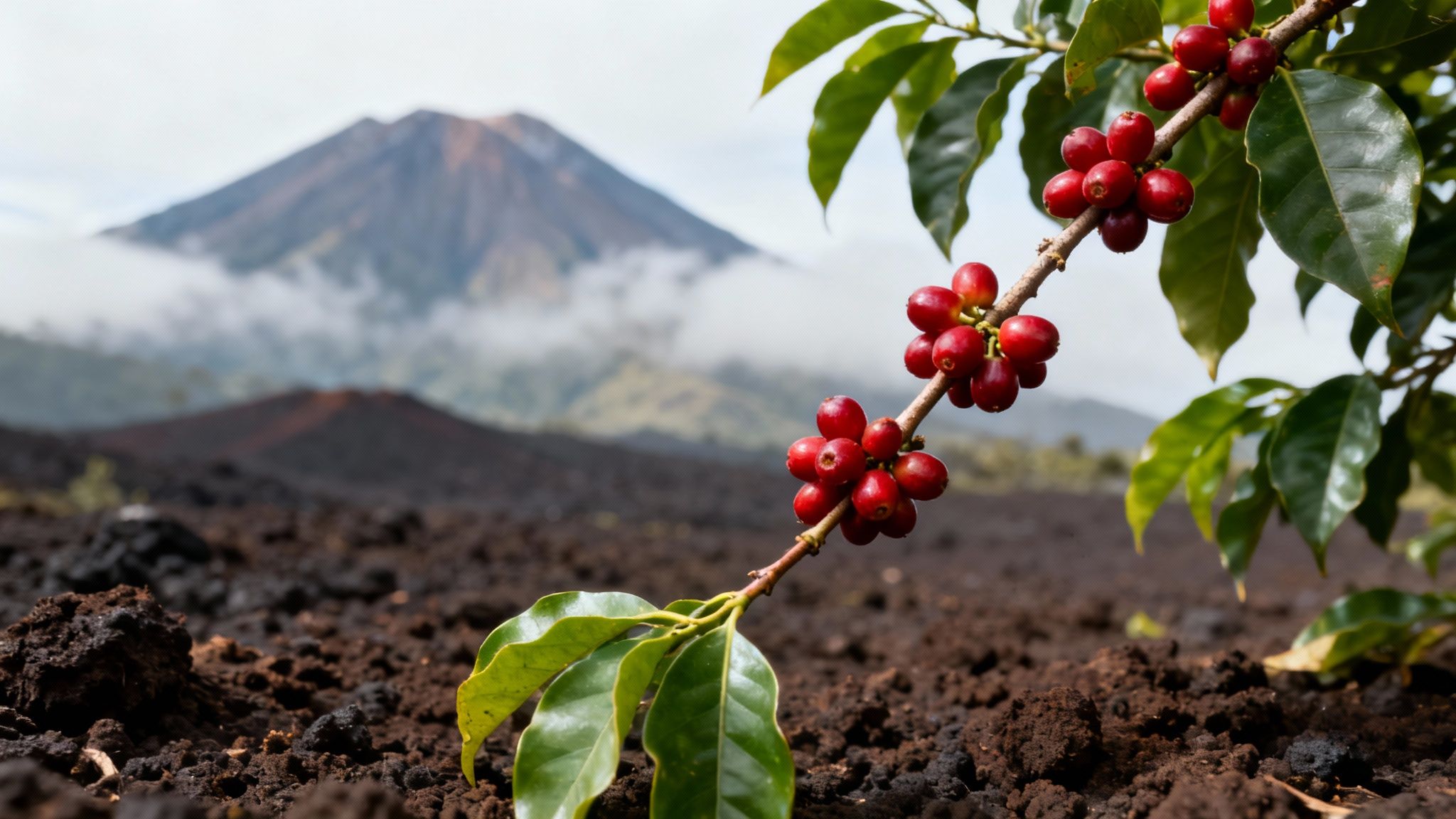
A great Colombian coffee is all about beautiful balance. It's known for a smooth, medium body, a bright-yet-gentle acidity, and an exceptionally clean finish. This is what makes it so easy to love. The flavors you'll typically find are a comforting trio of rich caramel, a hint of citrus, and some soft, nutty notes. This signature profile is a direct result of its unique growing conditions: high altitudes, rich volcanic soil, and the meticulous washed processing that lets the bean’s true character shine through.
A World of Arabica Flavors
Once you step outside Colombia, the Arabica category explodes into a wild adventure of taste. The flavor possibilities are nearly infinite, shaped by the distinct soil, climate, and processing methods of each region. Tasting single-origin Arabicas from around the globe is like walking through a gallery of wildly different artistic expressions.
-
Ethiopian Yirgacheffe: Get ready for vibrant, almost untamed flavors. These beans are famous for a light, tea-like body and an aromatic burst of jasmine, bergamot, and zesty lemon. You’ll often find intense blueberry or stone fruit notes, especially in naturally processed lots. To taste this profile for yourself, try our incredible Ethiopian single-origin coffee.
-
Peruvian Arabica: High in the Andes, you'll find coffees that share some similarities with their Colombian neighbors but have their own unique charm. Our Peruvian coffee tends to have a smoother, milder acidity with sweet notes of milk chocolate, toasted nuts, and a clean, floral finish.
-
Mexican Chiapas: From the southern highlands of Mexico comes an Arabica celebrated for its delicate complexity. Expect a light-to-medium body with a crisp acidity and tasting notes of dark chocolate, cinnamon, and even green apple. Explore it for yourself with our Mexico Chiapas single-origin beans.
The hallmark of a classic Colombian coffee is its harmony—a reliable, beautiful balance of sweetness, acidity, and body. In contrast, many other single-origin Arabicas often champion a single, spectacular characteristic, like the wild fruitiness of an Ethiopian or the deep, earthy notes of a Sumatran.
Acidity and Body: The Key Differentiators
To really get a handle on the differences, you have to tune into two key elements: acidity and body. Acidity in coffee isn't sour; it's the bright, lively sparkle that makes the flavor pop, like the tartness in a crisp green apple. Body is all about the weight and texture of the coffee on your tongue—is it light and delicate, or is it rich and syrupy?
| Sensory Element | Classic Colombian Profile | Other Single-Origin Arabicas |
|---|---|---|
| Acidity | Bright, crisp, and balanced. Often described as citrusy. | Ranges from intensely high and wine-like (Kenya) to very low and muted (Sumatra). |
| Body | Consistently medium-bodied, giving it a smooth and satisfying mouthfeel. | Can be anything from light and tea-like (Ethiopia) to heavy and syrupy (Indonesia). |
| Flavor Notes | Focused on caramel, nuts, chocolate, and red fruits. | A massive spectrum including floral, berry, earthy, spicy, and tropical fruit notes. |
When you put Colombian coffee up against the entire Arabica category, its impact becomes clear. As the world's third-largest producer, Colombia is a powerhouse dedicated almost exclusively to high-quality washed Arabica. This is quite different from other major growing regions that experiment with various processing methods. This unwavering focus is what delivers those mild, well-rounded profiles coffee lovers rave about. The unique soils and climates of Colombia’s Eje Cafetero create that signature bright acidity and fruity notes, making them perfect for the single-origin roasts we offer at Beans Without Borders. You can read more about Colombia's banner coffee year on Intelligence Coffee.
Ultimately, choosing between a Colombian bean and another Arabica comes down to what you're in the mood for. Are you looking for a dependable, beautifully balanced cup to kickstart your day? Or are you ready for a flavor expedition to a new corner of the coffee map? Your answer will lead you straight to the perfect bag, and we encourage you to click our links and make a purchase.
Brewing Methods To Unlock The Best Flavors
Getting your hands on a fantastic bag of Arabica beans is just the start of the journey. How you brew it is what really brings that coffee to life. Your grinder, water, and brewer are the tools that will either amplify or mute the incredible, nuanced flavors hiding inside each bean.
This is especially true when we talk about Colombian coffee vs Arabica coffee. The classic, crisp profile of a Colombian bean shines with certain methods, while a funky, fruit-forward Ethiopian Arabica needs a totally different approach to unleash its magic. Think of it as pairing the right technique to the right ingredient—it’s everything.
Highlighting Colombian Coffee's Balance
When you're working with a classic, well-balanced coffee like our Colombian Supremo, the mission is to highlight its clean acidity and mellow sweetness. Those delicate notes of caramel and citrus are easily lost if you’re not careful.
-
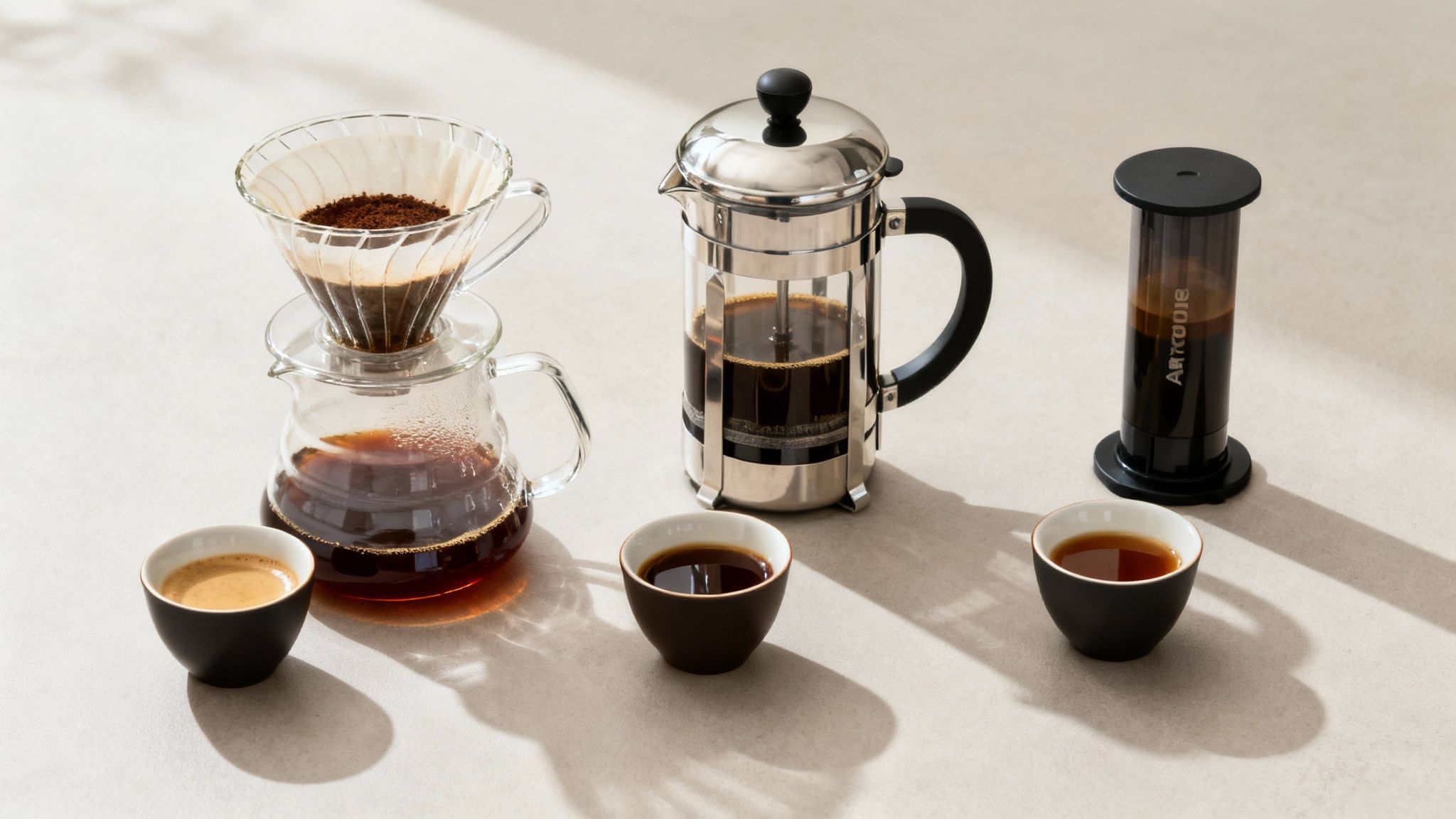
Drip or Pour-Over: These methods are your best friends here. The paper filter catches oils and fine particles, producing a stunningly clean and bright cup. The slow, controlled extraction coaxes out all the sweetness without a hint of bitterness. This is perfect for a classic cup of coffee.
-
Grind Size: You'll want a medium grind, something that feels like table salt.
-
Water Temperature: Keep your water just off a boil, right around 195-205°F (90-96°C). Any hotter, and you risk scorching those delicate flavors.
This precise approach lets the signature clarity of a washed Colombian coffee take center stage. What you get is a brew that's smooth, crisp, and just ridiculously satisfying.
Taming Bolder, Earthier Arabicas
Now, flip the script and think about a completely different kind of Arabica—maybe a rich, earthy bean from Indonesia. Coffees like our Bali Blue Single-Origin are famous for their full, almost syrupy body and deep, complex flavors. Using a paper filter here would be a crime; it would strip away the very oils that give the coffee its incredible character.
This is where an immersion method like a French press really shines. By steeping coarse grounds directly in hot water, all the natural oils and solids are preserved.
The French press is the perfect partner for bold, earthy Arabicas. It delivers a rich, full-bodied cup that accentuates the coffee's inherent weight and texture, something a drip brewer simply can't replicate.
The resulting brew is robust, textured, and bursting with deep flavor—a completely different but equally incredible coffee experience.
Crafting the Perfect Coffee Drink
The bean you choose is the star of your favorite coffee drinks. An Americano, Espresso, Latte, Frappe, Macchiato, or Mocha all begin with a quality espresso shot. For a perfect Latte or Macchiato, a balanced Colombian Supremo creates a smooth, chocolatey base that blends beautifully with steamed milk—whether you prefer whole, oat, or almond. For a bolder Mocha or a Breve (made with half-and-half), a richer espresso from our Bestselling Blends can provide the intensity to cut through the chocolate and cream. And for a truly decadent Affogato, a shot of either pulled over vanilla ice cream is pure bliss.
Want to dive deeper into all this? Check out our complete guide on the different types of coffee brewing methods. And when you're ready to start experimenting, purchase one of our stylish ceramic coffee mugs to complete the experience. Don't forget to sign up for our e-mail list for more tips and exclusive offers!
Find Your Perfect Coffee At Beans Without Borders
Now that you've got the inside scoop on the whole colombian coffee vs arabica coffee distinction, it's time for the fun part: putting that knowledge to the test. Your perfect coffee is out there, and finding it is all about knowing what you enjoy most in your daily ritual. We strongly encourage you to click the links and make a purchase of your new favorite coffee.
So, what kind of coffee drinker are you? Are you searching for that comforting, dependable brew that hits the spot every single morning? If so, you’ll feel right at home with our Colombian selections.
For the Lover of Classic Flavors
If your ideal cup is balanced and smooth with those familiar, rich notes of chocolate, caramel, and a touch of citrus, then a classic Colombian bean is your answer. There's a reason it's a worldwide favorite—its welcoming profile shines in any brewer, from a simple drip machine to a meticulous pour-over.
This is the kind of coffee that makes a fantastic Americano and stands up beautifully in a creamy oat milk latte. Its reliable character provides a delicious, satisfying foundation every time you brew.
For a coffee experience that is dependably smooth and masterfully balanced, our single-origin Colombian beans are the gold standard. They represent the best of what a classic, high-quality Arabica can be.
Ready to taste the benchmark for balanced flavor? Explore our entire collection of world-class single-origin coffees to find the Colombian profile that speaks to you. We roast in small batches and offer free US shipping on every single order. Make your purchase now!
For the Adventurous Palate
Maybe you’re someone who gets excited by the prospect of something new. If you love discovering wild, unexpected notes in your cup—and see coffee as a journey of exploration—then it’s time to venture into the wider world of Arabica.
Let us point you in the right direction. We suggest starting your adventure with beans from these incredible origins:
- Ethiopian Coffees: Get ready for an aromatic cup bursting with bright floral notes, hints of black tea, and vibrant berry flavors.
- Peruvian Selections: These coffees offer a more delicate and sweet profile, often with soft chocolate and toasted nut undertones.
These are the coffees for the curious home barista, the flavor-chaser, and anyone who wants to experience the incredible diversity the Arabica species has to offer. Find your new favorite and purchase today.
Start Your Journey Here
Feeling a little bit of both? If you're just dipping your toes into specialty coffee or want to try a few things before committing to a full bag, our curated Sampler Packs are made for you. They’re the best way to taste different profiles side-by-side and truly nail down your preferences.
At Beans Without Borders, we believe great coffee brings people together. As part of the coffee culture, you can join our community by grabbing one of our branded ceramic coffee mugs, shirts, t-shirts, hats, or a cozy hoodie. And be sure to sign up for our e-mail list—we’ll send you a 10% discount on your first purchase, plus you'll get first dibs on new arrivals and our favorite brewing tips.
Got Questions? We've Got Answers
After diving into the details of Colombian coffee vs Arabica, a few common questions usually pop up. Let's tackle them head-on so you can feel totally confident next time you're picking out a new bag of beans to purchase.
Is All Coffee From Colombia Arabica?
Yep, pretty much. If you're buying commercially exported coffee from Colombia, you can bet it's 100% Arabica. The country has built its entire global reputation on producing some of the world's best Arabica beans.
Colombia's high-altitude mountains and nutrient-rich volcanic soil are a perfect storm for growing incredible Arabica. Because of this, growing Robusta just isn't part of their game plan.
Which Coffee Is Better For Espresso?
This really boils down to what you like in your cup. A great single-origin Colombian bean pulls a beautifully smooth, balanced shot with that thick, lasting crema we all love. It's a fantastic choice for a straight espresso or as the base for an Americano. We recommend our Colombian Supremo.
That said, some of the most interesting and complex espresso blends out there mix Arabica beans from different parts of the world. For example, some of our Bestselling Blends might bring in beans from a place like Brazil to add a heavier body or introduce different layers of flavor.
The real secret to a great espresso is matching the bean's profile to the drink you're making. A well-rounded Colombian is a dream in a classic latte, but a more intricate blend can make a Mocha or Macchiato truly special. Click the links to purchase the perfect beans for your drink of choice.
What Is The Difference Between Single Origin And Arabica?
This is a fantastic question, and the answer really gets to the core of what makes specialty coffee so interesting. These terms aren't interchangeable; they describe two different things that often overlap.
- Arabica: This is the species of the coffee plant—Coffea arabica. Think of it as the big family tree that includes thousands of different varietals grown worldwide.
- Single Origin: This tells you the coffee comes from one specific place. That place could be a whole country, a small region within it, or even down to a single farm.
So, a fantastic Colombian coffee is the perfect example of a single-origin Arabica. Getting this distinction is your key to understanding how terroir—the unique environment of a place—shapes the final taste. The best way to experience this is to taste our single-origin coffees from Uganda, Mexico, or Bali side-by-side. You'll be blown away by how one species can taste so incredibly different.
Here at Beans Without Borders, we're convinced your perfect coffee is out there. Whether you're a fan of the classic, clean taste of a Colombian or you're ready to explore the unique notes of another single-origin Arabica, our fresh, small-batch roasted beans are here to make your daily brew something special. We encourage you to sign up for our e-mail list and explore our coffee and merchandise.