

Difference between arabica and robusta beans: Discover Coffee's Best Bets
When you get right down to it, the biggest difference between Arabica and Robusta beans comes down to two things: taste and caffeine. Arabica beans are prized for their smooth, sweet, and aromatic flavor, often carrying delicate notes of fruit and flowers. Ready to taste the difference? We encourage you to explore our curated selection of coffees and find your perfect match.
On the other side of the spectrum, Robusta beans pack a much stronger, bolder, and more bitter punch. They also contain roughly double the caffeine, which is why you'll often find them in espresso blends and instant coffee. No matter your preference, we invite you to click the links throughout this guide and make a purchase of the coffee that speaks to you.
A Head to Head Comparison of Coffee Beans
Walking down the coffee aisle can feel a bit overwhelming, but almost every bag on that shelf comes from one of two species: Arabica or Robusta. Getting a handle on what makes them different is the first real step to brewing a cup you truly love, no matter if you prefer a pour-over, a French press, or a rich shot of espresso.
These two beans truly define the world of coffee flavor. It’s not about one being "better" than the other—they just do different jobs for different tastes. Specialty coffee shops champion Arabica for its nuance and complexity, while Robusta is the workhorse valued for its raw power and its knack for producing that beautiful, thick crema on an espresso. These distinctions are also a huge part of the conversation in our guide on single origin coffee vs blends, where each bean plays a very specific role.
To make things clearer, let's put their key traits side-by-side.
Core Differences Between Arabica and Robusta at a Glance
This table breaks down the core characteristics that define Arabica and Robusta coffee beans, helping you quickly grasp what sets them apart.
| Characteristic | Arabica | Robusta |
|---|---|---|
| Flavor Profile | Sweet, soft, and aromatic with notes of fruit and sugar. | Bold and strong with earthy or rubbery notes; more bitter. |
| Caffeine Content | Lower, around 1.5% by weight. | Higher, typically 2.5% or more by weight. |
| Acidity Level | Higher acidity, giving it a bright and crisp taste. | Lower acidity, which creates a smoother, less sharp flavor. |
| Sugar Content | Nearly double the sugar, which creates a naturally sweeter cup. | Much lower sugar content, contributing to its bolder taste. |
| Bean Shape | Oval and elongated. | Small and circular. |
| Growing Conditions | Needs high altitudes and cool, stable temperatures. A delicate plant. | Thrives in hot climates with irregular rain. A very hardy plant. |
| Market Cost | More expensive because it's much harder to cultivate. | Less expensive and far easier to grow in large quantities. |
As you can see, everything from their shape to their chemical makeup is different, which is why they produce such dramatically different results in your cup. We invite you to explore our collection and purchase the coffee that best suits your taste.
Tracing the Roots: From Plant Genetics to Global Farms
To really understand what separates Arabica from Robusta, you have to go back to the very beginning: the plant itself. These aren't just two slightly different types of coffee; they are entirely distinct botanical species. We're talking Coffea arabica versus Coffea canephora (the species we call Robusta). This genetic fork in the road is the source of literally every difference that follows—from where they grow to how your final cup tastes.
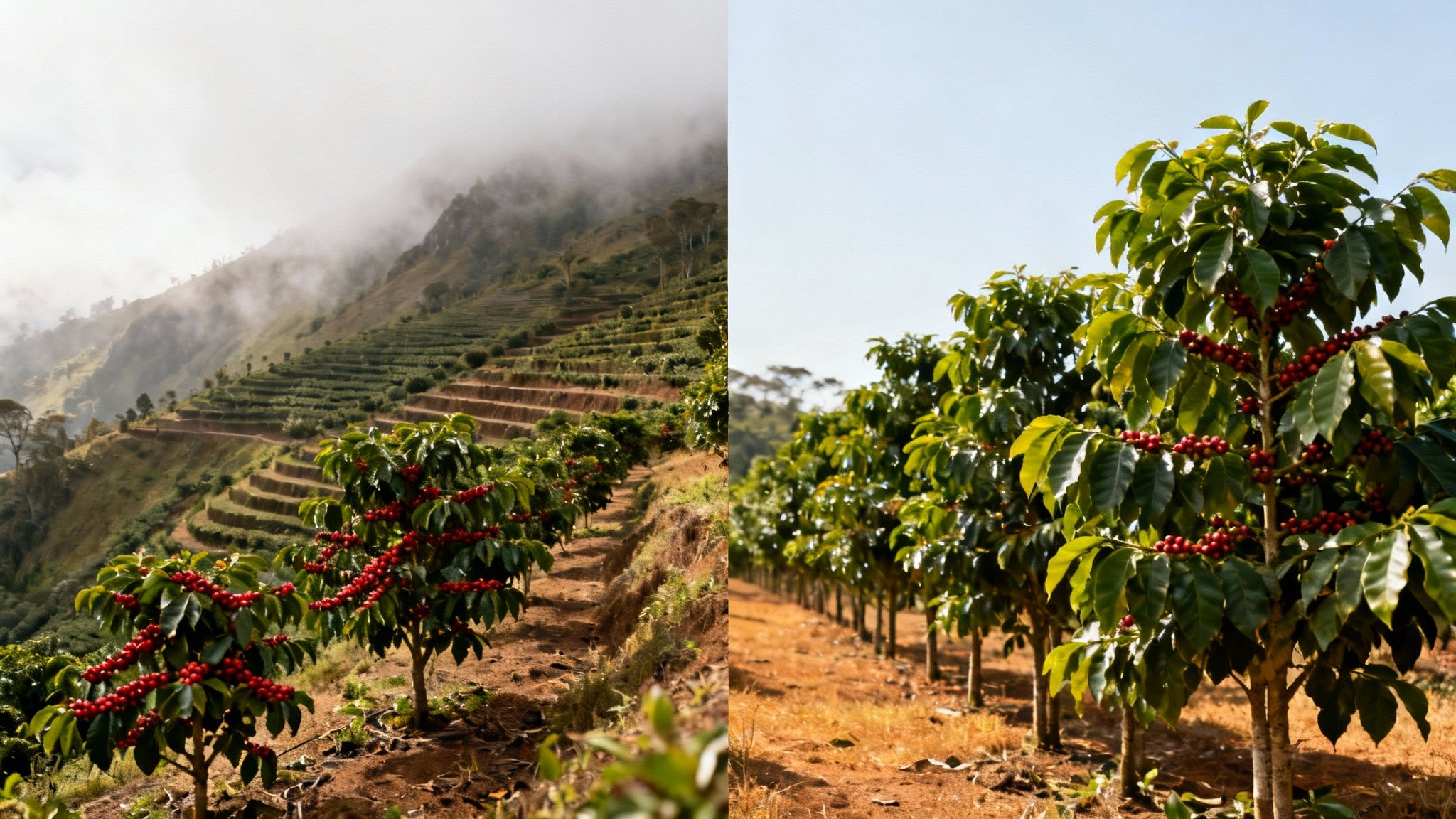
This biological blueprint dictates why farmers treat them so differently, and it’s the first chapter in the story of how a bean gets from the soil to your cup. The journey from these farms to your home is something we take great pride in.
Arabica: The High-Altitude Specialist
Arabica is, to put it mildly, the diva of the coffee world. It’s a delicate plant that demands a very specific set of five-star accommodations to thrive. Think of it as a connoisseur that requires everything to be just right.
It loves high altitudes, typically growing between 600 and 2,000 meters (that's about 2,000 to 6,500 feet). These mountain homes provide the cool, steady temperatures and just the right amount of rain it craves. Unfortunately, this sensitivity also makes it an easy target for pests and diseases, so farmers have to be incredibly hands-on.
These picky requirements are precisely why the most famous coffee regions are clustered in the "Bean Belt." We've sourced from the best of these, and we encourage you to make a purchase to taste the exceptional quality for yourself. The unique environment is essential for developing the complex, nuanced flavors that make premium coffees so special.
This deep connection between a specific place and the final taste is the heart of single-origin coffee. The idea is that the unique environment of a single farm or region leaves an unmistakable fingerprint on the beans' flavor.
Getting a handle on this concept can totally change how you appreciate your morning brew. You can dive deeper into this in our guide explaining what is single-origin coffee and why it’s such a big deal for coffee aficionados.
Robusta: The Hardy Survivor
Robusta, on the other hand, is exactly what it sounds like. Coffea canephora is a tough, resilient plant that can grow in places that would make Arabica wilt. It’s a survivor, plain and simple.
It prefers hotter climates and isn’t picky about altitude, happily growing anywhere from sea level up to around 800 meters (about 2,600 feet). This adaptability makes it far easier and cheaper to grow, and it produces a much bigger harvest per plant. Plus, it has a natural-born resistance to many common pests and diseases, which is a huge win for farmers.
This toughness comes from its chemistry. Robusta beans pack nearly twice the caffeine of Arabica, and that caffeine acts as a built-in insecticide, warding off pests. Its resilience means it can be cultivated all over the world, with major hubs in Southeast Asia and Africa. The powerhouse coffee industries in Vietnam and Uganda, for instance, are built on Robusta.
This fundamental difference in how they grow is the main reason for the huge gap in market price and availability. One is a delicate, premium crop requiring careful attention; the other is a durable, high-yield workhorse. Both play a crucial role in the coffee world, and it all starts right here on the farm. Find the perfect bean for your brew and make a purchase from our store today.
Decoding the Flavor Profile of Each Bean
The biggest difference between Arabica and Robusta hits you the moment you take a sip. It's more than just where they're from; these two coffee species deliver wildly different experiences in the cup, all thanks to their unique chemical makeup. One offers a delicate, complex dance of flavors, while the other lands a powerful, straightforward punch.
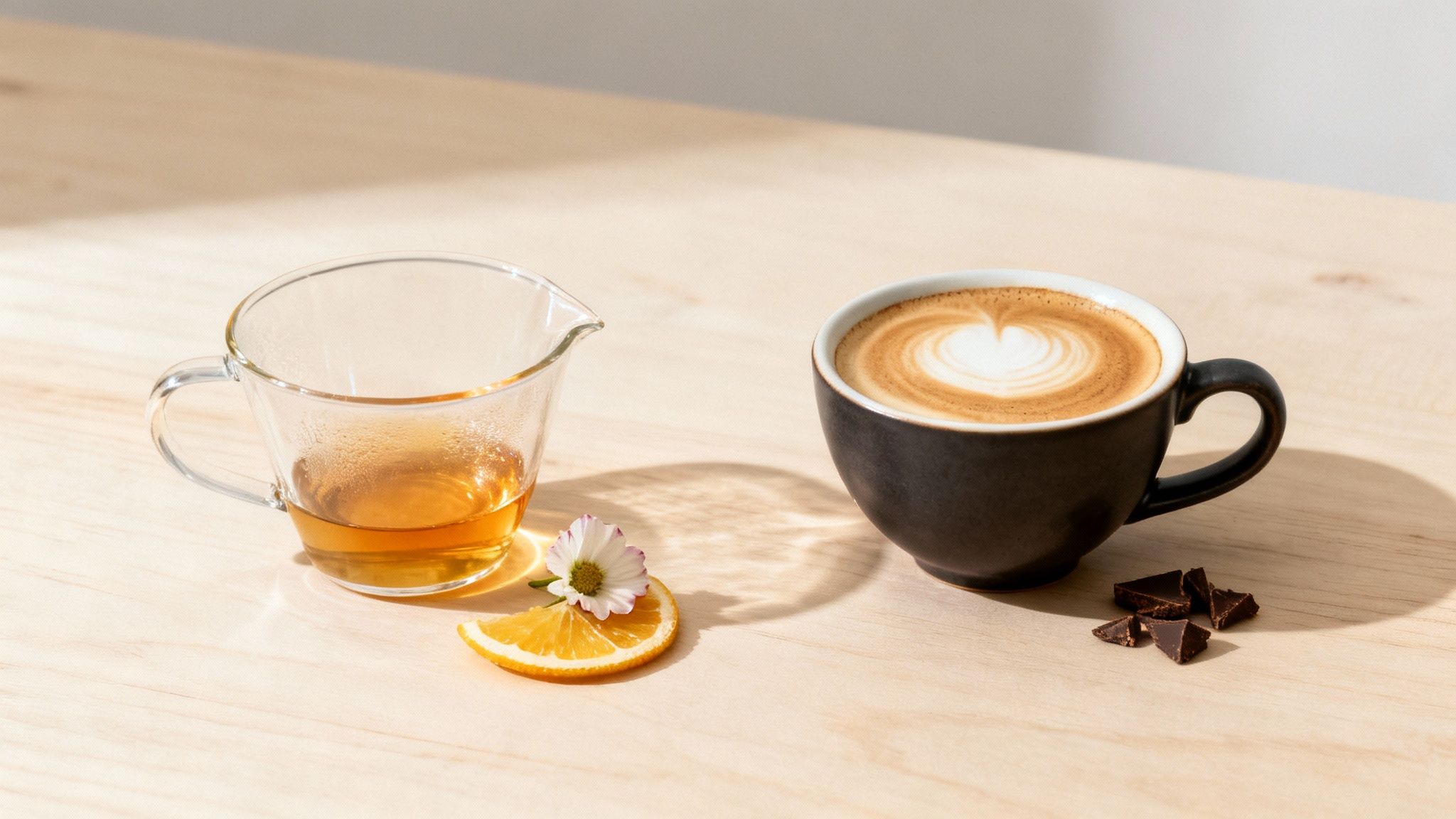
Nailing down these flavor profiles is the secret to choosing a coffee you'll genuinely love. Whether you're making a morning latte, a midday pour-over, or a strong espresso to get you through the afternoon, knowing what's in the bag makes all the difference. And for tea lovers, we also offer the best loose leaf tea online.
The Aromatic Complexity of Arabica
In the specialty coffee world, Arabica is king, celebrated for its intricate and aromatic character. Think bright, sweet, and nuanced. The tasting notes can span an incredible spectrum, from fruity and floral to wine-like and nutty.
This complexity isn't just a happy accident—it's pure chemistry. Arabica beans pack in nearly 60% more lipids and almost twice the amount of natural sugars as their Robusta cousins. When you roast them, these sugars caramelize, creating the subtle sweetness and delicate aromas that make a high-quality Arabica so special.
You'll often hear about Arabica's higher acidity. Don't think of it as sourness. It’s more of a bright, crisp quality that makes the flavors pop—like the tartness in a green apple or the zing of citrus.
This vibrant acidity and layered flavor make Arabica the go-to for brewing methods that highlight nuance, like a pour-over or French press. Our single-origin selections, such as the floral Ethiopian Yirgacheffe, are a perfect showcase of what Arabica can do. To see how different environments shape these flavors, check out our guide on the world's most famous coffee growing regions and their taste profiles. We strongly encourage you to click the links and purchase your favorite coffee.
The Bold Power of Robusta
If Arabica is nuanced, Robusta is unapologetically bold. It's strong, full-bodied, and intense. The flavor is often characterized by deep, earthy notes of dark chocolate, sometimes with a rubbery or nutty finish. This is that classic, potent "coffee" flavor many of us grew up with.
Robusta's lower acidity and sugar content are what give it that powerful—and sometimes harsher—taste. But that's not a flaw; it's a feature that makes it perfect for certain jobs. There's a reason it's the backbone of countless espresso blends.
Why Robusta Excels in Espresso:
- Crema Production: Robusta beans are champs at producing a thick, stable, and long-lasting crema—that coveted reddish-brown foam on top of a great espresso shot. Arabica just can't compete on its own here.
- Flavor Intensity: Its bold flavor cuts right through milk. This is crucial for drinks like lattes, cappuccinos, and macchiatos, where a weaker coffee would just get lost.
- Caffeine Kick: Let's be honest, the higher caffeine content delivers the jolt many of us are looking for in an espresso.
So, the unmistakable difference between Arabica and Robusta really comes down to this: are you in the mood for a delicate, aromatic experience or a bold, powerful one? Each has its rightful place in the coffee world, from a single-origin pour-over to a rich, crema-topped Americano. Explore our shop and make a purchase to find your ideal coffee today.
The Science Behind the Kick: Caffeine and Chemical Makeup
When you look past the farm and the roastery, the most dramatic differences between Arabica and Robusta are hidden right in their chemical makeup. This molecular blueprint is what really defines how they taste, feel, and even affect your body. It's a fascinating glimpse into how nature built two very different experiences from the same plant family.
Of course, the most talked-about difference is caffeine. This is where Robusta truly lives up to its name.
The Caffeine Divide: A Jolt vs. a Gentle Nudge
Robusta beans pack a serious wallop. They contain nearly double the caffeine of Arabica, clocking in at around 2.5% caffeine by weight. For comparison, an Arabica bean sits at a much milder 1.5%.
This isn't just a fun fact for coffee nerds; it's a core part of the plant's evolutionary strategy. Caffeine acts as a natural insecticide, so Robusta's high-octane dose gives it a powerful defense against pests. It’s a huge reason the plant is so resilient and easier to grow in less-than-ideal conditions.
So what does this mean for the cup in your hand?
- Need a serious wake-up call? A blend with Robusta is your go-to for that intense energy boost to kickstart your morning.
- Craving a smooth afternoon brew? A 100% Arabica coffee offers rich flavor without the aggressive kick, making it perfect for a relaxing pour-over.
Sugars and Lipids: The Secret to a Smoother Sip
While caffeine grabs all the headlines, the real secret to Arabica's celebrated flavor profile is its other compounds—namely, sugars and lipids (fats). This is where the science behind its superior taste really comes into play.
Arabica beans contain nearly 60% more lipids and almost double the concentration of natural sugars compared to Robusta. This chemical head start has a massive impact on the aroma and taste that ends up in your cup.
During roasting, these sugars caramelize to create those beautiful, complex notes of fruit, flowers, and sweetness that specialty coffee is known for. The higher lipid content also gives the coffee a richer mouthfeel and a smoother, less bitter finish.
Robusta, with its lower sugar and lipid content, naturally delivers a bolder, more rubbery, and often more bitter flavor. Its strength is in its raw power, not its finesse.
This is exactly why an espresso made with a Robusta blend, like our Espresso Blend, creates such a thick, stable crema and has the muscle to cut through milk in a latte. On the other hand, a single-origin Arabica like our Peruvian coffee shines in brewing methods that highlight its delicate sweetness and aromatic oils. It all comes down to matching the bean's chemistry to the experience you’re looking for. We encourage you to purchase a bag of each and discover the difference for yourself.
Yield, Price, and the Global Coffee Market
The journey from a coffee farm to your morning cup is driven by powerful economic and agricultural realities. The deep-seated differences between Arabica and Robusta don’t just stop at flavor and caffeine; they create entirely separate market dynamics that dictate availability, cost, and ultimately, how each bean makes its way into your life. These forces are exactly why you see such a price gap on the shelf and what determines the true value behind each bag.
Grasping this economic landscape makes it clear why Robusta is the workhorse of the mass-market coffee industry, while Arabica remains the heart and soul of the specialty coffee movement. It's a classic tale of quantity versus quality, resilience versus refinement.
Robusta: The High-Yield Economic Powerhouse
From a purely agricultural perspective, Robusta is a farmer's dream when it comes to efficiency. Its rugged nature means it thrives in a wider range of climates and altitudes, making it far less vulnerable to pests, diseases, and unpredictable weather. This built-in resilience translates directly into a higher, more dependable crop yield per plant—a game-changer for large-scale production.
Since it’s easier and cheaper to grow, Robusta naturally becomes the go-to, cost-effective choice for many of the world's biggest coffee products. Its bold, punchy flavor profile and lower price point make it the ideal backbone for:
- Instant Coffee: Robusta's potent character holds its own through the intense processing needed to create instant granules.
- Budget Blends: It's frequently used as a filler in ground coffee blends to keep retail prices accessible for consumers.
- Espresso Blends: Its knack for producing a thick, stable crema and delivering a serious caffeine kick makes it a non-negotiable component in many traditional espresso roasts.
This high-yield, low-cost model solidifies Robusta’s role as a cornerstone of the global coffee supply chain, fueling the daily routines of millions.
Arabica: The Premium Specialty Crop
Arabica, on the other hand, is a much fussier, high-maintenance plant. Its delicate constitution demands very specific growing conditions—high altitudes, steady temperatures, and just the right amount of rainfall. All of this makes successful cultivation far more challenging and expensive. Farmers have to pour significantly more labor and resources into shielding these sensitive plants from pests and climate shifts, which results in a much lower yield per hectare.
This combination of lower supply and massive demand for its nuanced, aromatic flavor profile firmly positions Arabica as a luxury good in the coffee world. Its price on the commodities market consistently sits well above Robusta's, a direct reflection of the greater risk and investment it takes to grow. This is the premium you’re investing in when you purchase one of our exquisite single-origin Arabica coffees—the quality more than justifies the cost.
The economic takeaway is simple: Robusta is grown for volume and resilience, keeping coffee accessible. Arabica is cultivated for its exceptional flavor and complexity, defining the world of specialty coffee.
A Global Market Divided by Bean
You can see the split between these two beans clearly in global production numbers. Did you know that Arabica and Robusta represent a classic showdown in the coffee world, with Arabica accounting for about 60% of global production while Robusta makes up the remaining 40%? This division is backed by extensive world coffee data, with top producers like Brazil and Colombia leading the charge for Arabica, and Vietnam and Indonesia dominating the Robusta market. For a deeper dive, you can explore some fascinating details on how climate change is impacting these coffee giants.
This market dynamic is precisely why we make the choices we do at Beans Without Borders. We focus on sourcing exceptional Arabica beans because we believe in delivering a truly transcendent flavor experience. When you choose our coffees, you're not just buying a bag of beans; you're investing in the art and dedication of specialty coffee cultivation. Explore our collection and taste the remarkable difference for yourself. While you're there, check out our branded shirts, t-shirts, hats, hoodies and ceramic coffee mugs to show your love for the coffee culture.
Choosing the Right Bean for Your Brewing Style
Knowing the difference between Arabica and Robusta is interesting, but what really matters is how that knowledge translates into your morning cup. This is where the fun begins—pairing the right bean with your favorite brewing method to get the exact experience you're after.
Think of it as matching the bean’s personality to your brewer’s strengths. A delicate pour-over setup is designed to highlight different qualities than a high-pressure espresso machine, so choosing the right coffee is key.
For Espresso Aficionados: The Quest for Crema and Intensity
If you're all about that rich, velvety crema and a powerful shot that really wakes you up, a blend with some Robusta in it is your secret weapon. Robusta's lower acidity and higher oil content are the magic ingredients for producing that thick, stable, reddish-brown foam that sits on top of a perfect espresso. Plus, its bold, chocolatey notes have the backbone to stand up to milk in lattes and cappuccinos.
Sure, a 100% Arabica espresso can be fantastic—often brighter and more nuanced—but it won't give you that classic, syrupy body and powerhouse intensity. For a truly authentic Italian-style shot, you need the muscle that Robusta brings to the table. Our Espresso Blend is crafted specifically for this, balancing Arabica’s finesse with Robusta’s powerful punch. We encourage you to click the link and make a purchase today.
For Pour-Over and Drip Enthusiasts: Savoring Nuance and Clarity
Brewing methods like pour-over, Chemex, or a standard drip machine are all about one thing: showcasing subtlety. These slower, gentler brewing processes are perfect for coaxing out all the delicate aromatic compounds hidden inside the beans. When this is your goal, a high-quality, single-origin Arabica is the only way to go.
The bright acidity, floral aromas, and fruity sweetness of a great Arabica really come alive, creating a clean, complex, and vibrant cup. Trying to use Robusta here would be a mistake; you'd likely end up with a harsh, rubbery, and bitter brew, completely overpowering the gentle nature of the method.
For an incredible pour-over, we always point people to our Ethiopian Yirgacheffe. Its vibrant floral and citrus notes are a perfect showcase of what makes a premium Arabica so special. We invite you to purchase a bag and taste for yourself.
This flowchart breaks down the journey from farm to cup, highlighting the economic and agricultural factors that influence your choice.
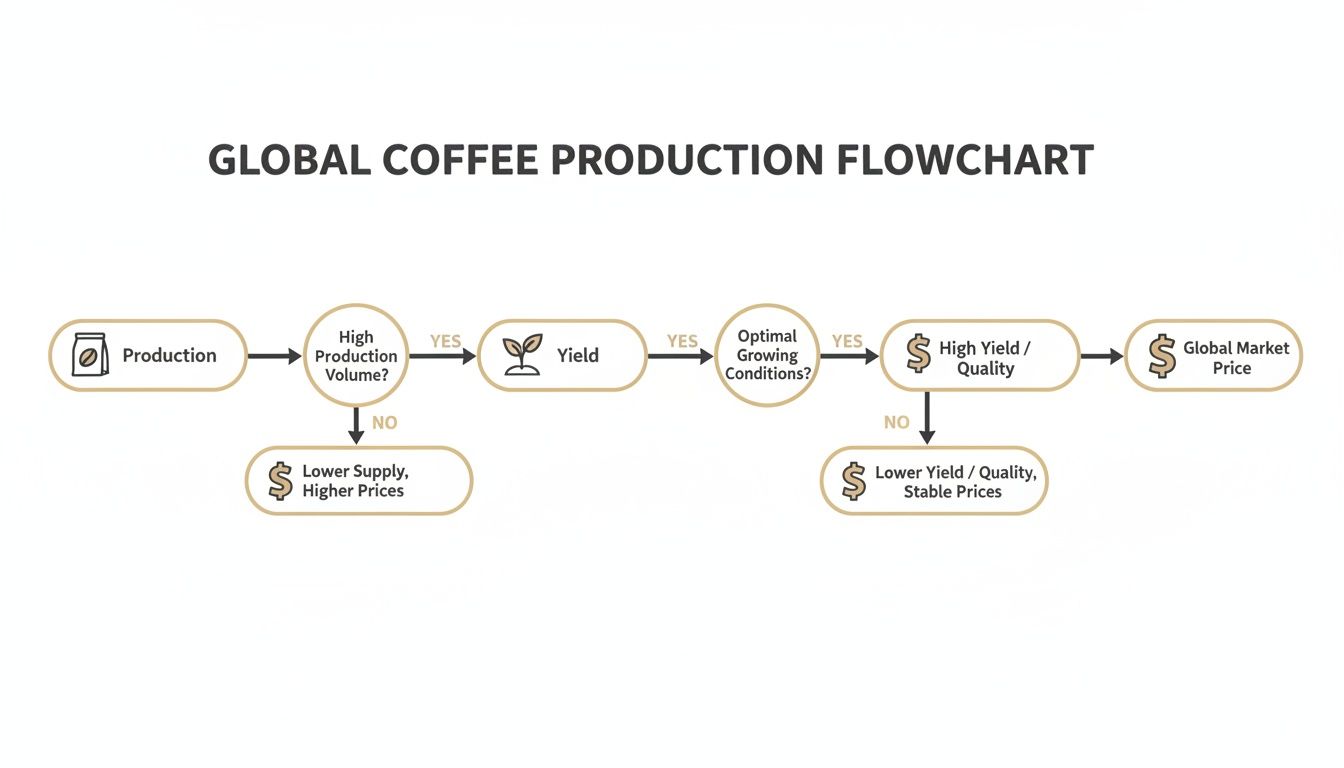
As you can see, Robusta’s hardiness and higher yield make it more affordable, while the delicate touch required to grow great Arabica naturally commands a higher price.
Making the Perfect Choice for Your Brew
Your daily brewing ritual is the ultimate guide. Here’s a quick cheat sheet:
- Espresso & Moka Pot: A blend containing Robusta is your best bet for that rich crema and bold flavor that cuts through milk.
- Pour-Over, Drip, & Siphon: Go for a single-origin Arabica to get a clean, aromatic, and beautifully nuanced cup.
- French Press: A medium-to-dark roast Arabica works wonders, giving you a full-bodied but still complex brew.
- Cold Brew: You can use either, but Arabica generally produces a smoother, less bitter concentrate. To get it just right, check out our guide on how to make cold brew coffee.
Economically, the coffee market is dynamic. While Arabica has always been the premium choice, Robusta is gaining ground. The global robusta and arabica beans market is projected to grow from USD 58.53 billion in 2025 to USD 90.03 billion by 2032. For our customers at Beans Without Borders—whether you’re grabbing a sampler pack or a branded mug—this means Arabica is perfect for savoring the unique notes of a single-origin from Peru or Ethiopia, while Robusta is the workhorse behind bold, powerful espresso blends. Learn more about coffee market trends and projections.
Ready to find your perfect match? Explore our coffee collection today. And don’t forget to sign up for our e-mail list to receive a 10% discount on your first purchase.
Your Top Questions, Answered
After digging into the details of Arabica and Robusta, a few common questions always seem to pop up. Let's tackle them head-on so you can feel confident grabbing your next bag of beans.
So, Is Arabica Actually Better Than Robusta?
That's the million-dollar question, isn't it? In the world of specialty coffee, you'll hear a lot of love for Arabica, but "better" really comes down to what you're looking for in your cup.
Arabica is celebrated for its incredible complexity and aromatic qualities. Think bright acidity, delicate floral notes, and hints of fruit. It's the bean you reach for when you want to savor nuance. On the flip side, Robusta brings the thunder with its bold, punchy flavor, higher caffeine content, and a unique talent for producing that rich, stable crema everyone loves in espresso.
It’s all about personal taste. If you're using a drip machine or pour-over and want a clean, flavorful experience, we'd point you toward our Peruvian Single-Origin Arabica. But for a powerful, classic espresso shot, a blend with some Robusta is tough to beat. Your perfect choice is waiting for you in our shop; we encourage you to make a purchase and find it.
Which One Makes the Best Cold Brew?
Both work, but they deliver completely different experiences. An Arabica cold brew will be smooth, sweet, and complex, pulling out all those subtle, delicate notes. Using Robusta, however, will give you a potent, super-caffeinated brew with a deep, chocolatey kick.
If you're just starting out, a medium-roast Arabica is a great way to nail that classic, smooth cold brew flavor. For those who want something richer and more intense, don't be afraid to experiment with a blend.
Why Do I See Robusta in Instant Coffee and Espresso Blends?
Robusta is a workhorse, and it shines in a couple of specific areas. Its strong flavor profile can withstand the intense processing needed to make instant coffee, and its higher yield makes it a more cost-effective choice for large-scale production.
For espresso, Robusta is a secret weapon. It’s the key to producing a thick, beautiful crema that lasts. Its lower acidity also helps balance out the sharpness of an espresso shot, creating a smoother, more rounded taste. And let's not forget the caffeine—it provides that powerful kick many of us crave in a latte or macchiato.
Here at Beans Without Borders, we know your perfect coffee is out there. Whether you're chasing the delicate notes of a single-origin Arabica, need a powerful espresso blend to start your day, or just want to browse our loose-leaf teas and branded mugs, we've got you covered. Don't forget to sign up for our e-mail list for exclusive offers.
Explore our collection of freshly roasted coffees at https://www.beanswithoutborders.com and start your next flavor journey. We encourage you to click the links and make a purchase of the coffee or coffees of your choice.