

How to Steep Loose Leaf Tea The Definitive Guide
Steeping loose-leaf tea really just comes down to three things: the temperature of your water, the amount of tea you use, and how long you let it steep. When you get the hang of balancing these, you can pull out the best flavor from any tea you have, whether it’s a delicate green or a bold black. The result? A perfect cup, every single time.
From Leaf to Cup: A Quick Intro for New Brewers
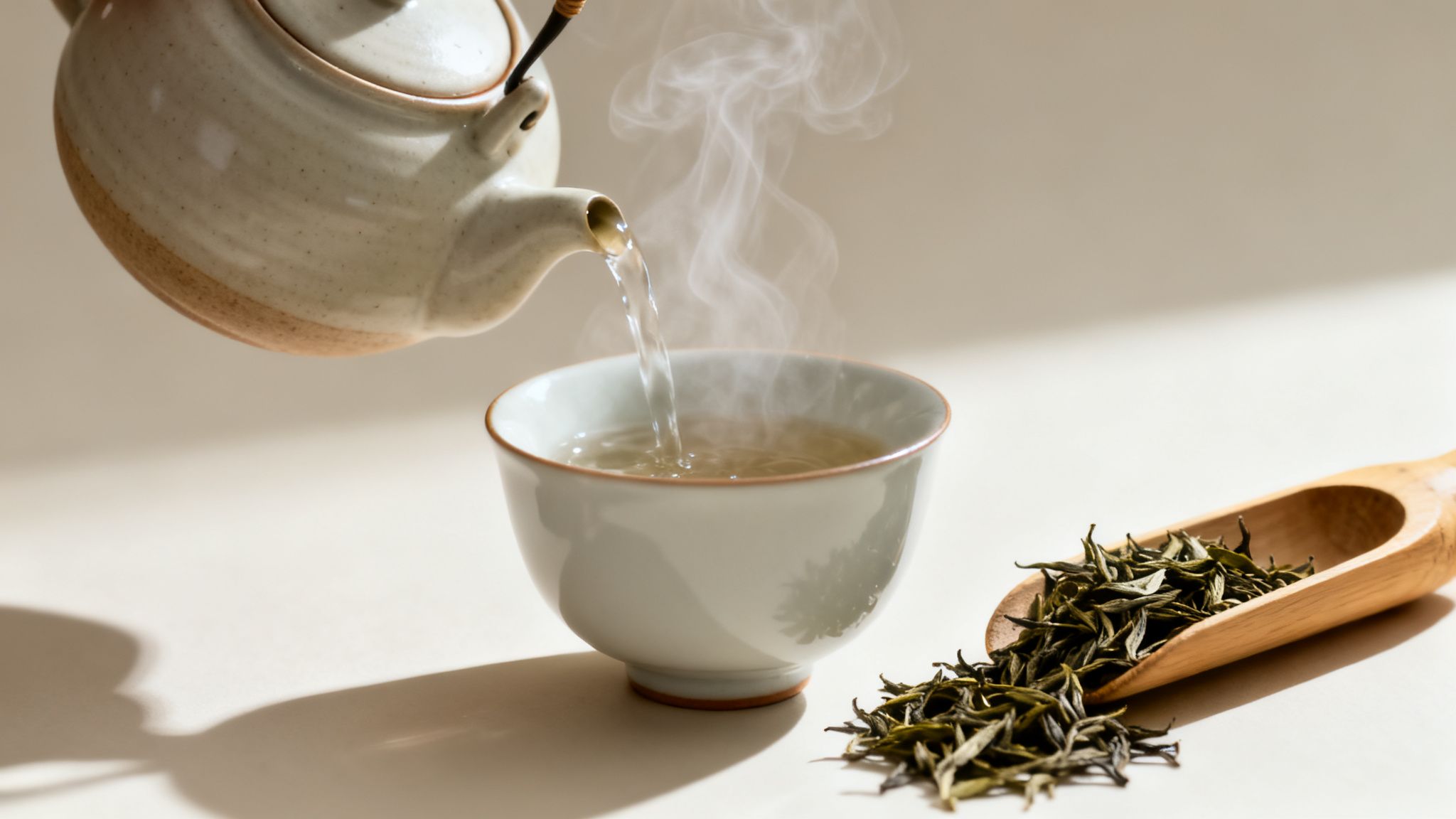
Welcome to the wonderfully rewarding world of loose-leaf tea! If you’ve ever felt like brewing a truly great cup of tea is some kind of secret art, you're in the right place. We're here to demystify the whole process and show you just how easy it is to make a flavorful, aromatic brew.
Forget about rigid rules and complicated steps. Think of this more like starting a conversation with your tea leaves. Once you understand a few key principles, you'll feel confident brewing anything from a fragile white tea to a deep, complex black tea.
Why Bother with Loose-Leaf Tea?
Let's be honest, using a tea bag is easy. But the experience of brewing loose-leaf tea is on a whole different level. Tea bags are convenient, sure, but they’re often filled with "dust and fannings"—the tiny, broken bits of tea leaves left over from processing. This tends to produce a flat, one-dimensional, and sometimes bitter flavor.
Loose-leaf tea, on the other hand, is all about the whole leaf. When you give these larger leaves room to unfurl in hot water, they release their full spectrum of essential oils, aromas, and delicate flavors. This means you get a cup that’s richer, more complex, and a true expression of where the tea came from. We dive deeper into this in our guide on loose leaf tea vs. tea bags.
The real magic of loose-leaf tea is that it’s a full sensory experience. It isn't just about the taste; it's about watching the leaves dance and expand, and breathing in the incredible aroma that fills the room as it steeps.
You're Part of a Growing Movement
If you're getting into brewing your own tea, you're in good company. More and more people are discovering the amazing quality and the simple, mindful ritual that comes with loose-leaf tea.
This isn't just a niche hobby; it's a global passion. The tea industry is valued at an estimated $86.28 billion USD in 2025, and a lot of that growth is driven by people just like you who want higher-quality drinks and a little more wellness in their day.
This guide is your starting point for moving beyond guesswork. Let's start brewing with a little more intention and unlock the incredible flavors waiting in those leaves.
Let's Talk Tea-Making Gear
Before we get into the nitty-gritty of temperatures and times, let's chat about the tools of the trade. Don't worry, you don't need a counter overflowing with expensive gadgets to make a truly fantastic cup of tea. A few well-chosen items are all it takes to elevate your daily brew from just okay to consistently amazing.
Think of it as setting the stage. The right equipment makes everything easier and, more importantly, gives your tea leaves the space and conditions they need to release all their incredible flavor. A simple, effective setup is your ticket to a perfect cup, every single time.
Your Most Important Tool: The Infuser
If you're going to focus on one thing, make it the infuser. This is what holds the leaves as they steep, and its design has a huge impact on the final taste.
Many people start with those small, clamp-style tea balls, but I've found they often do more harm than good. They tend to cram the leaves together, keeping them from fully opening up. When the leaves can't expand, you get a weak, muted brew—a common pitfall that leaves new brewers wondering what they did wrong.
For a truly exceptional cup, you need to give those leaves room to breathe, or as we like to say, "room to dance."
- Basket Infusers: Honestly, these are the best. They fit right into your mug or teapot and provide tons of space for water to flow around every leaf, pulling out all the complex flavors.
- Teapots with Built-in Infusers: A fantastic all-in-one option, especially if you're making tea for a friend. The key here is to check that the internal basket is nice and roomy.
A simple rule of thumb: you want the leaves to unfurl as if they were floating freely in the pot. More space equals more flavor, simple as that.
Kettles, Mugs, and The Finishing Touches
Of course, you can boil water in a saucepan, but a good kettle makes life so much easier. An electric kettle is a real game-changer, particularly one with variable temperature controls. This lets you dial in the exact heat for delicate green or white teas, so you never have to worry about that bitter taste that comes from scorching the leaves with boiling water.
And finally, the mug! The vessel you drink from is part of the whole experience. A solid, comfortable mug just feels right, and a quality one will help keep your tea at the perfect sipping temperature. It's why we designed our Beans Without Borders ceramic mugs—they have a great feel and excellent heat retention, so you can take your time and enjoy every last drop. Getting these few basics right will make your entire tea journey so much more rewarding.
Mastering the Steep for Every Tea Type
This is where the real art of brewing comes into play. You can't treat a delicate White Tea the same way you would a robust Black Tea and expect great results. Think of steeping as a conversation—the water temperature and time are how you coax the best, most authentic flavors out of the leaves.
Getting the water temperature right is probably the single most important factor. If you pour boiling water over a delicate green tea, for instance, you'll scorch the leaves. This releases a flood of tannins, resulting in a bitter, astringent cup. Yet, that same rolling boil is precisely what a hearty herbal blend needs to fully open up.
Green and White Teas: A Gentle Touch
Green and white teas are the most delicate of the bunch. Because they're minimally processed, their leaves are incredibly sensitive to high heat. The secret is to use water that’s well below boiling to protect their sweet, grassy, and sometimes wonderfully floral notes.
For most green teas, a temperature between 170–180°F (77–82°C) is the sweet spot. Don't have a variable-temp kettle? No problem. Just bring your water to a boil, then let it sit for two or three minutes to cool down before you pour. A quick steep of just 1–3 minutes is usually all they need. For a truly unique experience, you might also want to explore the ritual of preparing Matcha Green Tea, which has its own time-honored process.
White teas are even more fragile. Aim for an even lower water temperature, somewhere between 160–170°F (71–77°C). Give them a bit more time to infuse, around 4–5 minutes, to gently draw out that subtle, honey-like sweetness they're known for.
Oolong and Black Teas: Embracing the Heat
Oolong and black teas are much heartier and can handle the heat. The oxidation process they go through makes the leaves more robust, so they can stand up to hotter water without turning bitter. In fact, they need that heat to unlock their deeper, more complex flavors—from the floral notes of a good oolong to the rich, malty character of a classic black tea.
For oolongs, water just off the boil, around 195°F (90°C), is a perfect starting point. The real fun with oolongs is that they're made for re-steeping. Your first infusion might be short, maybe 2–3 minutes, but each subsequent steep will reveal new layers of flavor.
Black teas really shine with water at a full boil, 200–212°F (93–100°C). You need that intense heat to pull out their bold, full-bodied profile. A steep time of 3–5 minutes is a good rule of thumb, but don't be afraid to adjust it based on how strong you like your tea.
One of the best things about high-quality loose-leaf tea, especially Oolongs and Pu-erhs, is the ability to re-steep. Each infusion tells a new part of the tea's story, offering an evolving flavor profile you just don't get from a tea bag.
Pu-erh and Herbal Teas: Going for Full Extraction
Pu-erh, a unique fermented tea, and herbal infusions (also called tisanes) are the toughest of the lot. They both benefit from a full, rolling boil at 212°F (100°C) to make sure you're extracting all their deep, earthy flavors and wonderful compounds.
With Pu-erh, it's common practice to give the leaves a quick rinse with hot water to "wake them up" before the first real steep. That first infusion typically lasts 2–4 minutes. Just like oolongs, a quality Pu-erh can be infused over and over again.
Herbal teas, which can contain anything from dense roots and berries to delicate flowers, need a longer steep of 5–7 minutes (or even more) to ensure all their vibrant aromas and flavors make it into your cup.
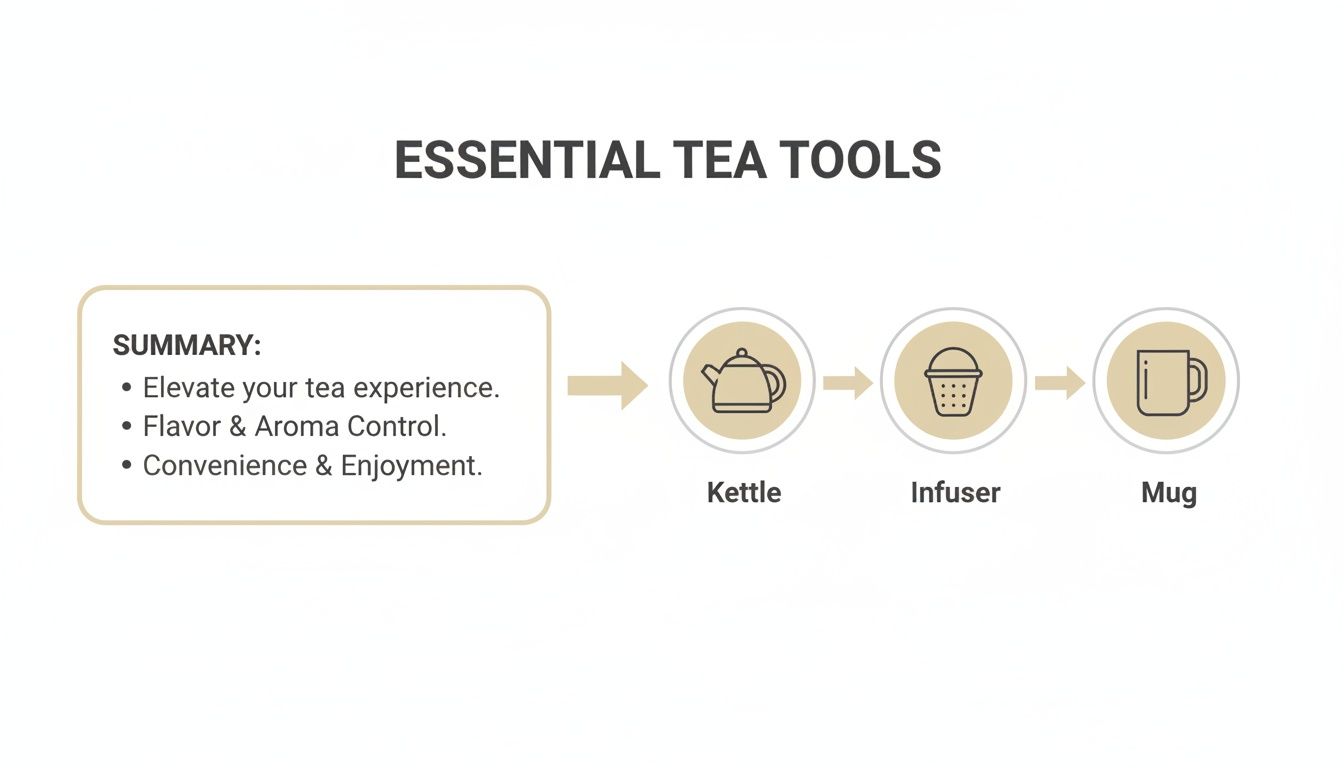
To make things a bit simpler, I've put together a quick reference chart with my go-to starting points for each tea type.
Quick Steeping Guide for Loose Leaf Tea
| Tea Type | Water Temperature | Leaf Ratio (per 8 oz / 240 ml) | Steep Time (1st Infusion) | BWB Tea Recommendation |
|---|---|---|---|---|
| Green Tea | 170-180°F (77-82°C) | 1 tsp | 1-3 min | Sencha |
| White Tea | 160-170°F (71-77°C) | 1.5 tsp | 4-5 min | Silver Needle |
| Oolong Tea | 195°F (90°C) | 1 tsp | 2-3 min | Iron Goddess of Mercy |
| Black Tea | 200-212°F (93-100°C) | 1 tsp | 3-5 min | Assam |
| Pu-erh Tea | 212°F (100°C) | 1 tsp | 2-4 min (after rinse) | Ripe Pu-erh Cake |
| Herbal Tea | 212°F (100°C) | 1-2 tsp | 5-7+ min | Chamomile |
Remember, these are just guidelines! The best cup of tea is the one you enjoy most, so feel free to experiment and find what works for you.
Troubleshooting Your Brew: What to Do When Tea Goes Wrong
We’ve all been there. You follow the directions, you're excited for that perfect cup, and... it's just not right. Maybe it's aggressively bitter, disappointingly weak, or tastes oddly flat.
Don't pour it down the drain just yet! These issues are completely normal and, better yet, easy to fix. Think of the instructions on a tea package as a great starting point, not an unbreakable rule. Your water, your kettle, and your own taste buds are all part of the equation. Let’s figure out what went wrong and get you back to brewing tea you love.
Why Does My Tea Taste Bitter or Astringent?
Bitterness is easily the most common complaint I hear. If your tea tastes harsh or makes your mouth feel unpleasantly dry (that’s astringency), it’s a classic case of over-extraction. You've pulled too many tannins—naturally occurring compounds in the tea leaf—into your cup.
Nine times out of ten, the culprits are water temperature or steep time.
Here’s how to dial it back:
- Cool It on the Water Temp: This is the big one, especially for delicate green and white teas. Water that's boiling or too hot literally scalds the leaves, forcing a rush of bitter tannins out immediately. Next time, let your kettle sit for a minute or two after it boils before you pour.
- Shorten the Steep Time: It’s amazing what a difference 30 seconds can make. An extra half-minute can be the tipping point that takes a brew from balanced and sweet to sharp and bitter. Set a timer and try stopping the infusion a little sooner.
What If My Tea Tastes Weak or Watery?
The opposite problem is a cup that lacks personality. It's thin, lifeless, and you can barely taste those complex notes you were promised. A weak brew usually points to a problem with your ratios or not giving the leaves enough time to open up.
Before you write off a tea as being too subtle, try these adjustments:
- Up the Leaf-to-Water Ratio: The simplest fix is often the best one. Just use more tea. Try adding another half-teaspoon of leaves to your infuser for the same amount of water. This will give your brew more body and a richer flavor.
- Let It Steep a Little Longer: Some teas need more time to unfurl and release their magic. This is especially true for herbal tisanes with dense ingredients like dried fruit or roots. Add an extra minute to your timer and see how the flavor develops.
- Consider Your Water Source: Water makes up over 98% of your cup, so it has a huge impact. Heavily treated tap water with a strong chlorine or mineral taste can easily overpower the delicate flavors of a high-quality tea. A simple switch to filtered or spring water can be a game-changer.
Ultimately, your palate is the only guide that matters. The "perfect" cup of tea is the one that tastes amazing to you. Use these guidelines as a jumping-off point for your own experiments and trust your taste.
Taking Tea on Ice: Hot vs. Cold Brewing
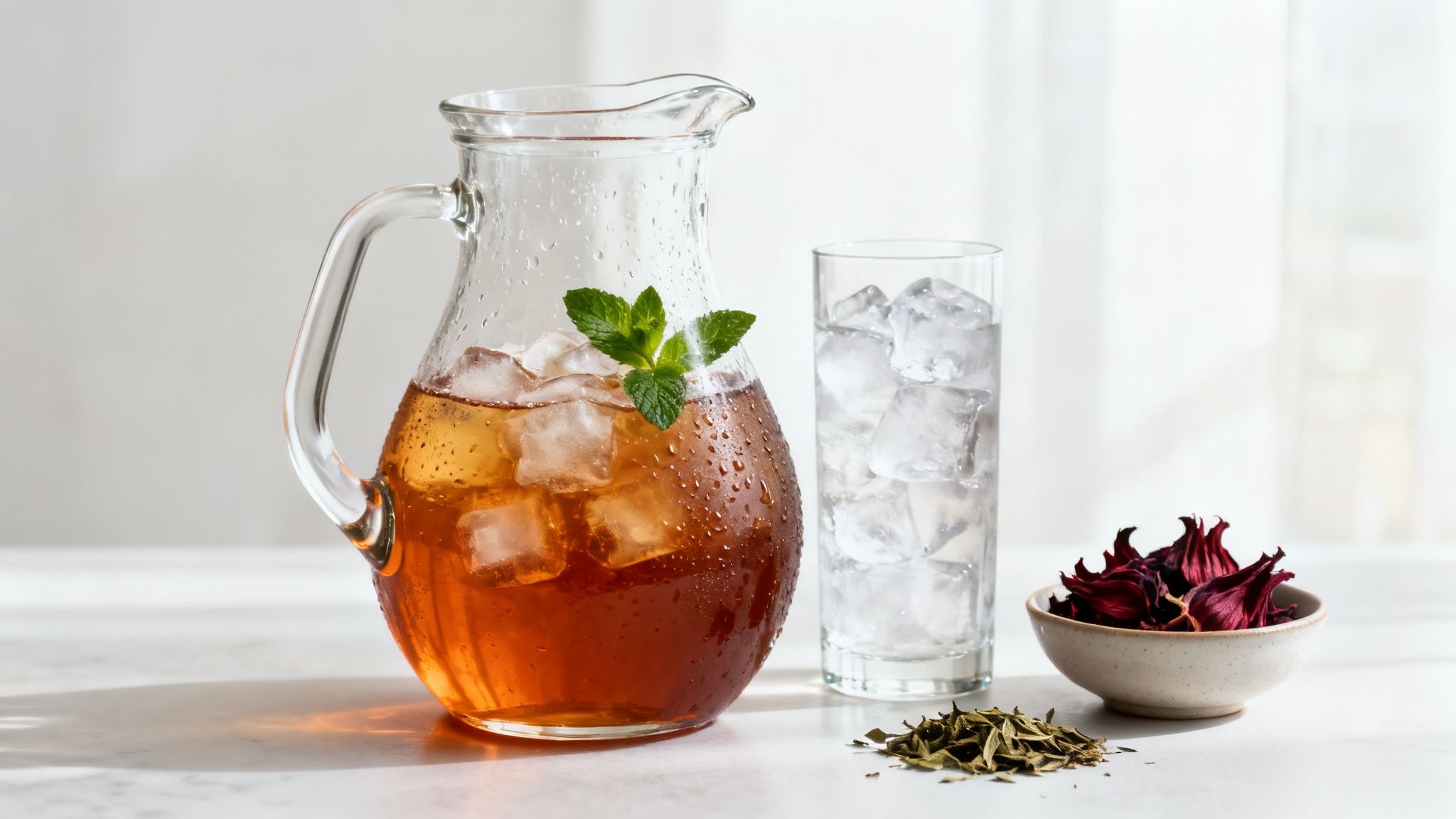
Loose-leaf tea isn't just for curling up with on a chilly day. It makes for an unbelievably refreshing iced tea, a far cry from the sugary powders and bland concentrates. When you start with high-quality leaves, you get a chilled drink that's vibrant, complex, and deeply satisfying.
You’ve got two main roads you can take to get to a brilliant pitcher of iced tea. The first is the classic hot-brew-then-chill method. The second is a slower, gentler cold brew that yields a totally different, incredibly smooth result. Let's break them down.
The Quick-Chill: Hot Brewing for Iced Tea
This is your fast track to a cool glass of iced tea. The whole trick here is to brew a strong concentrate that won't turn into a watery disappointment when the ice melts. A classic rookie mistake is brewing a normal-strength cup and just pouring it over ice—that's a recipe for a weak, sad drink.
Here’s how to do it right:
- Double down on the leaves. You’ll want to use about twice the amount of tea you’d use for a regular hot cup. For a quart-sized pitcher, think in the ballpark of 8 teaspoons.
- Brew it right. Stick to the proper water temperature and steep time for whatever tea you're using.
- Cool, then chill. Once you strain the leaves, let the concentrate cool down on the counter for a bit. Then, pop it in the fridge to chill completely before pouring over a full glass of ice.
This method is fantastic for bold teas that can hold their own against dilution. Fruity, bright infusions are especially great. For a real showstopper, try it with our Hibiscus Berry Herbal Tea—it brews into a stunning crimson drink that’s as delicious as it looks.
The Slow Method: The Art of Cold Brew
Cold brewing is a total game-changer for tea lovers. It’s a patient, gentle process that uses cold water from the very start, slowly pulling the flavor from the leaves over several hours.
The real magic? Because the tea never hits hot water, fewer bitter tannins are released. This gives you a final brew that’s remarkably smooth, naturally a little sweeter, and much less acidic. It’s a completely different experience.
Best of all, it's incredibly easy and almost entirely hands-off. Just combine your loose-leaf tea and some cold, filtered water in a pitcher or a big jar. A great place to start is with a ratio of about 1.5 to 2 teaspoons of tea for every cup of water.
Cover it up, stick it in the fridge, and let it steep for 8 to 12 hours. Once the time is up, just strain out the leaves and it’s ready to pour.
Keeping Your Loose Leaf Tea Fresh
So, you've brought home some beautiful, high-quality loose leaf tea. The last thing you want is for its vibrant, complex flavors to fade away before you get to enjoy them. Proper storage is the key, and thankfully, it's pretty simple once you know what you're up against.
Your tea's biggest enemies are the very things that make up your kitchen environment.
The Five Foes of Freshness
Think of your tea leaves as delicate little sponges, ready to absorb everything around them—for better or worse. To keep them tasting their best, you need to protect them from five key things:
- Light: Direct sunlight is a killer. Its UV rays break down the essential compounds in the tea, zapping the flavor and aroma right out of the leaves.
- Air: Oxygen causes your tea to go stale, a process called oxidation. This is great for making black tea, but not so great when it happens slowly in your pantry, making the flavor flat and dull.
- Moisture: Tea leaves are incredibly absorbent. Even a little bit of humidity can ruin their texture, and in a worst-case scenario, lead to mold.
- Heat: Storing your tea next to the stove or on a sunny windowsill is a big no-no. Heat essentially "cooks" the leaves, destroying the delicate essential oils that give tea its wonderful character.
- Strong Odors: Keep your tea far, far away from your spice rack, coffee beans, and that garlic bulb on the counter. It will soak up those smells, and nobody wants a cup of garlic-infused Silver Needle.
The golden rule is simple: store your tea somewhere cool, dark, and dry. An airtight, opaque container tucked away in a kitchen cabinet is your tea’s best friend.
A quick word of warning: never store your tea in the refrigerator. I know it seems like a cool, dark place, but it's a trap! It's full of moisture and a whole party of food odors that your tea will absorb in a heartbeat.
For a deeper dive into the best containers and techniques, check out our complete guide on how to store loose leaf tea.
Answering Your Top Tea Questions
You've got the basics down, but a few questions always pop up when you're dialing in your perfect brew. Let's tackle some of the most common ones I hear.
Can You Resteep All Loose Leaf Tea?
Not quite. While some teas are practically made for multiple infusions, others are more of a one-and-done deal.
High-quality Oolong, Pu-erh, Green, and White teas are the champions of resteeping. In fact, many tea lovers will tell you the second or third infusion is where they really open up and reveal their more complex notes.
On the other hand, most Black teas and herbal infusions give you their all in that first cup. Try to resteep them, and you'll likely get a watery, lackluster brew.
Why Does My Green Tea Taste So Bitter?
This is the number one question I get about green tea, and the culprit is almost always the same: you're scorching the leaves!
Green tea leaves are delicate. Hitting them with boiling water or leaving them in for too long is a surefire way to release too many bitter tannins. It’s a common mistake.
To fix it, pull back on the temperature. Aim for water around 175°F (80°C). And watch the clock—most greens are perfect after just 1-3 minutes. You'll be amazed at the difference; a smooth, sweet flavor will replace that harsh bite.
Does the Shape of My Tea Infuser Really Matter?
It absolutely does. Think of it this way: your tea leaves need room to unfurl and "dance" in the water to release all their flavor. If they're crammed into a tiny space, you're not getting the full picture.
This is why large, basket-style infusers that fit right into your mug are my go-to. They give the leaves plenty of space to expand.
Those small, novelty tea balls? While cute, they often restrict the leaves too much, leading to a weak, underdeveloped cup of tea. Give your leaves some breathing room—it makes a world of difference.
At Beans Without Borders, we believe a great cup is an experience worth savoring, whether it's coffee or tea. Explore our curated selection of the best loose leaf tea online and find your perfect brew.