

Sourness in Coffee: sourness in coffee Fixes for a Better Cup
That pucker-inducing sourness in your morning coffee? It’s usually the sign of a simple brewing mistake called under-extraction. This happens when hot water just doesn't hang out with the coffee grounds long enough to pull out all the good stuff.
But here’s the twist: not all tartness is a bad thing. Some tangy notes are actually the hallmark of an incredible, high-quality specialty coffee. It's like the difference between biting into a painfully unripe green banana versus the delightful zing of a perfectly ripe raspberry. One is a mistake, the other is delicious. We encourage you to click the links and make a purchase of the coffee of your choice.
Decoding Sour vs Acidic Coffee Flavors
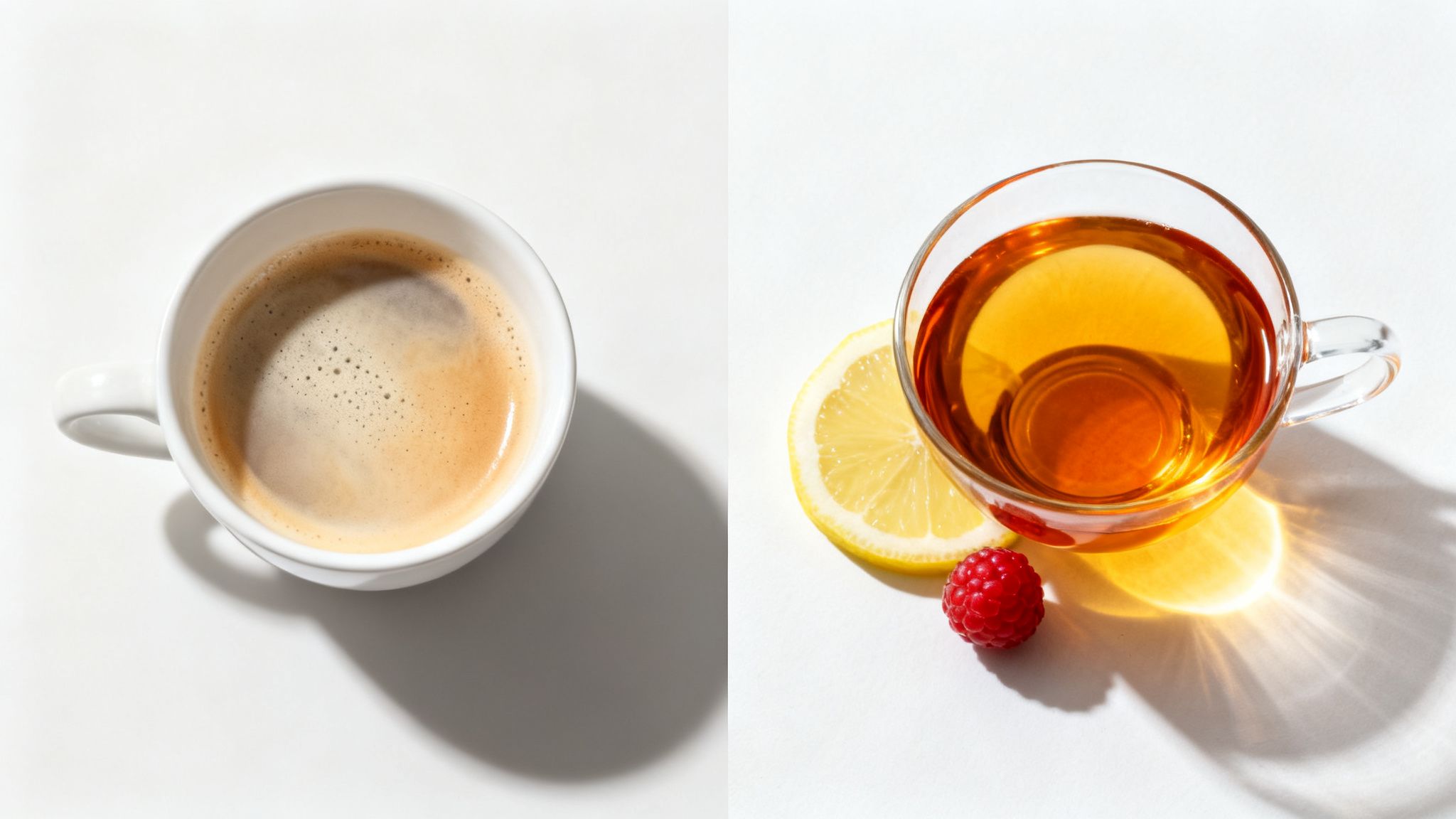
It’s incredibly common to mix up unpleasant sourness in coffee with desirable acidity, but they are worlds apart in flavor. True sourness is sharp, thin, and aggressive—it makes you wince, kind of like sucking on a lemon wedge. It’s a clear signal that something went wrong with your brew.
Acidity, on the other hand, is something we celebrate in the coffee world. It's that bright, vibrant, and lively quality that makes your coffee feel refreshing and complex. Think of the crisp snap of a Granny Smith apple or the sweet tang of a sun-ripened berry. This is the quality that gives a coffee its unique personality and sparkle, and it's often a sign of high-altitude, meticulously grown beans.
The Growing Appeal of Acidity
This love for bright, acidic coffees isn't just for a handful of coffee nerds anymore; it’s a real trend. While that sharp taste can come from under-extraction, it can also be the natural, high-acidity character of beans from powerhouse regions like Ethiopia.
In fact, a 2025 SCA report revealed that 42% of U.S. specialty coffee drinkers now prefer coffees with high-acidity profiles. That's a huge leap from just 28% back in 2015. This shift in taste lines up perfectly with what's happening at origin, as Ethiopia's coffee production hit a record 8.2 million bags in the 2025/26 season. You can explore more on global coffee consumption trends to see how palates are changing worldwide.
This quick guide can help you learn the key differences between the vibrant acidity found in specialty coffee and the unpleasant sourness that comes from a brewing error.
Good Acidity vs Bad Sourness At a Glance
| Characteristic | Good Acidity (Bright & Lively) | Bad Sourness (Sharp & Unpleasant) |
|---|---|---|
| Sensation | Refreshing, crisp, mouth-watering. Adds sparkle and complexity. | Pungent, sharp, thin-bodied. Makes you pucker your lips. |
| Flavor Notes | Reminiscent of fruit: citrus, berries, stone fruit, green apple. | Overpowering and one-dimensional, like unripe fruit or vinegar. |
| Aftertaste | Clean, pleasant, and lingering with sweet or fruity notes. | Dries out the mouth, leaving a harsh and unpleasant finish. |
| Common Cause | High-quality beans, often from high-altitude origins (e.g., Ethiopia). | Under-extraction (water too cold, grind too coarse, brew too fast). |
| Is It a Flaw? | No, it's a desirable feature that indicates quality and complexity. | Yes, it's a sign of a brewing mistake that needs to be fixed. |
Ultimately, knowing the difference helps you identify whether you're tasting a celebrated flavor note or a simple brewing mistake you can easily correct.
The key is distinguishing between a flaw and a feature. A sour cup is a brewing error, while an acidic one is a tasting experience. Recognizing this difference empowers you to fix your brew or choose a bean that perfectly suits your palate.
Getting this distinction down is the first real step toward taking control of your coffee. It gives you the power to troubleshoot a disappointing cup or confidently seek out beans that deliver those exciting, bright, and lively flavors you love.
The Hidden Chemistry Behind a Sour Cup
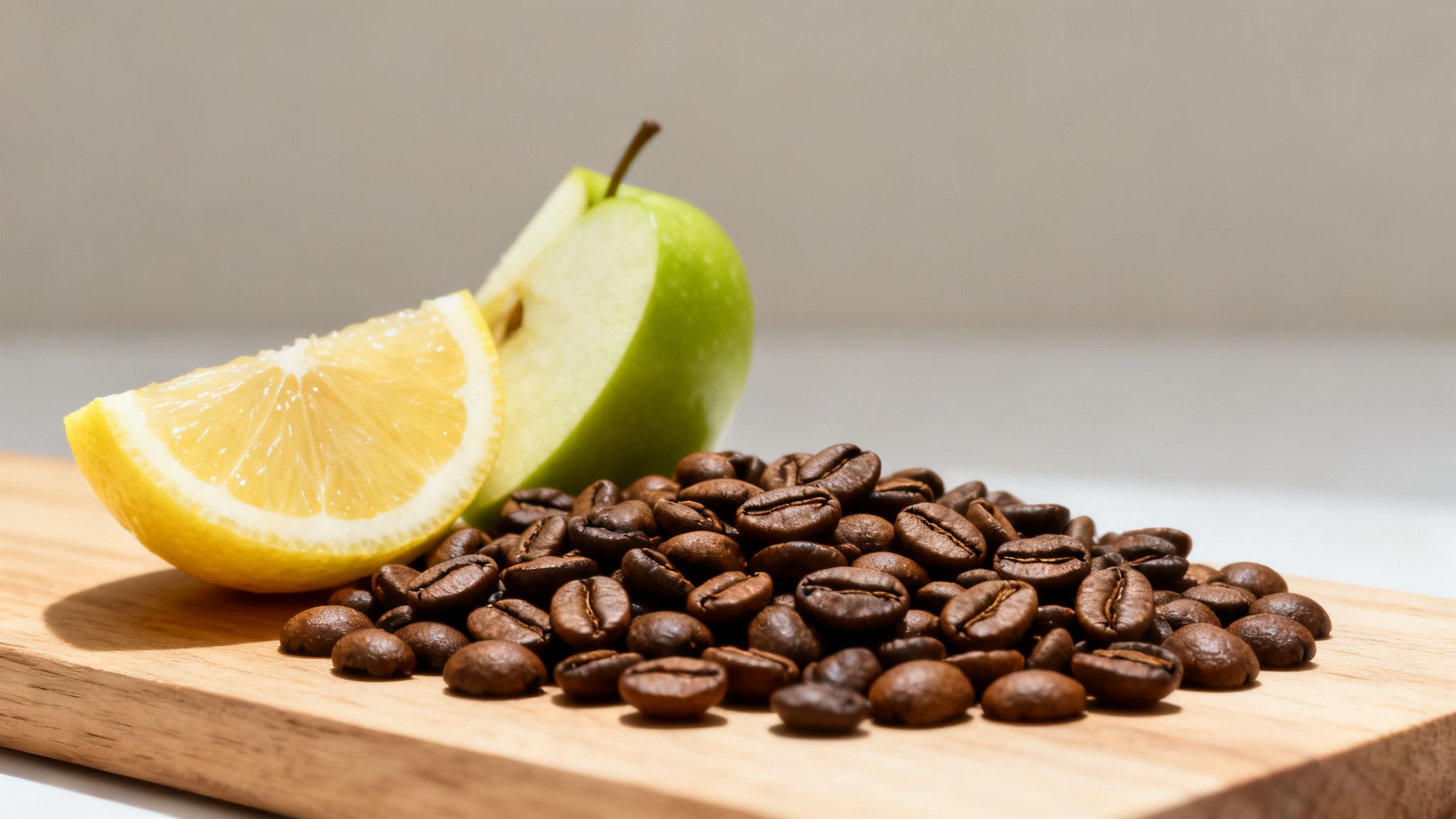
To really get to the heart of sourness in coffee, we need to peek at what’s happening on a molecular level. Every single coffee bean is loaded with a whole cocktail of organic acids. These compounds are the fundamental building blocks of flavor—they’re basically the coffee's DNA, setting the stage for all those bright, fruity, or even wine-like notes we love.
The two rockstars of coffee acidity are citric acid, which delivers that zesty, lemon-like pop, and malic acid, which gives you the crisp tartness of a fresh green apple. No surprise here—these are the exact same acids you find in those fruits. It’s why a really well-handled light roast can hit your palate with a burst of berry or citrus.
The Impact of Roasting
The roaster is where the magic really happens, and those acids are completely transformed. Think of a light roast as a quick sear on a steak. It preserves the bean's most delicate, natural acids, giving you a cup that’s bright, lively, and full of complex personality. This is exactly why our light-roasted Ethiopian beans sing with such vibrant, fruity flavors; they're a pure expression of their origin.
As the roast gets darker, however, the intense heat starts to break down those vibrant acids. In their place, deeper, more mellow flavors emerge. This is when you start tasting notes of chocolate, nuts, and rich caramel. One isn't better than the other, of course—they just offer two completely different journeys.
The real chemistry behind that tangy flavor is tied to compounds called chlorogenic acids (CGAs). As beans tumble in the roaster, these CGAs decompose into other acids that shape the final taste. Light roasts hang onto 15-20% more CGAs than dark roasts, which can lead to perceived sourness levels up to 25% higher in blind taste tests. This bright, acidic profile is gaining serious traction; it's estimated that 73% of daily American coffee drinkers will prefer light roasts in 2025. You can discover more about 2025 coffee consumption trends and see just how people's tastes are shifting.
How Processing Methods Change Flavor
Roasting is a huge piece of the puzzle, but the journey starts way before that, right at the farm. How the coffee cherry is processed dramatically alters its acid profile. The two main approaches create wildly different results:
- Washed Process: Here, all the fruit is scrubbed off the bean before it's laid out to dry. This method gives you a super clean, crisp cup where the citric and malic acidity really shines. It’s the purest expression of the bean itself.
- Natural Process: With this method, the coffee cherry is left completely intact while the bean dries inside. This lets the fruit's sugars ferment and soak into the bean, creating a much sweeter, jammier flavor profile with a more rounded, wine-like acidity.
Grasping this bit of chemistry brings a whole new level of appreciation to your morning ritual. It's not just coffee; it's a delicate dance between science and craft. For another crucial factor that shapes your brew's final flavor, take a look at our guide on the best water temperature for brewing coffee.
How a Coffee's Origin Story Shapes Its Acidity
Every coffee bean tells a story, and that story begins at home. The specific patch of earth where a coffee cherry grows—its soil, elevation, and climate—creates a unique flavor fingerprint we call terroir. It's the same reason a Pinot Noir grape tastes completely different in France than it does in California; a coffee's origin is the first and most important author of its acidic personality.
This idea of terroir is what makes single-origin coffee so special. It’s a direct taste of a specific place, an experience you can’t replicate anywhere else. The flavors are a pure, unfiltered reflection of the environment that nurtured the beans. From the volcanic soils of Central America to the high-altitude farms of Ethiopia, each region imparts a distinct character to its coffee.
The Altitude Effect
Altitude is one of the biggest players when it comes to acidity. Coffee grown way up high, where the air is cool and the soil is often rich with volcanic minerals, matures much more slowly. This long, lazy ripening period gives the beans extra time to develop complex sugars and a higher concentration of those bright, fruity acids we love.
It’s exactly why our high-altitude Ethiopian coffees are famous for their vibrant, almost wine-like acidity and delicate floral notes. On the other hand, our beans from the lower elevations of Mexico offer a smoother, more rounded profile with a softer acidity and those cozy, chocolatey hints.
Altitude isn’t just a number; it’s a flavor catalyst. Higher elevations force coffee cherries to ripen slowly, concentrating their sugars and acids, which translates into a more vibrant and complex cup.
This slow-and-steady development is the secret to creating the kind of acidity that coffee connoisseurs hunt for. It’s not just sourness; it's a structured, nuanced brightness that lifts the entire flavor profile. Tasting coffees from different altitudes is like taking a tour of the world’s mountainsides, one cup at a time.
Climate and Its Growing Impact
Beyond just how high up a farm is, the region’s overall climate has a huge say in the final taste, especially its sour and acidic notes. Everything from the amount of sunshine and rainfall to daily temperature swings directly impacts how the coffee cherry ripens and which acids end up stealing the show.
Climate change is making this factor even more critical. A 2025 USDA report pointed out that rising temperatures in key growing regions like Ethiopia and Peru have increased acidity variability by a startling 18% since 2010. As arabica cherries ripen faster in the heat, they can develop more malic acid, which can lead to sharper, more aggressive sour profiles in as many as 25% of harvests. You can read the full USDA report on coffee production to see just how dramatically climate is reshaping coffee flavors.
This makes our job of sourcing from specific microclimates more important than ever. By really understanding the unique terroir of each farm, we can hand-select beans that deliver that perfect, harmonious balance of sweetness and acidity you’re looking for. To dig even deeper into this, check out our guide on famous coffee growing regions and their distinct taste profiles.
Ultimately, this journey from a single hillside all the way to your cup is what makes single-origin coffee a genuine adventure. When you taste the bright citrus of an Ethiopian Yirgacheffe or the mellow sweetness of a Mexican Chiapas, you’re tasting its unique story. Why not explore our single-origin collection and start your own tasting journey today?
Your Guide to Fixing Sour Coffee at Home
Alright, let's roll up our sleeves and get you brewing better coffee. If you've ever sipped your morning cup only to be hit with an unpleasant pucker, you know what we're talking about. That sharp, tangy flavor is sourness, and it’s almost always a clear signal of under-extraction.
Think of it this way: the water just didn't have enough time or power to pull all the good stuff out of the coffee grounds. The good news? This is one of the easiest brewing problems to solve right in your own kitchen. The fix usually comes down to a few simple tweaks, whether you're using a drip machine, a pour-over, or a French press.
Choosing the right beans is also a great first step. Some coffees, particularly those from high-altitude regions, are naturally brighter and more acidic. This chart can help you see how a bean's origin story often shapes its final flavor.
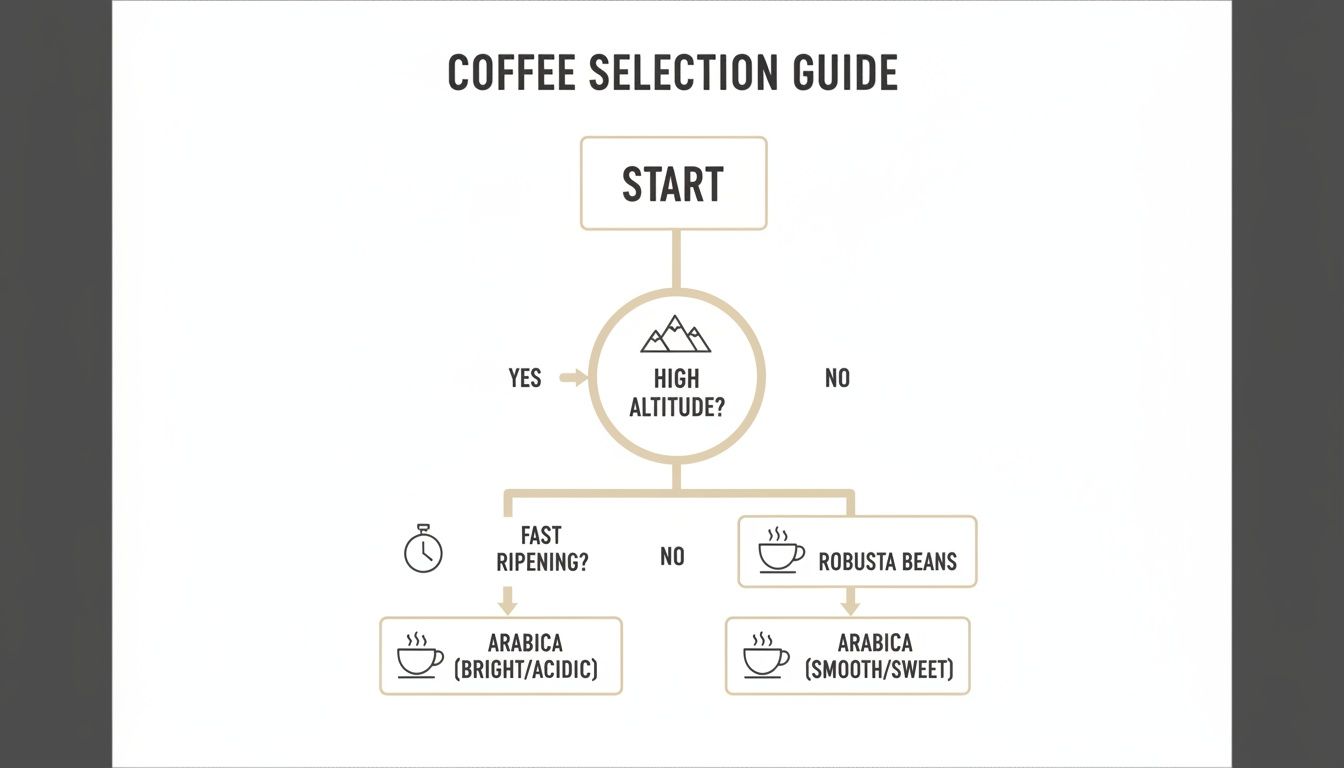
As you can see, understanding a coffee's background can point you toward a profile that naturally suits your palate, setting you up for success before you even start brewing.
Key Variables You Can Control
Think of brewing coffee like cooking. When a dish doesn't taste right, you adjust the ingredients or the cooking time. It's the same idea here. If your coffee is sour, your "recipe" just needs a small adjustment.
Here are the main dials you can turn to fix it:
-
Grind Size: This is your secret weapon. A finer grind exposes much more surface area to the water, which dramatically speeds up how quickly flavors are extracted. Most of the time, just tightening up your grind a notch is all it takes to fix a sour brew.
-
Brew Time: This is simply how long your coffee grounds and water are in contact. A longer brew time gives the water a better shot at dissolving those delicious, sweet compounds that are needed to balance out the coffee's natural acids.
-
Water Temperature: Hot water is a much better solvent than cool water. If your water isn't hot enough (below 195°F or 90°C), it just won't have the energy to do its job properly. You'll be left with a weak, sour cup. For best results, aim for water that’s just off the boil.
These three factors are your ticket to a well-extracted, balanced cup. And if you're curious about different brewing styles, our guide on how to make cold brew coffee explores a method famous for producing a smooth, low-acid result.
Your Sour Coffee Troubleshooting Guide
Feeling overwhelmed? Don't be. We've put together a simple table to help you diagnose the problem and apply the right fix on the spot.
| Symptom | Likely Cause (Under-Extraction) | Simple Solution |
|---|---|---|
| Tastes sharp, lemony, and watery | Your grind is too coarse. | Adjust your grinder to a finer setting. This increases the surface area, letting water extract more flavor. |
| Thin-bodied with a harsh, salty finish | Your brew time was too short. | Extend the brew time. For pour-overs, slow down your pour. For a French press, just let it steep for an extra minute. |
| The sourness is present but very weak | Your water-to-coffee ratio is off. | Use less water or more coffee. A stronger ratio can push the extraction into that balanced, sweet zone. |
| Consistently sour across different beans | Your brewing water is too cold. | Increase your water temperature. Aim for the sweet spot between 195-205°F (90-96°C) for a perfect extraction. |
At the end of the day, it's all about finding that perfect middle ground.
The goal is always balance. Under-extraction leaves the bright acids on their own, creating sourness. Over-extraction pulls out bitter compounds. A great brew finds that perfect sweet spot right in the middle.
With these simple fixes, you're well on your way to turning any of our Beans Without Borders coffees into a fantastic cup. Just remember to change only one thing at a time so you know exactly what worked. Happy brewing
Choosing the Perfect Coffee for Your Palate
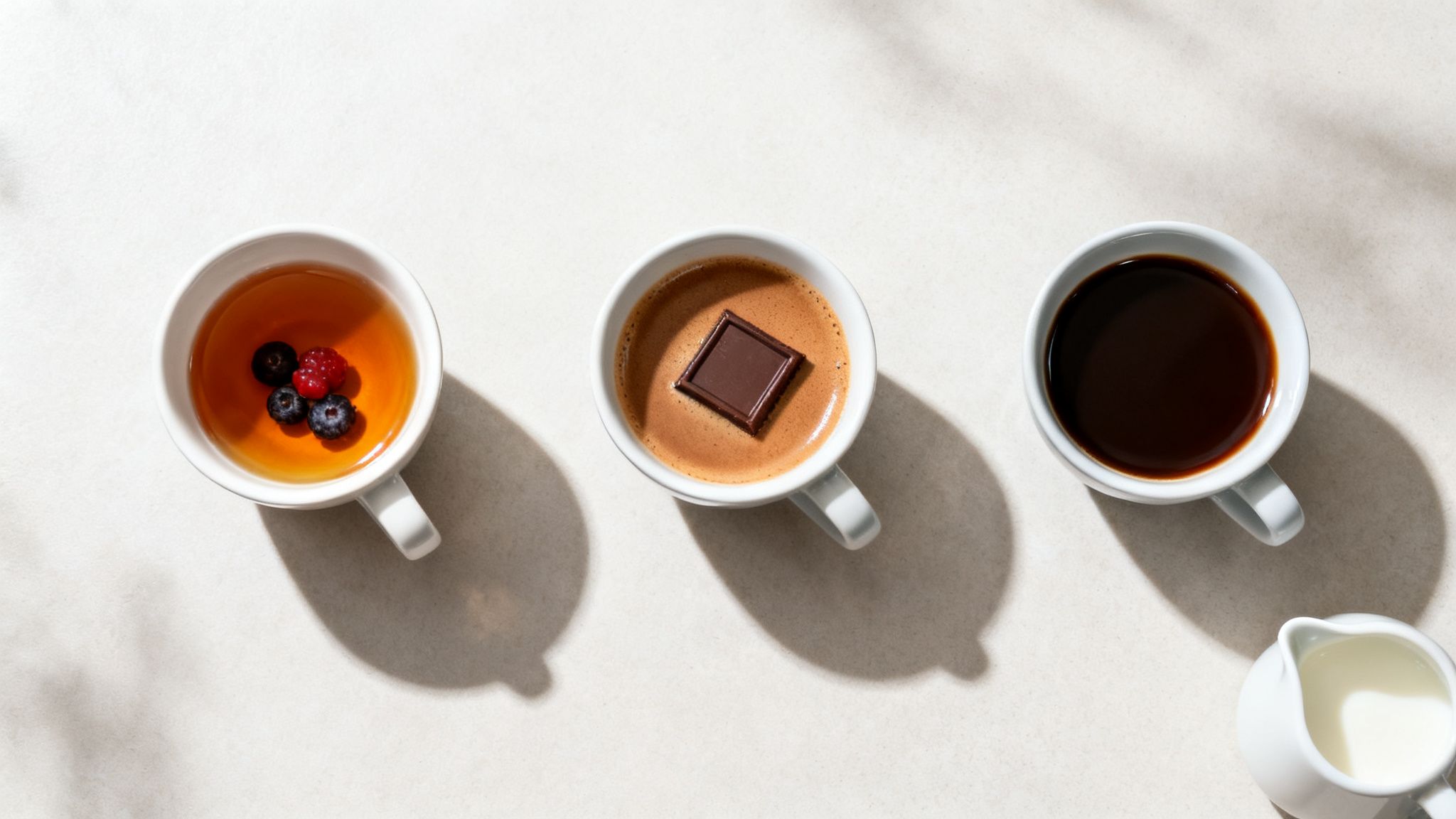
Now that you know how to fix unwanted sourness in coffee, you can get to the fun part: finding the perfect beans for your go-to drinks. Think of this as your personal matchmaking guide to our single-origin collection. We'll help make sure every cup you brew is exactly what you’re craving.
Let’s talk about pairing our coffees with classic café beverages like an Americano, Espresso, Latte, Frappé, Macchiato, Mocha, Breve, or Affogato.
For Milk-Based Drinks
When you're making a latte, cappuccino, a rich mocha, or a creamy breve, the coffee needs to have enough body and richness to slice right through the creamy milk without getting lost. You're looking for a solid, flavorful foundation.
Our Peruvian coffee is the ideal candidate here. Its profile is smooth and balanced, with delicious notes of chocolate and toasted nuts. This creates an espresso shot that’s bold but never overpowering, and it harmonizes perfectly with steamed milk for a truly comforting and decadent drink.
Crafting the Perfect Black Coffee
For drinks where the coffee is the star of the show—like an Americano, a classic drip brew, or a pour-over—you want beans with complexity and bright, clean flavors. In this case, acidity isn't a bug; it's a feature. This is where coffees with a more delicate and nuanced profile really get to shine.
We highly recommend our Ethiopian coffee for these brews. Its vibrant, almost wine-like acidity and delicate floral and citrus notes are best enjoyed without milk. Brewed as an Americano or pour-over, it produces a cup that is crisp, refreshing, and absolutely bursting with personality.
The perfect coffee pairing is all about synergy. For milky drinks, choose beans with deep, rich flavors that stand strong. For black coffee, select beans with bright, complex notes that can take center stage.
How Your Milk Choice Affects Acidity
Don't forget that the type of milk you use can completely change the final taste of your drink. Different milks interact with a coffee's natural acidity in very different ways.
- Dairy Milk (Whole, 2%, Skim): Whole milk is the classic choice for a reason. Its higher fat content softens acidity and adds a creamy sweetness, creating that rich, familiar latte experience.
- Oat Milk: This is a fantastic dairy-free option. Its creamy texture and subtle sweetness beautifully complement a coffee's bright notes without overwhelming them.
- Almond Milk: Lighter in body with a distinct nutty flavor, almond milk can sometimes clash with highly acidic coffees. It pairs wonderfully, however, with lower-acid beans like our Mexican coffee.
- Soy Milk: Known for its rich, creamy texture and distinct flavor, soy milk can create a wonderfully balanced drink, especially with medium to dark roast coffees.
Understanding these pairings lets you become your own at-home barista. Ready to find your perfect match? For a deeper dive, explore our guide on how to choose coffee beans and start your flavor journey.
Ready for the Next Chapter of Your Coffee Journey?
You’ve just unlocked a new level in your coffee skills, taming sourness like a pro. But believe us, this is just the beginning. Your palate is your passport, and here at Beans Without Borders, we have a whole world of flavor waiting for you to explore.
Think of us as your guide. We travel the globe (virtually, of course) to find incredible single-origin coffees that tell a story. Now, it’s your turn to taste them.
It’s Not Just About Coffee
We’re passionate about great beverages, period. That's why we also put the same care into sourcing our premium loose-leaf teas. Whether you're in the mood for a classic, robust English Breakfast or a soothing hibiscus berry blend after a long day, we’ve got you covered. We offer the best loose leaf tea online.
And if you want to wear your coffee love on your sleeve—literally—check out our merchandise. We’ve got durable ceramic coffee mugs perfect for that first morning cup, plus comfy hoodies, shirts, t-shirts, and hats. It's gear for people who truly appreciate the craft.
The best way to stay in the loop is to join our e-mail list. You’ll immediately get 10% off your next order, plus you'll be the first to know about new arrivals, get our latest brewing guides, and hear about special offers.
Our mission is simple: to bring the world's best coffee and tea to your doorstep. That’s why we’re proud to offer free shipping on all orders across the U.S., making it that much easier to brew a perfect cup, every time.
Got Questions? We've Got Answers.
Still wrestling with a few details about sourness in your coffee? Let's clear up some of the most common questions we hear from fellow coffee lovers.
Is Sour Coffee and Acidic Coffee the Same Thing?
That’s a great question, and the short answer is no. Think of it this way: all coffee has acidity. When it's balanced, we call it brightness or liveliness—it’s that pleasant, crisp quality you find in a juicy apple or a sweet orange. It’s a good thing!
Unpleasant sourness, on the other hand, is what happens when those acids are completely out of whack. It’s usually a tell-tale sign of under-extraction. The brewing water didn't have enough time or heat to pull out the sugars and other compounds needed to balance the coffee's natural acids, leaving you with a puckering, lemony taste.
If I Don't Like Sourness, Should I Just Drink Dark Roasts?
Generally, yes—a darker roast will almost always be less acidic. The roasting process itself mutes or breaks down many of the organic acids that taste sharp and tangy. In their place, you get those deeper, roasty, and chocolate-forward flavors.
If you've found light roasts a bit too much for your palate, stepping into the world of medium or dark roasts is a great move. For a beautifully smooth and low-acid cup, our single-origin coffee from Peru is a perfect place to start.
My Coffee Pods Taste Sour. How Do I Fix That?
You're right, you can't exactly dial in the grind on a pre-packaged pod. But you often have more control than you think.
Most single-serve machines let you choose the brew size. If your pod coffee is tasting sour, try running it on a smaller cup setting. This simple change reduces the amount of water pushed through the grounds, which can actually help increase the extraction and bring the flavors back into balance.
You can also look for pods that feature a darker roast profile from the get-go. Our Mexican single-origin pods, for instance, are roasted to deliver a rich, smooth flavor with naturally lower acidity.
Ready to leave sour coffee behind and discover a world of balanced, delicious flavor? Here at Beans Without Borders, we've sourced a collection of incredible single-origin beans and convenient pods designed for every kind of coffee drinker. Find your new favorite today.