

What is fair trade coffee: A Clear Guide to Ethical Coffee
Fair trade coffee isn't just a label; it's a commitment. It represents a global movement dedicated to making sure coffee farmers get a fair shake, shielding them from the wild swings of the commodity market. This approach fosters a real partnership, one built on fairness and respect that directly benefits the people growing your coffee.
Your Quick Guide to Fair Trade Coffee
Ever stood in the coffee aisle, stared at that little fair trade seal, and wondered what it actually means? Think of it as a promise—a promise that the supply chain behind that bag is more equitable and puts people first.
At the heart of the system is the Fair Trade Minimum Price. This is a floor price, a critical safety net for farmers. When the global market for coffee takes a nosedive, this minimum price guarantees that growers can still cover their production costs and provide for their families. It’s a powerful tool against the price crashes that have historically crippled farming communities.
But it doesn't stop there. On top of the minimum price, there's the Fair Trade Premium. This is an additional sum of money paid directly to the farmers' cooperative. What's special about the premium is that the farmers themselves democratically decide how to invest it. A community in Peru might pool their premium to build a new school, while a cooperative in Ethiopia could use it to buy better processing equipment to elevate their coffee's quality. The power is in their hands.
Here’s a simple breakdown of what these core principles mean on the ground.
Fair Trade Coffee at a Glance
| Core Principle | What It Means for Farmers and Communities |
|---|---|
| Minimum Price | A guaranteed price that acts as a safety net against market volatility, ensuring production costs are covered. |
| Premium Fund | Additional money for cooperatives to invest in community projects like education, healthcare, or infrastructure. |
| Labor Standards | Prohibits forced and child labor while promoting safe working conditions and protecting workers' rights. |
| Environmental Protection | Encourages sustainable farming practices, including water conservation and reduced pesticide use. |
Ultimately, fair trade is about empowering communities to build a better, more stable future for themselves.
By choosing fair trade coffee, you're not just buying a morning beverage; you're casting a vote for a more sustainable and just world. Each purchase supports economic stability, community empowerment, and environmental protection at the source.
This simple choice turns your daily cup into a meaningful act of support. When you buy from Beans Without Borders, you’re participating in a system that truly values the hard work behind every single bean. The benefits ripple out from the individual farmer to their entire community, building resilience for generations to come. Make a purchase today and become part of the solution.
Understanding the journey from a single farm to your cup is part of the experience, much like knowing what makes a coffee a true single-origin. To deepen your knowledge, you can learn more about what single-origin coffee is in our guide and see how sourcing transparency is key to ethical coffee.
How Fair Trade Certification Really Works
So, how does a bag of coffee actually earn that fair trade seal? It's not just a sticker somebody slaps on the bag. Behind that label is a robust system, managed by groups like Fairtrade International, designed to bring stability and integrity all the way from the farm to your kitchen.
The whole model is built on two simple but powerful ideas.
The Fair Trade Minimum Price: A Safety Net for Farmers
First, you have the Fair Trade Minimum Price. Think of it as a crucial safety net. The global coffee market is a rollercoaster, and prices can sometimes plummet so low that farmers can't even cover the cost of growing the beans. The minimum price guarantees that no matter what the market does, farmers get paid a stable, predictable price that covers their production costs and allows them to make a decent living.
The Fair Trade Premium: Fuel for Community Growth
The second piece of the puzzle is the Fair Trade Premium. This is an extra chunk of money paid on top of the sale price, and it goes directly to the farmer-owned cooperative. This is where the magic really happens. The farmers get together and decide, democratically, how to invest this community fund.
Maybe one year they use it to build a new health clinic or a school. The next, they might invest in better processing equipment to elevate the quality of their coffee, which in turn helps them command even better prices in the future. It’s a powerful cycle of empowerment.
These two financial pillars—the minimum price and the premium—provide both immediate security and a pathway for long-term development. But the certification goes even further, demanding strict standards for both people and the planet.
- Workers' Rights: The standards outright ban forced labor and child labor. They also ensure safe working conditions and protect the fundamental right of workers to organize.
- Environmental Protection: Farmers are guided toward more sustainable practices, like conserving water and cutting back on harmful pesticides, to protect the local environment.
- Traceability: Every single bag of certified coffee can be traced right back to its source. This transparency keeps everyone in the supply chain honest and accountable.
This diagram brings the core ideas together, showing how the stable price, community fund, and sense of partnership are all interlinked.
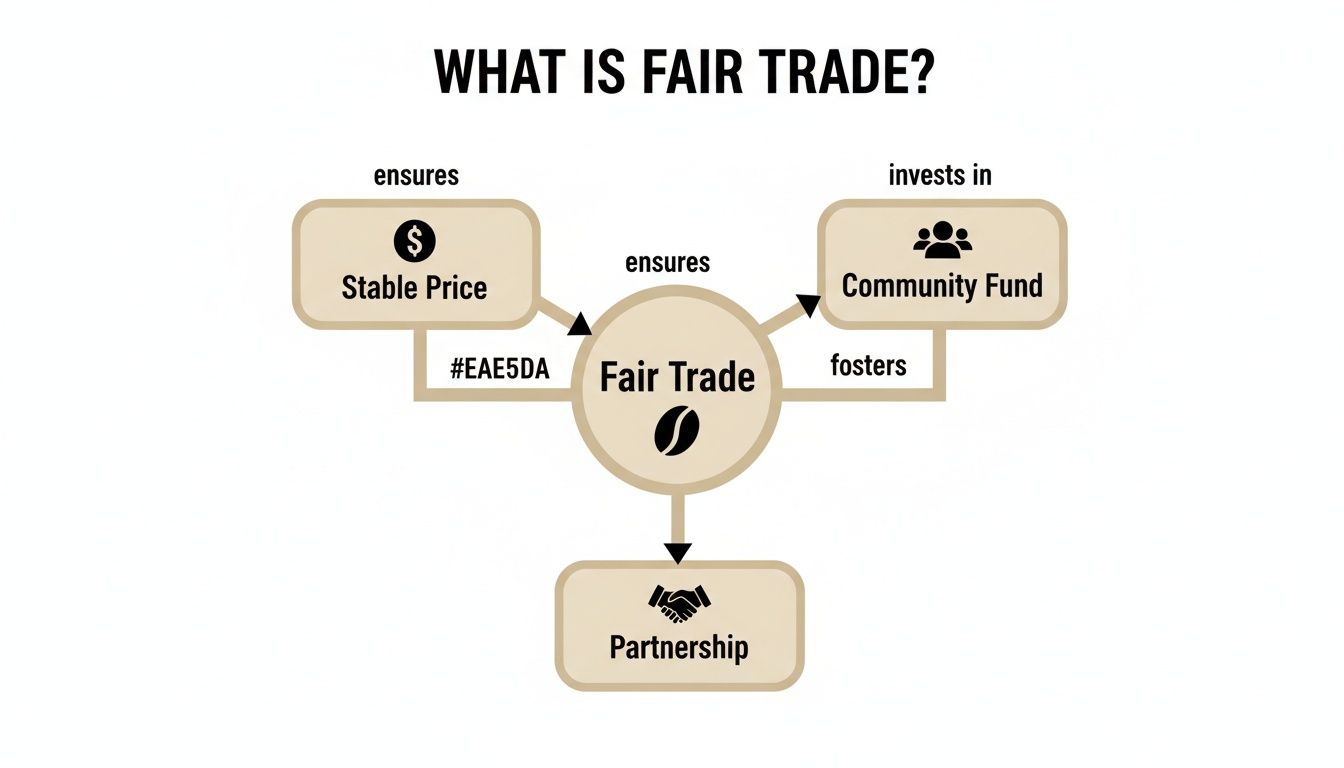
It’s a clear picture of how this isn’t just charity—it's a sustainable business model built on a foundation of mutual respect.
Real-World Impact and Investment
The proof is in how these cooperatives actually use the funds. In 2023, cooperatives sold a staggering 202,979 metric tonnes of fair trade coffee, with 35% of their total production sold under fair trade terms.
And they invested that premium money wisely. According to a Fairtrade impact report.pdf), 33% went directly toward improving production and quality, another 33% funded business development, 25% was paid out as direct financial benefits to farmers, and the remaining 5% was invested in social projects.
The Human Story Behind Your Morning Coffee
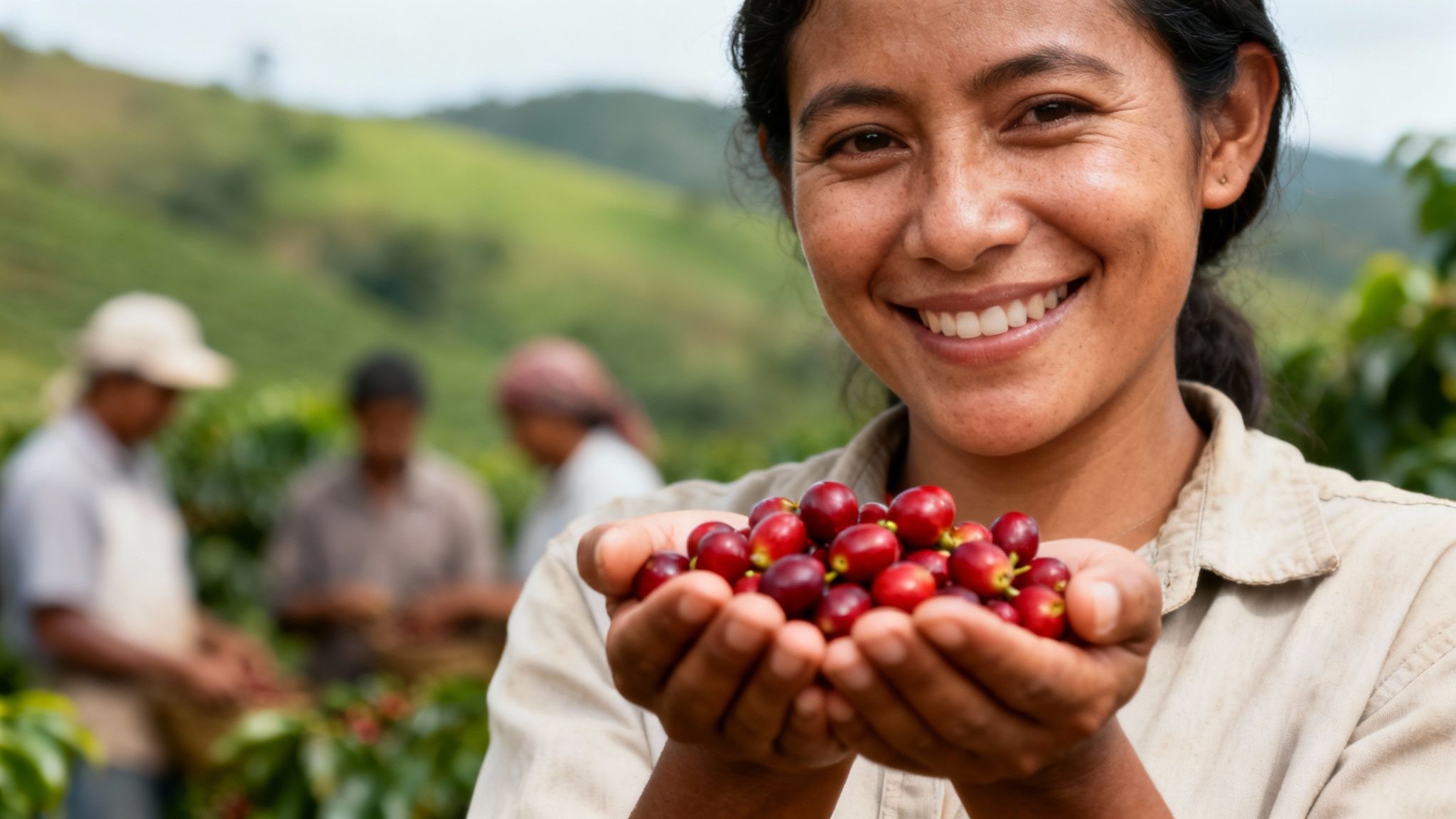
When we talk about fair trade coffee, it's easy to get lost in the details of price floors and certification seals. But behind all of that is the real story: the impact on more than 775,000 farming families across the globe. When you choose fair trade, your daily ritual becomes a direct line to positive, meaningful change right at the source. It’s a simple choice that helps build resilient communities from the ground up.
The economic stability fair trade provides is the bedrock of this change. That guaranteed minimum price means farmers can actually plan for the future. They can invest in their land and provide for their families without the constant, gnawing fear of a volatile market crash. It's the difference between just surviving and truly thriving.
Fostering Equality and Opportunity
Fair trade standards don't just stop at price; they actively push for gender equality. This creates real opportunities for women to step into leadership roles within their cooperatives. In many coffee-growing regions, women have historically been sidelined from decision-making, but fair trade helps break down those barriers, leading to a more equitable distribution of income and power that strengthens the entire community.
On top of that, the Fair Trade Premium acts as a powerful fund for collective progress. It’s money the cooperatives themselves decide how to invest to tackle their most pressing needs, leading to tangible, life-changing improvements. These community-led initiatives often focus on fundamentals like:
- Education: Building new schools or funding scholarships for the next generation.
- Healthcare: Establishing local clinics or improving access to medical care.
- Infrastructure: Constructing clean water systems or paving roads for better market access.
A Deeper Connection to Your Coffee
This transparent supply chain forges a powerful link between you and the people who grew your coffee. For instance, when you brew a cup of our single-origin Peruvian coffee, you’re supporting a specific cooperative that used its Fair Trade Premium to upgrade its processing facilities. That investment not only leads to a higher-quality coffee for you but also better livelihoods for them.
Every cup tells a story of empowerment. It’s the story of a young person attending school for the first time, a family accessing healthcare, or a community preserving the environment for future generations.
Ultimately, this system is about so much more than a fair price—it's about dignity, opportunity, and sustainable development. By choosing ethically sourced coffee, you become an active participant in this inspiring story. Click to purchase your coffee of choice and be part of the change. You can deepen this connection even further by learning what makes different coffees unique. Discover more about famous coffee-growing regions and their unique taste profiles in our 2025 guide and transform a simple purchase into a conscious act of support for farming communities worldwide.
Navigating Ethical Coffee Labels
Strolling down the coffee aisle can feel like trying to crack a secret code. You're met with a wall of labels: Fair Trade, Rainforest Alliance, Direct Trade. They all sound good, but what’s the real difference? While each one signals a step toward a more responsible cup, they prioritize different things. Understanding what makes each one tick is the key to picking a coffee that genuinely lines up with what you care about most.
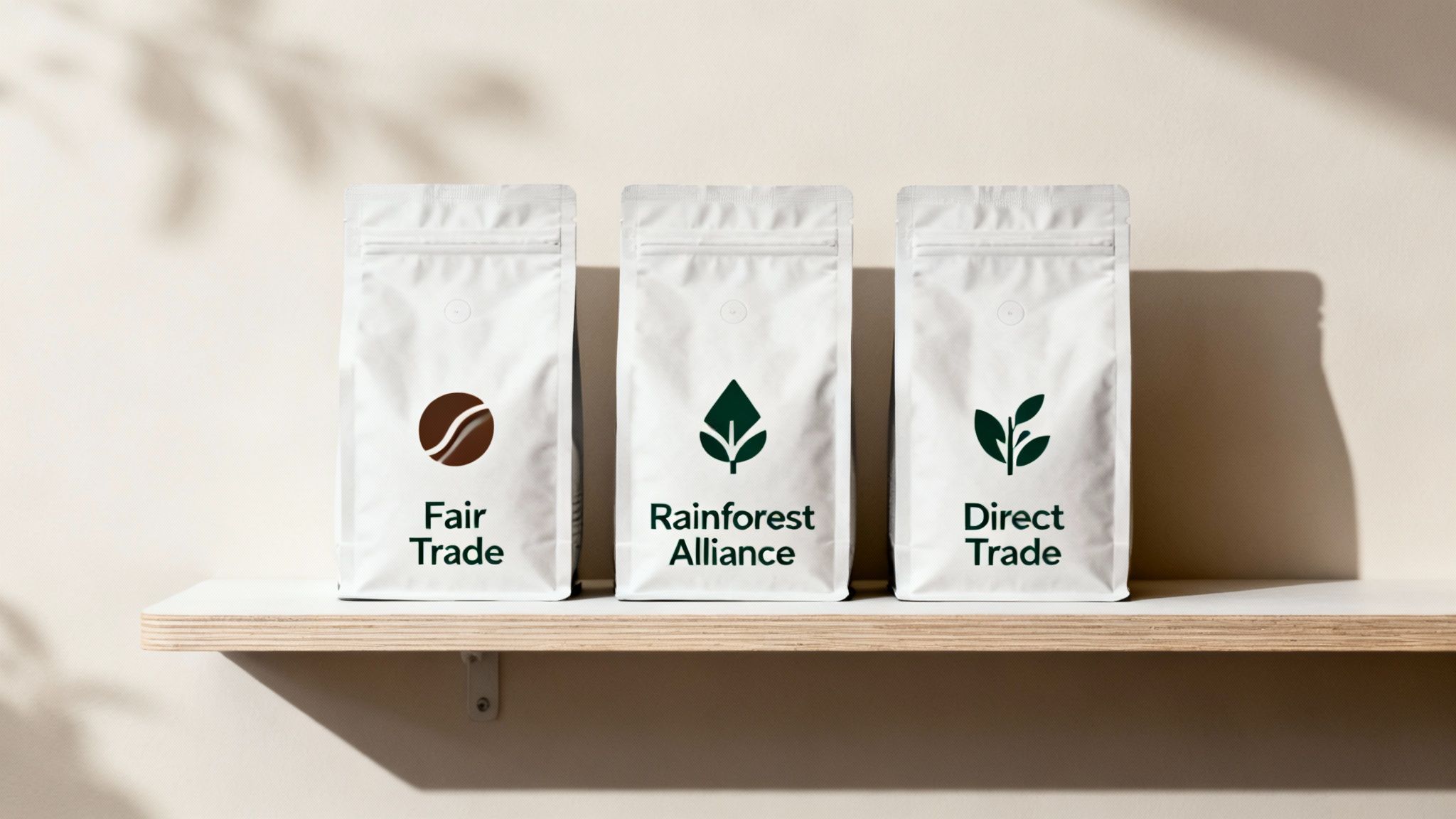
Think of these labels as different camera lenses for looking at the same supply chain. One might zoom in tightly on the farmer's wallet, while another pulls back to capture the entire ecosystem. Knowing which lens you're looking through helps you make a truly conscious choice for your morning ritual.
Fair Trade: A Focus on People and Price
As we've covered, Fair Trade is first and foremost a social and economic movement. Its entire reason for being is to give farmers a fair shake. It does this by guaranteeing a Fair Trade Minimum Price to shield them from market volatility and by providing the Fair Trade Premium to fund community projects.
Sure, environmental standards are part of the deal, but the heart and soul of this system is economic justice. When you see that Fair Trade seal, you know it represents a structure built to empower the people growing your coffee.
Rainforest Alliance: A Focus on Planet and Sustainability
The Rainforest Alliance certification—you'll recognize it by its little green frog seal—puts its weight behind environmental protection. The whole program is designed around conserving biodiversity, protecting natural resources like water and soil, and improving the well-being of farmworkers.
While it absolutely includes provisions for workers' rights, its main drive is to reward farmers for using sustainable agricultural practices that help the entire ecosystem thrive. It’s the go-to choice for coffee lovers who put the planet's health at the top of their list.
Direct Trade: A Focus on Relationships and Quality
Then you have Direct Trade. This one is a bit different because it’s not a formal, third-party certification. Instead, it’s a sourcing philosophy, and it's how many specialty roasters—including us at Beans Without Borders—operate. Direct Trade is all about building real, long-term relationships with coffee producers, cutting out the middlemen.
This approach creates radical transparency and almost always means roasters pay prices far above the Fair Trade minimum. In return, they get exceptional coffee. It’s a true partnership, built on mutual respect and a shared obsession with incredible quality.
Choosing a coffee isn't just about taste—it's about impact. Whether you prioritize economic fairness, environmental protection, or direct producer relationships, there’s an ethical coffee that matches your convictions.
To put it all into perspective, here’s a quick side-by-side look at how these models stack up.
Comparing Ethical Coffee Certifications
The table below breaks down the core mission of each label, making it easier to see where they place their emphasis.
| Certification/Model | Primary Focus | Key Benefit |
|---|---|---|
| Fair Trade | Economic justice for farmers | Guarantees a minimum price and provides a community premium fund for social and economic development. |
| Rainforest Alliance | Environmental conservation | Promotes sustainable farming practices that protect biodiversity, forests, and natural resources. |
| Direct Trade | Roaster-producer relationships | Creates a transparent supply chain, often leading to higher prices for farmers and exceptional quality for consumers. |
Each model offers a powerful pathway to a better coffee industry, and a well-informed choice can make a world of difference.
Here at Beans Without Borders, we believe in the strengths of these different approaches. We partner with Fair Trade cooperatives and cultivate direct relationships to bring you coffee that isn’t just delicious but tells a story of positive change. As you explore our collection of ethically sourced coffees, you can feel great knowing that every bag supports a more equitable and sustainable coffee world. Be sure to check out our loose leaf tea, branded shirts, and ceramic coffee mugs too.
How to Brew an Exceptional Cup of Fair Trade Coffee
You’ve made a great choice by picking up a bag of fair trade coffee. It connects your morning ritual to a global story of empowerment and sustainability. But the journey from bean to cup doesn't stop at the checkout—the real magic happens in your kitchen.
Brewing is where you unlock the incredible, distinct flavors that make your ethical choice so rewarding.
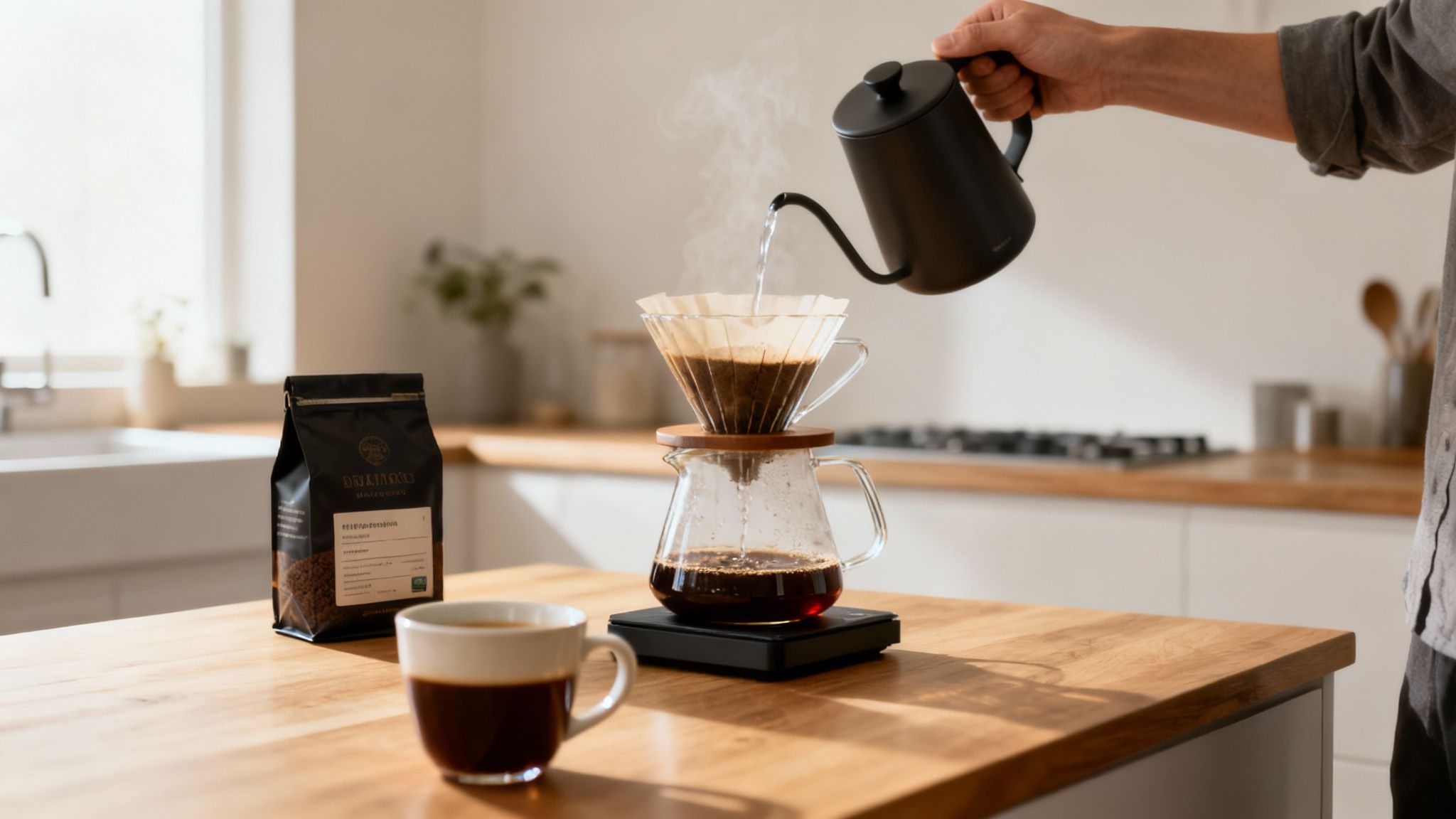
Knowing the "what" and "why" behind fair trade is just the first step. Learning how to brew it right is how you honor all the hard work that went into growing and harvesting those beans. Different brewing methods can highlight completely different characteristics in the same coffee, turning a good cup into a truly exceptional one.
Matching Beans to Brewing Methods
The secret to a fantastic brew is pairing your coffee's unique profile with the right brewing style.
Think of a pour-over. This method creates a beautifully clean, crisp cup that really lets delicate floral and citrus notes sing. It's the perfect stage for a bright and vibrant coffee like our Ethiopian Yirgacheffe. The paper filter traps most of the oils, resulting in a light body that showcases every nuanced flavor. If you're new to this, you can check out our guide on making the perfect pour-over coffee to get started.
On the flip side, you have the French press. It uses a metal mesh filter, which allows all the natural oils and some fine sediment to pass into your cup. This creates a rich, full-bodied brew with a satisfyingly robust texture. It’s the ideal way to experience the deep, chocolatey notes of our Peruvian single-origin coffee, as the immersive process enhances its inherent sweetness and full flavor.
And for those who just want a great, consistent cup without the fuss? Your classic automated drip coffee maker is a fantastic workhorse. It’s perfect for a balanced morning brew and works beautifully with a wide range of beans, making it a great match for our versatile blends.
Simple Tips for a Better Brew
No matter which method you choose, a few simple fundamentals will always elevate your experience:
- Start with Fresh Beans: This is non-negotiable. Always use freshly roasted, whole beans and grind them just moments before you brew. It's the single biggest upgrade you can make.
- Use Filtered Water: Your coffee is over 98% water, so its quality matters. Clean, filtered water without any off-tastes will make a massive difference.
- Mind Your Ratio: A great starting point for most methods is a 1:16 coffee-to-water ratio (by weight). From there, you can adjust to find what you like best.
Your brewing ritual is the final, crucial step in the farm-to-cup journey. By thoughtfully preparing your coffee, you honor the dedication of the fair trade farmers who grew it.
Ready to complete your setup? Explore our collection of high-quality brewing gear and sip your perfectly crafted fair trade coffee from one of our branded ceramic mugs. And for the true coffee enthusiasts, you can show your passion with our stylish shirts, hats, and hoodies.
Don't forget to sign up for our email list for more brewing tips and exclusive offers.
Ready to Taste the Difference?
Now that you understand what goes into making coffee truly fair, it's time to experience it for yourself. We invite you to put these principles into practice—and into your cup—by exploring the coffee we source at Beans Without Borders.
We've built our entire collection around partnerships with dedicated cooperatives. The result is a lineup of exceptional coffees that don't just taste good; they tell a story of empowerment, quality, and respect for the people who grow them.
From the bright, floral notes in our Ethiopian beans to the deep, chocolatey profiles from Peru, you can taste the care that goes into every single harvest. Each bag is a direct connection to the farmers who benefit from a more equitable system.
Discover Your Perfect Fair Trade Coffee
Not sure where to start? A great entry point is one of our sampler packs, which let you compare different flavor profiles side-by-side and discover what you love.
Sourcing single-origin fair trade coffees from places like Ethiopia, Peru, and Mexico isn't just something we believe in—it's what coffee drinkers are looking for. In fact, certifications that signal ethical practices now appeal to 47% of consumers globally. It's all about connecting people who love great coffee with the small-scale farmers who produce it. If you want to dig into the numbers, you can explore more insights into the fair trade coffee market here.
Choosing our coffee means you're not just brewing a delicious cup. You're supporting a transparent supply chain that honors the producers. It’s an investment in quality, community, and a better coffee world for everyone.
Dive in and find the brew that speaks to you. And while you're at it, check out our premium loose-leaf teas, branded apparel, and stylish ceramic mugs to complete your coffee ritual.
Sign up for our email list to get a 10% welcome discount on your first order of freshly roasted, fair trade coffee, with free shipping anywhere in the US.
Got Questions? We've Got Answers.
Let's wrap up with a few of the most common questions people ask about fair trade coffee. These quick answers should clear up any lingering confusion and help you feel even more confident about what that little seal on the bag really means.
Is Fair Trade Coffee Automatically Organic?
Not always, but they often go hand-in-hand. Think of them as two different certifications with goals that really complement each other. Fair Trade is all about the economic and social health of the farming communities, while Organic certification focuses on environmental health by banning synthetic pesticides and fertilizers.
Because so many fair trade standards encourage sustainable agriculture, you'll find a huge overlap. When you see both seals on a bag, it's a powerful one-two punch—a commitment to both the people growing the coffee and the planet they live on.
Why Does Fair Trade Coffee Sometimes Cost a Little More?
It can, and that extra cost is doing some heavy lifting. That small price difference is a direct investment in the values fair trade stands for. It funds the Fair Trade Minimum Price, which acts as a crucial safety net for farmers, and it pays for the Fair Trade Premium, which is money cooperatives can invest in community projects like building schools or improving healthcare.
So, you're not just paying more for coffee. You're casting a vote for a more equitable and sustainable supply chain. For us, the incredible quality paired with that positive impact makes it worth every penny.
How Do I Know if a Coffee Is Actually Fair Trade?
The simplest way is to look for an official certification seal right on the bag. The marks from trusted organizations like Fairtrade International or Fair Trade Certified™ are your guarantee. They signify that the coffee has passed a rigorous, third-party audit covering every step from the farm to the final roasted bean.
At Beans Without Borders, we make this easy. We proudly display these certifications on our coffee bags and love sharing the stories of the cooperatives we work with. That transparency is our promise to you, so you can always trust that your morning cup is making a tangible, positive difference.
Ready to brew a cup that truly matters? The Beans Without Borders collection is your gateway to a world of exceptional, ethically sourced coffee. Explore our single-origin beans, convenient coffee pods, and curated sampler packs to find your perfect match. Make a purchase today and join a global community that values fairness and quality.