

A Guide to Coffee Beans From Around the World
That first sip of coffee in the morning is more than just a wake-up call; it’s a direct connection to a specific place on our planet.
Coffee beans from around the world are a study in contrasts. You might get the delicate, tea-like floral notes from an Ethiopian Yirgacheffe, or the comforting, smooth chocolate finish from a Peruvian bean. Each origin has a story, and that story is written by its environment. Ready to find your perfect cup? Let's dive in and explore the incredible beans we've sourced just for you.
Your Passport to Global Coffee Flavors
Consider this your personal tour guide to the world's most incredible coffee-growing regions. Think of it as a passport, ready to take you from the vibrant highlands of Ethiopia to the rich, volcanic soils of Bali—all from the comfort of your kitchen. And the best part? Every coffee we mention is just a click away, ready to be purchased and shipped directly to you.
We're going to dive deep into the concept of terroir. It's a simple idea with a profound impact: the unique combination of soil, climate, and altitude that gives every single bean its distinctive character.
This journey is really about discovering the "why" behind the flavors you love. It’s about tasting that bright, citrusy acidity and knowing it comes from the high-altitude farms of Central America. It’s about recognizing that earthy, full-bodied richness and connecting it to the unique wet-hulling process famous in Indonesia. When you explore different origins, you're not just buying coffee; you're getting a taste of that region's culture and geography. We encourage you to click the links throughout this guide to make a purchase and experience these unique flavors firsthand.
What Shapes the Flavor in Your Cup?
A few key factors are always at play, working together to create the unique profile you experience in every brew. Getting a handle on these is the first step to truly understanding what you like and finding your next favorite bag of beans.
- Origin and Terroir: Much like wine grapes, coffee cherries are sponges for their environment. The specific minerals in the soil, the amount of rainfall, and the intensity of the sun all leave their mark.
- Processing Method: The way the coffee cherry is removed from the bean inside is a game-changer. Whether it’s washed, natural, or honey-processed, this single step dramatically shapes the final taste, influencing everything from acidity to body.
- Variety: Just like there are different types of apples, there are different coffee plant varieties. Arabica and Robusta are the big two, but within Arabica, you'll find varietals like Gesha or Bourbon that offer even more specific and nuanced profiles.
Each coffee tells a story of its origin. A single-origin coffee is like a solo artist, showcasing the distinct, unblended character of one specific farm or region. It's the purest expression of place.
This guide is here to help you navigate this rich and delicious world. Whether you're just starting out or you're already a seasoned coffee lover, you can learn more about what makes these coffees so special in our article explaining single-origin coffee.
Get ready to find your next favorite brew and hear the stories behind the beans.
Exploring the World's Premier Coffee Regions
Every time you brew a cup of coffee, you're tasting a story that began thousands of miles away. The world's best beans come from a lush, equatorial band of countries often called the "Coffee Belt," and each origin tells a unique tale through its flavor. It's why one coffee can taste like bright citrus while another is rich with chocolate.
What’s the secret? It all comes down to terroir—a simple idea with a profound impact. This term captures how a specific region's soil, climate, and altitude work together to create a signature taste. Let's explore how this plays out in our single-origin coffees from Ethiopia, Uganda, Peru, Bali, and Mexico, all of which are available for purchase on our website.
This concept map helps visualize how those core elements—soil, climate, and elevation—directly shape the final flavor in your cup.
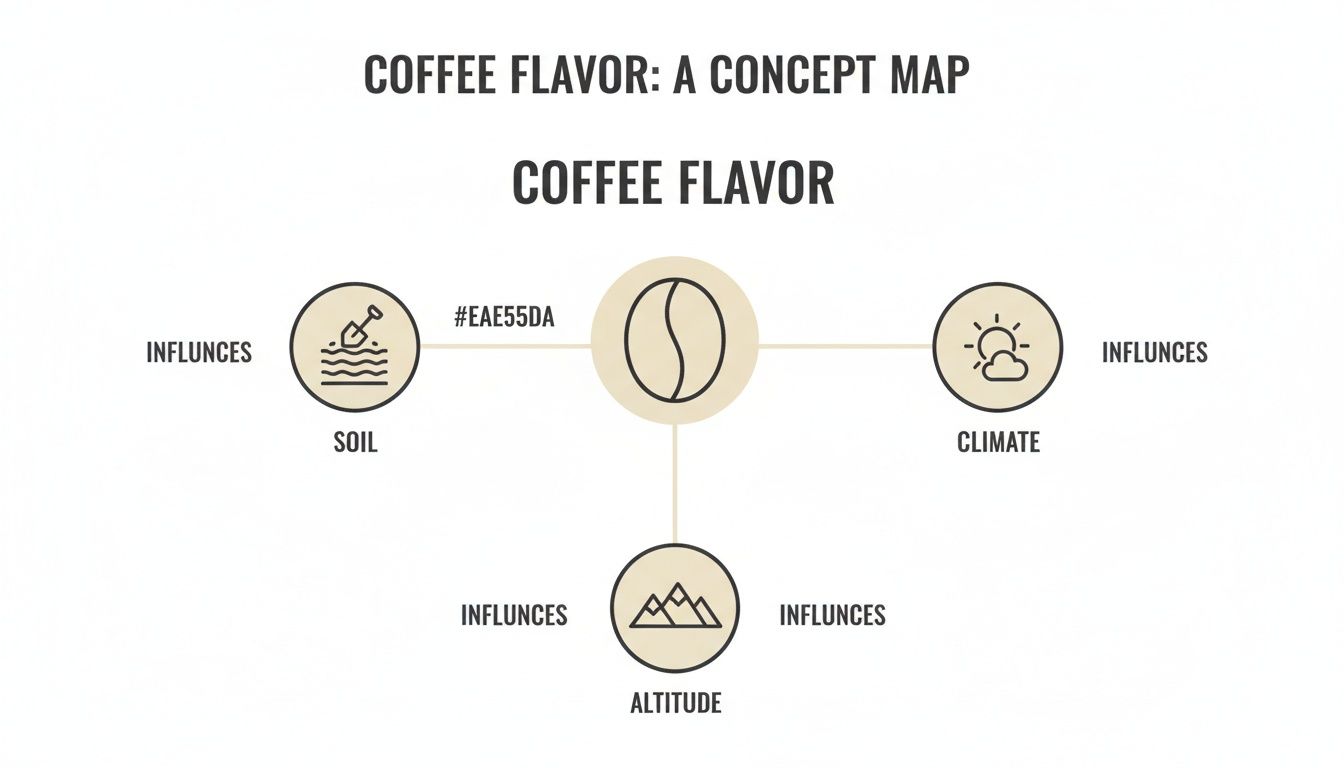
As you can see, a coffee's unique personality is no accident; it’s a direct reflection of the land where it was grown. We invite you to taste the difference for yourself by exploring our collection.
Ethiopia: The Birthplace of Coffee
Ethiopia is widely considered the cradle of coffee, and its beans are celebrated for their incredibly diverse and delicate flavors. Think floral, tea-like, and bursting with fruit—a true delight for the senses.
The natural processing method is common here, where the coffee cherry is dried whole around the bean. This technique imparts intense notes of blueberry, strawberry, and other sweet fruits. Our Ethiopian Yirgacheffe Coffee is a perfect example, offering a bright, clean cup with a fragrant, almost perfume-like aroma. Click to purchase a bag and experience the birthplace of coffee.
Uganda: The Pearl of Africa
Often overshadowed by its neighbors, Uganda is a true hidden gem in the coffee world. Beans from the Rwenzori Mountains, in particular, are known for their rich sweetness and complex, wine-like acidity.
These coffees often have a full body with notes of stone fruit, fig, and just a subtle hint of cinnamon. For a brew that’s both comforting and exciting, our Uganda Bugisu Coffee delivers a robust and memorable experience. Add it to your cart today!
Peru: Smooth and Balanced
If you’re looking for a smooth, mild, and utterly dependable cup, look no further than Peru. Grown at high altitudes in the Andes, these beans are known for their gentle acidity and well-rounded flavor profile.
Expect notes of nuts, chocolate, and a subtle citrus sweetness. It’s an incredibly versatile coffee that's perfect for everything from a morning drip brew to a balanced espresso. Try our Peru Cajamarca Coffee to experience its clean finish and classic, comforting taste. It's the perfect coffee to buy for your daily brew.
The sheer scale of coffee production can be astounding. For instance, Brazil stands as the undisputed king, commanding a staggering 30.8% of the global green coffee output in 2023. This dominance has shaped the world's coffee landscape for decades. Discover more about global production trends in this detailed overview of coffee production by country.
Bali: Earthy and Syrupy
Indonesian coffees are famous for their deep, earthy tones, and our beans from Bali are no exception. The region's volcanic soil and unique wet-hulling processing method create a coffee with a heavy, syrupy body and very low acidity.
Tasting notes often include dark chocolate, molasses, and a hint of licorice or cedar. This is a bold, intense coffee that stands up well to milk and is ideal for a rich French Press. Our Bali Blue Moon Coffee offers a profound and immersive flavor journey. Don't hesitate to purchase a bag and taste this unique profile.
Mexico: Crisp and Chocolatey
Mexican coffees, especially those from regions like Chiapas, are prized for their crisp acidity and delightful chocolatey notes. These beans typically offer a light to medium body, which makes them exceptionally easy to drink.
You'll often find flavors of milk chocolate, nuts, and a clean, bright finish. It’s a wonderful coffee for anyone who appreciates a brew that is flavorful without being overpowering. Our Mexico Chiapas Coffee is the perfect introduction to the region's satisfying and approachable profile. Click the link to make it yours.
You can dive deeper into these fascinating origins in our guide to famous coffee growing regions and their taste profiles.
A Snapshot of Our Single-Origin Flavor Profiles
Feeling a little overwhelmed by the choices? Not to worry. This quick guide breaks down the distinct tastes and characteristics of our featured single-origin beans to help you find your perfect match. Click on any of the coffees to make a purchase!
| Origin | Primary Flavor Notes | Acidity | Body | Recommended Coffee |
|---|---|---|---|---|
| Ethiopia | Floral, Fruity, Tea-Like, Berry | Bright | Light | Ethiopian Yirgacheffe Coffee |
| Uganda | Stone Fruit, Fig, Cinnamon, Winey | Medium | Full | Uganda Bugisu Coffee |
| Peru | Nutty, Chocolate, Mild Citrus | Gentle | Medium | Peru Cajamarca Coffee |
| Bali | Dark Chocolate, Molasses, Earthy | Low | Heavy/Syrupy | Bali Blue Moon Coffee |
| Mexico | Milk Chocolate, Nutty, Crisp | Crisp | Light-Medium | Mexico Chiapas Coffee |
Think of this table as your starting point. The real fun begins when you start brewing and discovering these nuances for yourself. Happy exploring!
How to Brew for Maximum Flavor
Picking out incredible coffee beans from around the world is just the start of the journey. To really get those beans to sing, you need the right brewing method. Think of different techniques as different lenses—each one brings a unique set of flavors into focus and can completely transform your morning cup.
Let's walk through three of the most popular ways to brew: the ever-reliable Drip coffee maker, the hands-on Pour-Over, and the rich, immersive French Press. Each one tells a different story with the same beans.
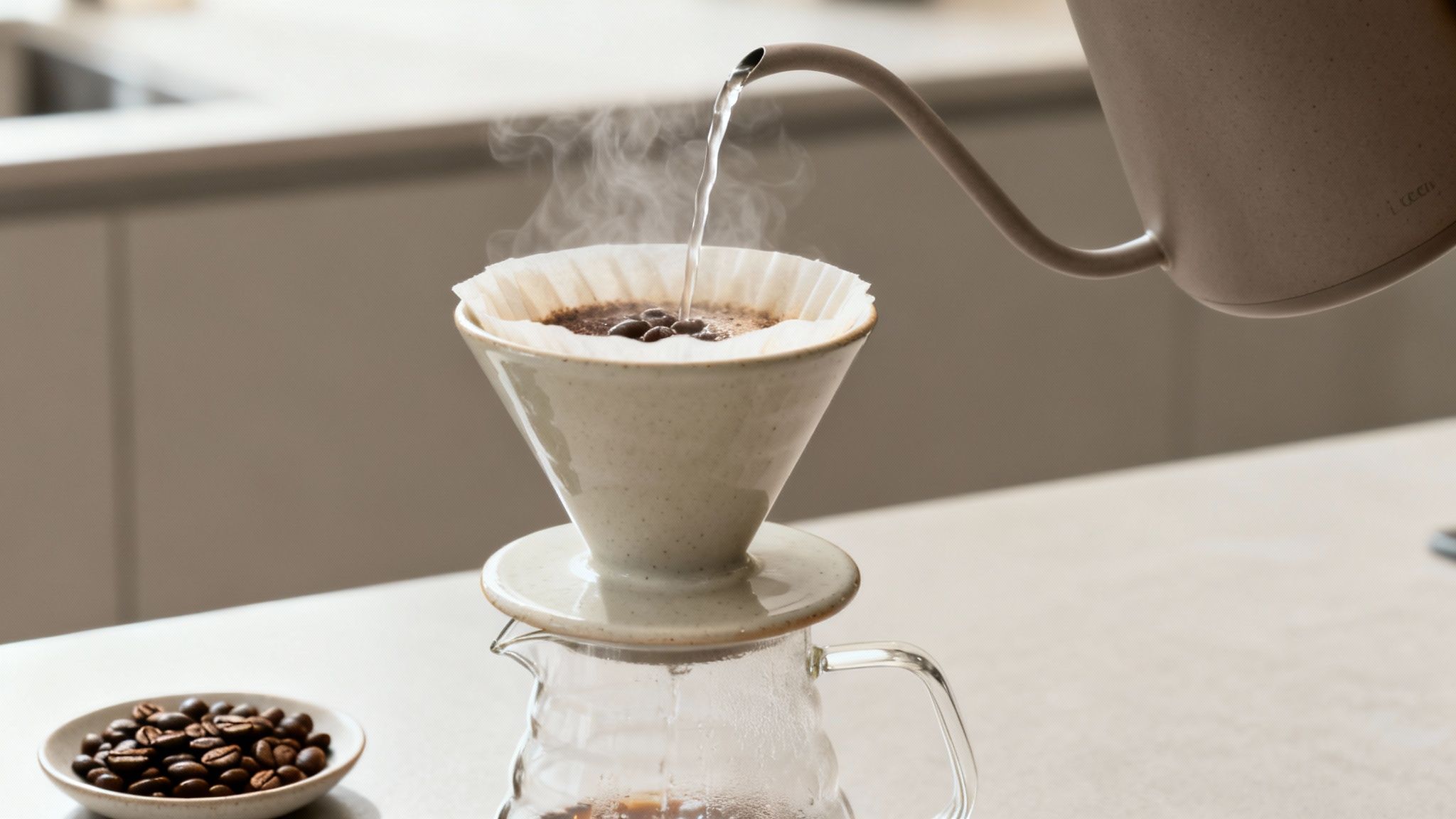
Once you get a feel for these methods, you can start matching your brewing style to your beans, guaranteeing you get the absolute best flavor from every origin you explore.
The Drip Coffee Maker: Consistent and Balanced
For most of us, the automatic drip coffee maker is the workhorse of the morning routine. Its biggest advantage is simple: it’s consistent and incredibly easy to use. Dial in your coffee-to-water ratio once, and you can expect a reliable, balanced cup day after day.
The machine does the work by heating water and showering it evenly over coffee grounds in a filter. It's a no-fuss process that pulls out a wide range of flavors without you having to hover over it.
- Best For: Those hectic mornings when you just need a great, straightforward cup of coffee without the fuss.
- Flavor Profile: You'll get a clean, medium-bodied brew with well-balanced acidity and flavor. It’s the quintessential coffee-shop cup.
- Bean Recommendation: The drip method is a fantastic all-rounder, but it really lets beans with a classic profile shine. Our Peru Cajamarca Coffee is a perfect fit; this method brings its smooth nutty and chocolatey notes forward beautifully. Click to buy it now!
The Pour-Over Method: Bright and Nuanced
For the coffee aficionado who loves the ritual, the pour-over is the ultimate tool. By manually pouring hot water over the grounds in a slow, steady spiral, you get total control over every aspect of the brew. This precision is what allows the coffee's most delicate, complex notes to come alive.
This technique is all about finesse. It generally yields a cup with a lighter body and a cleaner finish, making it the perfect stage for appreciating the subtle, fleeting aromatics of a top-tier single-origin.
Think of the pour-over as a spotlight. It illuminates a coffee's brightest, most delicate notes—the florals, the bright fruits, the tea-like qualities—that make certain single-origins so unforgettable.
Ready to give it a try? We've got a complete walkthrough on how to make pour-over coffee to get you started.
- Best For: Anyone who enjoys a mindful process and wants to taste every subtle layer in their coffee.
- Flavor Profile: This method highlights bright acidity, floral aromas, and intricate fruit notes.
- Bean Recommendation: To see what a pour-over can really do, try it with our Ethiopian Yirgacheffe Coffee. It will pull out those signature floral and citrus notes for an exceptionally vibrant and fragrant cup. Purchase a bag today to experience it yourself.
The French Press: Rich and Full-Bodied
The French Press is all about immersion. The coffee grounds steep directly in hot water, soaking up all that goodness before a mesh filter plunges them to the bottom. This direct contact creates a rich, full-bodied brew with a velvety texture that’s hard to beat.
Because it uses a metal filter instead of paper, a French Press allows more of the coffee's natural oils and fine sediment into your cup. This is what gives it that heavier body and robust flavor, making it a perfect match for coffees with deep, earthy, or chocolatey tones.
- Best For: Drinkers who crave a bold, strong, and intensely aromatic coffee experience.
- Flavor Profile: Expect a heavy, almost syrupy body with muted acidity and powerful, rich flavors.
- Bean Recommendation: A French Press needs a coffee with some backbone. Our Bali Blue Moon Coffee is an excellent choice, as this method will amplify its deep, earthy character and dark chocolate notes for a truly satisfying brew. We highly recommend you buy a bag and try it.
Your Guide to Classic Coffee Drinks
Walking into a great coffee shop can feel a little overwhelming, with a menu that reads like a foreign language. But don't worry—behind every Americano, Latte, and Macchiato is a simple formula. Let's pull back the curtain on the world's most popular coffee drinks so you can feel like a pro, whether you're ordering or making them at home with our freshly roasted beans.
Once you get a feel for these classics, a whole new world opens up. You’ll be able to craft your favorites on your own and even start recommending the perfect coffee beans from around the world for each one.
First, a Word on Espresso
At the core of almost every drink on a café menu is one key ingredient: espresso. It's not a type of bean, but a specific brewing method. Hot, highly pressurized water is forced through a tightly packed puck of finely-ground coffee, creating a small, concentrated shot of liquid gold. That shot is the foundation for everything that follows.
- Espresso: This is coffee in its purest, most intense form. A single or double shot served in a tiny cup, it’s all about the unadulterated flavor of the beans. It’s the soul of coffee.
- Americano: An elegant and straightforward drink. You just add hot water to a shot of espresso. This opens up the flavor, softening the intensity while keeping that rich crema and nuance. The result is something similar in strength to a drip coffee, but with a completely different character.
- Macchiato: The name means "stained" or "marked" in Italian, which is the perfect description. It's a shot of espresso "marked" with just a small dollop of steamed milk foam, giving you a powerful coffee-forward punch with just a whisper of creaminess.
For these espresso-focused drinks, you need beans that pull a bold and balanced shot. Our Signature Espresso Blend was made for this, creating a rich base that’s fantastic on its own or with a splash of milk. Click here to purchase the perfect foundation for your coffee creations.
Mastering Milk and Coffee Creations
This is where coffee becomes a creamy, comforting art form. The main difference between drinks like a Latte, Breve, or Mocha simply comes down to the ratio of espresso, steamed milk, and any other goodies.
A Latte is probably the most famous of the bunch. It’s built with a shot of espresso and a healthy serving of steamed milk, all topped with a thin layer of foam. For a silky smooth Latte, beans with lower acidity and nutty notes are a dream. Our Peru Cajamarca Coffee is a fantastic place to start.
A Breve dials the richness up to eleven by using steamed half-and-half instead of milk. This creates an incredibly decadent and velvety drink that needs a robust coffee bean to cut through all that cream.
And for the chocolate lovers, there's the Mocha. It’s the perfect marriage of coffee and chocolate, made with espresso, steamed milk, and chocolate syrup or cocoa powder. It's often finished with whipped cream for good measure. A coffee with deep, earthy tones, like our Bali Blue Moon Coffee, really makes the chocolate notes sing.
The kind of milk you use completely changes the game. Whole milk gives you that classic rich, creamy foam. Oat milk adds a wonderful, velvety texture and a touch of natural sweetness. Almond milk is lighter, bringing a subtle nuttiness that lets the coffee’s origin flavors come through more clearly.
Cool and Blended Favorites
Of course, not all great coffee is served hot. When the weather warms up, these chilled-out drinks are the perfect way to get your caffeine fix.
The Frappé is a blended iced coffee, traditionally made by shaking or blending instant coffee, sugar, water, and milk until it's perfectly frothy and cold. It started in Greece but has since taken over the world as a go-to summer drink.
Finally, the Affogato is the ultimate coffee dessert. It’s beautifully simple: a scoop of good vanilla ice cream or gelato that gets "drowned" (which is what affogato means) in a shot of hot, fresh espresso. The clash of hot and cold, bitter and sweet, is just an incredible experience. For a truly unforgettable Affogato, try it with a bold, complex coffee like our Uganda Bugisu Coffee. Add a bag to your cart and treat yourself.
Bringing Coffee Into Your Kitchen
The incredible flavors you find in coffee beans from around the world have so much more to offer than just a great morning cup. Think of coffee as a secret weapon in your kitchen—a versatile spice that can add a surprising depth to both sweet and savory recipes.
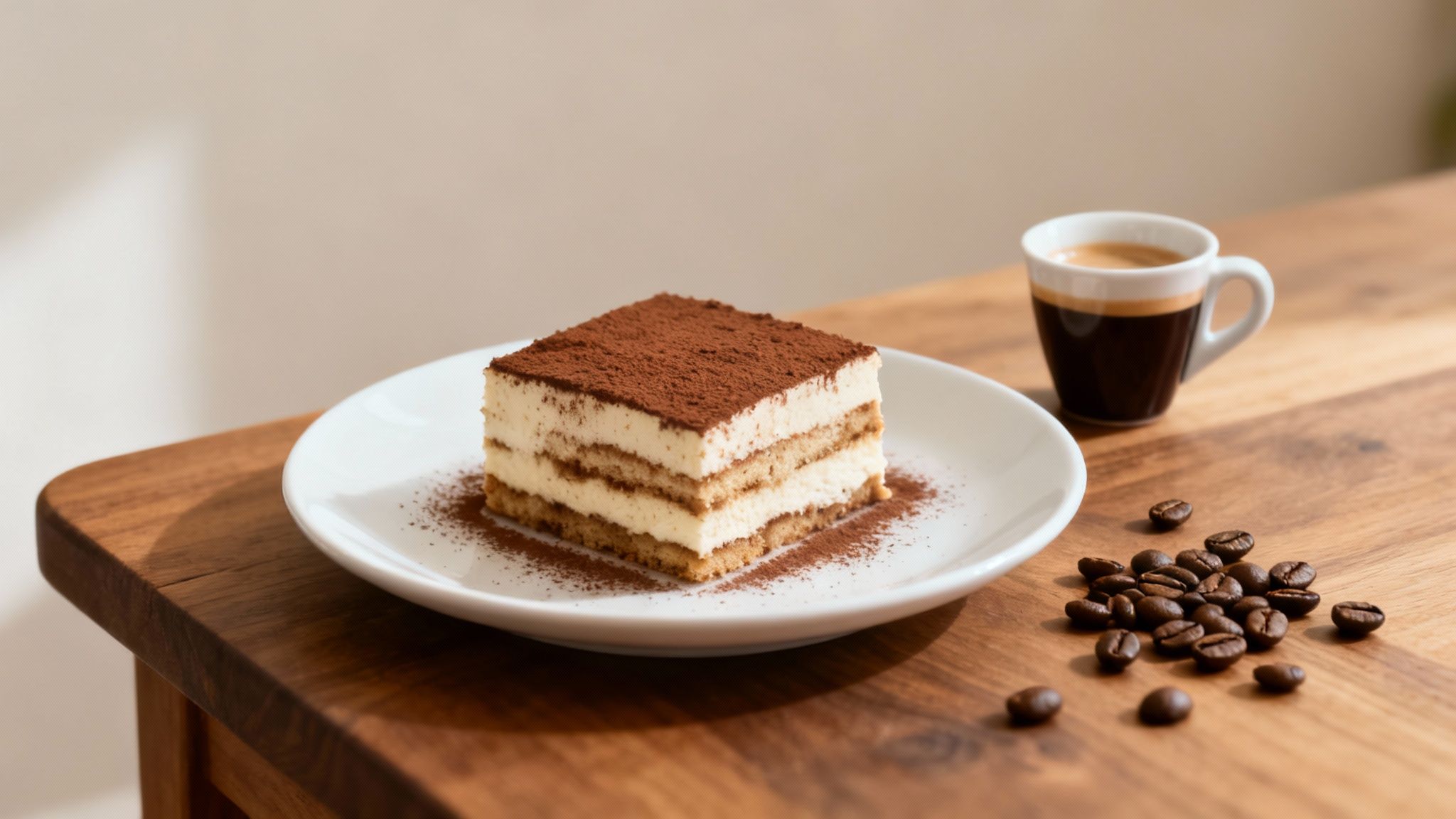
It's time to move beyond the mug. Imagine finely ground coffee as part of a rub for a steak, creating a beautiful, earthy crust. Or picture how a shot of perfectly pulled espresso can elevate a dessert like tiramisu from good to unforgettable. The possibilities are genuinely delicious.
From Savory Rubs to Sweet Finishes
Getting coffee into your cooking is easier than you might think. Depending on what you're making, you can use either finely ground beans or strong brewed espresso.
For savory dishes, a dark, robust coffee is usually your best bet. A classic espresso-rubbed steak is a fantastic starting point. Simply mix finely ground espresso with paprika, garlic powder, salt, and pepper for a crust that’s out of this world. Feeling more adventurous? Add a shot of espresso to your go-to barbecue sauce recipe. It introduces a smoky complexity that’s absolutely perfect for the grill.
Treat coffee like you would a fine wine when you're cooking. The origin of the bean makes a difference. A bold, earthy Bali bean will deepen the richness of a chocolate cake, while a bright, fruity Ethiopian coffee could lend an unexpected twist to a marinade.
When it comes to sweets, coffee is a natural soulmate for chocolate and cream. Here are a few ideas to spark your imagination:
- Classic Tiramisu: This iconic Italian dessert just isn't the same without strong coffee or espresso to soak those ladyfingers.
- Mocha Brownies: Add a shot of espresso or a spoonful of instant espresso powder to your brownie batter. It doesn't make them taste like coffee—it just makes the chocolate taste more intensely chocolatey.
- Coffee-Infused Ice Cream: Steep whole coffee beans in the milk and cream base for a smooth, sophisticated frozen dessert that’s pure elegance.
Beyond the Bean
We get it—the quest for the perfect brew can lead down many paths. For those moments that call for something a little different, we invite you to explore our carefully curated selection of the best loose leaf tea online. From the warm, spiced notes of our Masala Chai to the roasty, nutty character of Hojicha, we have a tea for any mood.
And if you want to wear your coffee passion on your sleeve (literally), we've got you covered. Show off your love for great coffee with our exclusive branded merchandise. Check out our collection of comfy t-shirts, cozy hoodies, and stylish ceramic coffee mugs—they make the perfect gift for yourself or the other coffee lovers in your life.
Ready to dive deeper? Sign up for our e-mail list today and we'll send you an exclusive 10% off your next purchase. You'll also be the first to hear about new arrivals and special offers.
Your Questions, Answered
Diving into the world of specialty coffee can feel a bit overwhelming at first, with a whole new vocabulary to learn. It's totally normal to have questions as you start exploring the amazing variety of coffee beans from around the world. We’ve pulled together some of the most common questions we get, with simple, direct answers to help you on your way.
Think of this as your friendly guide to coffee, here to build your confidence and help you appreciate every single cup.
What Is the Difference Between a Single Origin and a Blend?
This is probably one of the first questions people ask, and it really comes down to what the roaster is trying to achieve.
A single-origin coffee is like a solo artist. It comes from one specific place—a single farm, a small cooperative, or a distinct region—and its whole purpose is to show off the unique flavors of that origin. Our Ethiopian Yirgacheffe Coffee, with its famous floral and tea-like notes, is a classic example. You're tasting the purest expression of a specific terroir.
A blend, on the other hand, is more like an orchestra. We carefully select and combine beans from different origins to create a specific, balanced, and consistent flavor profile. For example, our espresso blend might pair the deep, chocolatey body of a South American bean with the bright acidity of an African bean. The goal is a harmonious taste you can count on every time.
Think of it this way: Single-origin coffees are for adventure, letting you explore the distinct character of a specific place. Blends are all about balance, crafted to deliver a reliable and well-rounded flavor experience, day in and day out.
There’s no right or wrong choice—it just depends on whether you're in the mood to explore something new or relax with a familiar favorite.
How Should I Store My Coffee Beans to Keep Them Fresh?
You've got great beans, so let's keep them that way! To protect all that amazing flavor, you just need to shield your coffee from its four biggest enemies: air, moisture, heat, and light.
The best way to do this is simple: keep your beans in an airtight container and store it somewhere cool and dark, like a pantry or cabinet. That's it. A common myth is to store coffee in the fridge, but that’s actually a bad idea. Coffee is porous, meaning it will absorb moisture and all the other smells lurking in your refrigerator.
What about the freezer? While it might seem like a good way to store coffee long-term, freezing can damage the fragile oils responsible for all those delicious aromas and flavors. Honestly, there's no substitute for buying fresh, whole beans and grinding them right before you brew. We roast all our coffees to order, so they show up at your door at their absolute peak. Want to know more about bean types? Check out our article on the difference between Arabica and Robusta beans.
Which Coffee Is Best for a Beginner?
If you're just starting to explore specialty coffee, my advice is to start with something that's balanced, smooth, and welcoming—not something that's going to shock your palate.
Our Peruvian Coffee is a perfect starting point. It has these wonderful, comforting notes of milk chocolate and nuts with a gentle acidity that’s really easy to enjoy. It’s a great introduction to the subtle complexity that single-origin coffees can offer without being overwhelming.
Another fantastic way to start is with one of our Sampler Packs. We've put these together so you can taste and compare coffees from different regions right next to each other. It's the best way to figure out what you like without committing to a full bag of something you've never tried. It's a low-risk, high-reward way to find your new favorite.
Can I Use Single Origin Coffee for Espresso?
Absolutely, and you should! While blends are often the go-to for espresso because they provide a consistent, balanced shot, pulling a single-origin espresso (often called an SOE) is an incredible way to taste the unique, and sometimes wild, flavors of a specific coffee.
It’s a totally different ballgame. An Ethiopian coffee, for example, might pull a shot that’s bursting with bright, fruity acidity—a world away from a traditional, nutty Italian-style espresso. A single-origin from Bali, on the other hand, could give you a syrupy, earthy shot with almost no acidity at all.
Ready to experiment? Here are a few to try:
- For a Bright, Fruity Shot: Our Ethiopian Yirgacheffe is a must.
- For a Syrupy, Earthy Shot: You can't go wrong with our Bali Blue Moon.
- For a Classic, Balanced Shot: The smooth, crowd-pleasing profile of our Mexico Chiapas is fantastic.
It’s a really fun way to experiment, but be prepared—single-origins can be a little fussier to dial in on your espresso machine. Still, we highly encourage you to give it a shot. You might just find a new obsession.
Your global coffee adventure is just a click away. At Beans Without Borders, we bring the world's finest, freshly roasted coffees directly to your door. Whether you're drawn to the floral notes of Ethiopia or the rich chocolate of Peru, we have the perfect beans to elevate your morning ritual. Explore our full collection and start your journey today at https://www.beanswithoutborders.com.