

Does Coffee Go Bad And How to Keep It Fresh
Yes, coffee absolutely goes bad. But it’s not the dramatic, moldy-bread kind of "bad" you might be picturing. It's more of a slow, quiet fade.
Think of a freshly roasted coffee bean like a vibrant, complex symphony of flavors and aromas. Over time, that symphony loses its key players, leaving behind a dull, muted, and often lifeless brew. To truly enjoy coffee, you need to start with fresh beans and brew them to perfection. Ready to find your perfect coffee? Explore our collection and find your new favorite brew today.
The Truth About Coffee Freshness
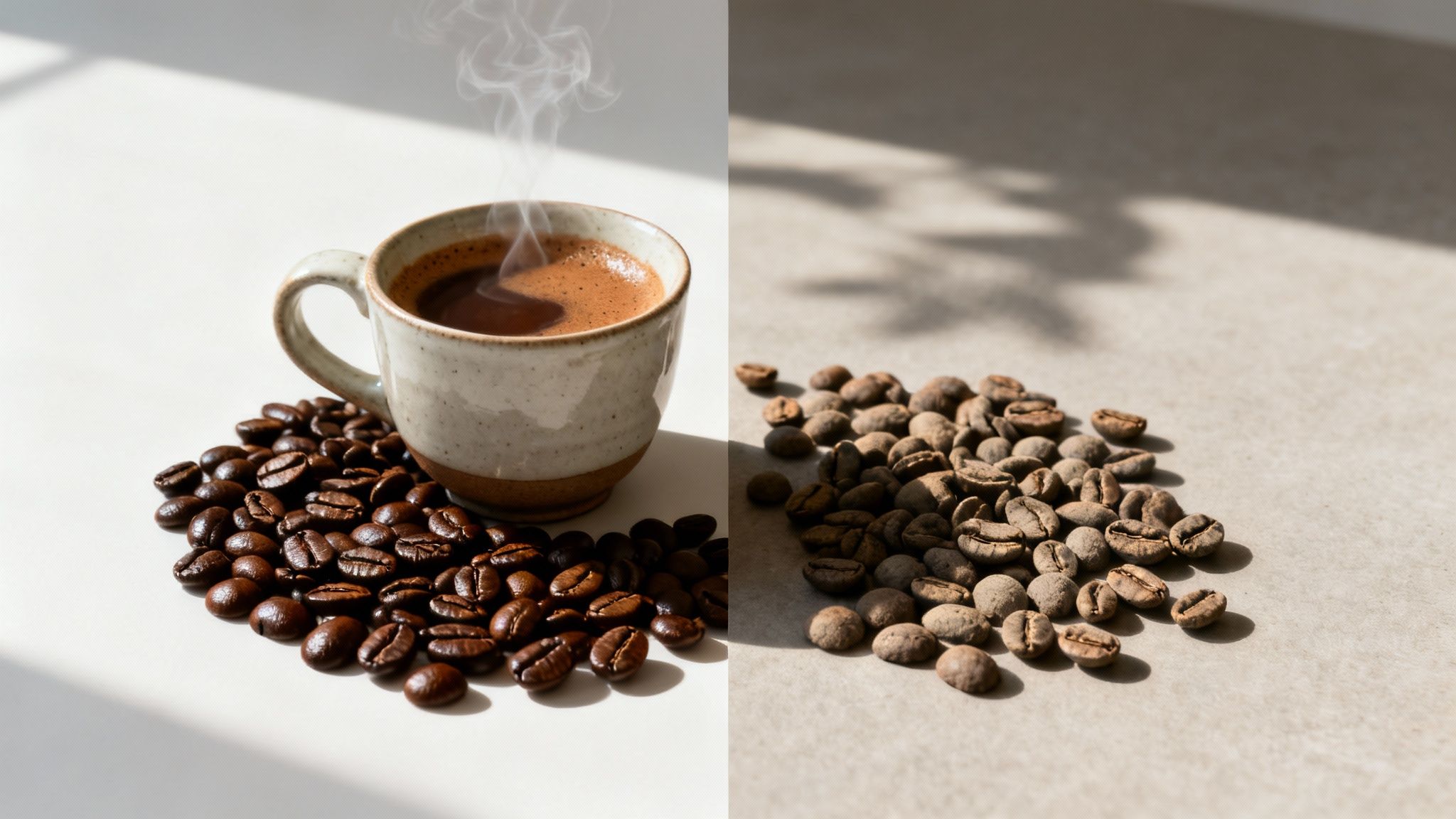
When coffee experts talk about beans "going bad," what they really mean is that they’re going stale. The clock starts ticking the second those beans come out of the roaster. The volatile compounds that give coffee its incredible aroma and deep flavor immediately begin to degrade through a process called oxidation.
This brings up a crucial difference: coffee that’s "un-delicious" is not the same as coffee that’s "unsafe." That forgotten bag of beans in the back of your cupboard is almost certainly safe to drink. But will it taste good? Probably not. You’re more likely to get a cup that tastes flat, woody, or even a bit like cardboard. The magic will be long gone. We believe every cup should be magical, which is why we encourage you to sign up for our e-mail list to get tips on brewing and special offers delivered right to your inbox.
The Enemies of Fresh Coffee
So, what’s causing this flavor heist? Four main culprits are constantly working to rob your coffee of its character. Knowing your enemy is the first step toward victory.
- Oxygen: This is public enemy number one. Air is the primary driver of oxidation, which breaks down the delicate oils and aromatic compounds that make coffee taste like, well, coffee.
- Light: Keep those beans in the dark! Direct sunlight and even harsh indoor lighting can bust up the flavor molecules, stripping the coffee of its personality.
- Heat: Warmth is a catalyst. Storing your coffee near the stove or in a sunny spot will drastically speed up the chemical reactions that cause it to go stale.
- Moisture: Coffee acts like a sponge. It’s hygroscopic, meaning it readily absorbs moisture—and any stray flavors or odors—from the surrounding air.
These storage fundamentals are key for keeping all your pantry staples in top condition. If you enjoy our best loose leaf tea online, for instance, the same rules apply. You can learn more in our dedicated guide on how to store loose-leaf tea to keep it just as vibrant as your coffee. And while you're at it, browse our collection of branded shirts, t-shirts, hats, hoodies, and ceramic coffee mugs to show off your passion for the best coffee culture.
How Quickly Does Quality Decline?
You might be wondering just how fast this flavor fade happens. While it’s not like milk spoiling overnight, the decline is quicker than most people think.
Research shows that roasted coffee beans are at their absolute best for just 2-4 weeks after the roast date. Studies have even estimated that after about 30 days at room temperature, the intensity of those beautiful flavor notes can drop by as much as 50%.
That’s why sourcing freshly roasted beans and storing them properly is non-negotiable if you want to experience what coffee truly has to offer. It’s this commitment to peak freshness that defines a truly exceptional cup. Every bag you purchase from us is a promise of quality, ready for your favorite brewing method.
Stale, Rancid, and Moldy: What's the Difference?
When we talk about coffee "going bad," it’s not just one thing. It's a process, a gradual decline with three very different outcomes: staleness, rancidity, and mold. Getting a handle on these stages is the key to understanding what’s really on in your coffee bag and why freshness is everything.
Let's think of it like a fresh, crisp apple. Each stage of coffee's decline has a perfect parallel in the life of that apple.
The Onset of Stale Coffee
Stale coffee is like that apple after a week on the counter. It's still an apple, and you can technically eat it, but it’s lost its magic. The crisp snap is gone, replaced by a soft mealiness. The bright, juicy flavor has faded into a dull, one-note sweetness. This is by far the most common way coffee goes bad.
The main villain here is oxidation. The moment those beans come out of the roaster, oxygen starts its attack, breaking down the fragile aromatic oils and flavor compounds that make coffee so special. This is a slow-motion heist, where all the vibrant, exciting notes—the fruity, floral, or chocolatey nuances—get stolen, leaving a flat, papery, or cardboard-like taste in their place.
It won't hurt you, but drinking stale coffee is a real letdown. The rich, earthy character you’d expect from a Sumatran dark roast, perfect for a French press, just isn't there anymore. You're left with a hollow, boring brew. Don't let this happen to you—click here to buy our Whole Bean Sumatran Coffee and taste the difference.
Freshly roasted coffee is packed with hundreds of aromatic compounds. Oxidation acts like an eraser, wiping away the coffee's unique personality until all that’s left is a generic, woody flavor.
The Unpleasant Turn to Rancidity
If staleness is a flavorless apple, rancid coffee is an apple that’s started to ferment and turn. It’s moved past being bland and has developed some actively unpleasant flavors. This is what happens when the natural oils inside the coffee beans actually spoil.
With enough exposure to air and light over time, the lipids (the fats) in the beans don't just lose their aroma; they go bad. This chemical reaction creates a distinctively harsh, sour, and often bitter taste that’s impossible to miss. It’s a sharp, acrid flavor that hits your palate in all the wrong ways, often leaving a greasy feeling in your mouth and a nasty aftertaste that lingers.
The Final Stage: Mold
And then there's mold. This is our truly rotten, fuzzy apple—the one you wouldn't dream of eating. This is the only stage where coffee becomes genuinely unsafe to drink. Thankfully, it's also the rarest.
Mold needs one thing to survive: moisture. Roasted coffee beans are incredibly dry, making them a pretty terrible place for mold to grow. This problem almost always happens because of bad storage—if whole beans or grounds get exposed to water or are kept in a super humid environment.
If you ever see fuzzy spots (white, green, or even blue) or catch a musty, mildew-like smell, that's your cue. Don't even think about it. The entire bag has to go straight into the trash.
How Long Does Your Coffee Actually Last?
The shelf life of coffee isn't a simple, one-size-fits-all answer. It really depends on what form it's in. The journey from a freshly roasted bean to your morning mug is filled with moments that either lock in or strip away its incredible flavor. Knowing the realistic timelines for each type of coffee is the first step to brewing a better cup and avoiding a disappointing one.
This timeline gives you a quick visual of how fast coffee can go from its peak to stale, then rancid, and in a worst-case scenario, even moldy.
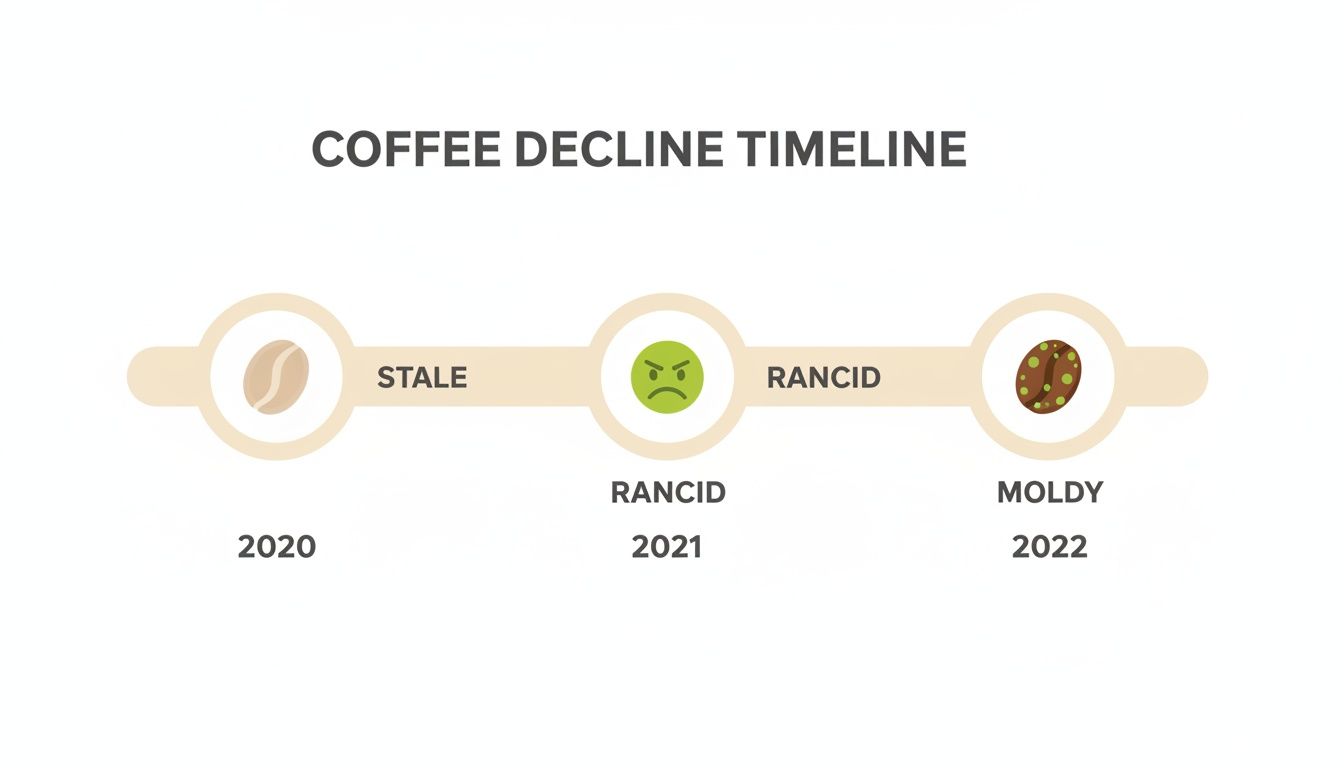
The main takeaway here is that while true spoilage with mold is pretty rare, the slide into staleness and rancidity happens much quicker than most of us think.
Whole Bean Coffee: The Freshness Fortress
If you want to protect your coffee's flavor, whole beans are your best bet. Think of the unground bean as a tiny, natural vault, shielding all the delicate oils and aromatic compounds from oxygen, their number one enemy.
- Peak Flavor Window: For about 1 to 4 weeks after the roast date.
- Why it Holds Up: The minimal surface area dramatically slows down oxidation. This keeps the coffee’s soul intact right up until the moment you're ready to grind.
By grinding just what you need for each brew, you're unlocking that flavor at its absolute peak. To really experience this, try a coffee like our Whole Bean Sumatran Coffee. Its deep, earthy character is something you want to taste fresh from the grinder.
Pre-Ground Coffee: The Convenience Countdown
There's no denying the convenience of pre-ground coffee, but it comes with a trade-off: freshness. As soon as you grind a coffee bean, its surface area expands exponentially, exposing all those wonderful, volatile compounds to the air.
The countdown to staleness begins the second the grinder stops. It's a lot like a sliced apple—the browning, or in this case, the flavor degradation, starts almost immediately.
The aromatic compounds in ground coffee can evaporate 2-3 times faster than in whole beans. This means a significant loss of flavor can happen in just a week or two. In a global coffee market projected to hit $238.99 billion by 2031, how coffee is handled after roasting is what separates the good from the great. For more on the science, you can dig into the research on coffee shelf-life models and market data.
Coffee Pods and Instant Coffee
These guys are built for the long haul, designed for convenience and a stable shelf life.
- Coffee Pods: They are individually sealed to keep oxygen out, giving them a much longer life than an open bag of ground coffee. They strike a decent balance for anyone who needs speed but doesn't want to completely sacrifice flavor.
- Instant Coffee: This is the marathon runner of the coffee world. Through freeze-drying or spray-drying, nearly all the moisture is removed, making it incredibly stable and able to last for years.
While practical, neither of these can truly capture the vibrant, complex experience of brewing with freshly ground beans. If you're weighing your options, our guide on whole bean vs. ground coffee breaks down the pros and cons in more detail.
The Five Signs Your Coffee Has Gone Bad
You don't need a lab or any special equipment to figure out if your coffee is past its prime. Your own senses are actually the best tools for the job. Think of yourself as a coffee detective—with a few simple checks, you can tell in an instant if your beans have lost their magic.
These five signs will tell you everything you need to know, starting with the most obvious clues and ending with the most definitive proof you'll find on the bag.
1. The Aroma Test
First things first: smell it. This is the easiest and most immediate test. Just open the bag and take a deep, long sniff. Fresh coffee has that incredible, complex aroma that fills a room—it might hit you with notes of fruit, chocolate, flowers, or nuts. It smells alive.
If what you get is a faint, dusty, or kind of papery smell, that's a bad sign. Those wonderful aromatic compounds are volatile and the first things to disappear as coffee stales. What's left behind is just a dull, lifeless scent.
2. The Visual Check
Next, just look at the beans. Pour some into your hand and really inspect them. Freshly roasted beans, particularly medium roasts, will often have a subtle, healthy-looking sheen. This comes from the natural oils rising to the surface after roasting.
Old beans, on the other hand, often look dull, dry, and chalky. On the flip side, if you have a very old dark roast, you might see an excessive, greasy layer of oil. That’s a sign the lipids are breaking down and the beans are heading toward rancidity.
3. The Bloom Test
This one is fun because you get to see the science in action. The "bloom" is that beautiful, puffy expansion of coffee grounds when hot water first hits them. It's caused by the rapid release of carbon dioxide, which gets trapped inside the bean during the roasting process and is a fantastic indicator of freshness.
Here's how to test it: Pour just enough hot water (right off the boil) to saturate the grounds and wait for 30 seconds.
- Fresh Coffee: You'll see it bubble up and swell, creating a lovely, thick foam dome. That's the bloom.
- Stale Coffee: You'll see a very weak reaction, or maybe no bubbles at all. This means most of that CO2 has already escaped over time.
4. The Flavor Profile
Of course, the ultimate proof is in the cup. This is the final and most important test. Brew a cup of coffee just like you normally would and take a sip, but this time, really pay attention to what you're tasting.
A fresh brew is a complex experience. It should have some brightness, some sweetness, and a pleasant aftertaste. Stale coffee, however, just tastes flat and one-dimensional. It’s often just bitter, harsh, or hollow, with none of the unique character it's supposed to have. If your coffee just tastes like generic "bitter brown liquid," it’s definitely stale.
5. The Roast Date
While your senses are great guides, the roast date is the hard evidence. This is, without a doubt, the single most reliable indicator of freshness you have.
Always look for a "Roasted On" date printed on the bag. Ignore the "Best By" or "Use By" dates, as they are often months or even a year out. The roast date tells you the exact moment the freshness clock started ticking.
If you want to see the difference for yourself, try one of our freshly roasted Ethiopian single-origin coffees. You’ll immediately notice the powerful aroma, the rich bloom, and the kind of vibrant flavor that only truly fresh coffee can deliver. Click here to make a purchase of these fantastic beans.
Expert Storage Tips to Maximize Coffee Freshness
You’ve tracked down some truly exceptional coffee, so the last thing you want is for its unique character to just fade away in your pantry. Protecting that flavor all comes down to smart storage. With the right habits, you can seriously extend your coffee’s peak freshness, making sure every cup tastes just as amazing as the roaster intended.
The golden rule is pretty simple: buy fresh, buy often, and buy in smaller quantities. This is the core of our philosophy here at Beans Without Borders. Think of freshly roasted coffee like fresh bread—it’s a perishable product with a ticking clock, and no storage magic can turn back time once it starts to go stale.
The Ideal Home for Your Coffee Beans
Your coffee has four natural enemies: oxygen, light, heat, and moisture. Your storage solution should be a fortress built to keep them all out. Luckily, the best defense is a simple one.
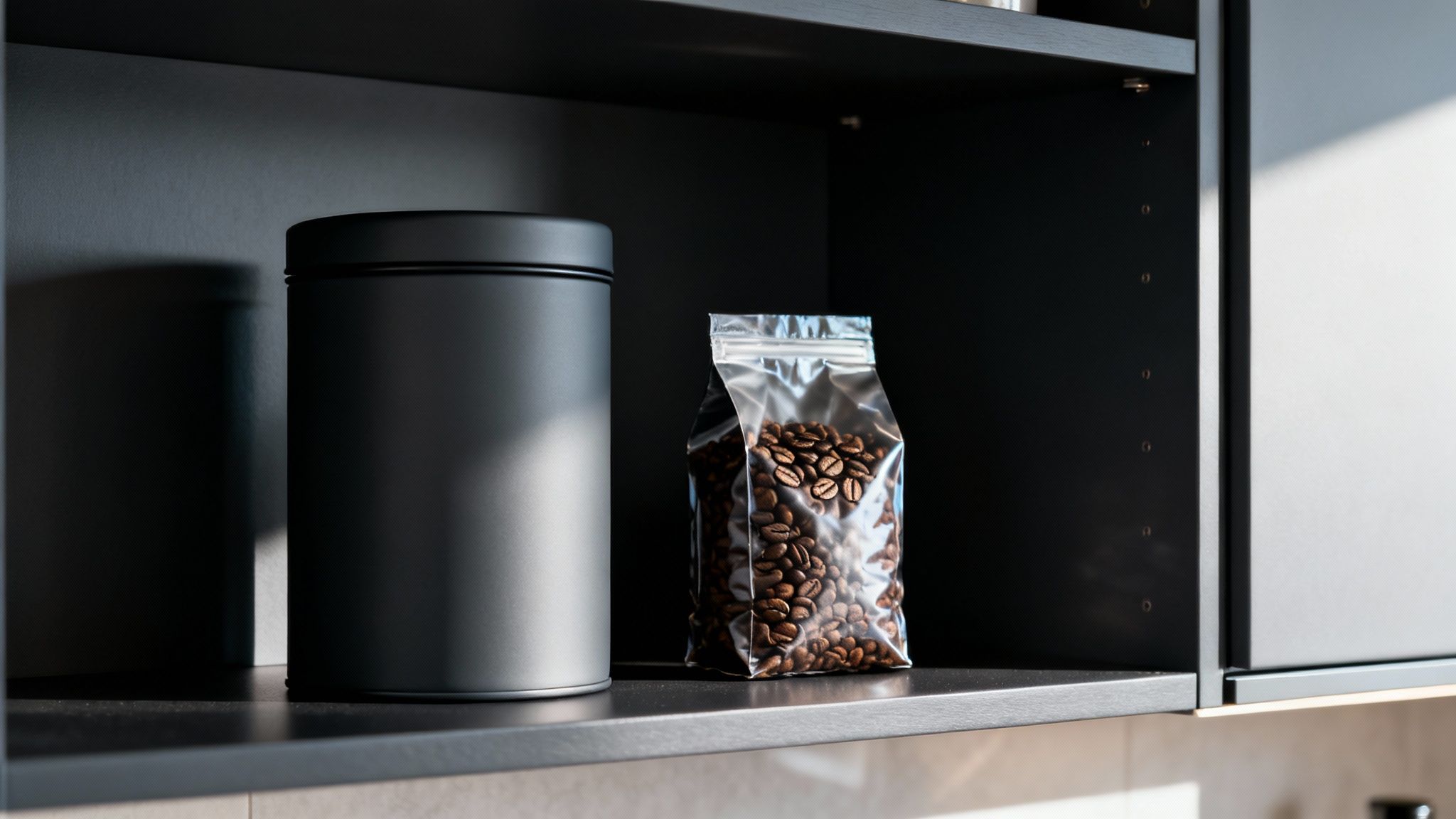
- Airtight is Non-Negotiable: Oxygen is the main reason coffee becomes dull and lifeless. An airtight container is your single most important weapon for slowing down the oxidation that steals flavor.
- Keep it in the Dark: Light, especially direct sunlight, acts like a wrecking ball on the delicate aromatic compounds in your beans. This is why an opaque container is always a better choice than a clear one.
- Location, Location, Location: Tuck that container away in a cool, dark, and dry spot—think pantry or cupboard. Stay away from places near the oven, on top of the fridge, or on a sunny kitchen counter where temperatures fluctuate.
For a deeper dive into picking the perfect container and other pro tips, check out our complete guide on how to properly store coffee beans.
The bag your coffee arrived in, especially after it’s been opened, usually isn't great for long-term storage. Moving your beans to a dedicated, opaque, and airtight canister is a tiny step that pays off big time in flavor.
The Great Debate About Freezing Coffee
So, should you freeze your coffee? It's one of the most heated topics among coffee lovers, and the answer is a cautious "yes, but only if you do it right." The big risk here is moisture. When beans thaw, condensation can form, which is a fast track to ruining their flavor and, in a worst-case scenario, introducing mold.
If you absolutely must freeze coffee for long-term storage, you have to follow these steps to the letter:
- Break the coffee down into small portions you’d use in about a week.
- Put each portion into a truly airtight, freezer-safe bag or container.
- Squeeze out as much air as humanly possible before you seal it tight.
- When you’re ready, take out one package at a time and let it thaw completely to room temperature before you open it. This is critical. And never, ever refreeze thawed beans.
Following this strict process is your best bet for minimizing moisture damage and keeping those beans in good shape.
Common Questions About Coffee Freshness
We've covered a lot of ground on the journey from fresh to stale, but I find a few key questions always come up. Let's tackle them head-on so you can feel confident about the coffee in your kitchen.
Can I Get Sick from Drinking Old Coffee?
Let's get the big one out of the way first. For the most part, drinking old coffee is more of a letdown for your taste buds than a health risk. If your beans or grounds have just gone stale, the coffee will taste dull, bitter, and maybe a bit woody. It's not pleasant, but it is unlikely to make you sick.
The real danger zone is moisture. If your coffee has been exposed to water and you see any signs of mold—fuzzy spots, discoloration, or a distinct musty smell—throw it out immediately. Don't even think about it. Otherwise, you're just dealing with a flavor problem, not a safety one.
Does Roast Level Affect Freshness?
Absolutely. Darker roasts, like a classic French or Italian roast, have a shorter window of peak freshness compared to their lighter counterparts. Why? The roasting process itself is the key.
A dark roast spends more time in the roaster, which brings the coffee's natural oils to the surface of the bean. This creates that beautiful, dark sheen, but it also exposes those fragile oils to oxygen, which is the primary enemy of freshness. A light or medium roast keeps more of those oils locked inside the bean, giving it a bit more staying power.
Is There Any Way to Revive Stale Coffee Beans?
I wish I had a magic trick for this, but sadly, you can't really turn back time on staling. Once those beautiful, volatile aromatic compounds have escaped, they're gone for good.
But that doesn't mean you have to toss the whole bag! Stale beans can get a second life in a brewing method where nuanced, delicate flavors aren't the star of the show.
Your best bet? Cold brew. The long, gentle steeping process in cold water is incredibly forgiving. It smooths out the harsh, bitter notes that become prominent in stale coffee, leaving you with a smooth, low-acid concentrate. You can find out how it’s done in our guide on how to make cold brew coffee.
Ready to taste the difference that peak freshness makes? At Beans Without Borders, we roast our single-origin and blended coffees in small, carefully managed batches to get them to you at their absolute best. Explore our collection and find your new favorite brew today.