

How to Grind Coffee Beans at Home for the Perfect Cup
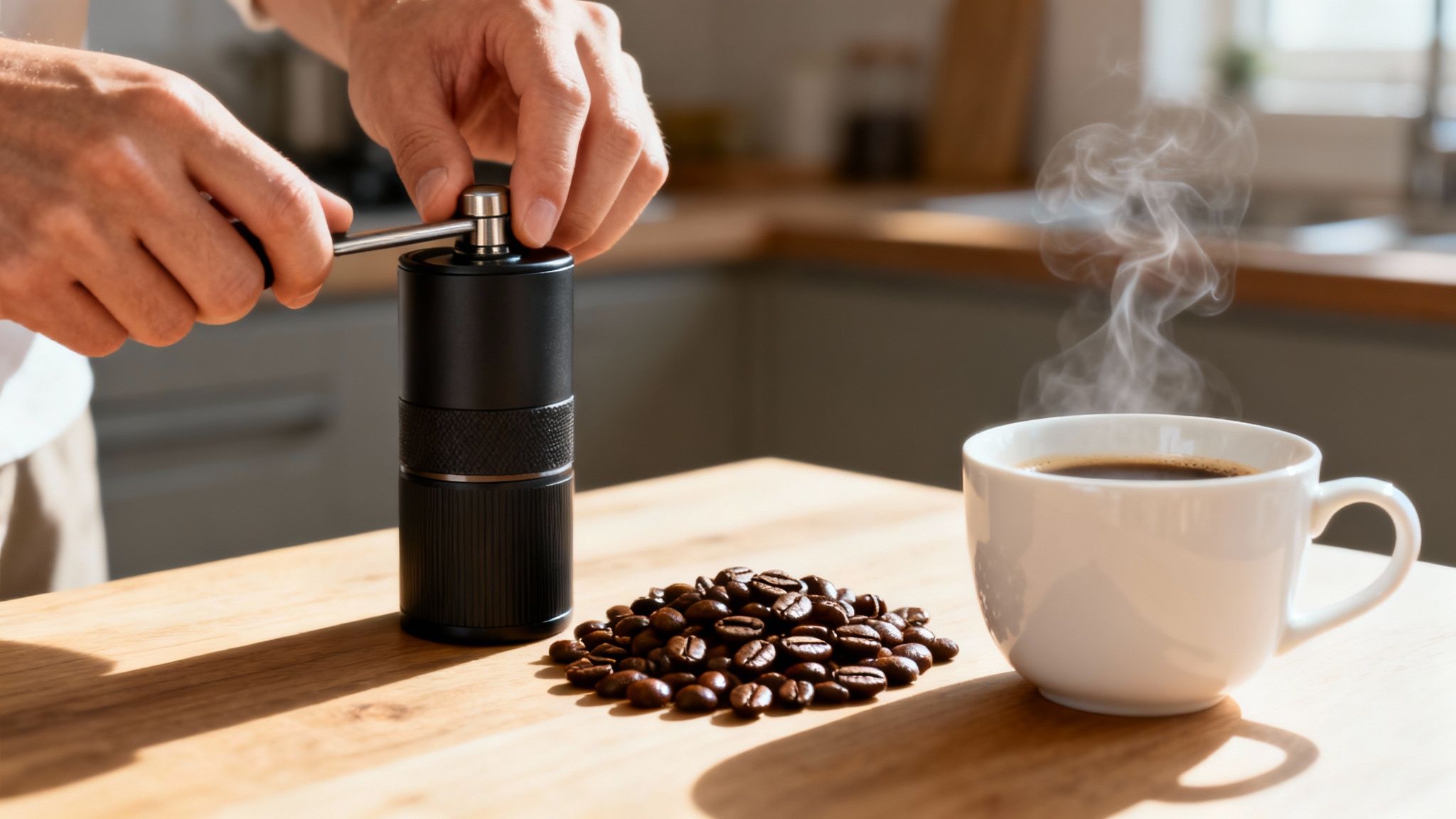
If there's one secret to making truly incredible coffee, it's this: grind your beans right before you brew. That amazing smell and the deep, complex flavors you love come from delicate compounds that start disappearing the second the coffee is ground. When you learn how to grind coffee beans at home, you lock in that peak freshness and turn a simple morning ritual into something special.
Why Grinding at Home Is a Game-Changer
The gap between a decent cup of coffee and an unforgettable one often boils down to this single step. Grinding fresh keeps the very soul of the coffee bean intact, making sure every subtle note from its origin and roast makes it into your mug. It’s like using fresh herbs from the garden instead of the dried stuff from a jar—the difference in vibrancy is night and day.
This guide is here to break it all down, making it easy for anyone to get started. We'll walk you through picking the right equipment and mastering the little tricks that will seriously elevate your coffee game.
The Science Behind Freshness
The moment you grind coffee, you dramatically increase its surface area, exposing all its fragile oils and aromatic compounds to the air. This kicks off oxidation, the process that makes coffee taste stale and flat. The flavor benefits of grinding on the spot aren't just coffee-snob talk; there's real science behind it.
Freshly ground beans release a symphony of over 200 volatile compounds that create flavor, but most of them vanish within 30 minutes. That bag of pre-ground coffee from the store? It might have lost up to 60% of its aroma and flavor before you even open it.
If you’re trying our beautiful single-origin beans from Ethiopia or Peru, you want the full experience. Investing in a quality burr grinder—the tool of choice for 85% of serious home baristas—guarantees you taste the coffee exactly as the roaster intended.
You're in Control of Your Brew
Freshness is huge, but grinding at home also puts you in the driver's seat for the most important part of brewing: grind size. Every brew method, from French press to pour-over, needs a specific grind texture to extract flavor properly. You can dive deeper into this in our guide comparing whole bean vs. ground coffee.
Being able to dial in your grind is how you find that perfect balance of sweetness, acidity, and body. It's what allows you to tweak your recipe and pull a consistently delicious shot or pour a perfect cup, every single time.
Ready to taste the difference for yourself? Grinding fresh is the best way to unlock the bright, floral notes of an Ethiopian Yirgacheffe or the deep, chocolatey body of a Peruvian bean. Your journey to better coffee starts right here.
Choosing Your Grinder: Burr vs. Blade
Your grinder is the single most important piece of coffee gear you’ll own. That might sound like an overstatement, but it’s true—it’s even more critical than your fancy brewer. The whole journey of grinding fresh coffee at home starts with one big decision: burr grinder or blade grinder?
This choice will fundamentally shape the flavor, consistency, and overall quality of every single cup you make.
Think of it this way. A blade grinder is basically a tiny blender with a spinning propeller. It doesn't grind; it violently smashes and shatters the beans. It’s fast and cheap, sure, but you end up with a chaotic mess of big chunks (we call these boulders) and fine dust (fines). When you try to brew that, the dust over-extracts and turns bitter while the boulders under-extract and taste sour. It's a recipe for a bad cup.
A burr grinder, on the other hand, is all about precision. It uses two revolving abrasive surfaces—the burrs—to gently crush beans into a consistent, uniform size. This consistency is the secret to a balanced, delicious cup of coffee, as it lets the water pull flavor from every particle evenly.
Why Consistency Is Everything for Flavor
So, why is having uniform coffee grounds such a big deal? Brewing is all about extraction, which is just a fancy word for dissolving the good stuff (flavor!) from the coffee into water. When your grounds are all different sizes, you get a messy, uneven extraction.
It’s impossible to brew a good cup from an inconsistent grind. You’re guaranteed to get the worst of both worlds: bitterness from the over-brewed fines and a sharp sourness from the under-brewed boulders.
The single biggest upgrade you can make to your home coffee setup is switching from a blade grinder to a burr grinder. It’s what lets you finally unlock the amazing, nuanced flavors of a great bag of beans, whether it’s a chocolatey Bali Kintamani or a bright, fruity Ethiopian.
With a burr grinder, you’re in the driver's seat. You can adjust the distance between the burrs to dial in the perfect grind size for your brew method. This control is what we mean when we talk about "dialing in" a coffee—making tiny tweaks to find that sweet spot where everything just sings.
Manual vs. Electric Burr Grinders
Okay, so you're sold on getting a burr grinder. Great choice! Now you have one more decision to make: do you go manual or electric?
- Manual Grinders: These hand-cranked grinders are fantastic. They’re portable, relatively inexpensive, and whisper-quiet. If you're just brewing a cup or two for yourself, they're perfect. For a lot of people, the ritual of hand-grinding is a really satisfying part of their morning routine.
- Electric Grinders: When you need speed and convenience, nothing beats an electric burr grinder. They handle larger amounts of coffee effortlessly, which is a lifesaver on busy mornings or if you're brewing for the whole family. They’re also a must-have for espresso, which demands an extremely fine and consistent grind.
Honestly, you can't go wrong with either one. Both will give you a night-and-day improvement over a blade grinder. It really just boils down to your budget, your daily routine, and how much coffee you’re making.
Burr Grinder vs. Blade Grinder At a Glance
To make the choice even clearer, let's put them head-to-head. This table breaks down the key differences between burr and blade grinders, showing why one is a specialized tool and the other is… well, better for spices.
| Feature | Burr Grinder | Blade Grinder |
|---|---|---|
| Grind Consistency | Uniform and even particles, leading to a balanced extraction and much better flavor. | Inconsistent chunks and powder, causing both sour and bitter flavors in the same cup. |
| Control | Precise adjustments allow you to match the grind size perfectly to your brewing method (French Press, Drip, etc.). | No real control. Grinding longer just creates more dust without getting rid of the big chunks. |
| Heat Buildup | Low heat generation, which protects the delicate oils and aromas in the coffee. | High-speed blades create significant heat, which can scorch the grounds and introduce a burnt, flat taste. |
| Cost | A higher initial investment, but it's one that pays for itself in every delicious cup. | Very inexpensive and easy to find just about anywhere. |
| Best For | Anyone who wants to brew truly flavorful coffee and get the most out of their high-quality beans. | Not recommended for coffee. Seriously. They work okay for grinding spices, though. |
In the end, choosing a burr grinder is an investment in flavor. It ensures all the hard work that went into growing, harvesting, and roasting those beautiful beans actually makes it into your mug. You’re not just buying a machine; you’re buying control, consistency, and a whole lot of incredible coffee.
Matching Grind Size To Your Brewing Method
This is where the magic really happens—pairing the right grind texture with your favorite brewing device. Forget about memorizing confusing numbers on a grinder dial for a minute. The goal is to develop an intuitive feel for the coffee, using simple cues you can see and touch.
Think of it this way: water is what pulls all that delicious flavor out of your coffee grounds. The size of those grounds dictates how much time the water has to work. Coarser grounds have less surface area, so water flows through quickly, meaning you need a longer brew time. Finer grinds have way more surface area, so the water extracts flavor much, much faster.
Nailing this relationship is the secret to dodging a cup that’s either disappointingly sour (that's under-extraction) or unpleasantly bitter (over-extraction). It’s all about finding that sweet spot.
French Press: The Coarsest Grind
For a full-immersion brew like a French Press, you need a very coarse grind. The grounds are going to be steeping directly in hot water for a few minutes, so a chunky, coarse texture is absolutely essential to slow down the extraction and save you from a bitter, muddy cup.
- What It Looks Like: Think coarse sea salt or even rough breadcrumbs. You should be able to see distinct, chunky particles.
- Why It Works: This size prevents over-extraction during the long steep (usually around 4 minutes) and helps the press's metal filter do its job without getting all clogged up.
- Our Coffee Pick: The bold, earthy notes of our Bali Kintamani Dark Roast are a fantastic match for the rich, full-bodied brew you get from a French Press.
Drip Coffee Makers: The Medium Grind Standard
This is your go-to setting for most of the automatic drip coffee machines you’ll find in homes and offices everywhere. A solid medium grind creates the perfect balance for how these machines automatically shower water over the coffee bed.
- What It Looks Like: The texture should feel a lot like regular granulated sugar or coarse sand.
- Why It Works: It’s fine enough to let the flavor extract properly during the machine's brew cycle but still coarse enough to keep the filter basket from turning into a swamp and overflowing.
- Our Coffee Pick: A classic brewer calls for a classic coffee. Our Peru Cajamarca Medium Roast gives you that smooth, balanced cup with notes of chocolate and nuts that just sings in a drip machine.
The rise of specialty coffee at home is no joke. The market is set to grow at a 9.5% CAGR, projected to hit $81.8 billion by 2030. Digging into the data, we see that 64% of coffee drinkers aged 25-39 enjoy specialty coffee every week, and 36% of them are using drip makers. Getting that medium grind right prevents the bitterness of over-extraction and can cut down on uneven brewing (channeling) by up to 25%. You can dive deeper into these market trends and consumer insights to see just how much brewing at home has evolved.
This chart gives a great visual breakdown of the two main types of grinders and how they stack up on consistency and control.
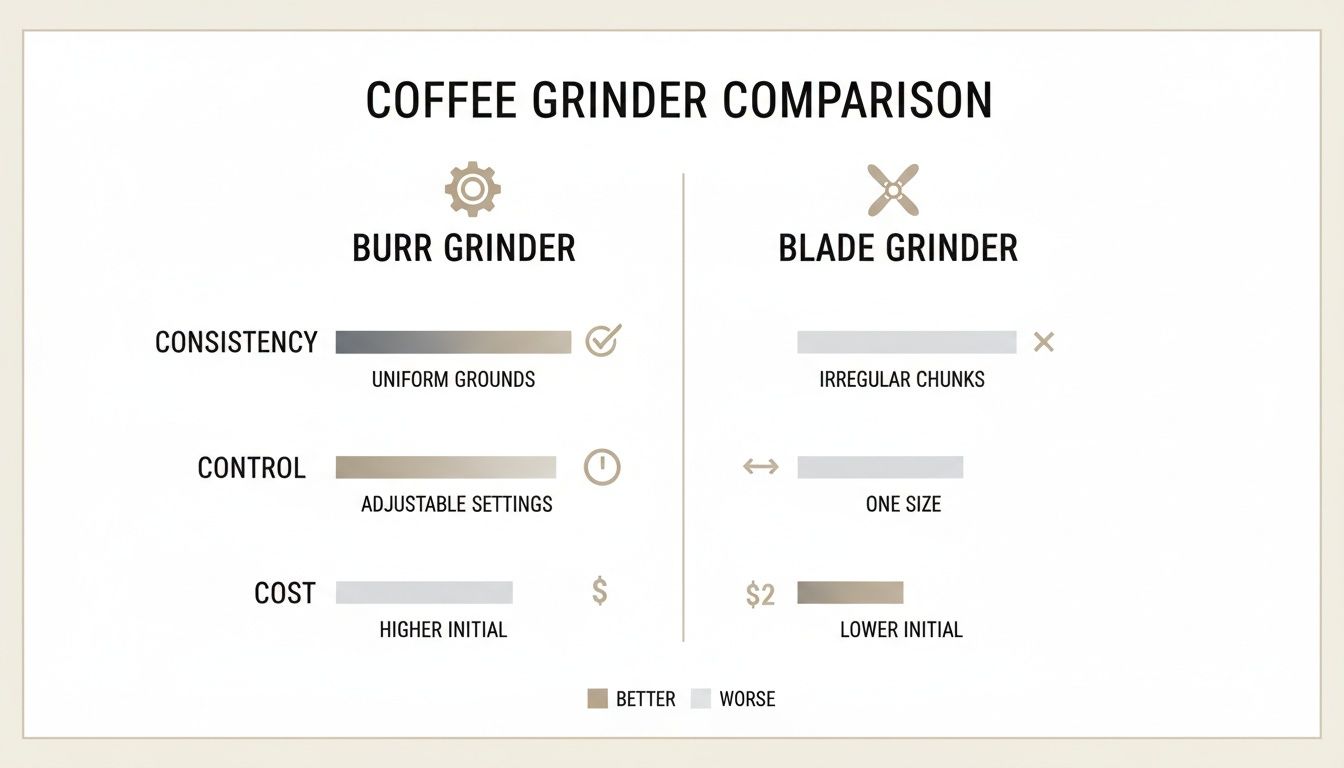
As you can see, while a blade grinder might be easier on the wallet, a burr grinder is what gives you the superior consistency and fine-tuned control needed for a truly exceptional cup of coffee.
Pour-Over: A Medium-Fine Grind
Manual methods like the V60 or Chemex put you in the driver's seat, and that level of control calls for a medium-fine grind. It's just a noticeable step finer than what you'd use for your drip machine.
- What It Looks Like: Picture the texture of table salt. It’s finer than sand, but it’s definitely not a powder yet.
- Why It Works: This grind size slows the water down just enough for a controlled, even extraction. This is what helps you pull out all those delicate, nuanced flavors that pour-over is famous for. If your brew is dragging and tastes bitter, go a little coarser. If it's rushing through and tastes sour, tighten it up and go finer. We get into the nitty-gritty of this in our comprehensive guide to pour-over grind size.
- Our Coffee Pick: The bright, floral, and almost tea-like notes of our Ethiopian Yirgacheffe Light Roast are practically made for the clean, crisp cup a good pour-over delivers.
Espresso: The Finest Grind
Espresso is a whole different ballgame. It uses intense pressure to blast hot water through a tightly packed "puck" of coffee in about 30 seconds. To make that magic happen, you need an extremely fine grind. A proper espresso grind is the foundation for an endless variety of coffee drinks, from a classic Americano to a decadent Mocha.
Pro Tip: "Dialing in" an espresso grind is a true art form. The tiniest adjustment can completely change your shot's timing and taste. This is where a quality burr grinder stops being a recommendation and becomes an absolute necessity.
- What It Looks Like: The consistency should be like powdered sugar or fine flour. When you pinch it between your fingers, it should clump together.
- Why It Works: This super-fine grind creates the resistance needed to stand up to the high-pressure water, which is how you get that concentrated, syrupy extraction. Go too coarse, and you'll get a watery, sour shot. Go too fine, and the machine will "choke," giving you a shot that's intensely bitter.
- Our Coffee Pick: To pull a rich shot for a latte or Americano, you need a bean that can handle the intensity. Our Signature Espresso Blend is crafted specifically for that perfect balance of sweetness, body, and a beautiful crema.
To make things a little easier, here’s a quick reference chart to help you visualize these different grind sizes and match them to your brewer.
Coffee Grind Size Quick Reference Chart
| Brewing Method | Recommended Grind Size | Looks Like... | Try It With Our... |
|---|---|---|---|
| French Press | Coarse | Coarse Sea Salt | Bali Kintamani Dark Roast |
| Drip Coffee Maker | Medium | Granulated Sugar | Peru Cajamarca Medium Roast |
| Pour-Over | Medium-Fine | Table Salt | Ethiopian Yirgacheffe Light Roast |
| Espresso | Fine | Powdered Sugar | Signature Espresso Blend |
Keep this chart handy as you start experimenting. Soon enough, you'll be able to eyeball the right grind size without a second thought.
Pro Tips for a Perfect Grind Every Time
You’ve got the basics down—you’re matching your grind size to your brewer and probably making some of the best coffee of your life. So, what’s next? Let's get into the little habits and techniques that will take your coffee from just "good" to truly exceptional.
This is where consistency and fine-tuning come into play. One of the single biggest upgrades you can make to your routine is to start weighing your beans. Seriously. This practice, called dosing, is what allows you to create a repeatable recipe.
Grab a simple digital kitchen scale and say goodbye to inconsistent scoops. Precision is the key to getting that same delicious result, every single time.
Master Your Grinding Technique
Believe it or not, how you grind matters, especially with electric grinders. Instead of just holding down the button and letting it rip, try grinding your coffee in short, controlled bursts. A few seconds on, a few seconds off.
Why? It’s all about heat. Grinding generates friction, which creates heat, and that heat can start to cook the delicate aromatic oils in your coffee before they even touch the water. The result is a flat, baked taste. Pulsing the grinder keeps the burrs cool and protects all that precious flavor.
Getting your grinding technique right can make a massive difference, potentially boosting flavor extraction by up to 50%. A great starting point for a standard 300ml (about 10oz) cup is 20g of beans. Just remember to grind in short bursts to keep the temperature from creeping up—heat over 40°C can degrade 15% of the coffee's delicate flavor compounds. This applies to everyone, from a beginner trying a new sampler pack to a pro chasing that perfect cup. For a deeper look into global coffee trends, check out this detailed report from the USDA.
The Art of Dialing In a New Coffee
Every time you crack open a new bag of beans, you'll need to "dial it in." This is just the coffee lover's term for making small adjustments to your grind setting to find the absolute sweet spot for that specific coffee.
Beans from different regions, with different roast levels, all behave a little differently in the grinder. It's part of the fun!
Here's how to do it:
- Start with a guess: Set your grinder to the size you think is right for your brew method.
- Brew and taste: Is the coffee sour, thin, or weak? Your grind is probably too coarse. Go a click or two finer.
- Adjust and repeat: Is it bitter, harsh, or astringent? The grind is likely too fine. Back it off and go a step or two coarser.
This back-and-forth process lets you perfectly tune your brew until it's balanced, highlighting the unique character of beans from places like Peru or Ethiopia.
"Dialing in is the conversation you have with your coffee. You make a small change, taste the result, and let the flavor guide your next move. It's how you unlock a coffee's true potential."
Proper Storage and Maintenance
Your grinder can't work its magic if it's dirty, and your beans will go stale if they aren't stored correctly. For anyone who's serious about great coffee, these final steps are non-negotiable.
First, only grind what you need, right before you brew. It's amazing how fast ground coffee loses its aroma and flavor. Keep the rest of your beans whole in an airtight, opaque container, stashed away from heat and light. And please, don't put them in the freezer! For more on this, check out our guide on how to properly store your coffee beans.
Finally, keep that grinder clean. Old coffee grounds and oils build up, go rancid, and will absolutely taint the flavor of your next brew. A quick brush-down after each use and a deeper clean every couple of weeks is all it takes to make sure every cup of Beans Without Borders coffee you make tastes pure and delicious.
Time to Start Grinding
You've got the roadmap, and now you know what a massive difference grinding your own beans can make. Seriously, learning how to grind coffee beans at home is the biggest upgrade you can give your morning cup. It’s what turns a simple daily habit into a genuinely rich experience. Think of this as your official invitation to start that adventure.
At Beans Without Borders, we're here to be your guide on this journey. We’ve always believed the most incredible coffees are found at the end of a dusty road, not sitting in a massive warehouse. Our mission is to bring those authentic flavors straight from the source to your kitchen.
Taste What You've Been Missing
The next move is a simple one: taste what fresh-ground coffee is all about. We'd love for you to explore our collection of whole bean coffees, which we've painstakingly curated from small farms around the globe.
Maybe you're curious about the bright, almost tea-like floral notes of a single-origin from Ethiopia. Or perhaps you'd rather jump around the map with one of our sampler packs. Either way, we have the perfect beans waiting for you.
Each bag we sell tells a story from a specific corner of the world. When you grind those beans right before brewing, you're getting the full, uncompromised version of that story.
- Feeling adventurous? Try our Single-Origin Sampler Pack to compare coffees from different continents.
- Love a classic cup? You can't go wrong with the smooth, perfectly balanced notes of our Peru Cajamarca Medium Roast.
The secret to better coffee isn't about wildly expensive gear or overly complicated rituals. It just starts with exceptional beans and the simple decision to grind them fresh.
More Than Just Coffee
While coffee is our first love, our passion for quality doesn't stop there. For those times you want to switch things up, we also carry a fantastic selection of premium loose-leaf teas. From the roasty, comforting notes of Hojicha to a classic English Breakfast, there’s a steep for every mood.
And if you really want to lean into the coffee culture, check out our branded merchandise. We've got durable ceramic mugs, super-soft t-shirts, and cozy hoodies that make perfect gifts for the coffee fanatic in your life (or a nice little treat for yourself).
Your Next Brew Starts Here
Your journey into the world of truly exceptional, freshly ground coffee is just a click away. We’ve made it as easy as possible to get started.
Take a look at our entire collection of whole bean coffees and find a bag that calls to you. To make things even sweeter, we offer free US shipping on all orders. As you keep dialing in your technique, maybe with our guide on how to make pour-over coffee, you'll appreciate the quality of fresh-ground beans even more.
Before you go, make sure to join our email list. We'll send you a 10% discount for your first order and keep you in the loop with exclusive offers, news about new coffees, and brewing tips. Welcome to a whole new world of coffee.
Common Questions About Grinding Coffee
As you dive into the world of home-ground coffee, you're bound to have some questions. Everyone does. Getting these sorted out early will make the whole process feel less intimidating and a lot more fun. Let's walk through a few of the most common things people ask.
How Long Do Whole Coffee Beans Stay Fresh?
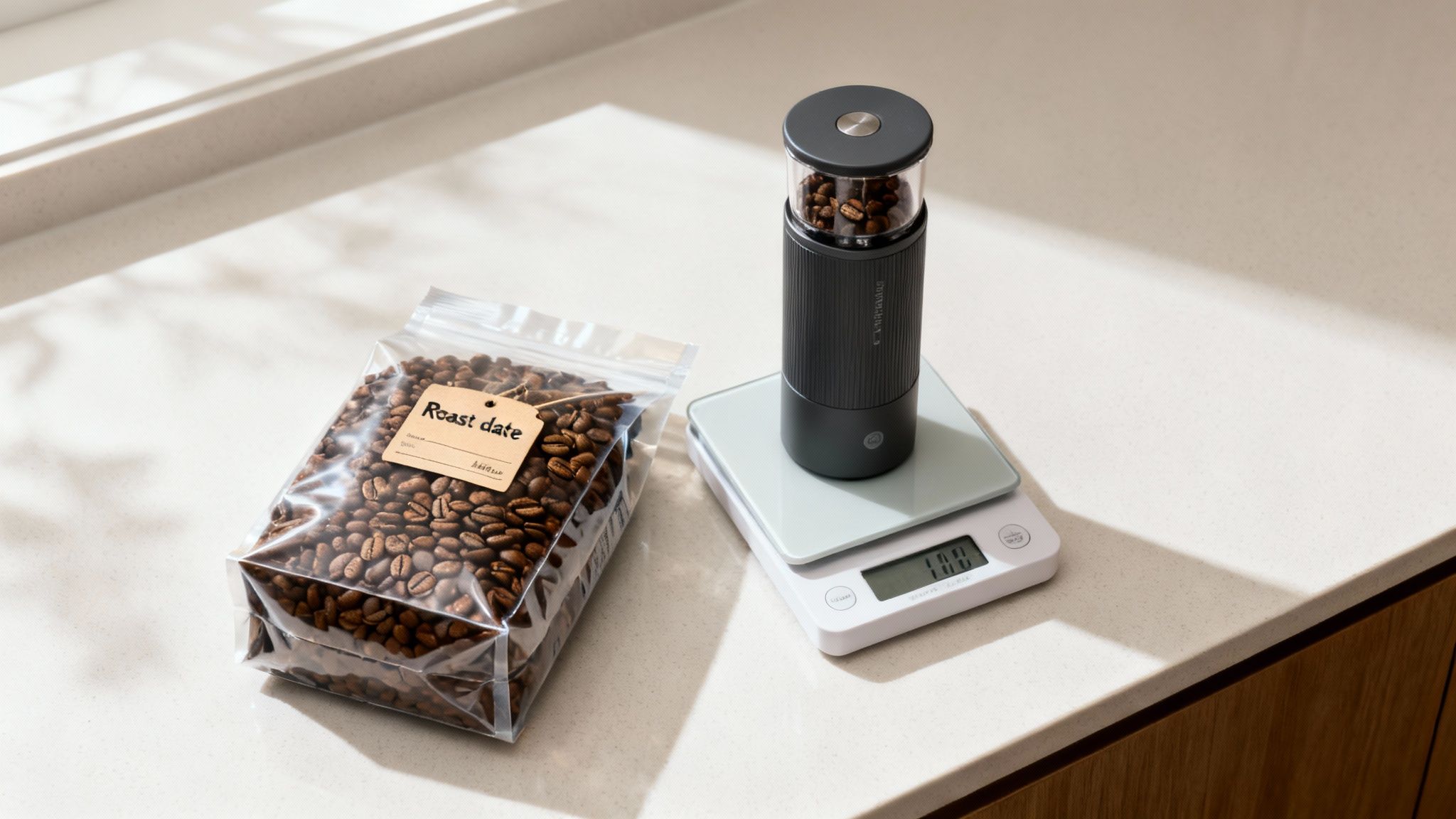
This is the big one, and it gets right to the heart of why we grind at home in the first place. Whole beans are at their absolute best for about 2-4 weeks after they've been roasted. In that sweet spot, all the delicate oils and aromatics are locked inside, just waiting to create that incredible flavor you love.
Compare that to pre-ground coffee, which starts going stale within minutes of being ground. That’s why we always recommend buying freshly roasted whole beans, like our single-origins from Peru or Ethiopia, in smaller bags you can use up while they're at their peak.
Can I Just Use a Blender to Grind Coffee?
I get it, it seems like a logical shortcut. A blender has blades, it spins fast—it should work, right? In a pinch, maybe, but it’s far from ideal for making good coffee. A blender basically acts like a souped-up blade grinder, violently smashing beans into a messy mix of powder and big chunks.
This uneven grind size is a recipe for bad extraction, leaving you with a cup that’s somehow both bitter and sour. If you’re serious about tasting what makes your beans special, an entry-level burr grinder is the way to go. The difference you'll taste is night and day.
What Is the Best Way to Clean My Coffee Grinder?
Keeping your grinder clean is non-negotiable if you want every cup to taste pure and fresh. Old coffee grounds and oils get left behind, and over time they go rancid, tainting the flavor of your next brew. The good news is that cleaning is pretty straightforward.
- For Burr Grinders: The easiest and most effective method is using grinder cleaning tablets. These are made from food-safe, grain-based materials that soak up oils and push out old grounds as they run through the burrs. Just grind a capful through, then follow it with a few beans to clear out any leftover tablet bits.
- For Blade Grinders: If you're still using a blade grinder, you can clean it by running a small amount of uncooked rice through it. The rice absorbs old oils and knocks stuck particles loose. Warning: Never, ever use rice in a burr grinder. It's too hard and can easily damage the motor or the burrs themselves.
A clean grinder is a blank canvas for every new coffee you brew. It guarantees you're tasting the beans, not the ghosts of brews past.
Do I Need an Expensive Grinder to Get Started?
Absolutely not! You don't need to drop a ton of cash to dramatically improve your morning coffee. The real goal here is to move from the chaotic chopping of a blade to the consistent, even milling of a burr grinder.
A good manual burr grinder or a solid entry-level electric model offers incredible bang for your buck. Honestly, the jump in flavor from a blade grinder (or a blender) to a basic burr grinder is the single biggest upgrade you can make to your coffee setup. Think of it as an investment in a better morning, one delicious cup at a time.
Ready to put your newfound knowledge to the test? The freshest, most flavorful coffee experience begins with exceptional beans. At Beans Without Borders, we invite you to explore our curated selection of single-origin and blended whole bean coffees. Find your new favorite and taste the difference for yourself.