

What Is Coffee Cupping and How Can It Help You Find Better Coffee?
Ever wonder how coffee experts can pick out those subtle tasting notes of blueberry, jasmine, or caramel in a cup? Their secret isn't magic—it's coffee cupping. This is the standardized method used across the industry, from the farmers who grow the beans to the roasters who perfect them, to taste, evaluate, and score coffee.
Think of it as wine tasting, but for coffee. It’s the universal language everyone in the coffee world speaks to understand a bean's quality and potential. At Beans Without Borders, this process is how we ensure every coffee we offer is a world-class experience.
An Introduction to Tasting Coffee
So, what exactly is coffee cupping? At its heart, it’s a controlled, systematic process for smelling and tasting coffee. The whole point is to strip away all the variables that different brewing methods (like a pour-over, French press, or espresso machine) introduce. By doing this, we can get to the core of what the bean itself tastes like, making it easier for you to find a coffee you’ll love and want to purchase.
To make this happen, everyone uses a precise coffee-to-water ratio, a specific grind size, and a consistent water temperature. This creates a level playing field, ensuring that when we taste a coffee here at our roastery, we're experiencing the same fundamental flavors as the producer tasting it thousands of miles away. It's this shared sensory experience that makes quality control possible all the way from the farm to your cup.
Why It Matters to You
Even if you're not a coffee professional, getting familiar with the basics of cupping can totally change how you enjoy your morning brew. It gives you the tools to figure out what you genuinely love in a coffee, empowering you to make a confident purchase.
Here's how it helps:
- Discover Your Palate: You'll start to recognize the building blocks of flavor, like acidity (that bright, crisp tingle), body (the weight and texture of the coffee on your tongue), and aftertaste.
- Appreciate Nuance: It demystifies why coffees from different parts of the world taste so distinct. For a deeper dive, our guide on what is single-origin coffee explores how a bean's home shapes its unique character.
- Make Better Choices: Once you know the lingo, you can confidently click the links and purchase coffees you'll adore. You'll know whether you're in the mood for the bright, floral notes of an Ethiopian Yirgacheffe or the rich, chocolaty profile of a classic Mexican bean.
Ultimately, cupping connects you more deeply to the story of your coffee. It bridges the gap between the people who grew it and your daily ritual, adding a whole new layer of appreciation to every single sip of the coffee you choose to buy.
The Surprising History of Coffee Cupping
The polished, almost scientific ritual of coffee cupping we know today didn't start in a sterile lab. Its roots are far more rugged, going back to a time when coffee was judged by sight alone. Just picture it: the late 19th century, where the best-looking green beans fetched the highest price, regardless of what they actually tasted like. Quality was a total gamble.
Everything began to change when a few pioneers asked a simple, yet radical, question: what if a coffee’s real value is in its flavor? This idea kicked off a massive shift in the global coffee trade. Cupping started as a no-frills quality check for merchants, just a way to ensure they weren't buying duds at auction.
From Simple Taste Test to Global Standard
The journey from a basic taste test to a worldwide standard was slow and steady. At first, it was pretty informal, but people like B.D. Balart started adding structure, pushing for blind tastings to get rid of bias. Roasters like Hills Bros. were some of the first big players to really run with this new "cup quality" approach. They were laying the foundation for a system based on sensory experience, not just what the eye could see.
The core idea was a game-changer back then: coffee should be valued for its inherent taste, not just how the green beans looked. This shift empowered both buyers and producers, creating a shared language for quality.
The real turning point came in 1999 when cupping became the official judging method for the prestigious Cup of Excellence competitions. This sealed its fate, cementing its role as the backbone of the entire specialty coffee movement. Soon after, the Specialty Coffee Association (SCA) created the standardized protocols and 100-point scoring system that professionals all over the world rely on today. Now, this very technique is used to evaluate a huge portion of the 123.8 million bags of coffee exported globally each year. If you want to dive deeper, Tastify has an excellent article covering the full history of coffee cupping.
Knowing this history helps you understand the intense dedication behind every single-origin coffee we offer. It’s why we can so clearly describe the bright, citrusy notes in our Peruvian coffee or the deep, chocolatey body of our Mexican beans. This commitment to quality, born from over a century of tasting history, is our promise that the journey from a specific farm to your kitchen results in a truly exceptional cup, every single time. We encourage you to click through and purchase a bag to taste this history for yourself.
How Professionals Cup Coffee: A Step-by-Step Guide
Ever wondered how experts can taste a coffee and pinpoint those specific flavor notes you see on the bag? It all comes down to a standardized tasting ritual called cupping.
Think of it like a chef methodically tasting every single ingredient to understand its purest form. Each step in the process is deliberate, designed to strip away variables and reveal the coffee's true, unadulterated character. Let’s walk through how the pros do it.
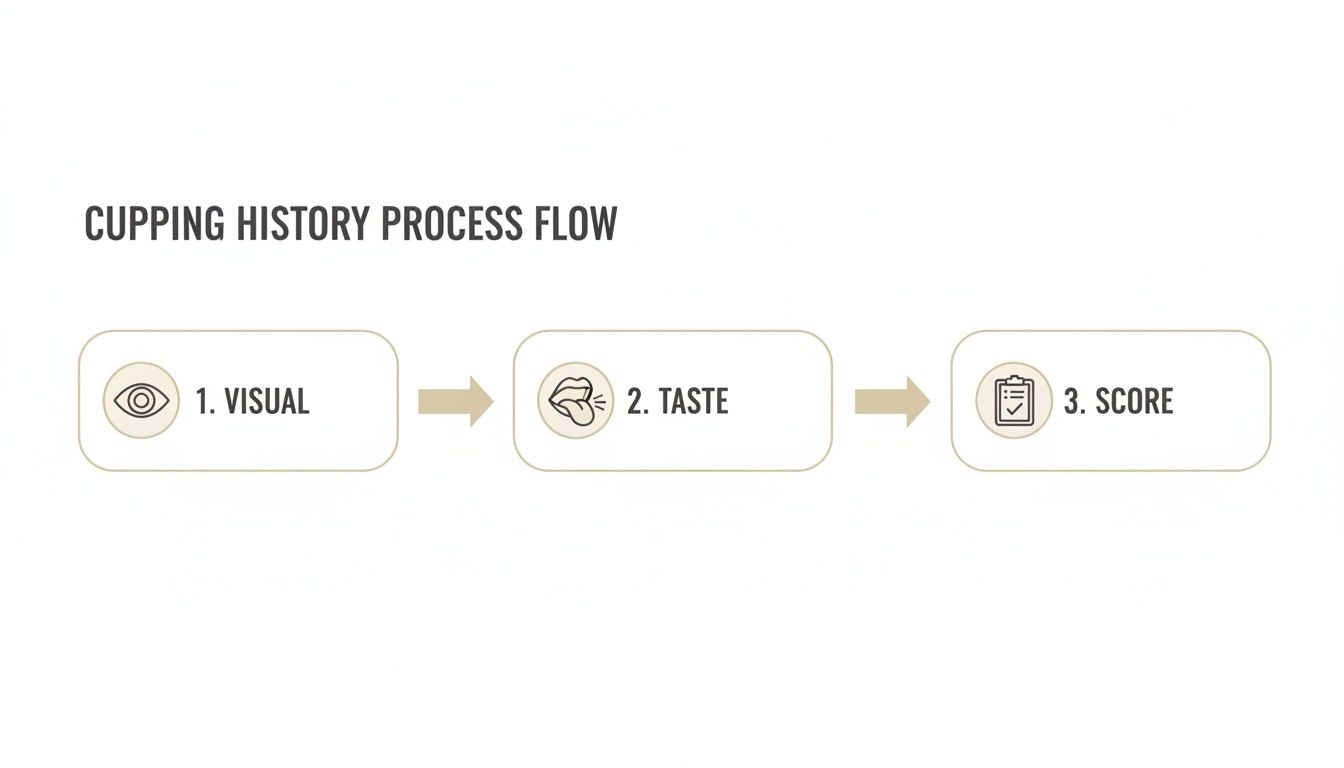
As you can see, the journey is a progressive one, moving from smell to taste and finally to a detailed evaluation.
Stage 1: Fragrance and Aroma
The evaluation starts before a single drop of water is introduced. Cuppers first assess the fragrance of the freshly ground, dry coffee. This initial sniff offers the first clues to a coffee's potential, hinting at everything from sweet florals to rich, nutty undertones. A consistent grind is crucial here, which is why knowing how to grind coffee beans at home can make a world of difference for any brewing method.
Next, hot water—usually just off the boil at around 200°F (93°C)—is poured directly over the grounds. A timer is set, and the grounds form a "crust" on the surface of the water. After letting it steep for exactly four minutes, cuppers lean in close to evaluate the aroma of the wet grounds, which often unlocks a whole new layer of complexity.
Stage 2: Breaking the Crust
Here comes the most dramatic moment in cupping: the "break." Using a cupping spoon, the taster gently pushes back the crust of floating grounds three times. This simple motion releases a powerful burst of aromatic compounds, providing the most intense sensory experience of the entire process. If there are any defects or unpleasant smells in the coffee, they'll almost always reveal themselves right here.
Once the break is complete, any foam and leftover grounds are carefully skimmed from the surface, leaving a clean, clear liquid for tasting.
Stage 3: The Slurp and Evaluation
After the coffee has cooled for a few minutes, it’s finally time to taste. This is where you’ll hear that famous—and famously loud—slurp. It might look a little strange, but it’s a critical technique.
The slurp is designed to spray the coffee across your entire palate, hitting all of your taste receptors at once. This aeration helps reveal the full spectrum of flavors, acidity, sweetness, and body.
Just like in wine tasting, professionals use a spittoon to avoid caffeine overload, especially when they're evaluating dozens of samples in a single session. They systematically assess key attributes like flavor, body (the weight and texture of the coffee on your tongue), acidity (that bright, sparkling sensation), and the finish. Each attribute gets a score, which all adds up to a final verdict on the coffee's quality. This is how we ensure every coffee you purchase from our site meets the highest standards.
Decoding the Flavors Cupping Reveals
Once you’ve slurped the coffee, the real magic begins: evaluating what’s actually happening on your palate. This is the moment where seasoned pros connect the dots between a coffee's journey—its origin, how it was processed, and the roast style—and the final story it tells in the cup. They’re hunting for specific, identifiable characteristics that reveal everything about the bean.
The goal isn't just to label a coffee as "good" or "bad." It's to understand why it tastes the way it does by breaking the experience down into its core components.
Understanding Acidity, Body, and Balance
When a coffee taster mentions "acidity," they aren't talking about sourness or something that will give you heartburn. In the coffee world, acidity is a prized quality—it's the bright, sparkling, lively sensation that makes a coffee feel vibrant on your tongue.
Think of it this way:
- It might be a sharp, crisp zing like a green apple, which you'll often find in Kenyan single-origin coffees.
- It could also be a softer, juicy sweetness, like biting into a perfectly ripe peach.
- In some Central American coffees, it feels like a clean, zesty pop of citrus.
Next up is body, which is all about the weight and texture of the coffee in your mouth. The difference between skim milk and heavy cream is a perfect analogy. A light-bodied coffee feels delicate and almost tea-like, while a full-bodied one is rich, heavy, and can feel wonderfully syrupy. Our Sumatran coffees, for instance, are famous for their incredibly heavy, almost creamy body.
Finally, cuppers look for balance. This is how well all the different elements—the acidity, sweetness, bitterness, and body—play together. In a well-balanced coffee, no single attribute screams for attention or overpowers the others. Everything is in perfect harmony.
From Floral Notes to Nutty Sweetness
The flavor profile is the heart and soul of the evaluation. This is where you pinpoint the specific tasting notes that make each coffee unique, and these notes are a direct reflection of where the coffee grew and how it was handled. This knowledge allows you to select and purchase the perfect coffee for your taste.
To give you a better idea of what to expect, here’s a quick look at how flavor profiles can differ by region.
Flavor Profiles by Coffee Origin
| Origin | Common Acidity | Typical Body | Example Flavor Notes |
|---|---|---|---|
| Ethiopia | Bright, Wine-like | Light to Medium | Jasmine, Bergamot, Blueberry, Lemon |
| Kenya | Sharp, Tart | Medium to Full | Blackcurrant, Grapefruit, Tomato, Cane Sugar |
| Peru | Mild, Gentle | Medium | Chocolate, Toasted Nuts, Caramel, Brown Sugar |
| Sumatra | Low | Heavy, Syrupy | Earthy, Cedar, Dark Chocolate, Brown Spice |
As you can see, a coffee's origin has a huge impact on what you'll taste. For instance, our Ethiopian beans are celebrated for their dazzlingly complex flavors. You might discover delicate floral notes, like jasmine or bergamot, that are just stunning. To dive deeper into what makes them so special, check out our guide to Ethiopian Yirgacheffe coffee beans.
On the other hand, a coffee from Peru offers a completely different world of flavor. There, you're more likely to find comforting notes of chocolate, toasted nuts, and a gentle, sweet caramel finish. These coffees are often incredibly smooth and easy-drinking—perfect for a cozy morning brew. Make sure to purchase your coffee of choice by clicking the links.
The aftertaste, or "finish," is the final piece of the puzzle. It’s the flavor that lingers on your palate long after you’ve swallowed. A truly great coffee leaves you with a clean, pleasant, and lasting aftertaste that makes you want to go right back for another sip. This sensory journey is what helps you find the perfect coffee, connecting your personal tastes directly to a specific corner of the world.
Why Cupping Is Essential for the Coffee You Drink
So, what does this formal-looking ritual have to do with the coffee in your kitchen? It might seem a bit distant from your daily brew, but cupping is actually the single most important quality control tool in the coffee world. It’s the behind-the-scenes work that directly shapes the character and consistency of the coffee you love and purchase from us.
Think of it as our promise of quality, a commitment we honor every step of the way from the farm to your cup.
For our team at Beans Without Borders, cupping is a daily discipline. Before we even consider adding a new single-origin coffee to our lineup, we cup it. When a new shipment of green beans is on its way, we cup samples to make sure they're just as good as what we approved. And after every single roast, we cup again. Why? To be absolutely certain our roast profile has hit that sweet spot, perfectly unlocking the bean's natural sweetness, acidity, and unique flavors.
This obsessive attention to detail is how we can confidently put tasting notes on our bags. When we say you'll taste jasmine and bergamot in an Ethiopian Yirgacheffe or a nutty sweetness in a bean from Peru, it's because we've tasted it ourselves, time and time again. We encourage you to make a purchase and taste the difference this dedication makes.
From Quality Control to Coffee Discovery
But cupping isn't just about playing defense and maintaining consistency. It's also our primary tool for discovery. It's how we hunt down those truly special, limited-run micro-lots that deliver an experience you won't forget. By lining up dozens of samples and tasting them side-by-side, we can pinpoint a coffee that just sings—one that stands head and shoulders above the rest, even if it grew on a farm right next door.
This commitment is crucial in today's global coffee market, an industry where world production is projected to hit a staggering 178.8 million bags this year. Cupping is what allows us to navigate this massive supply and zero in on the best of the best. The standardized scoring system ensures that everyone, from growers in Ethiopia to importers in the United States, is speaking the same language of quality. If you want to dive deeper, you can find some fascinating insights on the global coffee market and its dynamics.
Cupping is more than just tasting; it's a verification system. It ensures the farmer's hard work, the unique terroir of the land, and the art of the roast are all perfectly expressed in the final product.
Ultimately, this dedication to the cupping process is how we build trust with you. It’s our way of showing that every bag of coffee we sell, from whole beans to our convenient coffee pods, has been held to our highest standards. When you choose to make a purchase with Beans Without Borders, you're not just buying coffee; you're buying the confidence that comes from a process built on sensory excellence. And for those who prefer a different kind of brew, we also offer the best loose leaf tea online.
Start Your Own Coffee Tasting Adventure at Home
Now that you've got the theory down, it’s time to bring the experience into your own kitchen. You don't need a lab full of fancy equipment to start exploring the incredible world of coffee flavor. Your journey can begin with a few simple tools you probably already have.
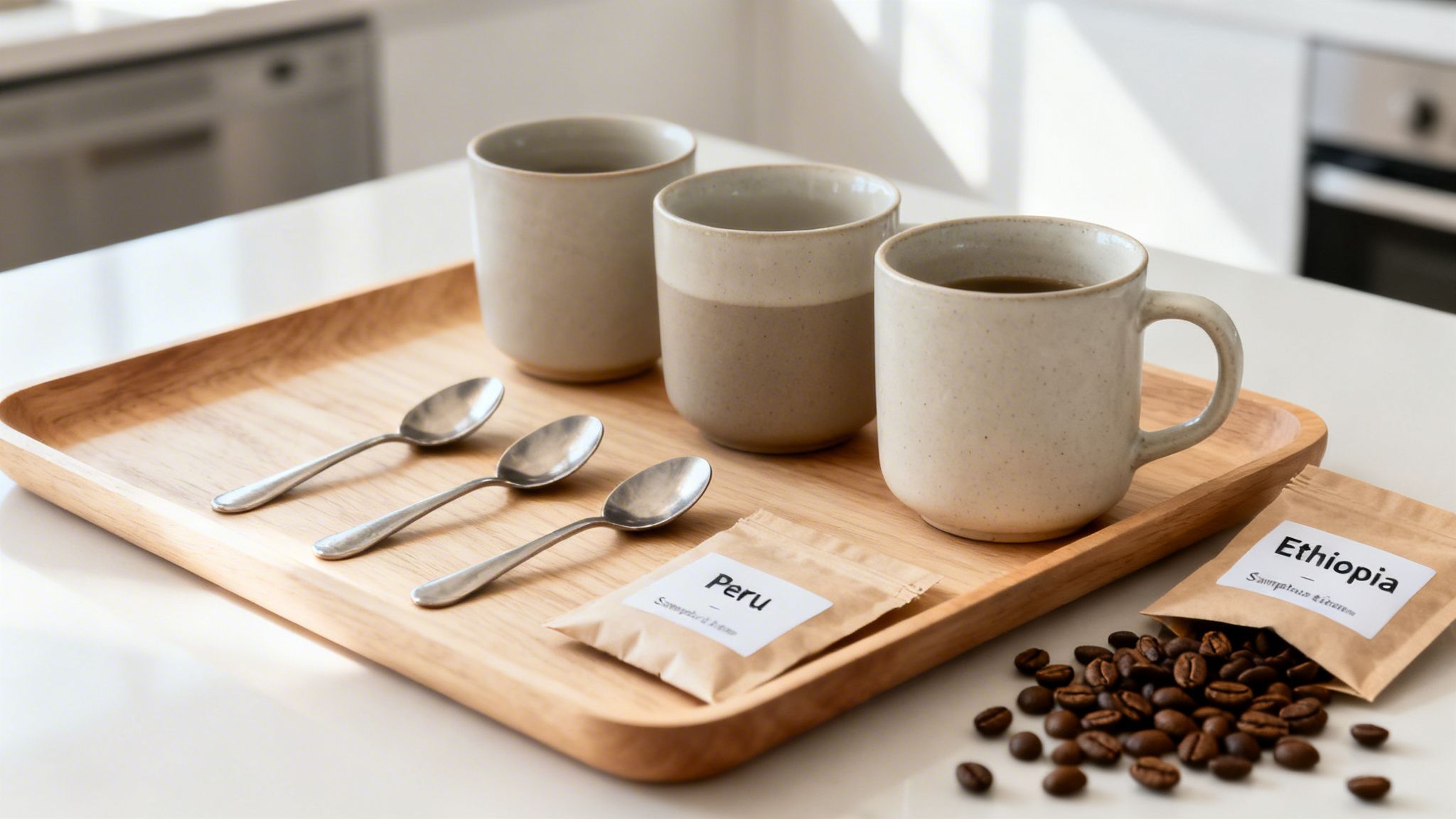
The best way to learn, without a doubt, is by comparing different coffees side-by-side. It’s in those direct comparisons that the subtle differences in aroma, body, and acidity really start to pop. To make it easy, we’ve put together the perfect starting point. Click the links below and make a purchase today!
Your First Step into a Wider World
Our sampler packs are curated specifically for discovery. They give you the chance to taste coffees from different growing regions right next to each other, which is the best hands-on lesson you can get.
-
Whole Bean Sampler: For those who love the ritual of grinding fresh, our Whole Bean Sampler Pack lets you compare three distinct single-origin coffees. To get the most out of every bag, check out our guide on how to store coffee beans properly.
-
Coffee Pod Sampler: Prefer convenience? Our Coffee Pod Sampler Pack delivers the same diverse tasting experience with the push-button ease of your favorite machine.
Tasting different coffees at once is your passport to understanding your own palate. It’s how you move from just drinking coffee to truly experiencing it.
This whole practice has grown from a simple merchant's tool into a global standard that connects farmers, roasters, and coffee lovers everywhere. The standardized process ensures that quality is communicated clearly across the entire supply chain, which helps everyone make better choices about the beans they buy and enjoy. You can explore more about the global evolution of coffee cupping and its impact.
Embrace the coffee culture and complete your setup with our branded ceramic coffee mugs and comfortable apparel. To get started with a special discount and more exclusive content, sign up for our e-mail list today. Let us be your partner in discovery.
Your Coffee Cupping Questions Answered
Got a few more questions rattling around? Perfect. Let's tackle some of the most common ones so you can feel confident diving into the world of tasting.
Cupping vs. Brewing: What's the Real Difference?
It all boils down to intent. When you brew a pot of coffee—whether it’s a pour-over, a French press, or your trusty drip machine—your goal is simple: make a delicious drink to enjoy.
Cupping, on the other hand, is a disciplined sensory analysis. Think of it less like cooking and more like a science experiment. It follows a strict protocol with a specific coffee-to-water ratio to strip away the variables of different brewing methods. This lets the coffee's true, unvarnished character shine through, putting every bean on an equal playing field.
Do I Need a Lab Full of Gear to Cup Coffee at Home?
Absolutely not! While the pros have their specialized bowls and spoons, you can get started with everyday kitchen items.
All you really need are a few matching mugs, a tablespoon (or even a soup spoon), hot water, and some great coffee. To get the most out of your first tasting, we highly recommend grabbing one of our Sampler Packs. Comparing a few different origins side-by-side is where the magic really happens. Click the link to make a purchase and start your journey.
What Does a Coffee's Score Actually Tell Me?
Professional tasters use a 100-point scale to objectively rate a coffee's quality. For a coffee to earn the coveted "specialty grade" label, it must score 80 points or higher.
This final number isn't arbitrary; it's a composite score reflecting a coffee's performance across key categories like aroma, flavor, acidity, and balance. It's the industry's universal language for quality, and it’s a standard we live by. We cup every single coffee we source to make sure it delivers the exceptional experience you're looking for. This is our guarantee when you make a purchase from our store.
Ready to put that theory into practice? Your next favorite coffee is waiting to be discovered. Beans Without Borders has curated a collection of incredible single-origin beans and sampler packs that are perfect for your first tasting adventure. Don't forget to check out our selection of the best loose leaf tea online and our branded coffee culture apparel, including shirts, t-shirts, hoodies, hats, and mugs.
Explore our coffees and start your journey today at https://www.beanswithoutborders.com. And be sure to sign up for our e-mail list for exclusive offers