

What Is Direct Trade Coffee? A Guide to More Ethical Sourcing
Think of it like buying your favorite vegetables at a local farmers' market instead of a giant grocery store. You get to meet the person who grew them, understand their process, and know exactly where your food comes from. That’s the simple, powerful idea behind direct trade coffee.
It's a model that cuts out the long, confusing chain of middlemen, connecting coffee roasters like us directly with the farmers who cultivate the beans. This isn't just a transaction; it's a real partnership.
Defining Direct Trade Coffee
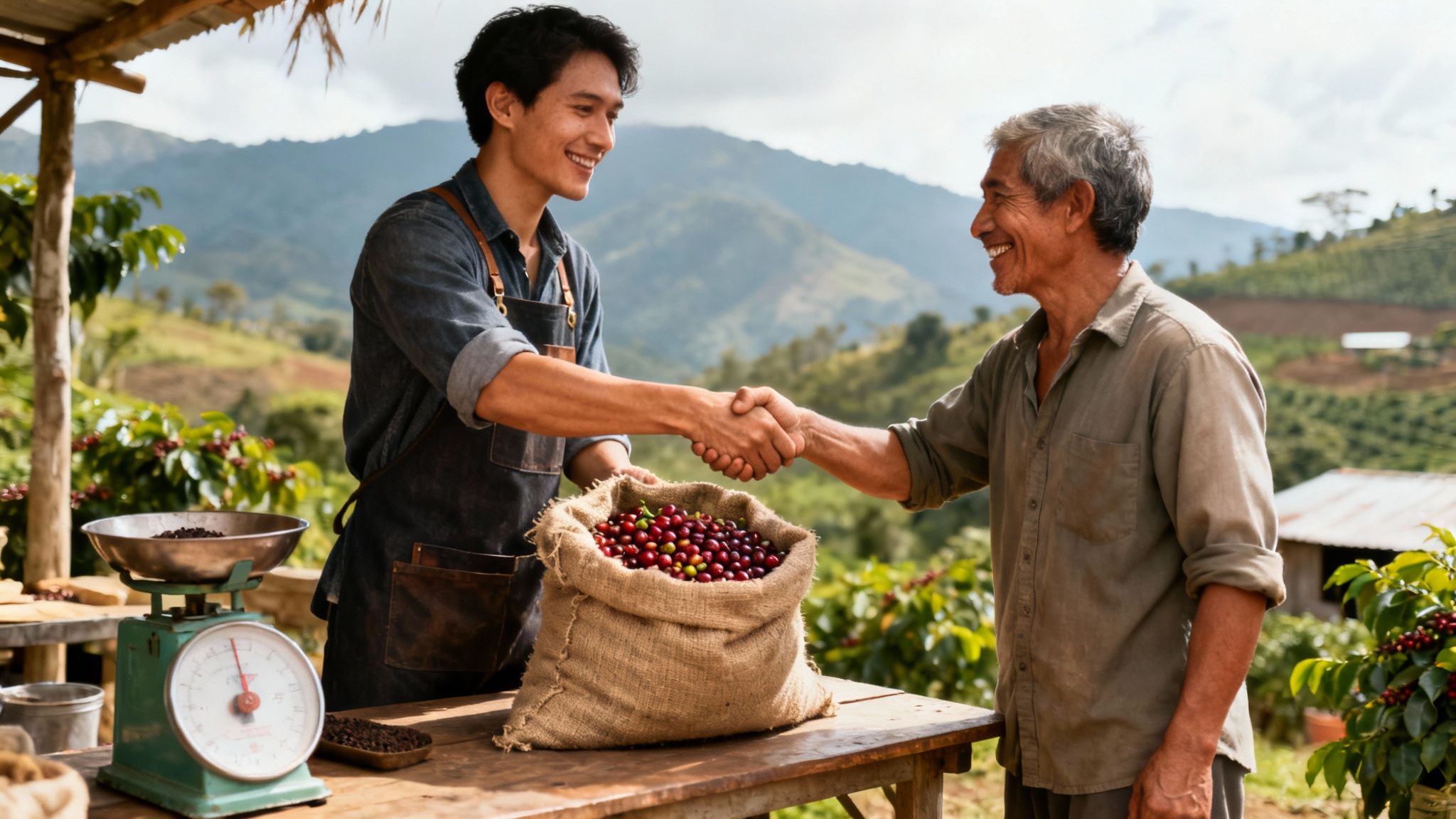
So, what is direct trade coffee at its core? It's a sourcing philosophy centered on building one-on-one relationships. Instead of navigating the anonymous, often impersonal commodity market, roasters like Beans Without Borders travel to coffee-growing regions to establish genuine connections with individual farmers and their cooperatives.
This changes everything. The process shifts from a faceless purchase to a true collaboration built on mutual respect, open dialogue, and a shared passion for creating incredible coffee. It’s less about just buying beans and more about working together, year after year, to make them even better.
Beyond a Simple Transaction
Conventional coffee trading often treats beans like any other commodity, bought and sold in bulk with little regard for the people who grew them. Direct trade flips that script entirely. The focus moves from sheer volume to the unique story, effort, and quality that goes into each harvest.
This model gives farmers a voice and a seat at the negotiating table, empowering them to earn prices that truly reflect their hard work and expertise. It’s built on a foundation of a few key ideas.
To put it simply, here are the fundamentals of the direct trade model.
Direct Trade Coffee at a Glance
| Core Principle | What It Means for You & Farmers |
|---|---|
| Direct Communication | Roasters and farmers talk openly, sharing feedback on everything from cultivation to processing methods. |
| Premium Payments | Farmers earn significantly more than the standard market price, rewarding them for their quality and hard work. |
| Complete Transparency | The supply chain is short and clear. You know exactly which farm your coffee came from and who grew it. |
| Long-Term Relationships | These aren't one-off deals. Lasting partnerships give farmers financial stability and roasters a reliable source of amazing coffee. |
This clear, direct link creates a powerful cycle of improvement. When farmers are paid fairly for their best crops, they can reinvest in their farms, support their families, and uplift their communities—which, in turn, leads to even more exceptional coffee down the line.
How Direct Trade Delivers Exceptional Coffee
For anyone who loves a great cup of coffee, the payoff is immediate and delicious. Because these relationships are all about quality, direct trade opens the door to incredible micro-lot and single-origin coffees you just can’t find anywhere else. These are the coffees that truly express a sense of place, bursting with the distinct flavors of their specific origins.
If you want to dive deeper into what makes these coffees so unique, check out our guide on what is single-origin coffee.
When you brew a cup of our direct trade coffee from Peru or Ethiopia, you’re tasting more than just a premium beverage. You're becoming part of a more sustainable, equitable story in the world of coffee—one that celebrates craftsmanship, supports communities, and honors the incredible people who make our morning ritual possible.
The Human Story Behind Your Coffee
Every bag of coffee tells a story, but with direct trade, we get to read every single chapter. It turns what was once an anonymous commodity into a real, tangible connection, linking your morning ritual directly to the people and places that made it possible. This isn't just a different way of doing business; it’s about building relationships from the ground up.
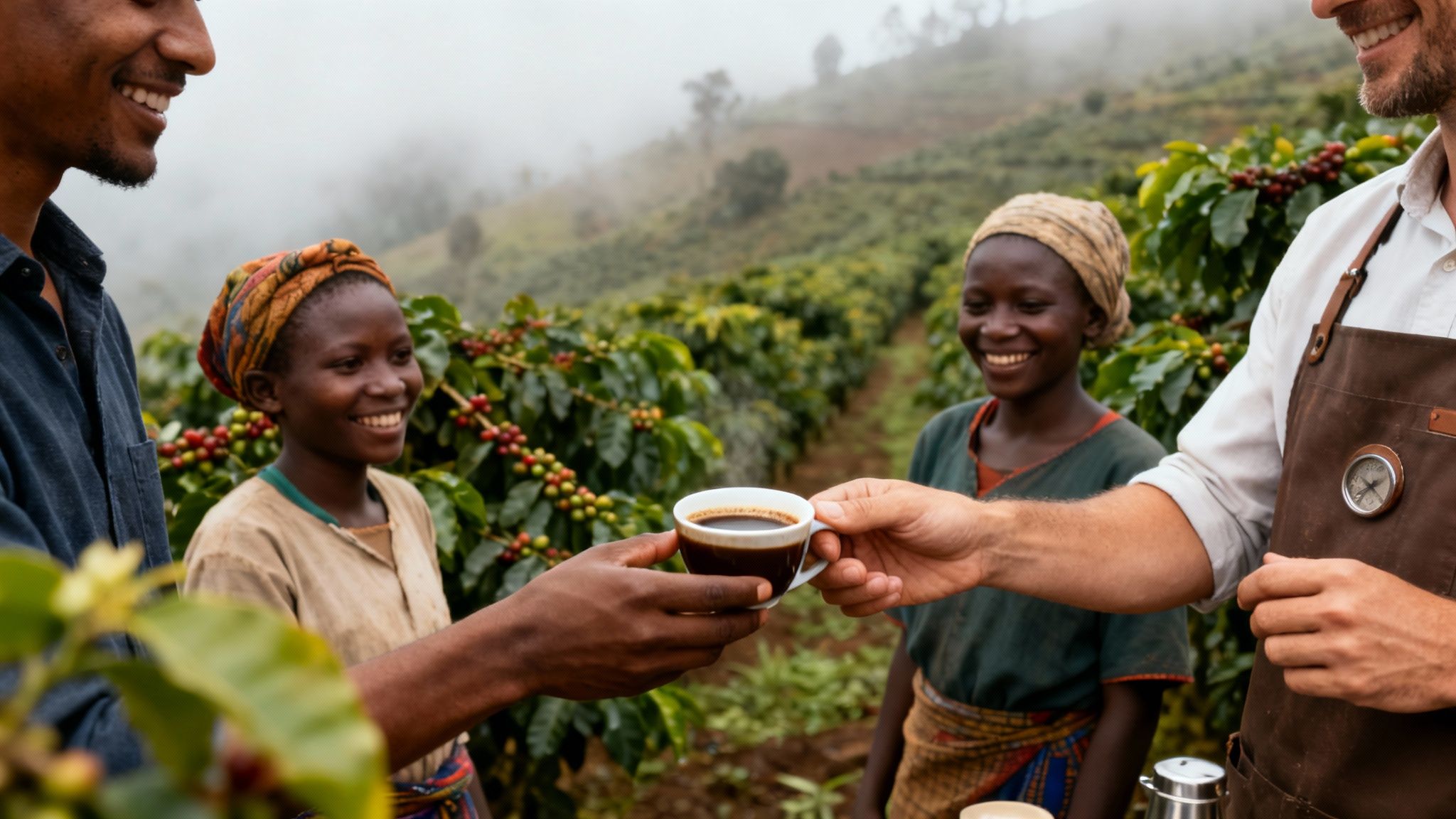
Think about a journey to a partner farm, maybe one nestled in the lush, rolling mountains of Uganda. Instead of just placing an order from a desk thousands of miles away, we're actually there, walking through the rows of coffee trees. We feel the rich soil under our feet and see the vibrant red cherries hanging heavy on the branches, ready for harvest. This is where direct trade really comes to life.
From Farm Visit to Lasting Partnership
These visits are our chance to meet the farming families, many of whom have cultivated this same land for generations. We sit down together, share stories, and learn about their biggest challenges and recent triumphs. It builds a genuine rapport that goes way beyond a simple buyer-seller transaction. Honestly, it's a powerful experience that completely removes the anonymity from the supply chain.
One of the most important moments is when we share a freshly brewed cup right there at the source. We call this cupping—it's a tasting session where we evaluate the coffee’s aroma, flavor, and quality side-by-side with the farmers. It becomes a collaborative effort to pinpoint what makes their coffee so special and figure out how we can keep making it even better.
This hands-on connection is also how we agree on a price that truly honors the exceptional care and hard work poured into every single bean. The price is based on quality and mutual respect, not the unpredictable whims of a distant stock market.
The Power of a Name and a Place
When you know the name of the farmer and the specific cooperative where your coffee was grown, your daily cup takes on a whole new meaning. All of a sudden, it’s not just a caffeine boost; it’s a tangible link to a community on the other side of the world.
This direct line of sight from farm to roastery ensures complete accountability. We see firsthand the sustainable practices being used, the investments being made in the community, and the immense pride the farmers take in their craft.
This level of transparency is at the very core of what we do at Beans Without Borders. When you pick up a bag of our single-origin Bali coffee, you're not just buying coffee; you're choosing a product with a clear, respectful story you can feel great about.
Connecting You to the Source
Knowing the origin story enriches the entire coffee experience. It helps you appreciate the subtle flavor notes unique to each region—notes shaped by the local climate, soil, and processing methods. That's why we’re so passionate about sharing these stories with you.
We believe that understanding where your coffee comes from is just as important as knowing how to brew it. If you want to dive deeper into the diverse characteristics of these incredible places, you can learn more about the unique coffee beans from around the world in our detailed guide.
Ultimately, choosing direct trade transforms a simple purchase into a meaningful act of support. It’s an investment in quality, in sustainability, and in the people who are the true artisans of the coffee world. That personal connection is the promise we make with every partner farm and every bag of coffee we share.
Direct Trade vs. Fair Trade: Unpacking the Differences
Many coffee lovers hear "Direct Trade" and "Fair Trade" and assume they're the same thing. While they both spring from a desire to create a better, more equitable system for coffee farmers, they are fundamentally different approaches. Knowing how they work helps you choose coffees that truly line up with what you care about.
Think of Fair Trade as a crucial safety net. It's a formal, third-party certification system designed to protect farmers from the wild price swings of the global coffee market. By setting a minimum price, it ensures that farmers, especially those organized in cooperatives, get a stable baseline income, shielding them from disastrous market crashes.
Direct Trade, on the other hand, is all about the relationship. It’s not a formal certification but a sourcing model built on a direct connection between a roaster (like us at Beans Without Borders) and an individual farmer or a specific estate. The goal here is to pay significant premiums for exceptional quality, with prices that often soar far above both the standard commodity price and the Fair Trade minimum.
Core Philosophy and Structure
The real split between the two comes down to their core philosophy. Fair Trade offers a standardized, system-wide solution that provides broad economic stability for large groups of farmers. It's a structured system with clear rules and oversight, which is vital for providing that widespread support.
Direct Trade is more personal and decentralized. It's built on individual partnerships where the quality of the coffee is the primary driver of the price. This flexibility and direct negotiation transform the supply chain from a simple transaction into a genuine collaboration between the grower and the roaster.
This model really started gaining traction in the early 2000s, evolving from the fair trade movement. It represents a major shift, cutting out the traditional middlemen to connect roasters directly with farmers in incredible coffee-growing regions like Ethiopia, Uganda, and Peru. This approach allows roasters to pay premiums—often 20-50% above commodity prices—for truly exceptional lots, which is how we get those amazing single-origin coffees.
Pricing Models and Quality Incentives
Here’s where you can see the biggest difference. Fair Trade sets a price floor to guarantee a stable income, an incredibly powerful tool in the fight against poverty. But that price isn't necessarily tied to the quality of a specific batch of coffee. A coffee that scores 84 points on a quality scale might fetch the same base price as one that scores a much higher 88 points.
With Direct Trade, the price is almost entirely based on quality. A roaster might taste a coffee right there on the farm and decide its incredible flavor profile is worth paying an extra $2 per pound over the going market rate. This creates a fantastic incentive for farmers to invest in better processing equipment and fine-tune their cultivation methods, because higher quality directly translates to a higher income.
For a deeper dive into the Fair Trade system, you can read our detailed guide on what is fair trade coffee.
Comparing Coffee Sourcing Models
To make these distinctions clearer, let's look at them side-by-side. This table breaks down how Direct Trade, Fair Trade, and the conventional coffee market stack up against each other.
| Feature | Direct Trade | Fair Trade | Conventional |
|---|---|---|---|
| Primary Goal | Quality and relationships | Economic stability and fairness | Lowest possible price |
| Pricing | Quality-based premiums, often well above market rates | Minimum price floor + social premium | Driven by global commodity market (C-price) |
| Structure | Relationship-based, no central certification | Third-party certification system | Complex chain with many intermediaries |
| Focus | Individual farms or small estates | Farmer cooperatives and associations | Large-scale, bulk commodity lots |
| Transparency | High; direct communication and farm visits | Moderate; ensured by certification standards | Low; origin is often untraceable |
| Quality Incentive | Very high; better quality means much higher pay | Lower; price is not directly tied to cup score | Minimal; focused on volume, not quality |
As you can see, each model serves a different purpose within the vast world of coffee.
Ultimately, this isn't about picking a "winner." Both models bring something incredibly valuable to the industry. Fair Trade provides an essential safety net for thousands of farmers, while Direct Trade rewards excellence and fosters deep, collaborative partnerships that push quality forward.
Together, they give coffee lovers like you different, but equally valid, ways to support a more sustainable and equitable coffee world.
Why Direct Trade Benefits Everyone Involved
The direct trade model is about so much more than just a transaction; it creates a powerful ripple effect that builds a healthier, more sustainable coffee world. It’s a genuine partnership where everyone—from the farmer growing the coffee cherries to the person enjoying the final brew—comes out ahead. When you choose direct trade, you're making a conscious decision to champion quality, empower communities, and elevate the entire coffee experience.
For farmers, the impact can be life-changing. Direct trade means a higher, more stable income and the respect they deserve as skilled artisans. These aren't one-off deals; they're long-term relationships that give producers the financial security to invest in their farms, their families, and their communities. Think better equipment, sustainable farming practices, and even funding for local schools and healthcare. It’s about building lasting prosperity, not just chasing a short-term profit.
For you, the coffee lover, the benefits are just as real. You get your hands on unique, incredibly fresh micro-lot coffees with flavor profiles you simply won't find on a supermarket shelf.
A Cycle of Mutual Success
The real magic of direct trade lies in how everything is connected. When farmers are paid a premium for exceptional quality, they have every reason to keep refining their growing and processing methods. This dedication leads to even better-tasting coffee, which in turn delights customers and strengthens the roaster's reputation.
It's a virtuous cycle that keeps itself going and constantly improves. Success is shared, which fuels innovation and resilience all the way from the farm to your cup.
When you choose direct trade, you're not just buying coffee; you're investing in a more transparent and respectful supply chain that values people and quality above all else. It's a vote for a better way of doing business.
The financial boost for farming communities is undeniable. Premiums paid directly to farmers can add an extra $1-2 per pound to their bottom line, lifting entire communities. Take Peru, for example, where direct partnerships established since 2005 have helped boost farm yields by 25% by sharing agricultural knowledge. It's a perfect illustration of how collaboration leads to prosperity. You can dig deeper into these market dynamics in this insightful coffee industry report.
The Consumer Advantage
Beyond the warm feeling of doing good, direct trade delivers a truly superior coffee experience. Complete traceability means you know exactly where your coffee comes from—the specific region, the farm, and often even the farmer's name. This transparency is your guarantee of authenticity and lets you connect with the story behind what you're drinking.
Here’s what you get out of it:
- Exceptional Flavor: Access to exclusive, high-scoring micro-lots with complex and unique taste profiles.
- Peak Freshness: A shorter supply chain means the beans travel from the farm to the roaster, and then to you, much faster.
- Total Transparency: You can feel confident knowing the story behind your coffee and the positive impact your purchase makes.
- Ethical Peace of Mind: You're supporting a system that pays farmers fairly and encourages sustainable agriculture.
This diagram helps break down the core ideas behind the relationship-focused Direct Trade model and the certification-based Fair Trade system.
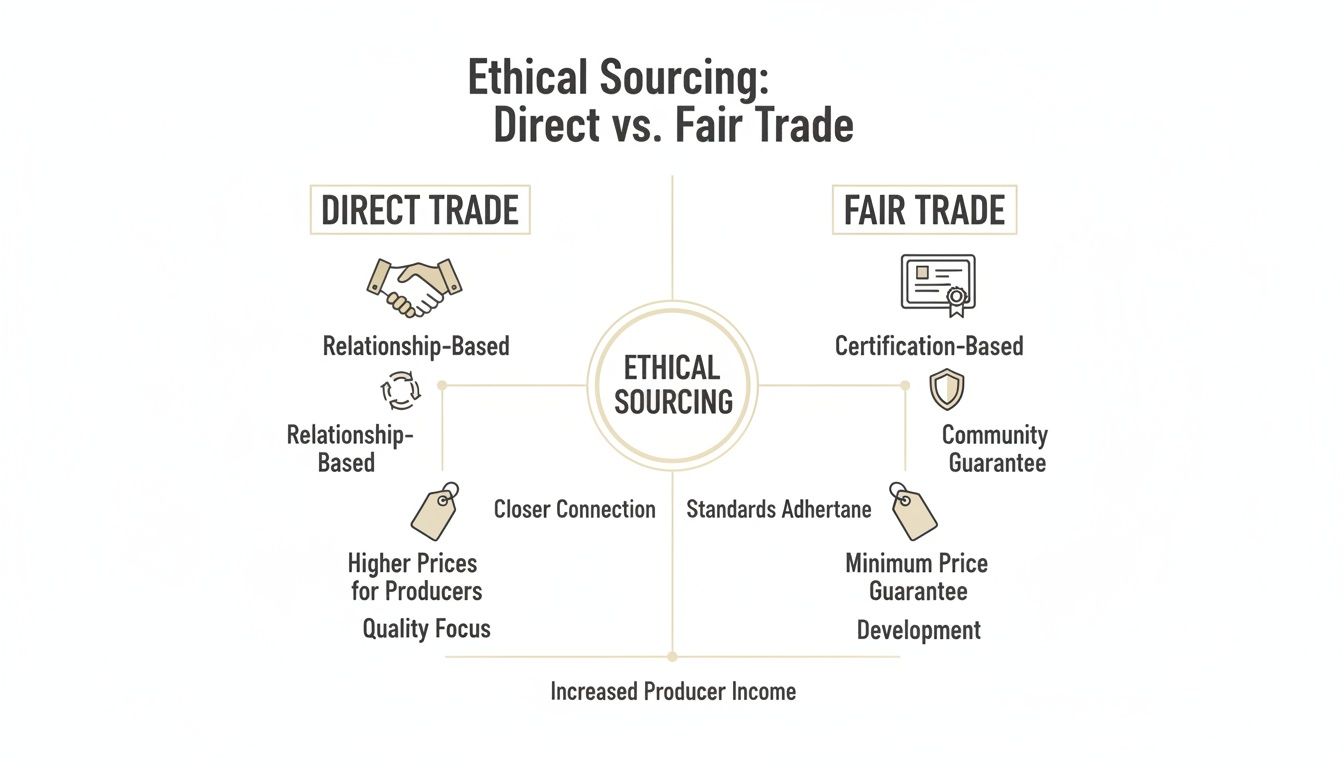
As you can see, Direct Trade hinges on quality-based premiums and direct relationships, while Fair Trade provides a crucial price safety net through a certified system. Both are working toward a more equitable coffee world, just from different angles. When you choose our single-origin Peruvian coffee beans, you're stepping directly into this beneficial cycle, ensuring that every cup you brew supports a healthier, fairer coffee ecosystem for everyone involved.
How to Find and Support Real Direct Trade Coffee
Since "direct trade" isn't a regulated term like Fair Trade, spotting the real deal requires a little detective work. There's no official stamp of approval, which puts the responsibility on roasters to be radically transparent and on us, the coffee drinkers, to look beyond the label.
But don't worry, we'll give you the tools to identify genuine partnerships and make choices you can feel great about.
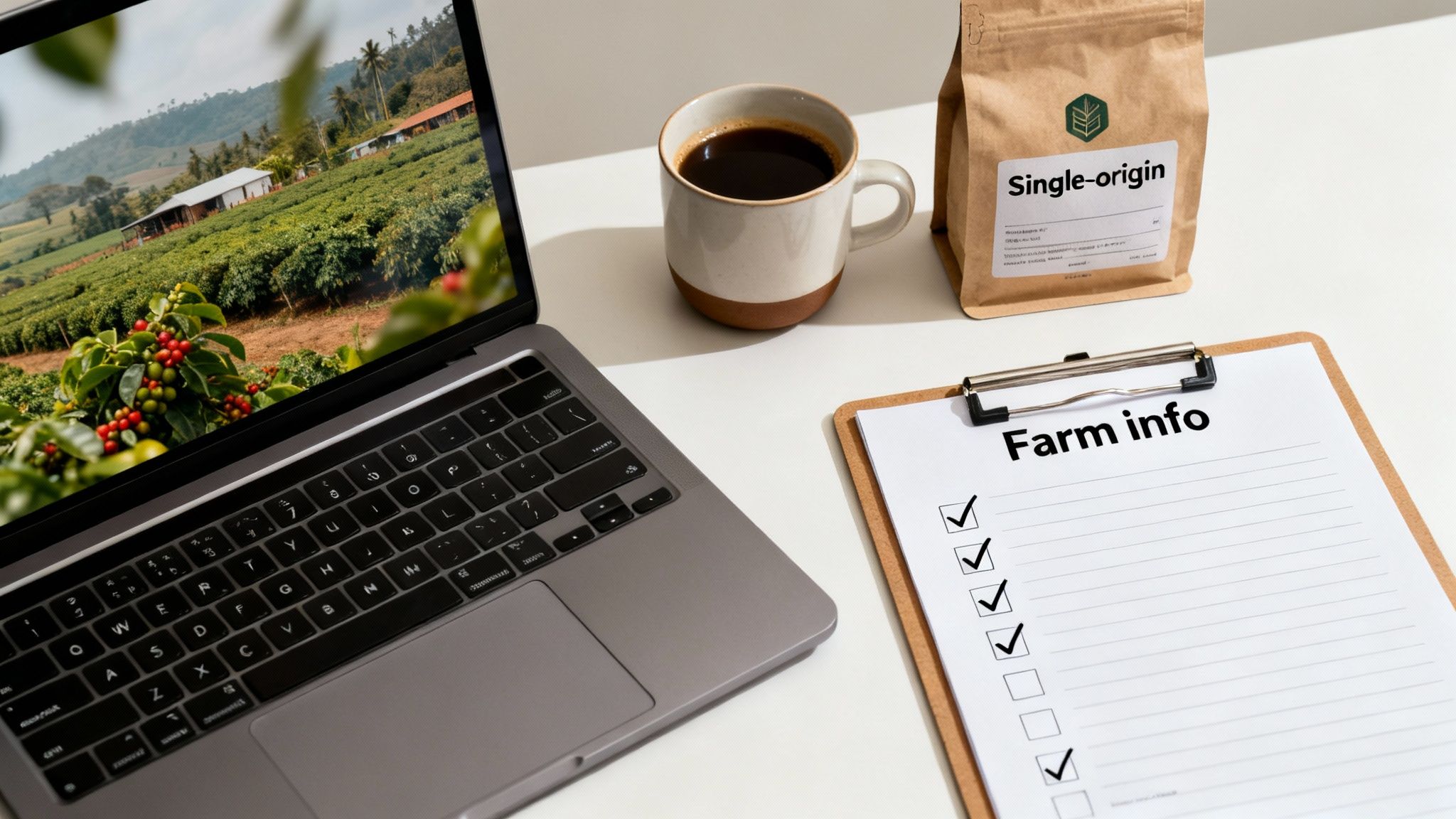
The key to supporting authentic direct trade is to look for roasters who tell the whole story. Vague marketing claims like "ethically sourced" just don't cut it. A roaster who is truly invested in direct trade will be excited to share the details because those relationships are a massive point of pride.
Look for Radical Transparency
Genuine direct trade is built on storytelling and evidence, not a keyword slapped on a package. When you’re browsing for new beans, think of yourself as a coffee detective. You're looking for clues that prove a real, meaningful connection exists between the person who roasted your coffee and the person who grew it.
This commitment to cutting out middlemen like exporters and brokers ensures farmers get a much fairer slice of the pie—often 70-90% of the retail value compared to a meager 20-30% in conventional trade. To put that in perspective, direct trade programs in Mexico since 2012 increased farmer premiums by 40%, helping fund schools and equipment for over 10,000 families. You can discover more insights about the global coffee trade and its impact.
Your Direct Trade Checklist
When you're checking out a roaster, ask yourself if they provide specific, verifiable information. The more details they share, the more confident you can be in their claims.
Here’s a practical checklist to help you identify the real deal:
- Specific Farm Information: Do they name the farm, estate, or cooperative? Can they tell you the exact region and altitude where the coffee was grown?
- Producer Profiles: Do they share the farmer's name and their story? A real partnership is about people, and a roaster should be eager to introduce you to their partners.
- Sourcing Trip Evidence: Look for photos, videos, or blog posts from their visits to the farms. This shows they are physically present and building actual relationships, not just sending emails.
- Pricing Honesty: While not always public, some roasters are open about the premiums they pay. Honesty about paying well above the commodity market price is a very strong sign of commitment.
- Detailed Coffee Descriptions: Roasters who know their sources can provide rich details about processing methods (like washed, natural, or honey-processed) and specific flavor notes. That level of detail only comes from close collaboration.
For example, on our product pages, you'll find clear information about the growing region and characteristics that make each coffee unique. This is what separates a true single-origin from a generic blend. If you're curious about what that means, you can learn more about single-origin coffee vs blends in our guide.
Key Takeaway: The spirit of direct trade coffee lives in its traceability. If you can trace your beans back to a specific place and a specific person, you're likely supporting a system that truly values transparency and fairness.
Using this checklist, you can confidently navigate the world of specialty coffee and sidestep the roasters who use "direct trade" as just another marketing buzzword. Your choice becomes a powerful act of support for businesses dedicated to building a more equitable—and delicious—coffee world, one relationship at a time.
Ready to Try It for Yourself?
You've learned all about what makes direct trade special—the relationships, the quality, the fairness. Now comes the best part: experiencing it firsthand. Choosing to buy direct trade coffee isn’t just about making an ethical choice; it's about tasting a better cup of coffee.
With every sip, you're not just enjoying a fantastic brew. You're part of a story that connects you straight to the hardworking farmers who grew those beans.
Let's Find Your New Favorite Coffee
We get it—the world of specialty coffee can feel a little overwhelming. But we’re here to help you find a coffee that not only tastes incredible but also feels good to buy. Think of us as your personal coffee guide.
- For the Seasoned Coffee Lover: If you appreciate the nuance in a great cup, you have to try our single-origin Ethiopian Yirgacheffe coffee beans. Its bright, floral, and almost tea-like notes are absolutely stunning in a pour-over, where every delicate flavor gets a chance to stand out.
- For the Curious Newcomer: Not sure where to begin? Our curated Coffee Sampler Packs are your perfect starting point. It’s like a world tour in a box, letting you taste different origins side-by-side to discover what you truly love.
- For Ultimate Convenience: We all have those mornings. For a quick, quality cup that doesn’t cut corners, our direct trade Coffee Pods deliver rich, satisfying flavor in seconds.
Remember, every bag you buy helps sustain this better model of trade, putting more money directly into the pockets of the farmers who deserve it.
It's More Than Just a Drink
We're not just selling coffee; we're trying to build a community around it. A community that cares about where their coffee comes from and the people who grow it.
Want to get closer to the source? Sign up for our email list. You’ll get stories from our partner farms, special offers, and a 10% welcome discount on your first order. It’s the best way to stay in the loop.
And if you want to wear your values on your sleeve (literally), check out our gear. From super-soft hoodies and t-shirts to classic ceramic coffee mugs, you can help spread the word about a better way to buy coffee.
Tea drinkers, we haven't forgotten you! Our selection of the best loose leaf tea online is sourced with that very same commitment to transparency and quality.
Your journey into the world of direct trade starts right here, with one simple choice. Explore our collection today and taste the difference a real relationship makes.
Got Questions? Let's Talk Direct Trade
As you dive deeper into the world of specialty coffee, you're bound to have some questions about direct trade. That's a good thing! It means you're thinking critically about where your coffee comes from. Let's tackle a few of the most common ones I hear.
Is Direct Trade Coffee Automatically Organic?
That's a great question, and the answer isn't a simple yes or no. While direct trade and organic practices often overlap, one doesn't guarantee the other.
Here’s the thing: the close relationships forged in direct trade naturally push farmers toward more sustainable, environmentally sound practices. Why? Because those methods—like nurturing soil health and avoiding harsh chemicals—almost always produce a higher quality, better-tasting coffee cherry. Better beans mean a better price for the farmer.
Many of these producers are farming organically in everything but name. They just haven't gone through the formal certification process, which can be incredibly expensive and bureaucratic, especially for a small-scale farm. It’s often a case of shared values and a commitment to quality trumping an official label.
How Can I Actually Verify a Roaster's Claims?
Since "direct trade" isn't a third-party certification with a neat little logo, the burden of proof falls on the roaster. And honestly, it should. The best way to check if a roaster's claims are legit is to look for radical transparency. Vague marketing fluff just won't cut it.
Genuine direct trade is all about storytelling and evidence, not just a sticker on a bag. Roasters who are truly committed to this model will be excited to share every last detail of their sourcing partnerships.
Look for these signs of a real-deal direct trade relationship:
- They name the specific farm, washing station, or cooperative.
- They share the farmer's story and tell you about their life and work.
- You can find photos and videos of the roaster visiting the farm.
- They're open about their pricing models and the partnerships they've built.
When a roaster is proud to show you the receipts, you know they're walking the walk.
Does Direct Trade Mean I'll Pay More for My Coffee?
Compared to the cans of commodity coffee at the supermarket, yes, direct trade coffee often has a higher price tag. But it’s not just more expensive; it offers a whole lot more value. That price reflects the true cost of producing an incredible coffee in a way that’s fair and sustainable for everyone involved.
Try to think of it less as an expense and more as an investment. You're investing in a living wage for a farmer and their family. You're supporting agricultural practices that protect the planet for future generations. And, of course, you're getting an absolutely outstanding cup of coffee with a story you can feel good about. It's about paying what's fair for a product that benefits the entire chain, from seed to cup.
At Beans Without Borders, every coffee we source is a direct result of these powerful, personal relationships. We believe you can taste the difference that connection makes.
Ready to taste the story behind your coffee? Explore our complete collection of direct trade coffees and find your new favorite today.