

Your Ultimate Guide to the Perfect Chemex Grind Size
If you’ve ever wondered what makes Chemex coffee taste so uniquely clean and nuanced, the secret often comes down to one thing: getting the grind size just right. The sweet spot is a medium-coarse grind, which should look a lot like coarse sea salt or raw sugar crystals.
Get it wrong, and you'll know immediately. A grind that’s too fine will choke the filter, trapping the water for too long and leaving you with a bitter, over-extracted brew. Go too coarse, and the water will gush right through, resulting in a sour, weak, and underdeveloped cup. Mastering this single variable is your first and most important step toward a flawless Chemex. To achieve this perfection, you need the right beans, and we encourage you to explore our selection and make a purchase today.
The Secret to a Flawless Chemex Brew
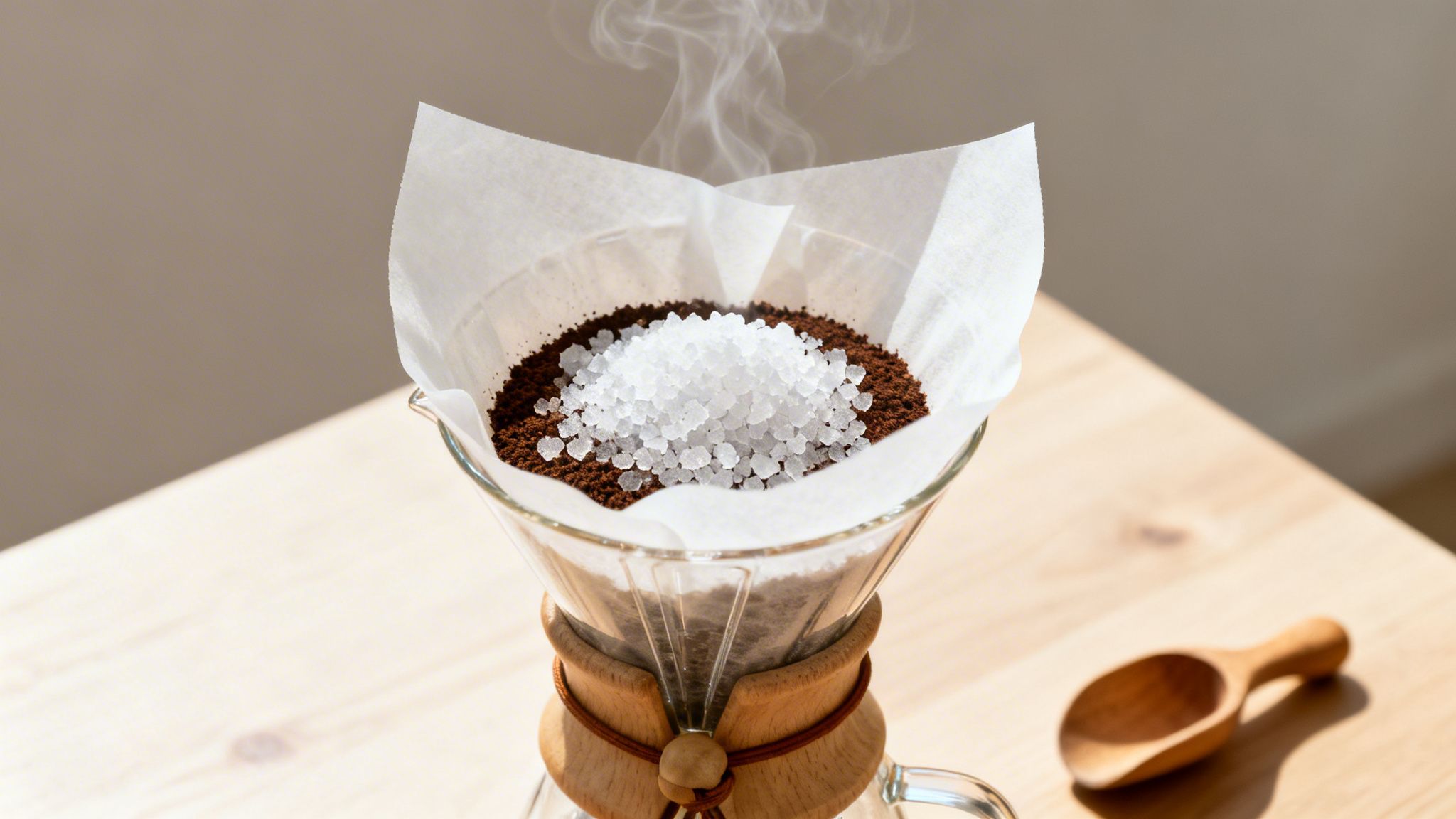
Think of your coffee grounds as a gatekeeper for flavor. The size of those grounds directly dictates how long hot water gets to spend mingling with them—a process we call extraction. Striking the perfect balance here is what allows you to taste all the subtle, vibrant notes locked inside high-quality beans, turning a good cup of coffee into an exceptional one.
The Chemex is a classic pour-over brewer, invented back in 1941 by chemist Dr. Peter Schlumbohm. Pour-over is a method where hot water is manually poured over a bed of coffee grounds in a filter. This is different from a French press, where coffee grounds steep directly in water, or automatic drip machines that control the water flow for you. The iconic hourglass shape and, most importantly, the special bonded paper filters—which are 20-30% heavier than typical coffee filters—are built to remove oils and fine particles (sediment).
This unique, thick filter is precisely why that medium-coarse grind is so crucial. It’s coarse enough to prevent the filter from clogging but fine enough to allow for a slow, even flow of water that extracts all the good stuff.
Why This Grind Size Matters
Ultimately, the goal is to achieve a balanced extraction. You want the water to pull out all the desirable sugars and bright acids from the coffee without hanging around long enough to start pulling out the bitter compounds. The right grind size creates the perfect obstacle course for the water, ensuring it flows through at just the right pace.
The beauty of the Chemex lies in its simplicity and the clarity of the coffee it produces. Nailing the grind size is the first and most critical step in honoring the coffee's origin and the roaster's craft.
This ideal consistency helps you hit the perfect brew time, which for a Chemex is usually somewhere between four and five minutes. That timing is what unlocks the bright, fruity notes in a single-origin Ethiopian bean or the rich, chocolatey depth of a coffee from a South American growing region like Peru. By focusing on this one adjustment, you gain incredible control over the final taste in your cup. We invite you to find the perfect coffee for your Chemex on our site and click to make a purchase.
Chemex Grind Size At a Glance
| Grind Size | Looks Like | Flavor Impact |
|---|---|---|
| Too Fine | Table salt, fine sand | Bitter, muddy, over-extracted. Brew time is too long. |
| Ideal (Medium-Coarse) | Coarse sea salt, raw sugar | Clean, bright, balanced, and complex. Brew time is just right. |
| Too Coarse | Peppercorns, breadcrumbs | Sour, weak, watery, and under-extracted. Brew time is too fast. |
Getting a feel for these visual cues will make dialing in your grinder so much easier.
If you're looking for more guidance on the overall brewing method, our detailed guide on how to make pour-over coffee covers everything from water temperature to pouring technique.
Why Your Grind Size Is Everything
Let's get right to the heart of what makes a great cup of coffee. The whole game is about how hot water interacts with your coffee grounds, and grind size is what controls that interaction. For a Chemex, you're aiming for a medium-coarse grind—this is the sweet spot that unlocks that famously clean, nuanced flavor profile the brewer is known for.
Imagine trying to brew with fine sand versus large pebbles. The sand (a fine grind) would pack down, choking the flow and letting water sit for way too long. The pebbles (a coarse grind) would let water gush right through, barely making contact. A Chemex, with its signature thick paper filter, needs a grind that's right in the middle to get the contact time and flow rate just right.
The Dangers of Under and Over-Extraction
Getting that balance right is what separates a fantastic cup from a frustrating one. It all comes down to avoiding two very common brewing mistakes.
- Under-extraction: This is what happens when your grind is too coarse. The water zips through the grounds too fast to pick up the good stuff—the sugars, the delicate floral notes, the subtle fruitiness. You're left with a cup that just tastes sour, weak, and underdeveloped.
- Over-extraction: Go too fine, and you hit the opposite problem. The water gets stuck in the dense coffee bed, pulling out everything—including the harsh, bitter compounds you don't want. This gives you a brew that’s unpleasantly astringent and hollow.
Mastering the grind is the single biggest step you can take toward brewing with intention, not just luck. It's the difference between a cup that's merely "caffeinated" and one that makes you stop and savor what you're drinking.
Unlocking a Coffee's True Character
Once you get a feel for this, you can start pulling out the specific tasting notes that our roasters worked so hard to cultivate. Those bright, clean citrus notes in our Ethiopian Yirgacheffe really pop when the grind is perfect, but they'll taste unpleasantly sour if the coffee is under-extracted. On the flip side, the deep chocolate and nutty flavors in our Peruvian beans are rich and satisfying—unless they're masked by the harsh bitterness of over-extraction. We highly recommend you purchase a bag and try it yourself.
By dialing in your chemex grind size, you're taking direct control over how your coffee tastes. It truly is the most important dial you can turn for consistently amazing coffee at home. If you want to see how this concept applies to other brewers, we have a complete breakdown on grind size for pourover coffee you can check out.
How to Find Your Perfect Chemex Grind Size
Nailing your Chemex grind size can seem a bit intimidating at first, but it's really just a simple, repeatable process. Think of it less like a chore and more like a satisfying part of your coffee ritual. We're aiming for a medium-coarse consistency, something that looks and feels a lot like coarse kosher salt.
If you have a popular home grinder like the Baratza Encore, starting at a setting of around 20 is a fantastic benchmark. For any other grinder, just keep that "kosher salt" visual in your mind. Once you have that starting point, the real fun begins: brewing, tasting, and making small tweaks.
The Taste-And-Adjust Method
The best part about this process is that your own taste buds are the ultimate judge. After you brew a cup with that initial grind size, take a moment to really taste it. Ask yourself one simple question: is this brew more sour or more bitter? Your answer points you exactly where you need to go next.
- If it tastes sour or acidic: Your grind is too coarse. The water flowed through the coffee bed way too fast, not giving it enough time to pull out all the good stuff. This is called under-extraction. The fix? Adjust your grinder to a finer setting for the next brew.
- If it tastes bitter or unpleasantly dry: Your grind is too fine. The water got stuck in the dense coffee bed for too long, pulling out harsh flavors. This is over-extraction. To fix this, simply adjust your grinder to a coarser setting.
Keep an eye on the clock, too. Your total brew time is a huge clue. For most Chemex recipes, you're aiming for a total brew time of four to five minutes. If your brew finishes in three minutes, you definitely need to grind finer. If it’s dragging on past six minutes, you’ll want to grind coarser.
It’s a straightforward feedback loop: sourness means go finer, bitterness means go coarser.
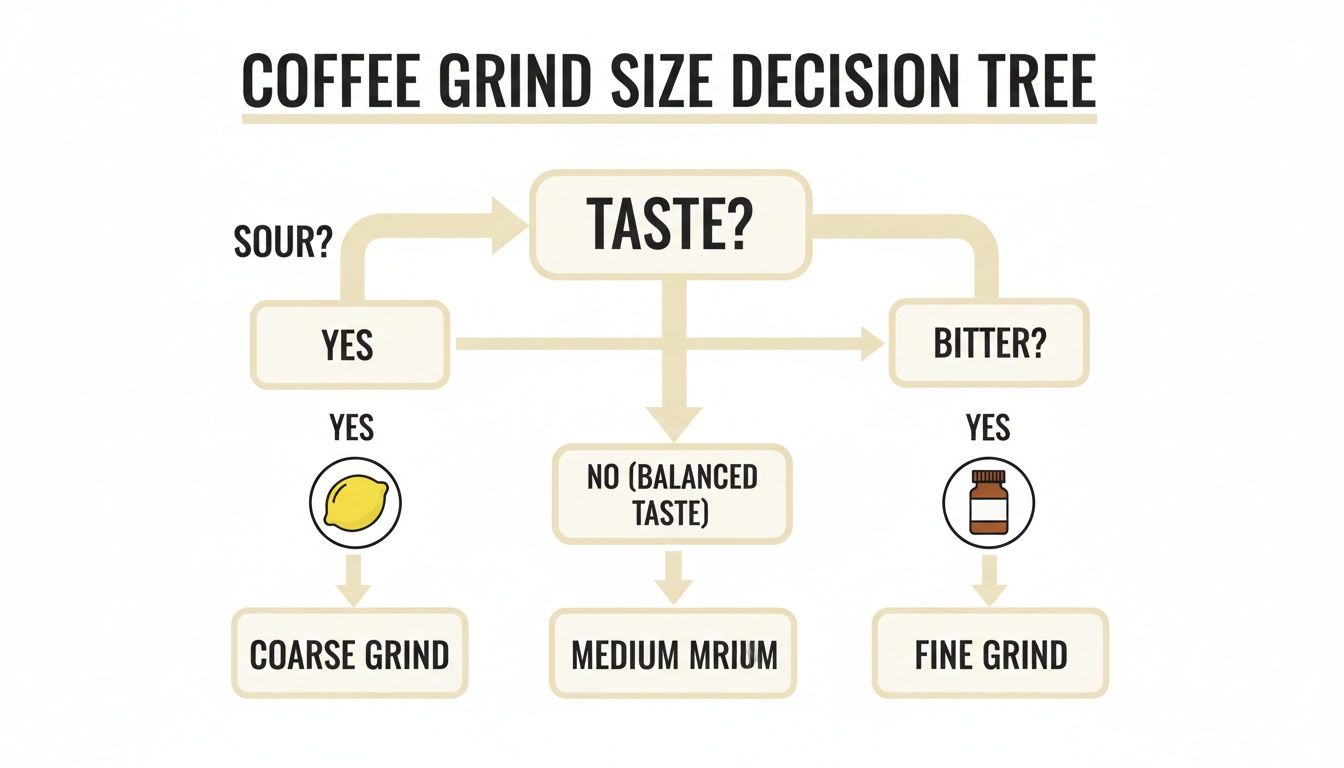
This simple decision tree helps turn what you taste into a clear, actionable step for perfecting your next cup.
"The most important tool you have for dialing in your grind is your own palate. Trust what you taste, and make one small adjustment at a time. This iterative process is the key to unlocking consistently delicious coffee."
Troubleshooting Your Chemex Brew
Sometimes the signals can get a little mixed. This quick guide helps you connect what you're tasting (and seeing on your timer) with the right grind adjustment.
| Problem (Taste And Time) | What It Means | How to Adjust Your Grind |
|---|---|---|
| Sour, acidic, thin body. Brew finishes too fast (under 4 mins). | Under-extracted. Water passed through too quickly. | Go finer. This increases resistance and slows down the brew. |
| Bitter, astringent, dry finish. Brew takes too long (over 5.5 mins). | Over-extracted. Water was in contact with the coffee for too long. | Go coarser. This creates more space for water to flow freely. |
| Both sour and bitter. Often a sign of inconsistent grind size. | Uneven Extraction. Fines over-extract (bitter) while boulders under-extract (sour). | This points to a grinder issue. A quality burr grinder is key. |
| Hollow or weak flavor, but brew time is okay. | Recipe issue. Your coffee-to-water ratio might be off. | Check your dose first. Try adding 1-2g more coffee before changing the grind. |
Remember, taste is always the final decider, but using time as a secondary data point makes the whole process much easier to manage.
This is where a quality burr grinder really shines. Grinder analytics show that Chemex users can achieve 90% even extraction rates with a good burr grinder, a huge jump from the 55% rate often seen with blade grinders. In fact, in SCA-certified trials, medium-coarse grinds scored 15% higher in clarity when brewing single-origin coffees.
If you want to practice your technique, a forgiving and balanced coffee is your best friend. Our Bali Blue beans have a wonderful profile that responds predictably to grind adjustments, making them a perfect training partner. For a deeper dive, check out our complete guide on the medium-coarse coffee grind. We encourage you to click the link and purchase a bag.
Choosing the Right Grinder for Your Chemex
Let's talk about the single most important piece of coffee gear you can own: a quality grinder. Trying to master your Chemex grind size is a losing battle without the right equipment, and trust me, not all grinders are made equal. The big difference you need to know about is between a burr grinder and a blade grinder.
A blade grinder is basically a tiny blender. It has a spinning blade that just smashes beans into little bits and pieces. What you end up with is a chaotic mess of super-fine dust and big, clunky chunks. This inconsistency is the absolute enemy of a good Chemex brew—the dust over-extracts and makes the coffee bitter, while the big chunks under-extract, leaving it sour.
Burr Grinders for Superior Consistency
Now, a burr grinder works more like a pepper mill. It uses two abrasive surfaces (the "burrs") to crush the beans into a consistent, uniform size. This consistency is everything when you're chasing that clean, balanced, and nuanced flavor the Chemex is famous for. When every coffee particle is roughly the same size, they all extract their flavor at about the same rate, saving you from that dreaded mix of sour and bitter notes.
Investing in a quality burr grinder is the single fastest way to level up your entire coffee game at home. It gives you the control and consistency you need to really unlock what's special about your coffee beans.
While a top-notch electric burr grinder is a fantastic investment for any serious coffee lover, there are also some incredible manual hand grinders that offer amazing consistency for a much lower price. The goal is simple: get a grinder that creates uniform particles so you're in complete control of the final brew. If you want to dive deeper into the mechanics, we break it all down in our guide on how to grind coffee beans at home.
The No-Grinder, No-Problem Solution
Not quite ready to pull the trigger on a new grinder? No worries, we've got you covered. We believe brewing incredible coffee at home should be easy and accessible for everyone.
That's why we give you the option to have any of our single-origin or blended coffees ground for you. We'll nail that perfect medium-coarse consistency your Chemex needs.
Just choose the "Chemex Grind" option when you order your favorite Beans Without Borders coffee. We'll take care of the grinding on our commercial-grade equipment right before we ship it out, delivering expert results and total convenience straight to your door. This is the best way to ensure a perfect purchase for your home brewing setup.
A Step-By-Step Recipe for the Perfect Brew
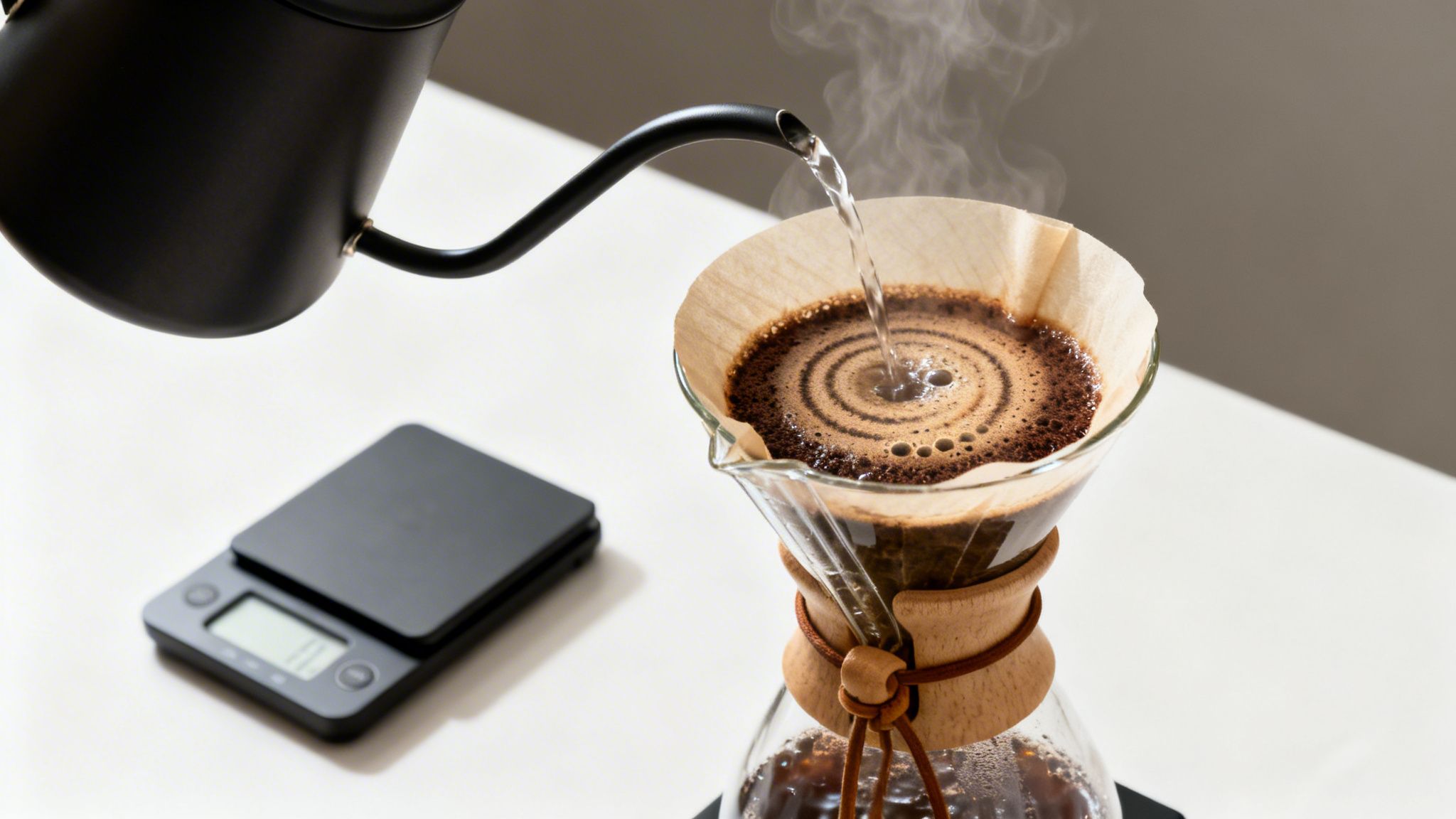
Alright, we've covered the theory behind the ideal Chemex grind size. Now for the fun part: putting it into practice. This is my go-to recipe, a reliable starting point for brewing a consistently fantastic cup. We'll be using a classic 1:16 coffee-to-water ratio, a gold standard in the coffee world that almost always yields a balanced, flavorful brew.
All you need is your Chemex, a filter, a scale, a timer, and of course, some great coffee.
Your Starting Point for a Flawless Cup
This recipe is built around 30 grams of medium-coarse coffee and 500 grams of water, which makes about two small mugs. The beauty of this is you can easily scale it up or down—just keep that 1:16 ratio consistent.
-
Heat Your Water: Bring some good, filtered water to a boil, then take it off the heat and let it sit for 30-45 seconds. You’re aiming for a water temperature right around 200°F (93°C). Any hotter and you risk scorching the delicate coffee grounds.
-
Prepare the Filter: Unfold your Chemex filter and place it in the brewer so the thicker, three-layered side faces the spout. Give it a good rinse with hot water. This step is crucial—it washes away any papery taste and preheats the glass. Don't forget to dump this rinse water out before you start brewing.
-
Add Coffee and Tare Scale: Add your 30g of freshly ground coffee into the filter. A gentle shake will help create a flat, even bed of grounds. Now, place the whole setup on your scale and hit the tare button to zero it out.
-
The Bloom (0:00 - 0:45): Start your timer and slowly pour about 60g of water over the grounds. Your goal is to just wet them all evenly. This is the "bloom," and it’s where the magic starts. You’ll see the coffee bed puff up as it releases trapped CO2, which paves the way for a much better extraction. Just let it sit for 45 seconds.
-
First Pour (0:45 - 1:30): Begin pouring again, this time in a slow, controlled circular motion. Start in the center and spiral your way out. Keep going until your scale reads 250g. Try your best not to pour directly down the sides of the filter.
-
Second Pour (1:30 - 2:30): After the water level drops a bit, start your second pour using the same gentle, circular pattern. Continue until you hit your final weight of 500g. A steady, gentle stream is what you're after here.
-
Drawdown (2:30 - 4:30): Now, just let gravity do its thing. All the water will drip through the coffee bed. The whole show, from the first pour to the last drop, should wrap up somewhere between 4 and 5 minutes.
Mastering a simple, repeatable recipe is your gateway to experimentation. Once you have this technique down, you can confidently tweak one variable at a time—like grind size or water temperature—to perfectly suit different beans.
Once the dripping stops, lift the filter out and give the Chemex a gentle swirl to mix everything together. Pour yourself a cup and enjoy the clean, vibrant coffee you just made.
This technique really comes alive when you use freshly roasted, high-quality beans. To see just how different coffees can taste with this method, we highly recommend our single-origin sampler pack. It's the perfect way to put your new brewing skills to the test and explore a whole world of flavor. We strongly encourage you to click the link and make a purchase.
Time to Taste the World
Getting your Chemex grind size just right isn't just a technical exercise; it's the key that unlocks a whole world of flavor. This is where the real fun begins, letting you finally taste the incredible diversity that different coffee-growing regions have to offer.
Think about it: that perfect medium-coarse grind can bring our single-origin Ugandan beans to life, highlighting their clean, bright notes and delicate floral aromas without a trace of bitterness. Shift that grind slightly, and you could be dialing in the rich, nutty profile of our Mexican coffee, ensuring you get every drop of its full-bodied sweetness and smooth finish. Every origin has a story to tell, and you now have the skills to listen.
Put Your New Skills to the Test
You've done the reading, and now you have the tools to brew a truly exceptional cup. Don't let that knowledge sit on the shelf—it's time to experience the difference for yourself. We also offer the best loose leaf tea online, for those moments when you want a different kind of brew.
Brewing is a journey of discovery. Each new bag of beans is a new map, and your grinder is the compass that guides you to its hidden treasures.
We’ve put together a collection designed for exactly this kind of exploration. Take a look at our single-origin coffees and find a new favorite that will challenge and delight your palate.
And what better way to enjoy that perfectly brewed coffee than in a mug designed for it? Grab one of our beautifully branded ceramic coffee mugs to complete the experience. To show your love for coffee culture, we also offer branded shirts, t-shirts, hats, and hoodies.
Ready to dive deeper into amazing coffee from around the globe? Sign up for our email list today and get 10% off your first order! You’ll get exclusive offers, more brewing tips, and be the first to hear about our newest arrivals. Your flavor journey starts now.
Chemex Grind Size: Your Questions Answered
Getting the hang of your Chemex grind size always brings up a few good questions. Let's walk through some of the most common ones I hear, so you can brew with more confidence and get that delicious cup you're after.
How Does Chemex Grind Compare to French Press or V60?
It all comes down to the filter and how long the water hangs around. A French Press, with its metal filter and long steep time, needs a really coarse grind to keep muddy sediment out of your cup. On the other end, a Hario V60 uses a much thinner paper filter and has a quick drawdown, so it needs a medium-fine grind to get a balanced extraction.
The Chemex is the happy medium. Its famous bonded paper filters are super thick, which means you need a medium-coarse grind. It has to be finer than your French Press setting to pull out all the good flavors, but coarser than a V60 grind to keep the water from getting stuck and turning your coffee bitter.
Can I Use Pre-Ground Coffee for a Chemex?
Look, fresh-ground beans are always going to give you the most flavor and aroma. There's just no substitute for it. But if you're in a pinch or don't have a grinder yet, you can definitely use pre-ground coffee.
Your best bet is to look for bags labeled specifically for "drip" or "medium-coarse grind." That'll get you in the right ballpark.
Even better, we've got you covered. When you grab a bag from Beans Without Borders, just choose the "Chemex Grind" option at checkout. We'll grind your beans to the perfect size right before we ship them out, giving you a great balance of convenience and quality.
Honestly, choosing a pre-ground option that's dialed in for a Chemex is a smart move. It takes the guesswork out and ensures you get a consistent brew, especially if you're just starting or haven't invested in a quality burr grinder.
Should I Tweak the Grind for Different Roasts?
Absolutely. This is where you really start leveling up your coffee game. Making small tweaks for different roast levels can make a huge difference.
- Light Roasts: These beans are harder and less porous. Grinding them just a touch finer helps the water extract all those bright, fruity, and delicate flavors they're known for.
- Dark Roasts: These are much more brittle and soluble. Going a little coarser will prevent the brew from pulling out too much, which is what leads to those ashy, bitter tastes.
Think of your baseline medium-coarse setting as your starting point, not the finish line. Always trust your taste buds—the final cup is the only thing that matters. Our single-origin sampler pack is a fantastic way to experiment with this and taste the difference yourself. We highly encourage you to make a purchase and start your journey.
Ready to put this into practice? At Beans Without Borders, we hunt down incredible single-origin coffees that are practically made for the Chemex. You can get them as whole beans or have us grind them perfectly for you. Discover your next favorite coffee today.