

A Practical Guide to Grind Size for Pourover Coffee
For pour-over, we're aiming for a medium-fine grind, something that feels a lot like table salt or granulated sugar. This is the sweet spot. It gives the water just enough time to pull out all the rich, complex flavors from the coffee without making it sour (from a grind that's too coarse) or bitter (from a grind that's too fine). Honestly, getting this one thing right is the biggest leap you can take toward brewing a truly exceptional cup at home. And when you’re brewing with high-quality beans, precision makes all the difference. Explore our coffee selection and discover your new favorite roast to start your brewing journey.
Why Your Grinder is Your Most Powerful Brewing Tool
Think of your coffee beans like ingredients in a kitchen. A chef wouldn't chop delicate herbs the same way they'd chop a carrot; the size of the cut totally changes how flavor is released during cooking. It’s the exact same idea with coffee. The grind size for pour-over is the most important dial you can turn to control the final taste. It directly manages how long the water and coffee are in contact, which is the key to unlocking all the delicious potential locked inside each bean.
When the grind is off, you'll taste it immediately. It usually creates one of two problems:
- Under-extraction: If your grind is too coarse—like rough sand—the water just rushes through it. It doesn't hang around long enough to grab the good stuff, leaving you with a cup that tastes disappointingly sour, weak, and flat.
- Over-extraction: On the flip side, if the grind is too fine—almost like powder—the water gets stuck and drains painfully slowly. It pulls out everything, including the unpleasant bitter and astringent compounds. The result is a harsh, dry-tasting brew.
The Secret to Delicious Coffee
The whole game is about finding that perfect middle ground, a balanced extraction that lets the unique notes of your coffee shine. This pursuit of precision is what gets coffee lovers so obsessed with their grinders. It's no surprise the global pour-over coffee gear market exploded to USD 1.58 billion in 2024, driven by people just like us chasing that perfect cup. In fact, a recent study found that 78% of pour-over brewers reported a major improvement in taste once they started dialing in their grind. You can discover more insights on this growing trend here.
A balanced brew isn't about some secret, complicated recipe. It's simply about controlling the interaction between water and coffee. Your grinder is what gives you that control, turning brewing from a guessing game into a delicious, repeatable craft.
Of course, to really taste the difference a great grind makes, you need to start with incredible whole-bean coffee. The vibrant, fruity notes in our single-origin Ethiopian coffee or the smooth, chocolatey profile of our Peruvian selection truly come alive when the grind is dialed in just right. Master this one skill, and you’ll unlock the full potential of world-class coffee in your own kitchen. Click the links to purchase a bag today and taste the difference.
2. A Visual Guide to Coffee Grind Sizes
Let's be honest, trying to dial in your grind size for pourover can feel a bit abstract. Forget about micron settings and technical jargon for a minute. The fastest way to get a feel for it is to connect the numbers on your grinder to things you can actually see and touch.
Think of it this way: your coffee grounds create a bed that water has to flow through. If the grounds are too big (coarse), the water rushes through, not picking up much flavor. That's a weak, sour cup. If they're too small (fine), the water gets stuck, pulling out harsh, bitter flavors. Your goal is to find that sweet spot right in the middle. The right beans make finding that sweet spot even more rewarding.
From Coarse Salt to Fine Sugar
We can use everyday textures to build a mental map of grind sizes. As you grind finer, you're creating more surface area, which means the water can extract flavors much faster.
- Coarse Grind: This looks and feels like chunky sea salt. It’s great for methods like French Press where coffee steeps for a long time, but for pourover, it’s almost always too big. The water will fly through, leaving you with a watery, underdeveloped brew.
- Medium-Coarse Grind: Now we’re in the territory of rough sand. This is a great starting point for drippers with thicker paper filters, like a Chemex, that need a bit more contact time. You can go deeper on this specific texture in our guide to the medium-coarse coffee grind.
- Medium Grind: This is your classic table salt texture. It's a fantastic all-rounder and a solid place to begin for many flat-bottom drippers, such as the Kalita Wave, as it promotes a nice, even flow.
- Medium-Fine Grind: This feels like granulated sugar. This is the magic zone for most cone-shaped pourover brewers, like the iconic Hario V60. It creates just enough resistance to slow the water down for a deep, flavorful extraction without choking the filter.
This chart is a perfect visual for what happens when you go too far in either direction.
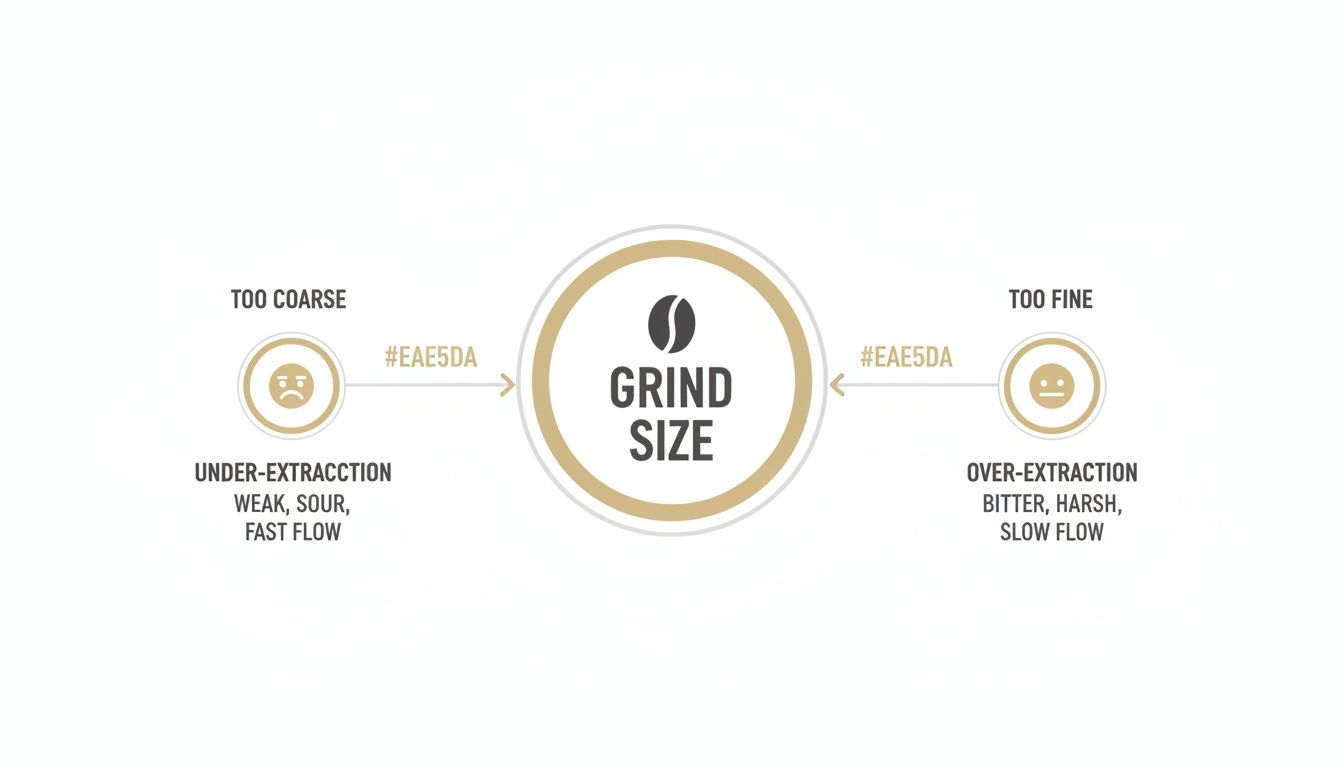
As you can see, a grind that's too coarse leads straight to sour, weak coffee. Go too fine, and you’ll end up with a bitter, harsh cup that feels dry on your tongue.
Visual Guide to Common Coffee Grind Sizes
To make this even more practical, here’s a quick reference table. Use it to connect what you see and feel with the flavors you’re likely to get in your cup. It’s your cheat sheet for dialing in.
| Grind Size | Looks and Feels Like | Effect on Pourover Brew Time | Potential Taste Profile in Pourover |
|---|---|---|---|
| Coarse | Coarse sea salt | Very Fast (< 2 minutes) | Sour, weak, thin, and lacking sweetness. |
| Medium-Coarse | Rough sand | Fast (2:00 - 2:30 minutes) | Bright but potentially underdeveloped. |
| Medium | Table salt | Moderate (2:30 - 3:30 minutes) | Balanced, sweet, and well-rounded. |
| Medium-Fine | Granulated sugar | Slow (3:00 - 4:00 minutes) | Rich, complex, but risks bitterness. |
| Fine | Powdered sugar | Very Slow (> 4 minutes) | Bitter, harsh, astringent, and often clogged. |
This table shows a clear pattern: the finer you grind, the longer the brew takes, and the more you extract from the coffee.
The real takeaway is simple: Grind size is your main control over brew time. Adjusting your grinder is how you decide how long the water and coffee get to hang out, and that interaction shapes the entire flavor of your brew.
By starting with a visual cue—like the texture of table salt or sugar—you can stop guessing. You'll start making small, intentional tweaks that get you closer to that perfect, repeatable cup you're chasing. When you're ready to test your skills, make a purchase of some of our premium beans.
Matching Your Grind to Your Pourover Brewer
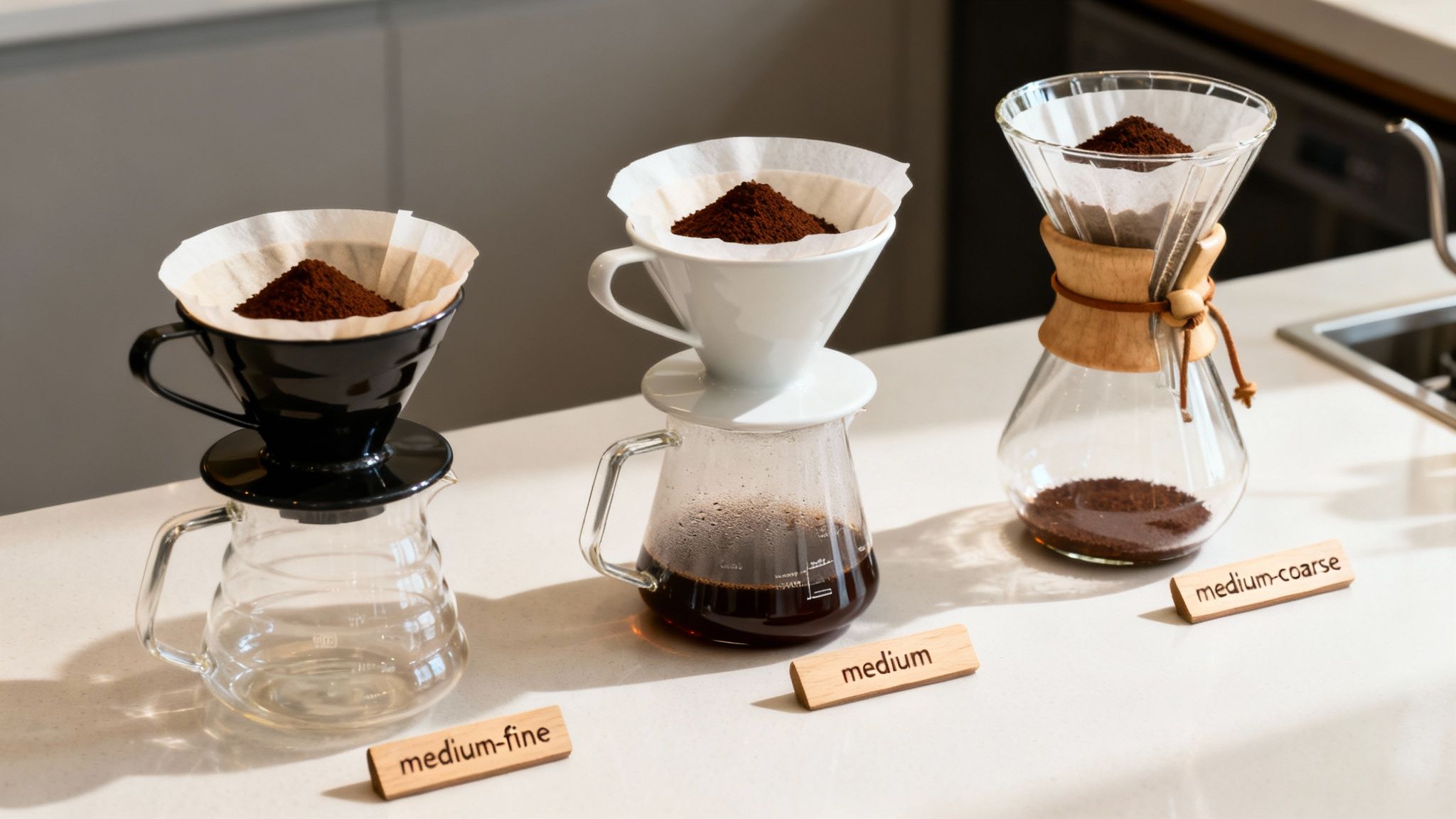
Not all pour-over drippers work the same way, and this is where dialing in your grind size for pourover really starts to feel like a craft. The specific design of your brewer—its shape, the filter it uses, the size of its opening—is what dictates how water flows through your coffee. To get a truly stunning cup, you have to get the grind just right for your specific device.
Think of it this way: the perfect grind for a Chemex will likely clog up a V60 and leave you with a bitter, over-extracted mess. Let's look at some good starting points for three of the most popular brewers you'll find on coffee counters.
Hario V60: The Precision Brewer
The Hario V60 is famous for its steep, conical shape and that big hole at the bottom. This design allows for a very fast flow rate, which gives you a ton of control but is also famously unforgiving if your grind is off.
- Recommended Grind: Start with a medium-fine grind, something with a texture similar to granulated sugar.
- The Reason Why: A slightly finer grind creates just enough resistance to slow the water down as it travels through the coffee bed. Without it, water would gush through that large opening, leaving you with a weak, sour, and disappointing brew.
- Perfect Pairing: That control and clean finish make the V60 a superstar for highlighting the bright acidity and delicate floral notes of light roast coffees. We recommend trying this method with our vibrant single-origin Ethiopian coffee.
Kalita Wave: The Consistent Performer
With its flat-bottom design and three small drainage holes, the Kalita Wave is a different beast altogether. This setup is built for consistency and even extraction, making it one of the most forgiving and easy-to-use drippers out there.
- Recommended Grind: A medium grind is the ideal starting point. Think of the consistency of table salt.
- The Reason Why: The flat bottom creates a wide, even bed of coffee, and the three holes ensure water drains steadily across the entire surface. A medium grind keeps the flow just right, preventing the clogs that a finer grind might cause in this system. The result? A reliably balanced and sweet cup.
- Perfect Pairing: The Kalita's talent for creating balance is perfect for coffees with rich, deep flavors. It produces a smooth, incredibly satisfying cup every single time. Try it with our balanced Peruvian selection for a truly memorable experience.
Your brewer's design is a roadmap. The shape, flow rate, and filter thickness all provide clues that guide you toward the right grind setting. Pay attention to these details, and you'll find your perfect recipe much faster.
Chemex: The Elegant Filter
The Chemex is an icon, but its real secret weapon is the proprietary bonded paper filters. These filters are 20-30% thicker than what you’ll find with other brewers, and they do two things: slow down the brew and trap almost all of the oils and fine sediment.
- Recommended Grind: You'll want to aim for a medium-coarse grind. It should look and feel a bit like rough sand or kosher salt.
- The Reason Why: That super-thick filter paper demands a coarser grind. If you go too fine, your brew will slow to a crawl, taking forever to drain and leaving you with a hopelessly bitter cup. The medium-coarse grind allows water to flow at the right pace, producing that signature clean, bright, and sediment-free coffee the Chemex is famous for.
- Perfect Pairing: The Chemex’s ability to clarify flavors is perfect for showcasing coffees with subtle and complex profiles. It strips away any heaviness, allowing delicate notes to shine through.
Feeling ready to experiment? The best way to really understand these differences is to taste them side-by-side. For a deeper dive into the whole process, check out our complete guide on how to make pour-over coffee.
How to Dial In Your Grind by Taste
Alright, this is where theory meets reality—in your cup. Learning to dial in your grind size for pourover is the single most powerful skill you can develop as a home brewer. It’s less about memorizing charts and more about learning to listen to what your coffee is telling you through taste.
The whole process boils down to a simple loop: brew, taste, diagnose, and adjust. By focusing on just one variable at a time—the grind—you can steer your brew from "pretty good" to "absolutely incredible." Think of it not as a chore, but as a fun and delicious puzzle you get to solve every morning.
Your Starting Recipe and First Brew
To get started, we need a solid, repeatable baseline. We're going to lock in every variable except for the grind, so we can clearly see how each tiny adjustment changes the final taste.
- Choose Your Coffee: Grab a bag of your favorite whole beans. If you really want to see how this process works across different origins, one of our curated coffee sampler packs is a perfect way to explore. We encourage you to click the link and make a purchase to begin your tasting journey.
- Pick a Ratio: A 1:16 ratio is a fantastic, reliable starting point for almost any pourover. That simply means for every 1 gram of coffee, you use 16 grams of water. A standard single cup is often 20g of coffee to 320g of water.
- Set Your Water Temperature: Let's keep the water temperature consistent. For most light and medium roasts, somewhere between 93-96°C (200-205°F) is the sweet spot for pulling out complex flavors without scorching the coffee. (We have a whole guide on the best water temperature for brewing coffee if you want to dive deeper).
- Select Your Starting Grind: Using the recommendations from the last section, pick a starting grind for your specific brewer (e.g., medium-fine for a V60).
Now, go ahead and brew that first cup. For now, don't even worry about the brew time on your stopwatch. The only tool that matters right now is your palate.
Diagnosing Your Coffee by Flavor
Let the coffee cool for a minute or two, then take a sip. What's the very first thing you notice? Forget what the flavor notes on the bag say for a moment and just focus on the overall sensation. Is it unpleasantly sharp and mouth-puckering, or is it harsh and drying? Your coffee is giving you direct feedback.
-
If It Tastes Sour: A sharp, tangy, or overly acidic flavor is the classic sign of under-extraction. The coffee might also feel thin and weak in your mouth, almost like unripe fruit. This is happening because the water zipped through the coffee grounds too quickly, failing to pull out enough of the good stuff—the sugars and deeper flavors.
-
If It Tastes Bitter: A harsh, astringent, or unpleasantly bitter taste that dries out your palate is the dead giveaway for over-extraction. In this case, the water hung around for too long, dissolving not just the delicious compounds but also the unpleasant, bitter ones. The coffee often tastes "hollow," like all the good flavor has been stripped away.
Making the Right Adjustment
Once you’ve identified the problem, the fix is beautifully simple. Your grinder is the control knob for taste.
Sour? Go Finer. A sour cup needs more extraction. Grinding finer creates more surface area for the water to work with and slows down the flow, giving it the time it needs to dissolve those sweet, balanced flavors. Nudge your grinder setting just one or two clicks finer.
Bitter? Go Coarser. A bitter cup needs less extraction. Grinding coarser creates larger particles, which lets the water pass through more quickly. This reduces the overall contact time and prevents the water from pulling out those harsh, dry notes. Adjust your grinder one or two clicks coarser.
After you've made one small adjustment, brew again with the exact same recipe. Taste it. Did it get better? Did you overshoot and now it's a little bitter? The goal is to find that perfect middle ground—the "sweet spot" where the sourness and bitterness vanish, leaving you with a vibrant, balanced, and delicious cup.
This simple, taste-driven method is what truly unlocks the potential of every coffee you buy. It’s the key to making amazing coffee, consistently, no matter what beans or brewer you’re using. Now is the perfect time to purchase the coffee of your choice and practice your new skills.
The Essential Gear for Grind Consistency
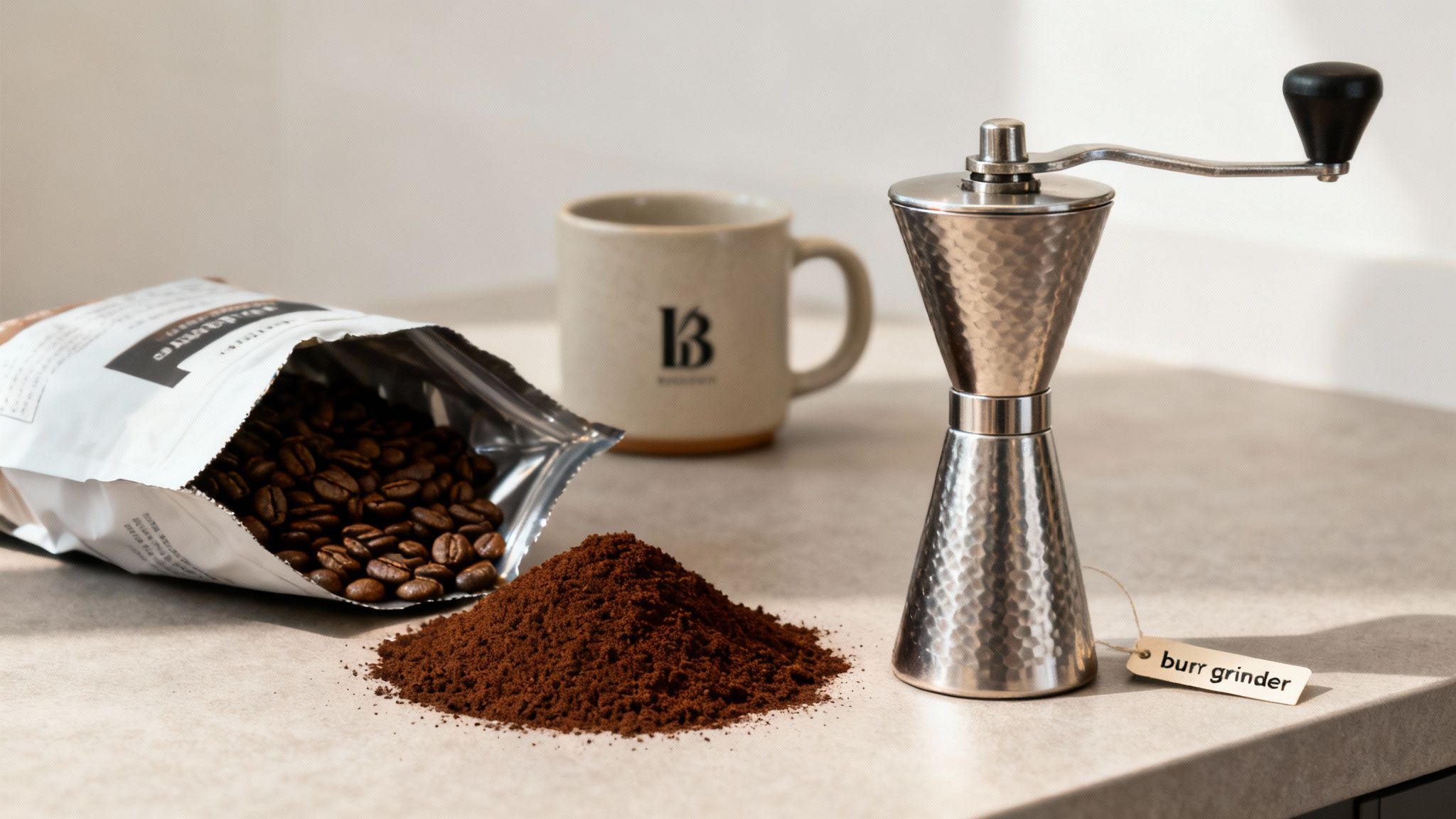
When you're trying to dial in the perfect grind size for pourover, your grinder isn't just a tool; it's your most important brewing partner. While you can technically adjust any grinder, the secret to consistently amazing coffee is using the right kind of grinder. And in the world of specialty coffee, that means one thing: a burr grinder.
So, what’s the big deal? Unlike blade grinders that just violently smash beans into a chaotic mess of different-sized pieces, burr grinders are all about precision. They use two abrasive surfaces—the burrs—to gently crush beans into a remarkably uniform size.
That consistency is the magic ingredient. When all your coffee grounds are the same size, the water can extract flavor evenly from every single one, giving you that balanced, sweet, and complex cup we're all chasing. Blade grinders, on the other hand, produce a mix of large "boulders" and fine "dust," leading to a brew that's somehow both sour (from the under-extracted big pieces) and bitter (from the over-extracted fine powder) at the same time.
Why a Burr Grinder Is a Non-Negotiable Upgrade
Let’s be direct: investing in a quality burr grinder is the single biggest leap you can make to level up your home coffee game. It's more critical than your fancy gooseneck kettle, your digital scale, and even your dripper itself.
When you're ready to make the jump, here’s what to look for:
- Material: Hardened steel or ceramic burrs are the way to go. They're durable and will give you a precise grind for years.
- Adjustment Mechanism: You want a grinder with either stepped (clicks) or stepless (infinite) adjustments. This gives you the fine-tuned control needed to make those tiny tweaks we've been talking about.
- Capacity and Speed: Think about your routine. A quality manual hand grinder is fantastic for single cups, but if you're brewing for more than one person, an electric model offers much-needed speed and convenience.
This isn't just coffee-nerd talk; the entire industry is built on this principle. The commercial coffee grinder market hit USD 1.96 billion in 2024, driven by the demand for equipment that delivers uniform particles for methods like pour-over. In fact, studies show that in specialty coffee shops, inconsistent grinds are behind an estimated 35% of customer complaints. Using a good burr grinder at home allows you to unlock up to 30% more flavor from every bean and drastically cut down on disappointing brews. Read the full research about commercial coffee grinder trends.
Completing Your Coffee Ritual
Of course, a great grinder is just one part of the equation. It works best when paired with exceptional coffee. Grinding our freshly roasted whole bean coffee just moments before you brew is the absolute best way to experience all the hard work that went into growing and roasting it. That burst of aroma when you grind fresh beans? That’s your first reward.
For a deeper dive, check out our complete guide on how to grind coffee beans at home.
Investing in your gear is investing in your daily ritual. The right tools don't just make better coffee; they make the entire process more enjoyable, turning a routine into a moment of mindful craft.
And once you’ve brewed that perfect cup, it deserves the perfect vessel. Our branded ceramic coffee mugs are designed to feel great in your hands and keep your coffee warm, so you can savor every last sip. To really show your love for the craft, you can even sport one of our stylish t-shirts or hoodies and celebrate your passion for a great brew. Browse our merchandise and find something that expresses your coffee culture style.
Ready to Brew Your Best Coffee?
We've covered a lot of ground together, from the nitty-gritty science of extraction to the hands-on art of dialing in your grind. The goal was to take the guesswork out of your pourover routine, giving you the confidence to taste, tweak, and perfect your brew. You now have a solid foundation for turning any coffee into an exceptional cup.
The next step is the most rewarding one: putting it all into practice. All the technique in the world won't matter without great coffee to work with. Now's the time to pair your new skills with beans that truly shine.
Your Next Great Cup Awaits
Why not start with something that rewards your effort with unforgettable flavor? We’ve sourced some incredible single-origin coffees that are just waiting to be brewed with care.
- Love a vibrant, fruity cup? You have to try the bright, floral notes of our single-origin Ethiopian coffee.
- Craving something smooth and balanced? The rich, chocolatey profile of our Peruvian selection is a true crowd-pleaser.
- Looking for a clean, complex experience? Check out the sweet, syrupy body of our incredible Bali beans.
You've done the work to become your own expert barista. The only thing missing is the right raw material—freshly roasted, high-quality beans that are ready to show you what they've got.
To help you get started, we'd love to welcome you to our coffee community. For a limited time, sign up for our email list and we'll send you a 10% discount for your first order. You'll also get more brewing guides and a first look at new coffees sent straight to your inbox.
You have the know-how. Now all you need is the coffee. It’s time to stop just making coffee and start crafting it. Find your next favorite beans today, get them delivered fresh, and brew the best coffee of your life.
Got Questions? We've Got Answers.
Even with the best guide, a few questions always come up when you're trying to nail your grind. Let's tackle some of the most common hurdles home baristas run into.
My Pourover Is Draining So Slowly. What Gives?
If your brew is choking up and draining at a snail's pace, you've got a classic sign of a grind that's too fine. Think of it like trying to pour water through wet sand—the tiny coffee particles get packed together, creating a traffic jam that water can't get through. This leads to a long, slow brew and a bitter, muddy-tasting cup.
The fix is simple: go coarser. Don't be shy—make a significant adjustment on your grinder, maybe a few full steps up. The goal is to get the water flowing freely again. From there, you can make smaller adjustments to dial it back in. Also, keep an eye on your pour; an overly aggressive stream can stir up the fine particles and make a clog even worse.
Does the Roast Level Change My Grind Setting?
It sure does. A coffee’s roast level and bean density are huge factors in how it brews.
- Lighter Roasts: These beans are harder, denser, and a bit more stubborn about giving up their flavor. To unlock all those bright, floral, and complex notes, you’ll often need a slightly finer grind. This gives the water more surface area to work with.
- Darker Roasts: On the flip side, darker roasts are more brittle and porous. They give up their flavors easily, so you’ll want to go a bit coarser to prevent those bitter, ashy flavors from taking over your cup.
Think of our recommendations as a great starting point, but always trust your taste buds. This is something you can really feel for yourself with our coffee sampler packs. Try dialing in a light-roast Ethiopian Yirgacheffe and then a medium-roast from Mexico—you'll see right away that they need different approaches. We encourage you to click the link and make a purchase.
Is It Okay to Use Pre-Ground Coffee for Pourover?
You can, but honestly, we wouldn’t recommend it if you're chasing great flavor. The moment coffee is ground, it starts to go stale through oxidation, losing all those incredible aromas and delicate notes. Pourover is all about clarity and nuance, and that’s the first thing you lose with pre-ground coffee.
Beyond that, the “drip” setting on most pre-ground bags is a one-size-fits-all guess that's probably not right for your specific brewer. If you want to experience the full potential of a coffee and let its unique origin character shine, grinding fresh right before you brew is the single biggest upgrade you can make to your setup.
At Beans Without Borders, we know that an amazing cup begins with an amazing bean. Ready to take your daily brew to the next level? Explore our collection of freshly roasted, single-origin coffees from around the globe.