

The Coffee Golden Ratio Your Guide to a Perfect Brew
Ever wonder why that café-brewed coffee tastes so consistently good, while your home brew can be a bit of a gamble? The secret isn't magic; it's math. Well, simple math, anyway. It all comes down to the coffee golden ratio.
This isn't some rigid, unbreakable law. Think of it more as a tried-and-true starting point used by professional baristas and coffee enthusiasts to nail a balanced, delicious cup every single time. It's the key to getting your brew just right—not too weak, not too bitter. Ready to transform your daily ritual? A world of exceptional coffee is just a click away.
What Is the Coffee Golden Ratio?
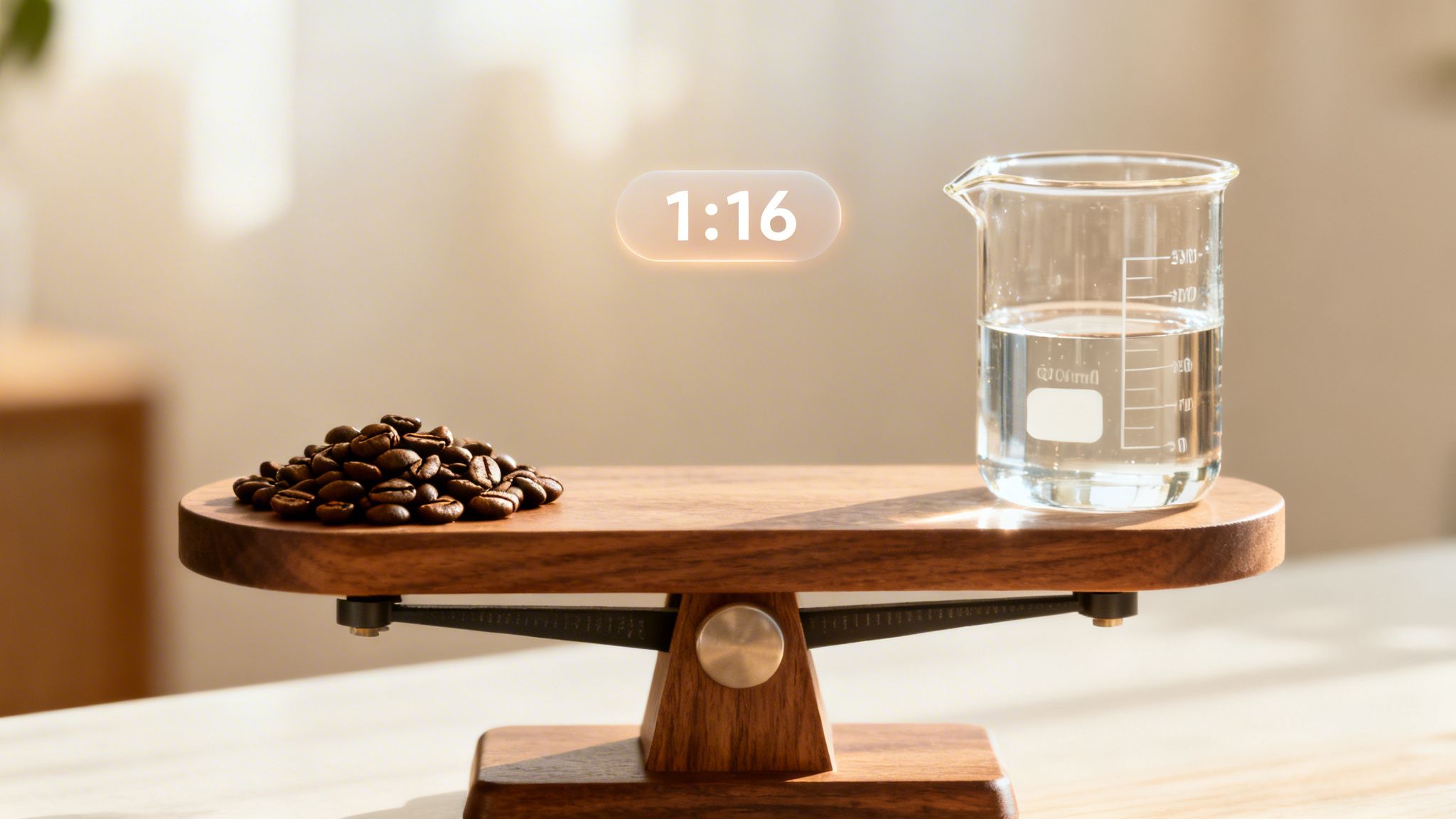
At its core, the golden ratio is a guideline for the proportion of coffee grounds to water, measured by weight. The sweet spot for most brewing methods falls somewhere between 1:15 and 1:18.
In plain English, that means for every one gram of coffee, you'll use 15 to 18 grams of water.
Think of it like a foundational recipe for a perfect soup. Once you master the base, you can start experimenting—a little more salt here, a dash of spice there. While industry standards, like those from the Specialty Coffee Association (SCA), often lean towards a lighter 1:18 ratio, we've found that a 1:16 ratio hits the mark for most people, delivering a richer, more full-bodied cup.
For a little help getting started, here’s a quick cheat sheet.
Golden Ratio Quick Start Guide
This simple reference table converts the golden ratio into common kitchen measurements for a standard single serving.
| Starting Ratio | Coffee per 250ml Water (by weight) | Coffee per 6oz Water (by volume) |
|---|---|---|
| 1:15 | 16.7 grams | ~3 tablespoons |
| 1:16 | 15.6 grams | ~3 tablespoons |
| 1:17 | 14.7 grams | ~2.5 tablespoons |
| 1:18 | 13.9 grams | ~2.5 tablespoons |
Remember, these are starting points! Your personal taste might lead you to adjust slightly, and that's the whole point of mastering the craft.
Why This Ratio Is Your Perfect Starting Point
For anyone tired of guessing how many scoops to use, adopting the golden ratio is a game-changer. It takes the ambiguity out of brewing and helps you sidestep the usual frustrations that lead to a bad cup.
Sticking to a proven ratio helps you:
- Avoid Weak Coffee: Using too little coffee results in a watery, sour, and unsatisfying brew. The ratio ensures you have enough grounds to extract a deep, rich flavor.
- Dodge Bitterness: On the flip side, too much coffee can create a harsh, bitter, and overpowering taste from over-extraction. The ratio keeps everything in balance.
- Brew with Consistency: Once you find a cup you love, you can replicate it perfectly every single morning. No more hit-or-miss coffee.
Ultimately, understanding the golden ratio is the first real step toward becoming your own best barista. It gives you the confidence to brew an amazing cup, whether you're using a complex pour-over with bright Ethiopian coffee beans or a simple, robust French press. Ready to transform your daily brew? Explore our coffee collection and find the perfect beans to start your journey.
Why This Ratio Unlocks Amazing Flavor
So, why all the fuss about a "golden ratio"? It's not just some arbitrary rule that coffee snobs made up. It's a principle grounded in the science of extraction.
Think of brewing coffee as a delicate balancing act. Your goal is simple: dissolve the perfect amount of flavorful stuff from the coffee grounds into your hot water. This is where the magic—or the misery—happens. Get it wrong, and you'll run into one of two common brewing disasters.
The Science of the Sweet Spot
Brewing is really just a quest to hit a specific flavor target. The golden ratio is your map, guiding you straight to that delicious middle ground and helping you avoid the unpleasant extremes on either side.
Here’s what we're trying to dodge:
- Under-Extraction: This is what happens when you don't pull enough flavor from the coffee. Maybe the water ran through the grounds too fast, or you just didn't use enough coffee to begin with. The result? A cup that tastes weak, thin, and disappointingly sour. If you've ever had a brew that tasted lemony in a bad way, you'll know what I mean. You can learn more about how to troubleshoot sourness in coffee to get this sorted.
- Over-Extraction: The complete opposite problem. Here, you've pulled too much from the grounds, including all the nasty, bitter compounds that are best left behind. This gives you a brew that’s harsh, astringent, and leaves a dry, chalky feeling in your mouth.
It’s a lot like steeping a tea bag. Pull it out too soon, and the tea is just sad, colored water. Leave it in forever, and it becomes an unpleasantly bitter mess. The coffee golden ratio is your guide to hitting that perfect steep time, every single time. And if you love tea, don't forget to check out our selection of the best loose leaf tea online.
The golden ratio is your key to moving from guessing to intentional brewing. It empowers you to control the outcome, replicate fantastic results, and easily diagnose what went wrong if a cup doesn't taste right.
This simple concept has completely changed how people brew at home. The widespread adoption of a starting ratio—often simplified to 1 to 2 tablespoons of ground coffee for every 6 ounces of water—has helped demystify great coffee. It's a huge reason why at-home coffee consumption now sits at a massive 70%.
This focus on precision is also what’s fueling the specialty coffee market's incredible growth, which is projected to hit $81.8 billion by 2030. By understanding this balance, you’re not just following a recipe; you’re mastering a fundamental skill that unlocks the incredible flavor potential locked inside every single bean. Click here to purchase the coffee of your choice and taste the difference.
Calculating the Ratio for Any Brew Size
Alright, let's move from theory to practice. Figuring out the golden ratio for your specific brew is much simpler than it sounds. You don’t need to be a math whiz to get this right—just a simple formula and you're on your way to a perfectly balanced cup, every single time.
The magic formula is this: take the total amount of water you plan to use (in grams) and divide it by the second number in your chosen ratio (like 16, 17, or 18).
Total Water (g) ÷ Ratio Number = Coffee Grounds Needed (g)
That’s it. This one little equation is your ticket to consistency, whether you're brewing a single morning cup or a full pot for friends.
Putting the Formula to Work
Let's run through a quick, real-world example. Say you want to fill your favorite oversized mug, which holds about 500ml of water. Since 1ml of water conveniently weighs 1g, you're starting with 500g of water.
Using our go-to 1:16 ratio, the math looks like this:
- 500g (water) ÷ 16 = 31.25g (coffee)
So, you'd want to measure out about 31 grams of coffee. This is exactly why a simple digital kitchen scale is the best friend a home barista can have. It completely removes the guesswork and is the key to brewing that perfect cup again and again.
For a deeper dive into common measurements, our guide on how much coffee grounds per cup has you covered.
What If I Don't Have a Scale?
No scale? No problem. While a scale gives you laser-like precision, you can still get fantastic results by focusing on consistency. Just grab your trusty measuring spoons or a coffee scoop.
Here are a few solid starting points if you're using volume, based on a 1:16 ratio:
- For a small mug (8 oz / ~230g water): Start with about 2.5 level tablespoons of ground coffee.
- For a large mug (12 oz / ~340g water): Go for roughly 4 level tablespoons of ground coffee.
Keep in mind, these are solid estimates. Different roasts have different densities—a scoop of a light, dense bean will weigh more than the same scoop of a darker, lighter bean. The real secret is to use the same scoop every time. This simple habit will dramatically improve your daily brew and empower you to make great coffee with whatever tools you have on hand.
Tailoring the Golden Ratio to Your Brew Method
Think of the golden ratio as your trusty starting line, but remember that the finish line—that truly perfect cup of coffee—often depends on the gear you're using. Different brewing methods are like different languages; they all communicate with the coffee grounds, but in their own unique way. A slight tweak to your ratio is like finding the right dialect, unlocking a whole new level of flavor.
Whether you're meticulously tending to a pour-over or just flipping the switch on your trusty automatic drip machine, we'll walk you through the best starting points for each. It's this kind of precision that makes a difference in the 2.3 billion cups of coffee enjoyed worldwide every day. You don't need a lab full of expensive equipment, just the right numbers for your go-to method. If you're curious about the bigger picture, the USDA's official report has some fascinating insights into global coffee trends.
The calculation itself is refreshingly simple: just divide your total water weight by your ratio number to figure out how much coffee you need.
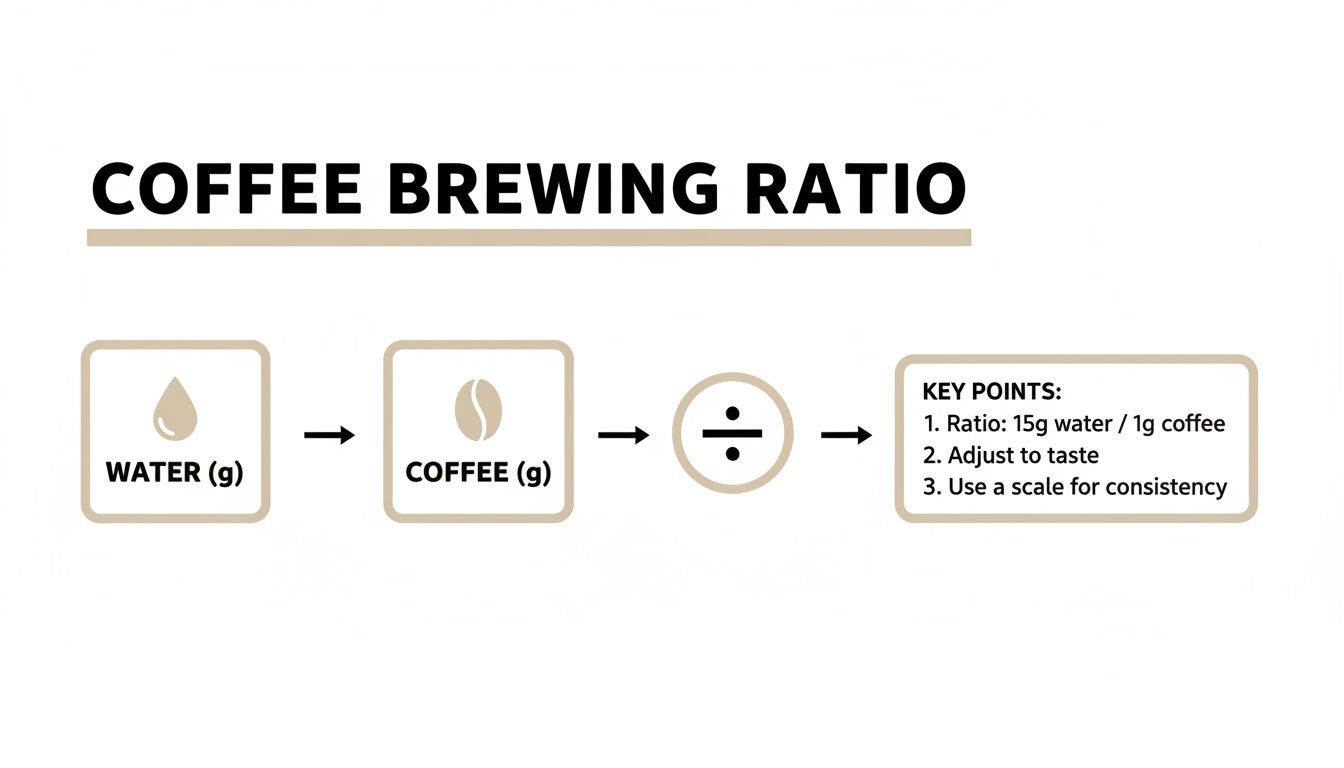
This little guide breaks down the core formula, so you can nail your measurements no matter how much (or how little) coffee you're making.
Pour-Over: The Bright and Clean Cup
Pour-over brewing is an art form built on control. It’s the best way to let the delicate, complex flavors of a great single-origin bean really sing. For this method, a 1:16 ratio is your sweet spot. It creates a beautifully balanced extraction that pulls out bright acidity and floral notes without ever tasting thin or watery.
This slightly lighter ratio is your insurance against over-extraction, which can be a real risk with the slow, deliberate nature of a pour-over. Get it right, and you're rewarded with a clean, vibrant cup every single time.
- Mini-Recipe: Use 22g of medium-fine ground coffee for 350g of water.
- Perfect Pairing: The bright, citrusy, and floral character of our single-origin Ethiopian beans is a stunning match for the pour-over method. For a full tutorial, check out our guide on how to make pour-over coffee.
French Press: The Bold and Full-Bodied Brew
The French press is all about full-immersion brewing, where the coffee grounds get to hang out and steep directly in the water for a few minutes. This process is famous for yielding a rich, full-bodied, and wonderfully robust cup of coffee. To really lean into that character, you’ll want a slightly stronger ratio.
We recommend starting with a 1:15 ratio for the French press. This creates a bolder brew that has the muscle to support the method's heavy body and rich texture without tipping over into bitterness. And don't forget—a coarser grind is essential here to keep your final cup free of sediment.
By tightening the ratio for immersion brewing, you ensure the water becomes fully saturated with flavor, resulting in that classic, velvety French press character.
- Mini-Recipe: Use 30g of coarse ground coffee for 450g of water.
- Perfect Pairing: The deep, earthy, and chocolatey profile of our rich Bali blend is the perfect companion for the immersive, full-bodied experience of a French press.
Automatic Drip Machine: The Everyday Essential
Your automatic drip machine is the unsung hero of the morning rush. With the right golden ratio, it can produce a fantastic pot of coffee that easily rivals its manual counterparts. Most drip brewers perform beautifully with a ratio somewhere between 1:16 and 1:17.
Try starting at 1:16 for a well-rounded and flavorful brew. If it tastes a little too intense for your liking, just nudge it to 1:17 by using the same amount of coffee but adding a bit more water. You'd be surprised what a big difference that small tweak can make to your daily pot.
- Mini-Recipe: For an 8-cup pot (about 1200g of water), use 75g of medium ground coffee.
- Perfect Pairing: A versatile and balanced coffee like our Peruvian beans is an excellent choice for drip machines, delivering a smooth and satisfying cup that starts your day off right.
Brew Method Ratio Starting Points
To make things even easier, here's a quick-reference table. Think of these as proven starting points—your launchpad for experimentation. The perfect cup is personal, so don't be afraid to adjust these to your taste. Find the perfect coffee for your favorite brew method and make a purchase today.
| Brew Method | Recommended Starting Ratio | Suggested Grind Size | Recommended Coffee Pairing |
|---|---|---|---|
| Pour-Over | 1:16 | Medium-Fine | Ethiopian (Light Roast) |
| French Press | 1:15 | Coarse | Bali (Dark Roast) |
| Automatic Drip | 1:16–1:17 | Medium | Peruvian (Medium Roast) |
This table should help you match your beans and grind to your brewer, taking the guesswork out of the equation and getting you closer to that perfect brew, faster.
How to Adjust the Ratio for Your Perfect Taste
This is where the fun really begins. Once you’ve got a handle on the golden ratio, you can stop just following recipes and start creating your own signature brew. Think of the standard ratio as your starting point, but the real magic happens when you listen to your taste buds and make small, deliberate tweaks. It’s a bit like tuning a guitar—a tiny adjustment can bring everything into perfect harmony.
The process is simple enough. Just taste your coffee and ask yourself what you'd like to change. Is it a little too strong, maybe leaning toward bitter? Or is it a bit thin and underwhelming? Your palate will tell you exactly where to go next.
Dialing in Your Ideal Strength
Changing your coffee's strength is as easy as nudging the coffee-to-water ratio. Even though the numbers look small, they make a huge difference in the final cup.
Here’s a quick rundown on how to make those adjustments:
- For a Stronger, Bolder Cup: If your coffee tastes weak or you just want more punch, it's time to tighten the ratio. Moving from 1:16 to a 1:15 ratio means you’re using more coffee for the same amount of water. The result? A more concentrated and robust brew.
- For a Lighter, Milder Cup: If your brew is a bit too intense or has a bitter edge, the fix is simple: add more water. Shifting from a 1:16 to a 1:17 or even 1:18 ratio will give you a lighter-bodied, more delicate cup that can really highlight a coffee's subtle notes.
Remember, the goal isn't just about raw strength—it's about finding balance. A tiny change can unlock a completely new flavor profile in your favorite beans, turning a good cup into a truly great one.
Nailing that perfect ratio for your taste—usually somewhere between 15-18 grams of coffee per 250ml of water—is a practice championed by groups like the Specialty Coffee Association. This focus on precision is a big reason why specialty coffee has grown so much, projected to hit $45 billion with an 80% growth in the U.S. since 2011. Whether you're a professional barista or just a home brewer, getting this right ensures every sip is fantastic.
The Crucial Role of Grind Size
As you start tweaking your ratio, don't forget about your other main tool for controlling flavor: grind size. It works in tandem with your ratio to dial in the perfect extraction. A finer grind exposes more surface area, so flavors extract faster. A coarser grind, on the other hand, slows things down.
So, if you tried a stronger 1:15 ratio and it tasted bitter, try making your grind a touch coarser next time. On the flip side, if your lighter 1:17 brew tasted a little sour, a slightly finer grind will help you pull out more of its sweetness. Of course, other factors matter, too. Our guide on the best water temperature for brewing coffee can help you get another key variable just right.
To make this whole process of discovery even more delicious, we highly recommend our curated Sampler Pack. It’s the perfect way to experiment with amazing beans from Peru, Mexico, and Uganda, turning what could be tedious troubleshooting into a delightful journey. You’ll find the exact coffee golden ratio that makes you happiest, one cup at a time.
Bringing It All Home: Your Perfect Brew
So, there you have it. The coffee golden ratio isn't some rigid, unbreakable law. Think of it as your most trusted starting point—a reliable map for navigating the incredible flavors locked inside every great coffee bean. It's the key to making consistently delicious coffee, every single time.
Our goal has always been to find the world's best coffees and get them into your hands. This guide is just another way we hope to help you enjoy them to their absolute fullest. Now, the fun part begins.
Start Exploring with Our Coffees
Ready to put your newfound knowledge to the test? Dive into our collection of single-origin coffees and signature blends. Whether you're aiming for a bright, clean pour-over or a rich, syrupy espresso, having the right beans is where it all starts. Applying the golden ratio is how you nail the landing.
You've got the skills. You know the science. Now you can take any of our beans and turn them into something truly special. Grab a bag recommended for a bold French press or a delicate AeroPress brew and taste what a little precision can do. And with free shipping on every U.S. order, your next great cup is never far away.
Your perfect brew is waiting. Whether you're exploring our loose-leaf teas or sipping from one of our ceramic coffee mugs, we’re here to make that daily ritual just a little bit better. We also have branded shirts, t-shirts, hats, and hoodies for you to show off your love for coffee culture.
For more brewing wisdom and a 10% discount on your first order, be sure to sign up for our email list. We'd be honored to join you on your coffee journey.
Common Questions About the Coffee Golden Ratio
Mastering the coffee-to-water ratio is a journey, and a few questions are bound to pop up along the way. I've heard these a lot over the years, so let's clear up some of the most common points of confusion.
What If I Don’t Have a Scale?
No scale? No problem. While a digital scale is the gold standard for consistency, you can absolutely get by without one. The best place to start is with the classic rule of thumb: two level tablespoons of ground coffee for every six ounces of water.
The key here isn't perfect precision but consistency. If you use the same scoop every single time, you'll start to build a reliable recipe. It's a simple habit that takes you from random guesswork to intentional brewing, and the results speak for themselves.
Does the Golden Ratio Work for Espresso?
Not in the same way. Espresso is a completely different beast, built around a much tighter, more concentrated ratio to create that signature syrupy shot we all love. A typical starting point for espresso is a 1:2 ratio—meaning one part coffee grounds to two parts liquid espresso in the cup. This concentrated brew is the base for popular drinks like Americanos (espresso and hot water), Lattes (espresso and steamed milk), and Macchiatos (espresso with a dollop of foam).
Think of espresso as a specialized technique, much like cold brew. It follows the same core principles of extraction but requires its own unique recipe. The golden ratio we've been talking about is your trusty guide for classic methods like pour-over, drip, and French press.
How Does Roast Level Affect the Ratio?
This is a great question, and the answer depends on how you measure. If you're weighing your coffee in grams, the ratio (like 1:16) stays the same no matter what. A gram of light roast is, well, a gram, just like a gram of dark roast.
But if you're measuring by volume (with scoops), things change. Darker roasts are less dense because the beans expand and lose mass during the roasting process. This means a scoop of dark roast coffee actually weighs less than the same scoop of light roast. To get the same strength, you might need to add a little extra dark roast to compensate.
Can I Use This Ratio for Any Coffee Bean?
Absolutely! The golden ratio is designed to be a universal starting point that creates a balanced, well-extracted cup from just about any high-quality bean you can find. It’s the perfect baseline for letting a coffee's true character come through.
This is what makes it so useful for exploring new coffees. It provides a level playing field, so you can really taste the bright, floral notes in something like our Ethiopian beans or savor the deep, chocolatey profile of our Bali blend.
Now that you’re armed with the know-how to brew the perfect cup, the only thing left is to find the right beans. At Beans Without Borders, we source incredible single-origin coffees from the world's best growing regions to bring that experience right to your kitchen.
Explore our collection and start your journey to a better brew today.